Artwork
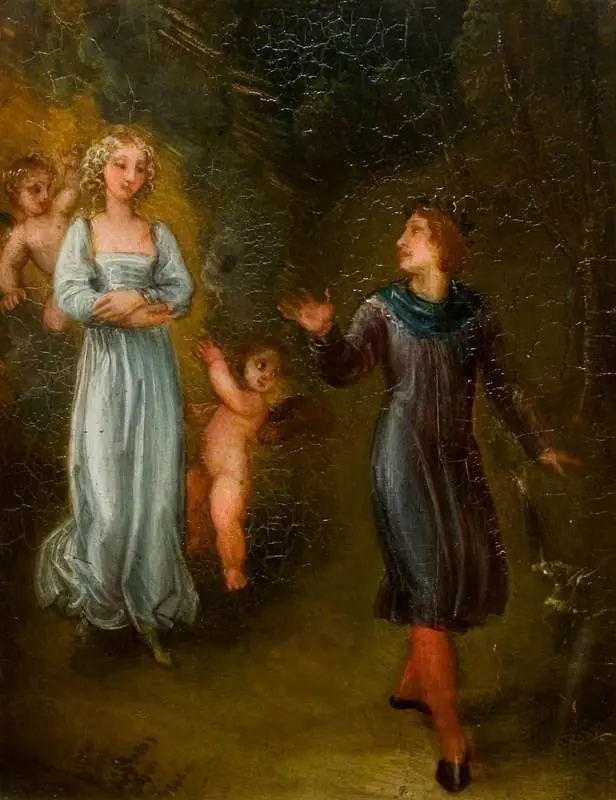
Paolo and Francesca (sketch for a mural in the Villa Carreggi)
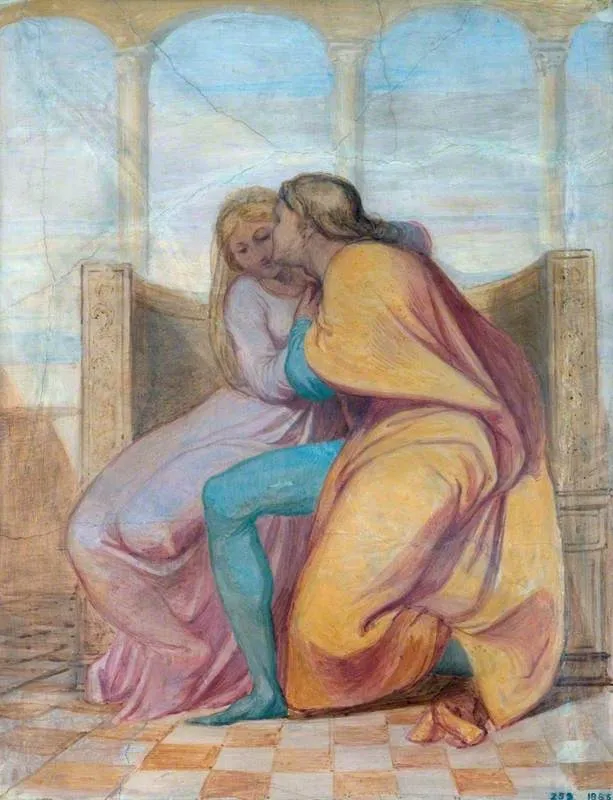
Paolo and Francesca (sketch for a mural in the Villa Carreggi) is an unspecified painting by the British Romanticist artist George Frederic Watts. It dates from 1845 and is held in the collection of the Victoria and Albert Museum.
About this work
Overview
George Frederic Watts, a British painter linked to Symbolism, produced a preparatory sketch in 1845 for a mural intended for the Villa Carreggi. The work belongs to the Romantic tradition in Britain, where narrative and emotive content were central concerns.
Subject & Meaning
The composition portrays the ill‑fated lovers Paolo and Francesca, characters from Dante Alighieri’s *Inferno*. Their intimate embrace and touching faces convey the tragic passion that leads them to the second circle of Hell, reflecting Watts’s interest in moral and emotional allegory.
Technique & Style
Executed as a sketch, the piece employs a limited palette of pink, yellow, blue and muted tones. The figures sit on a bench before a backdrop of cracked light‑blue sky and classical columns, suggesting a preliminary layout for a larger mural. The handling is loose, emphasizing gesture over detail.
History & Provenance
Created as a study for the Villa Carreggi commission, the drawing remained in Watts’s studio before entering private collections. It later surfaced in the art market in the early twentieth century, where it was identified as an early example of his allegorical mural work.
Context
During the mid‑nineteenth century, British artists increasingly turned to literary sources for subject matter. Watts’s choice of a Dante episode aligns with contemporary Romantic fascination with medieval themes and the moral complexities they embodied.
Artist & collection
Artist
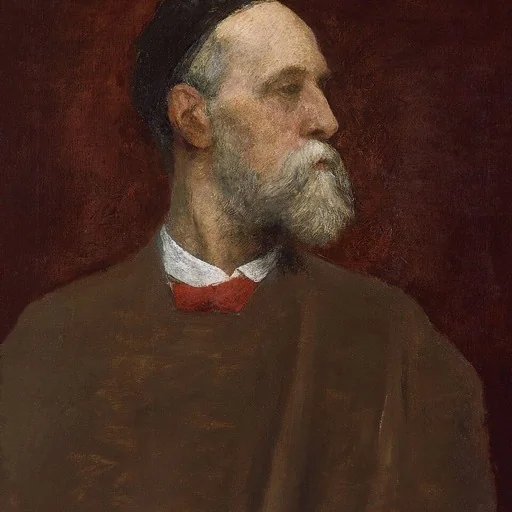
George Frederic Watts (23 February 1817 – 1 July 1904) was a British painter and sculptor associated with the Symbolist movement.

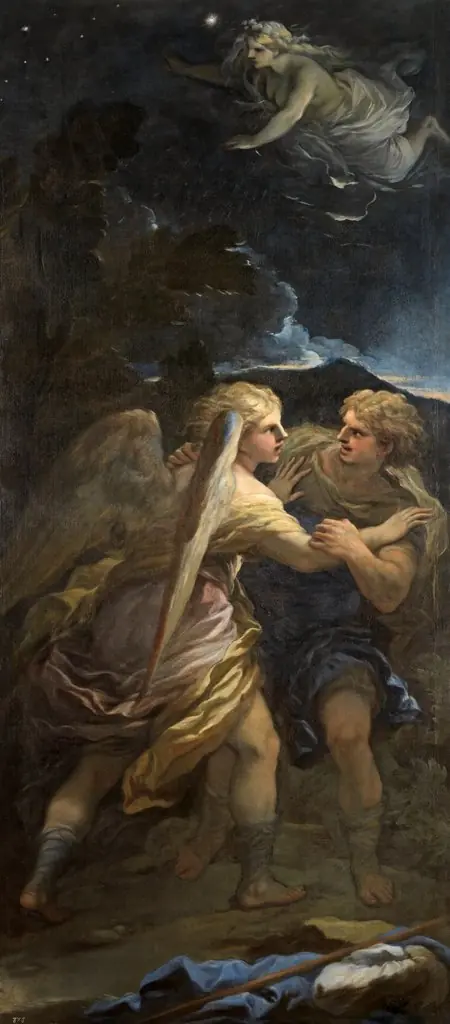 Lucha de Jacob con el ángel
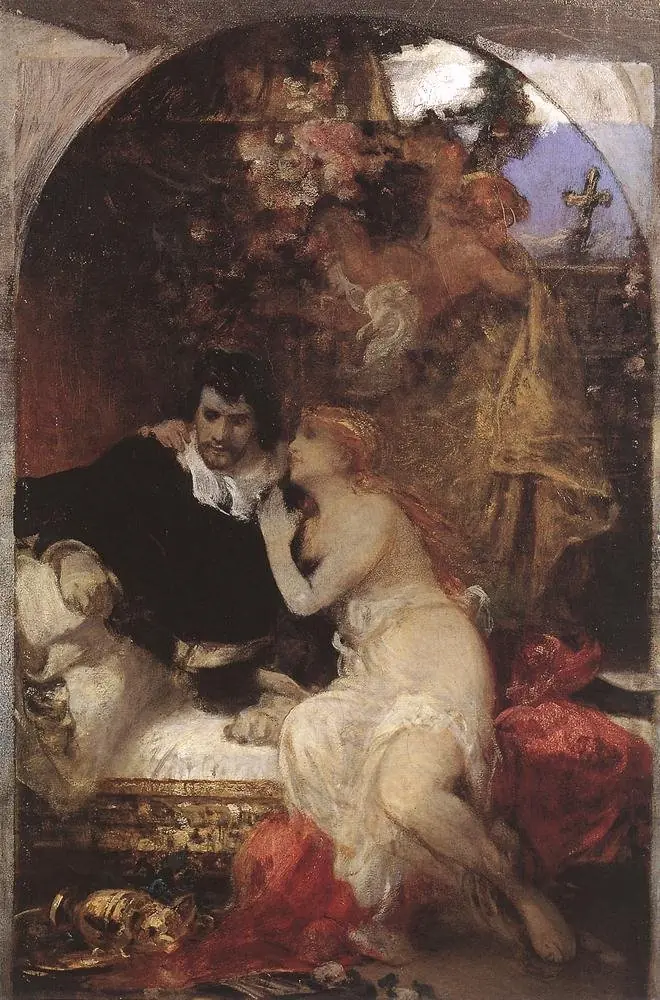 Venus and Tannhäuser
 Pierre du Terrail, Chevalier de Bayard
 Selim discovered with Zuleika by Giaffir and his men
 Burns and his Highland Mary
 Et historisk stykke
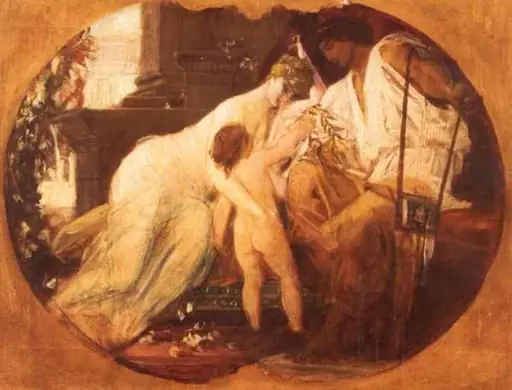 Scenă mitologică
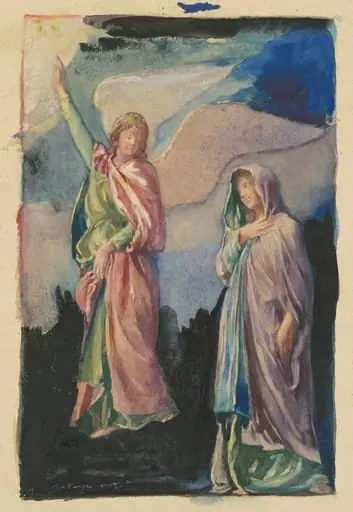 Study for "Faith" and "Hope"
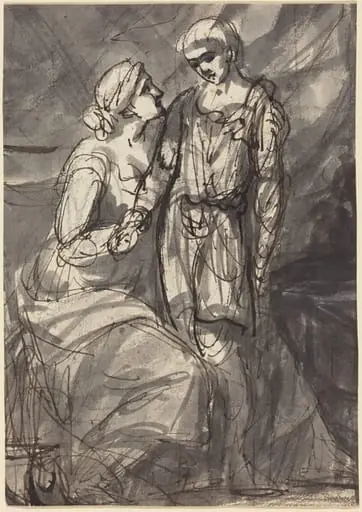 Two Figures in Classical Dress
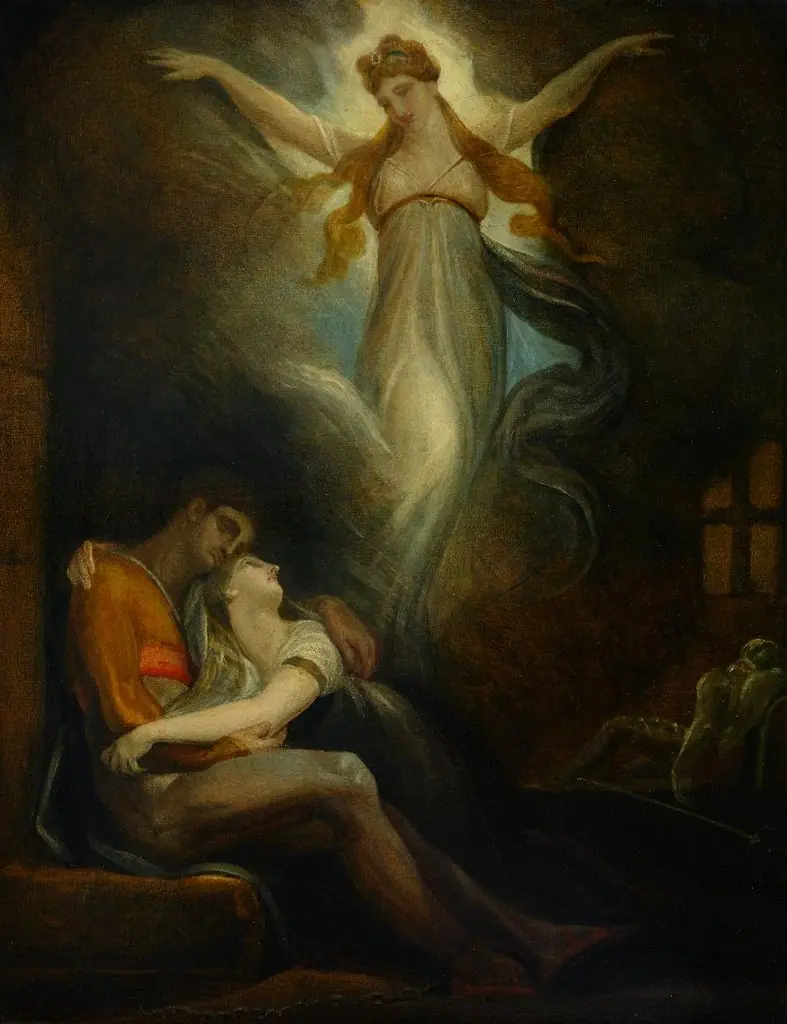 Das Gefängnis
 Petrarch and Laura
 Königin von Saba vor Salomon