Artwork
Billeting the Troops
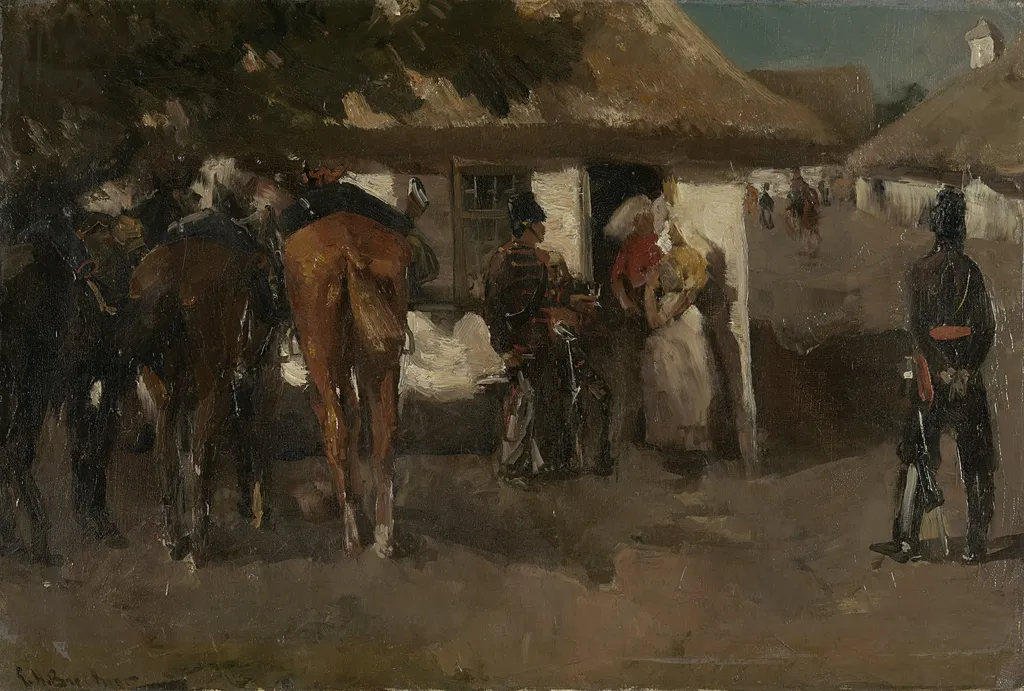
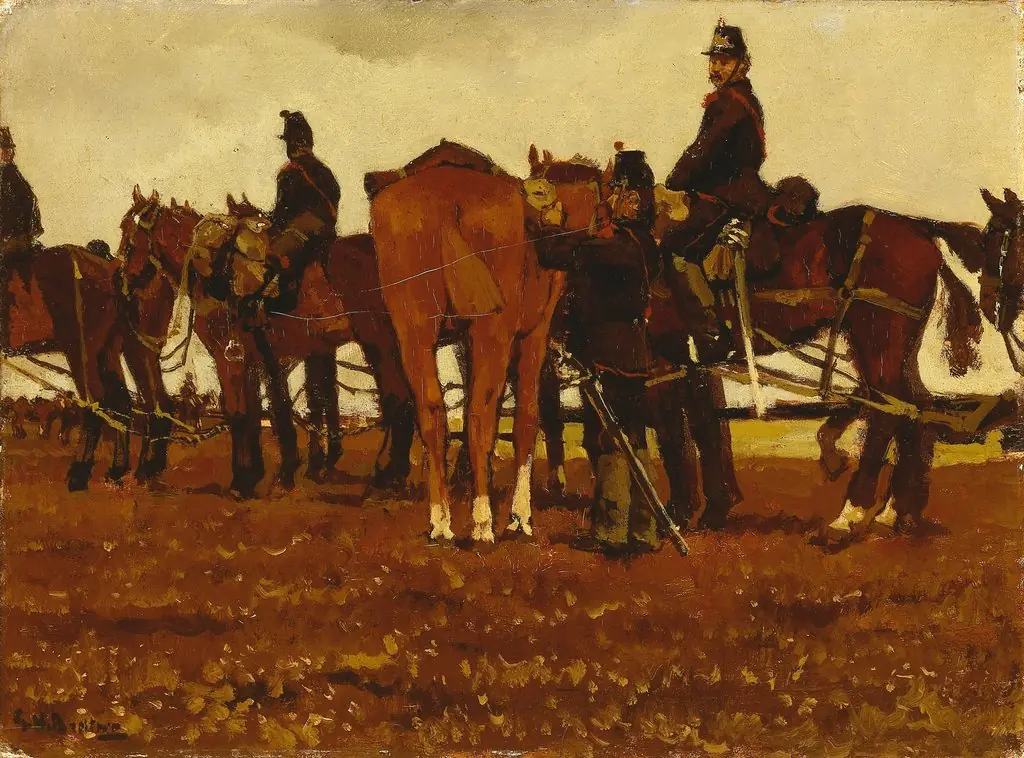
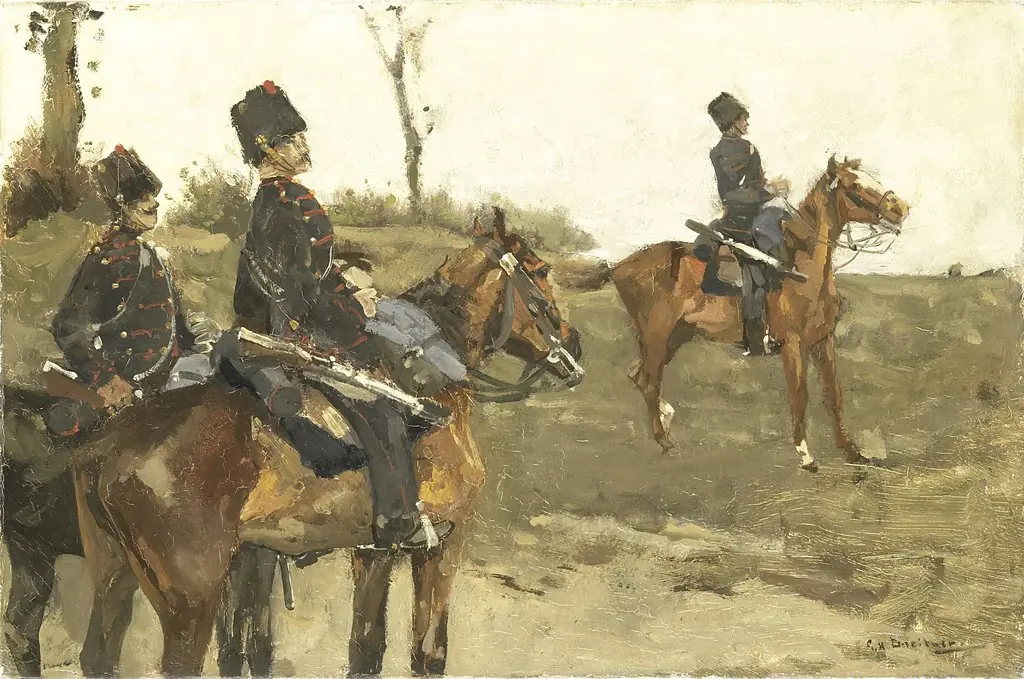
Billeting the Troops is an oil painting by the Post-Impressionist artist George Hendrik Breitner. It dates from 1900 and is held in the collection of the Rijksmuseum.
About this work
Overview
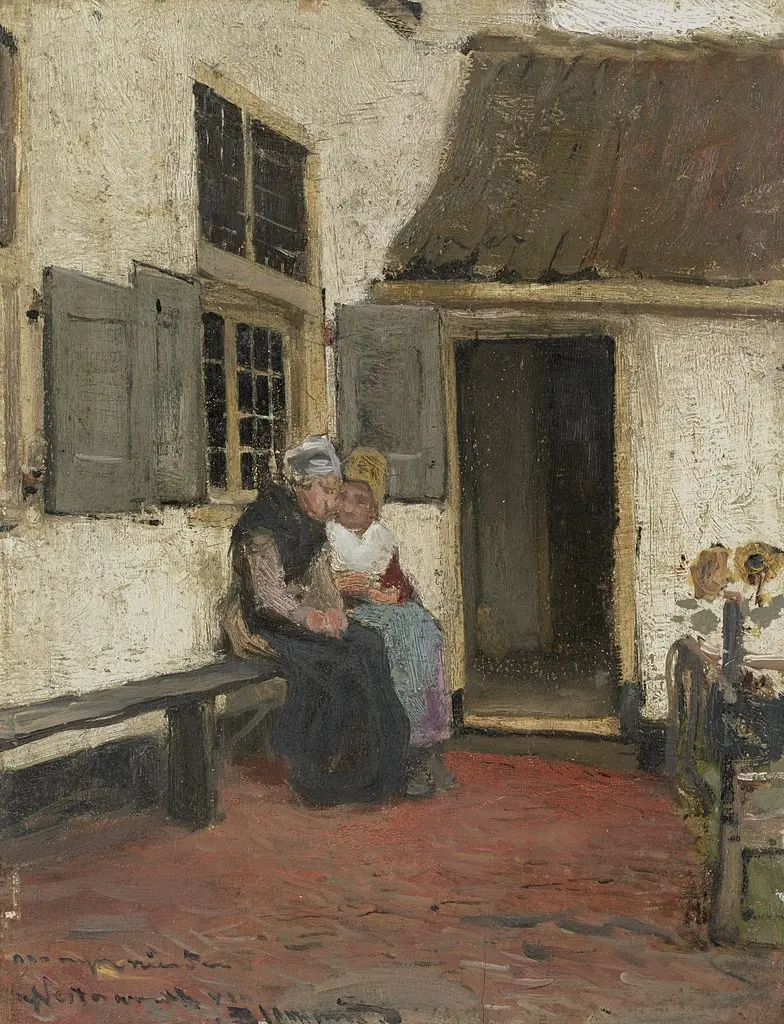
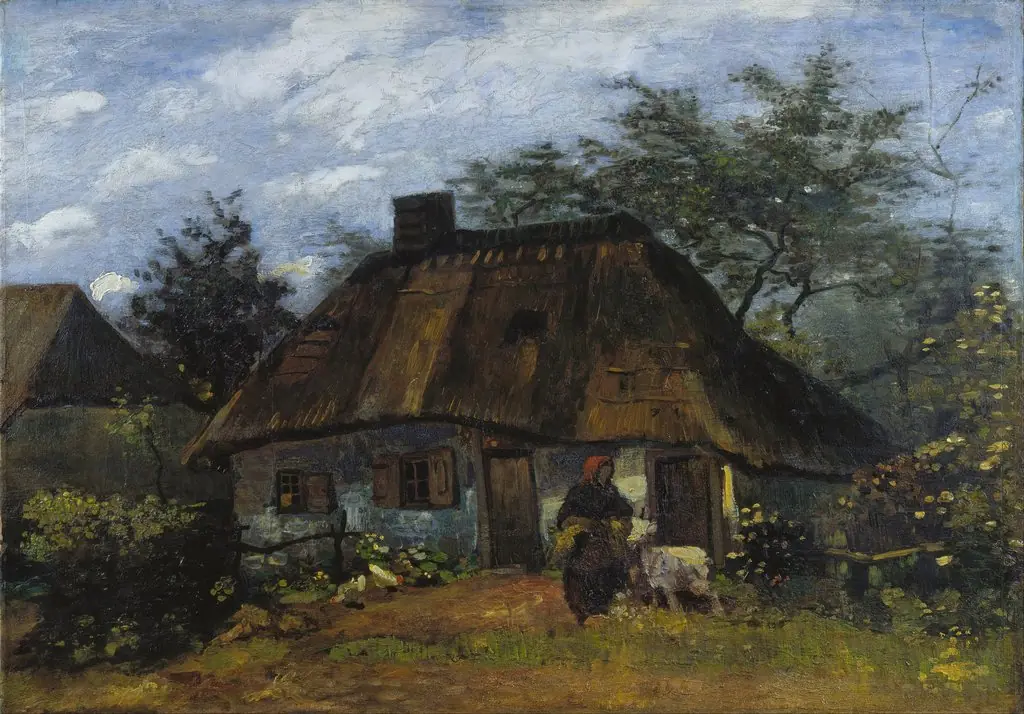
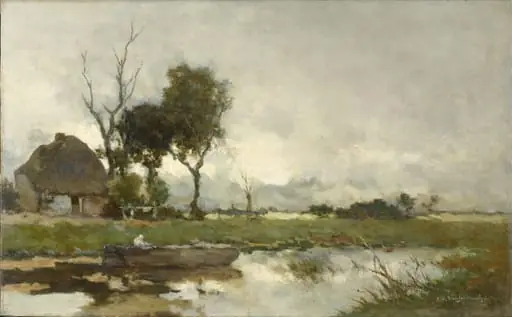
George Hendrik Breitner’s 1900 oil painting *Billeting the Troops* captures a moment of military life in a rural setting. The composition centers on a thatched cottage where soldiers pause, a horse tethered nearby, and a woman with a child at the doorway. The work is held by the Rijksmuseum and reflects Breitner’s focus on everyday scenes.
Subject & Meaning
The canvas depicts a small group of troops stationed temporarily beside a modest house, suggesting a brief respite during a march. The presence of the civilian family, especially the mother and child, introduces a contrast between military order and domestic routine, hinting at the ordinary disruptions caused by the movement of armed forces.
Technique & Style
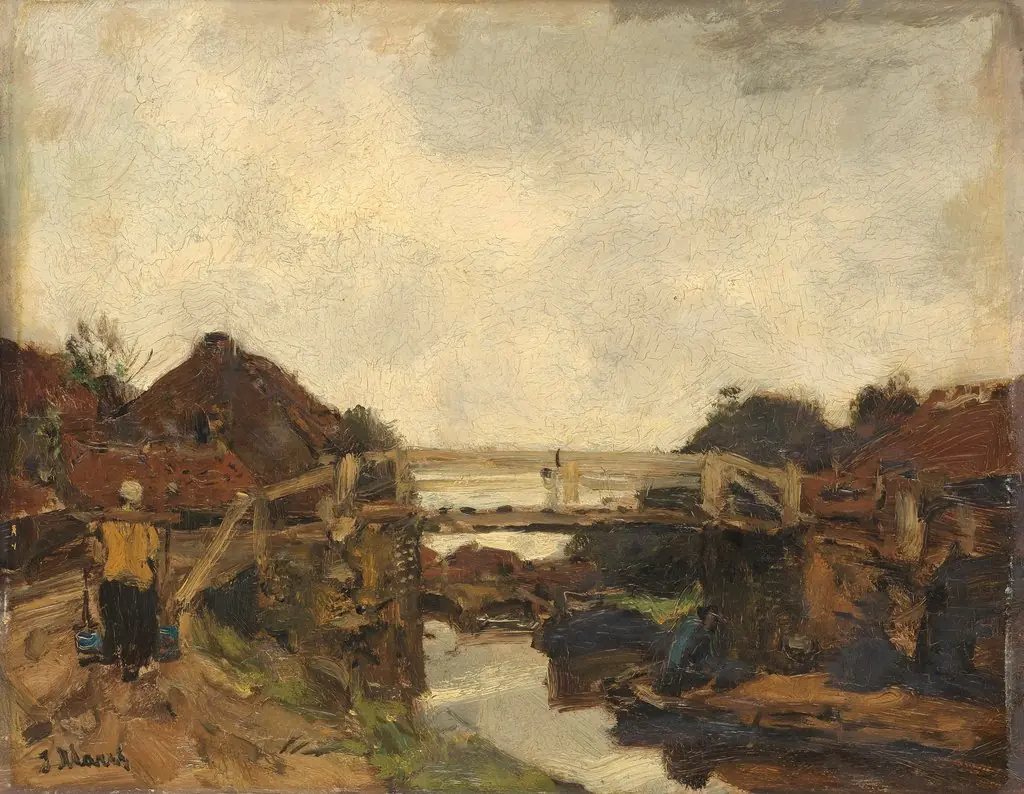
Breitner employs loose, vigorous brushwork and a muted palette of browns, grays, and faint greens to convey the damp atmosphere of the scene. The texture of the paint, applied with noticeable thickness, adds a tactile quality that emphasizes the weathered surfaces and the hurried impression of a fleeting moment.
History & Provenance
Created at the turn of the twentieth century, the painting reflects Breitner’s interest in urban realism and his occasional use of photographic references to record transient conditions such as rain. After its completion, the work entered the collection of the Rijksmuseum, where it remains part of the institution’s representation of Dutch Impressionist art.
Own this work as a print
Artist & collection
Artist
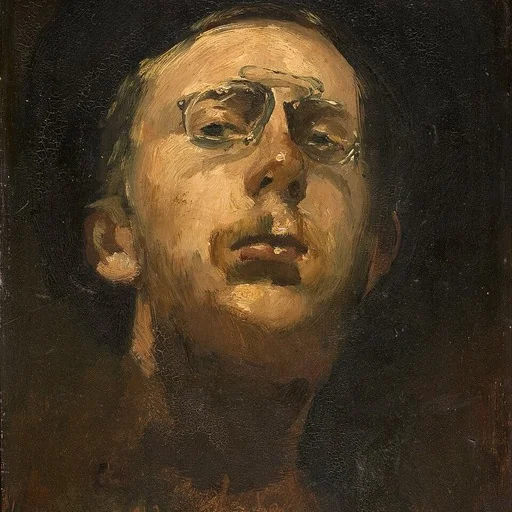
George Hendrik Breitner (12 September 1857 – 5 June 1923) was a Dutch painter and photographer.