Artwork
Jack's Crag, Borrowdale, Cumberland
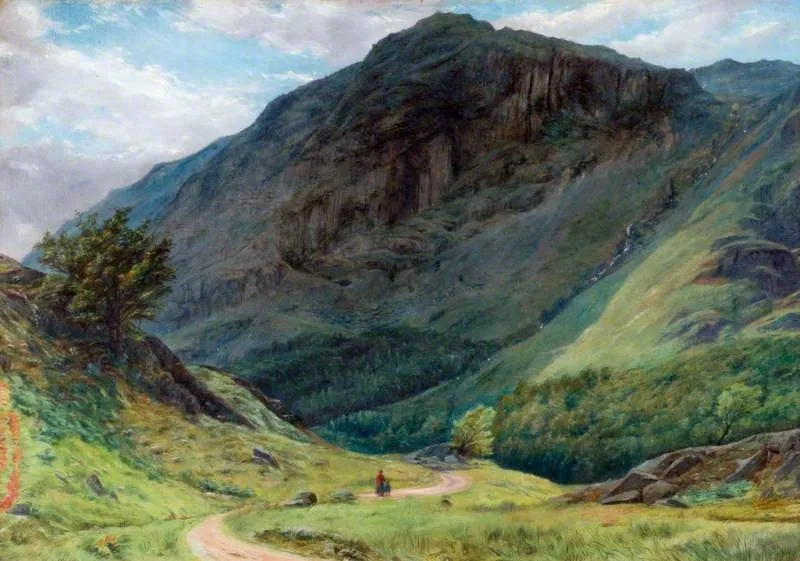
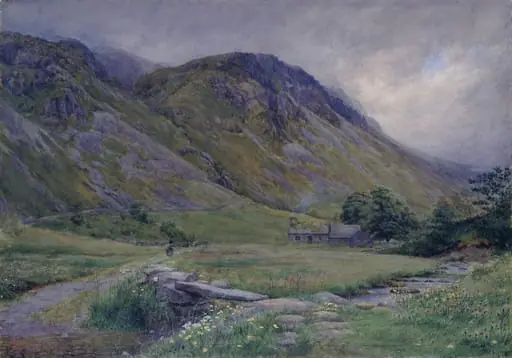
Jack's Crag, Borrowdale, Cumberland is an oil painting by the Realist artist George Henry Newton. It dates from 1860 and is held in the collection of the Victoria and Albert Museum.
About this work
Overview
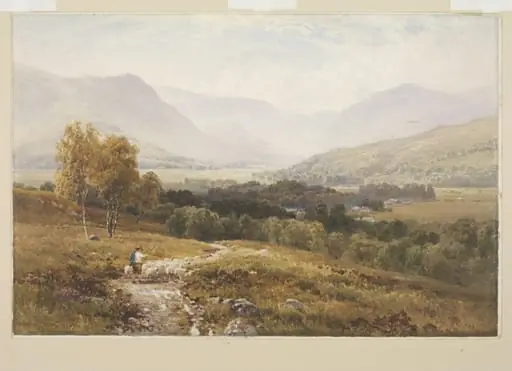
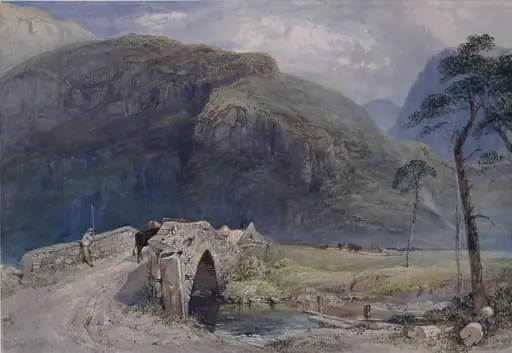
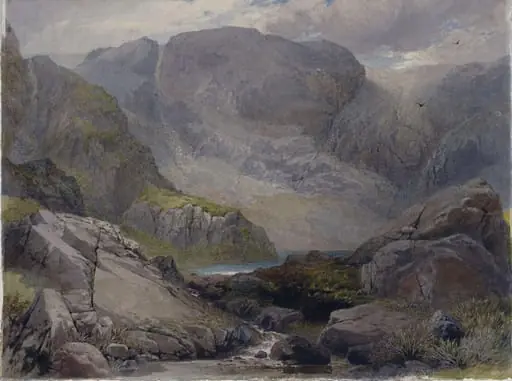
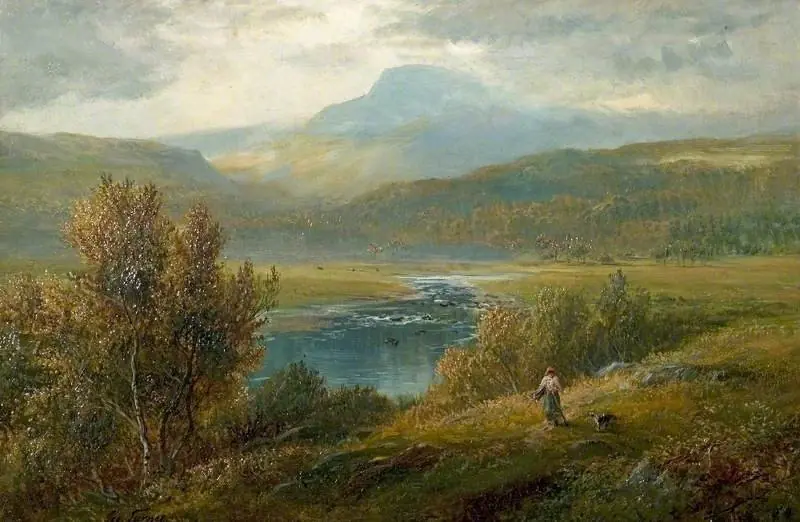
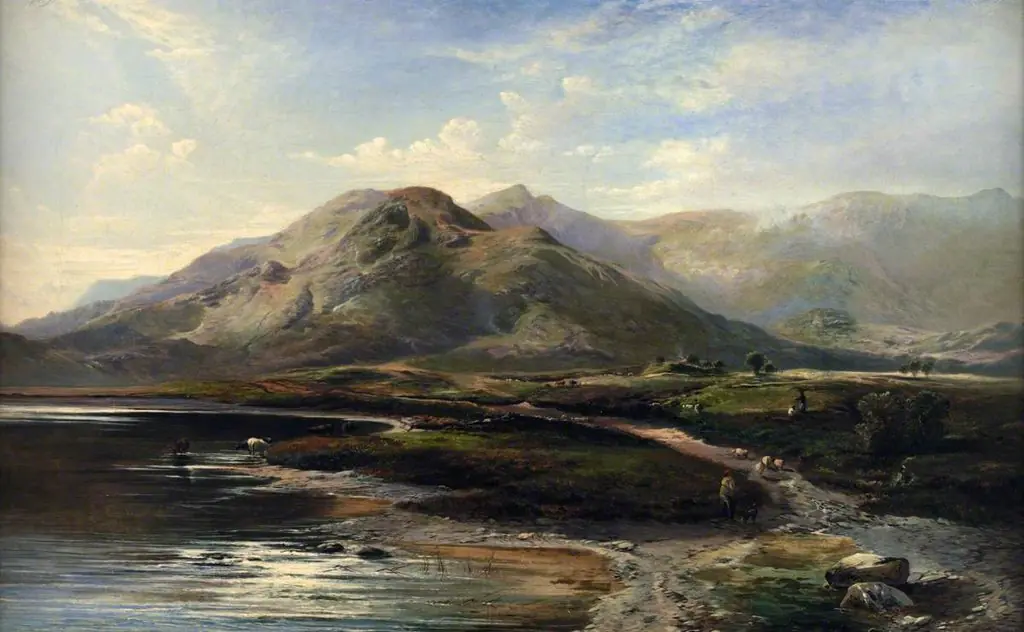
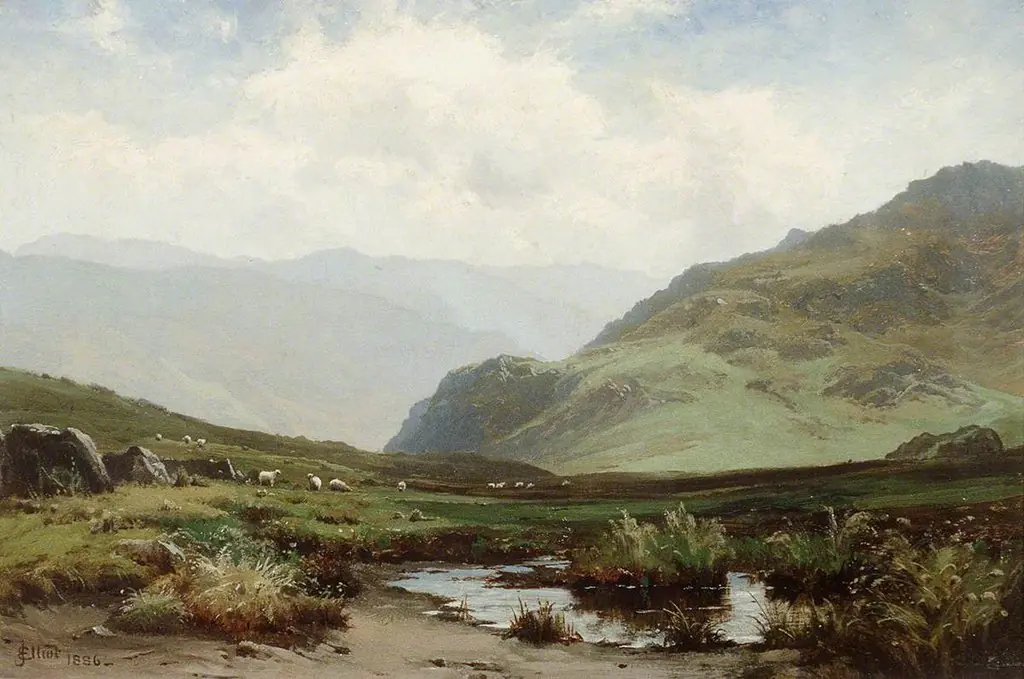
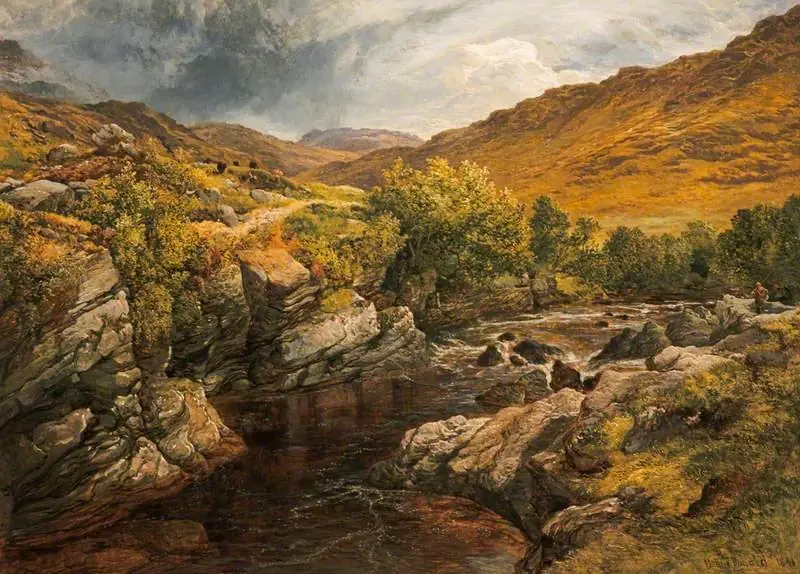
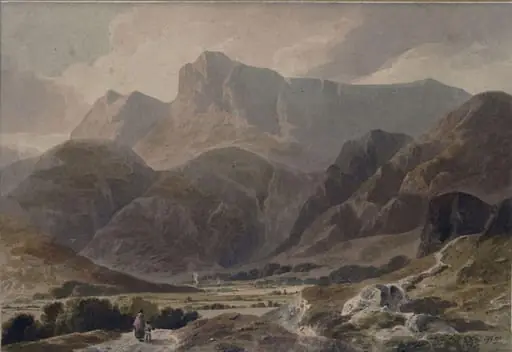
George Henry Newton’s oil on canvas, completed in 1860, portrays a quiet valley scene in Borrowdale, Cumberland. A narrow, earth‑colored track winds forward, bordered by verdant foliage and rising crags under a sky mottled with clouds. A solitary traveler traverses the path, providing a reference for scale and inviting the eye deeper into the composition.
Subject & Meaning
The work captures a moment of pastoral solitude, emphasizing the relationship between human movement and the expansive natural landscape. The lone figure suggests a contemplative journey, while the surrounding mountains and sky convey a sense of enduring tranquility and the modest grandeur of the English countryside.
Technique & Style
Newton employs a restrained palette of earth tones and muted greens, allowing atmospheric perspective to create depth. Delicate brushwork renders the foliage and rock faces, while softer, blended strokes suggest the cloudy heavens. Light is diffused across the scene, highlighting the path and enhancing the painting’s calm, immersive quality.
History & Provenance
Created in the mid‑nineteenth century, the painting entered the collection of the Victoria and Albert Museum, where it remains on display. Its acquisition reflects the museum’s interest in documenting British landscape painting of the period and preserving works that illustrate regional topography.
Context
During the 1860s, British artists increasingly turned to rural subjects, celebrating the nation’s natural scenery amid industrial change. Newton’s depiction of Borrowdale aligns with this trend, offering a visual record of the Lake District’s terrain before extensive tourism and development altered the landscape.
Artist & collection
Artist
This painter captured the rugged lakes and fells of northern England in the 1860s.