Artwork
Langdale Pikes in Cumbria
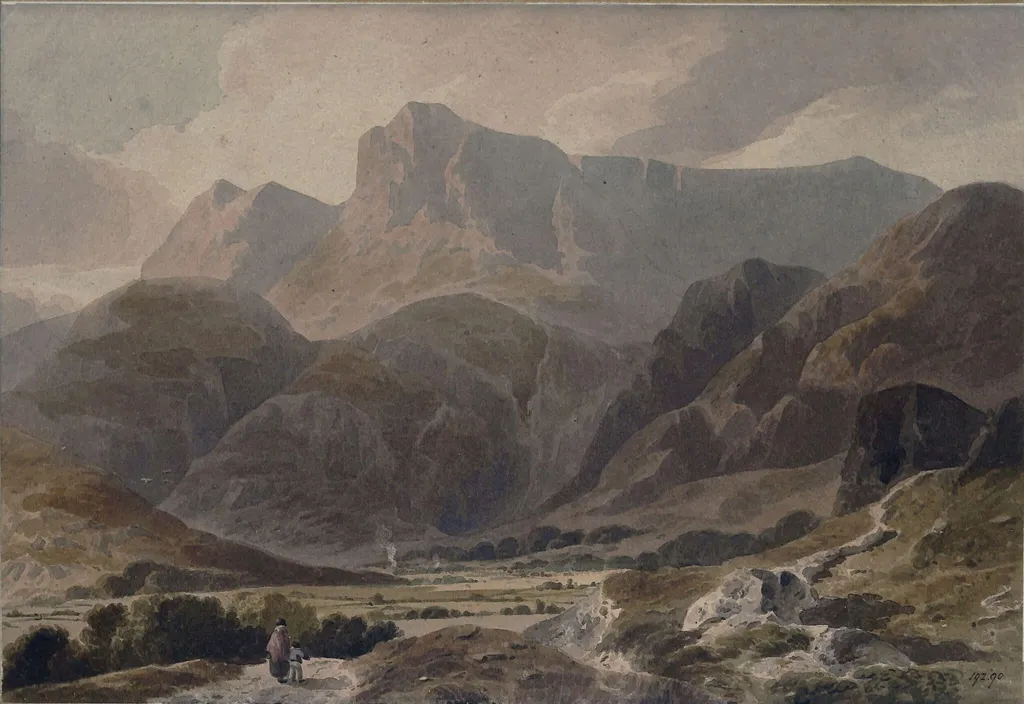
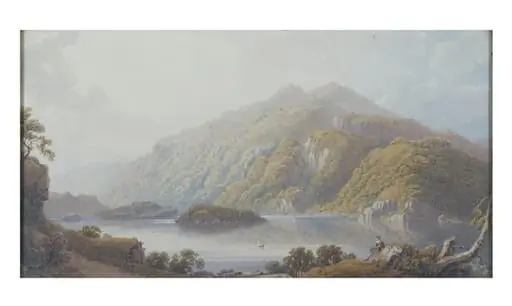
Langdale Pikes in Cumbria is a watercolor work on paper by the Romanticist artist George Fennel Robson. It dates from 1805 and is held in the collection of the Victoria and Albert Museum.
About this work
Overview
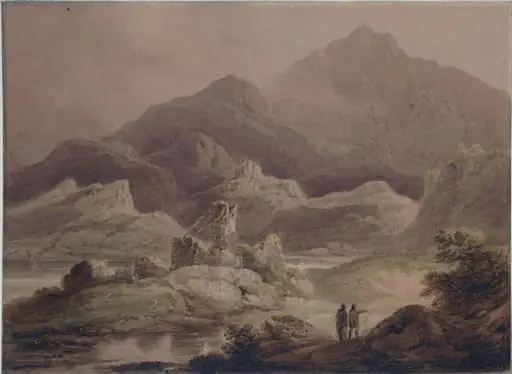
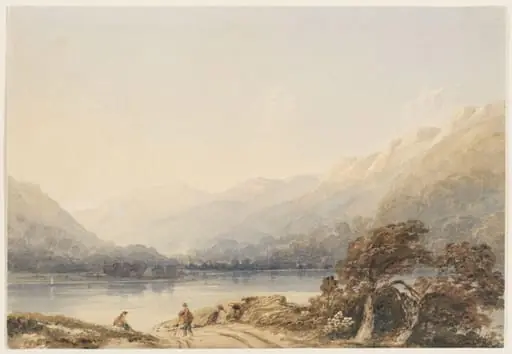
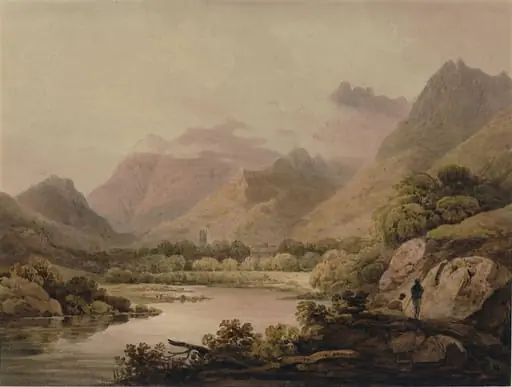
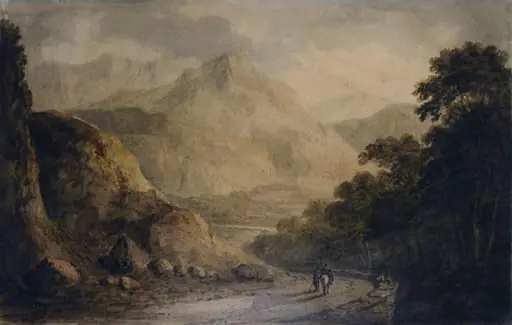
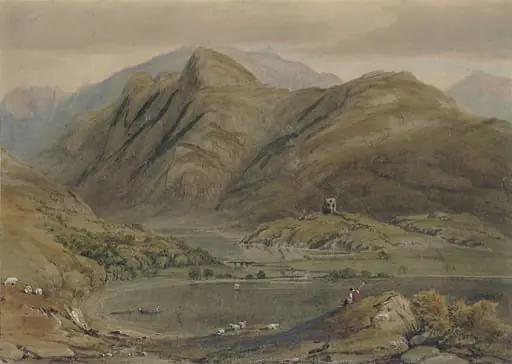
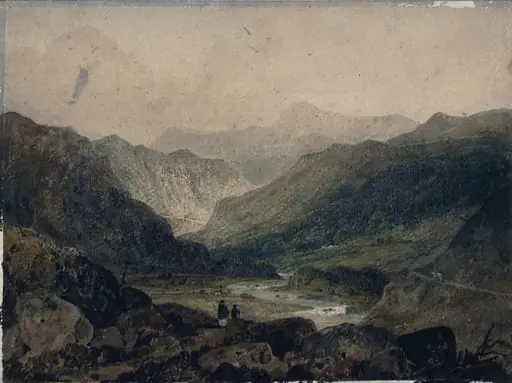
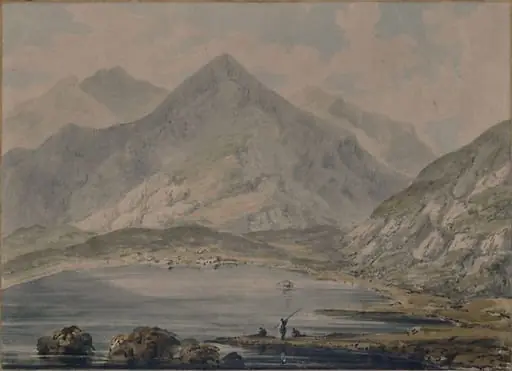
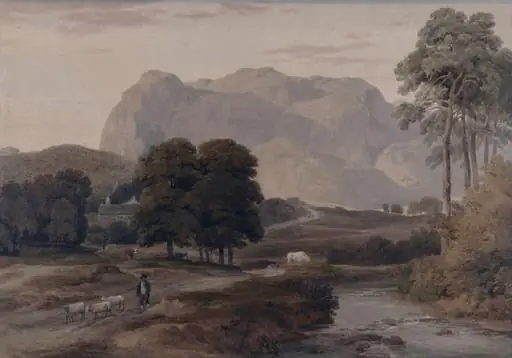
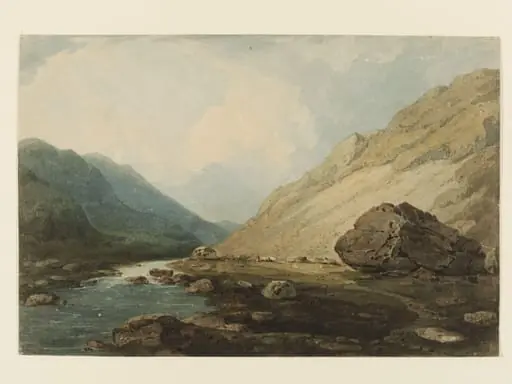
Painted in 1805 by George Fennel Robson, this watercolor depicts the Langdale Pikes, a rugged range in Cumbria, England. Executed in delicate washes, the work captures the quiet grandeur of the Lake District’s terrain. It resides in the Victoria and Albert Museum’s collection, where it stands as an example of early 19th-century British landscape watercolor.
Subject & Meaning
The painting presents a remote, untamed mountain landscape with sharp peaks and shadowed valleys. Two diminutive figures on a winding path emphasize the scale and solitude of nature. Rather than dramatizing the scene, Robson conveys a contemplative stillness, reflecting Romantic ideals that valued nature’s quiet power over human intervention.
Technique & Style
Robson employed soft, layered watercolor washes to suggest the texture of weathered rock and the subtle play of light across distant slopes. Muted earth tones dominate, with faint green hints indicating distant vegetation. The blended strokes avoid sharp outlines, creating a hazy, atmospheric effect that enhances the sense of depth and serenity.
History & Provenance
Created in 1805, the work entered the Victoria and Albert Museum’s collection as part of its broader acquisition of British watercolors from the Romantic era. Its provenance traces to Robson’s active period as a topographical artist, though specific ownership details prior to museum acquisition remain undocumented.
Context
This piece emerged during the height of British Romanticism, a movement that redefined landscape as a vessel for emotional and spiritual reflection. Artists like Robson responded to growing interest in the Lake District’s wild scenery, influenced by poets such as Wordsworth and the rise of picturesque tourism in northern England.
Legacy
Robson’s watercolor contributes to a broader tradition of British landscape watercolor that prioritized subtle tonality over dramatic effect. While not widely known today, his work exemplifies the quiet, observational approach that helped shape the medium’s development in the early 1800s, influencing later topographical and plein air practices.
Own this work as a print
Artist & collection