Artwork
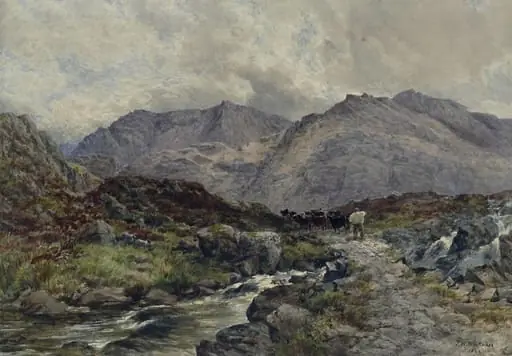
Landscape with bridge and cattle
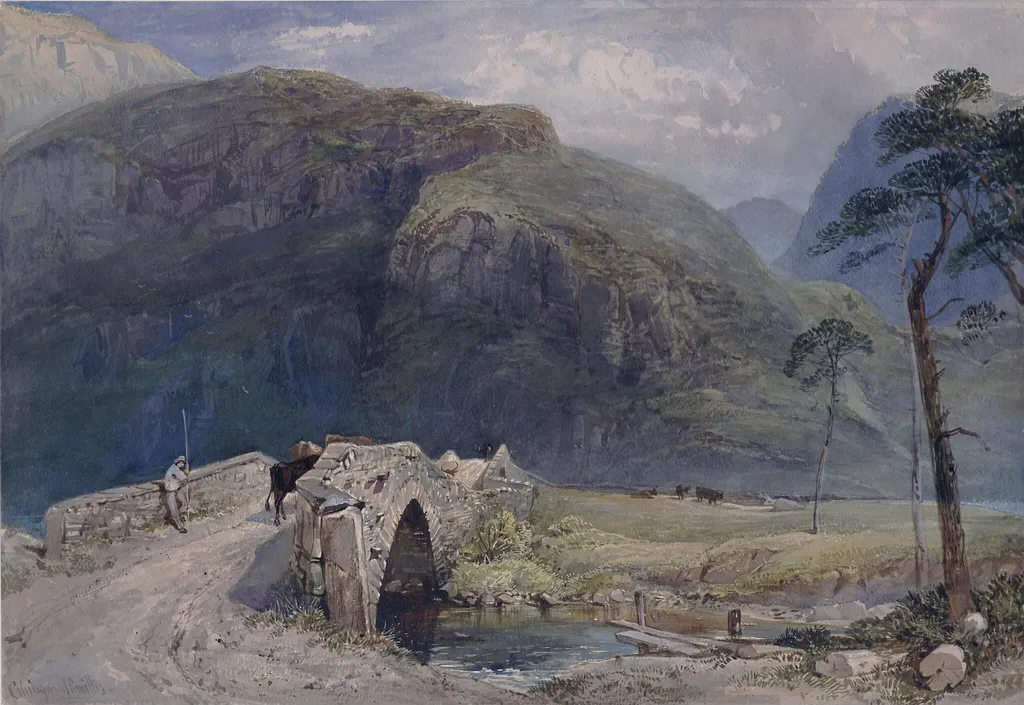
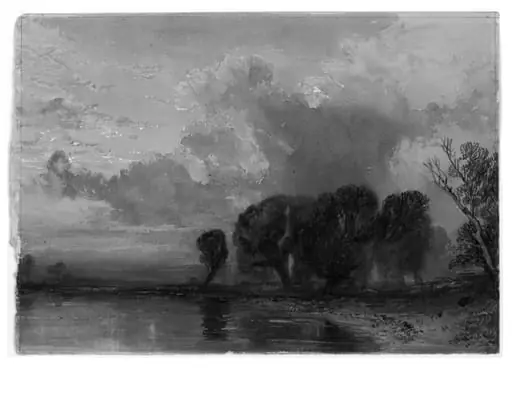
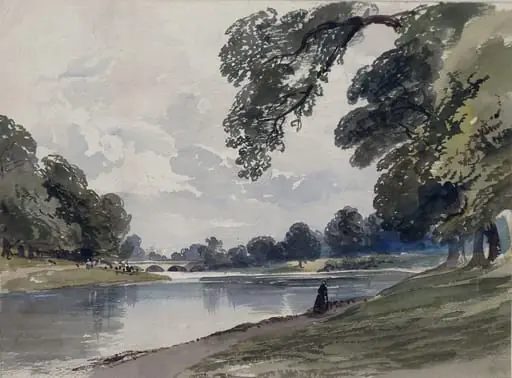
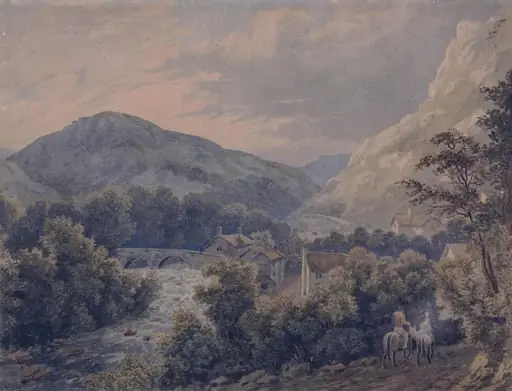
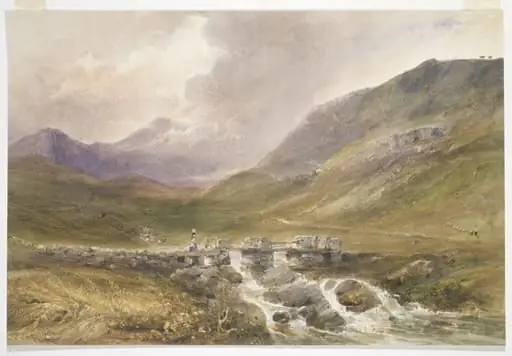
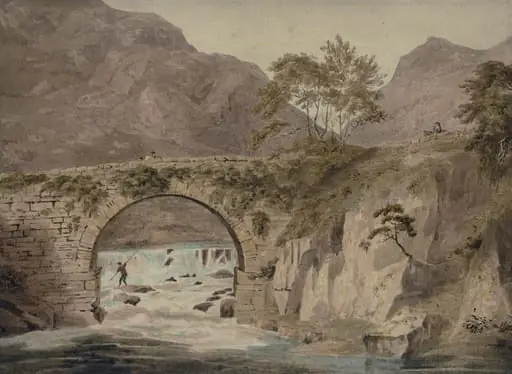
Landscape with bridge and cattle is a watercolor work on paper by the British Romanticist artist William Collingwood Smith. It dates from 1835 and is held in the collection of the Victoria and Albert Museum.
About this work
Overview
The composition is dominated by natural elements—cliffs, scattered vegetation, and grazing cattle—rendered with minimal detail and fluid brushwork.
This watercolour by William Collingwood Smith depicts a quiet rural scene centered on a weathered stone bridge spanning a rocky stream. The composition is dominated by natural elements—cliffs, scattered vegetation, and grazing cattle—rendered with minimal detail and fluid brushwork. The artist’s signature is present, affirming authorship. The work’s immediacy suggests it was executed outdoors, capturing a fleeting moment in the landscape.
Subject & Meaning
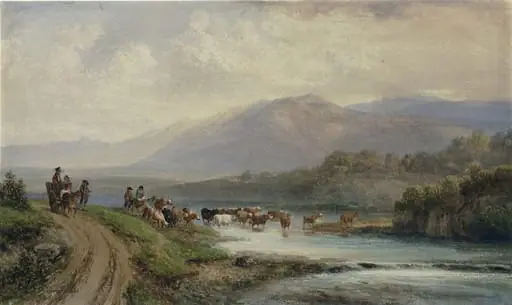
The scene presents an unidealized view of the countryside, where human presence is subtle: one figure leans on a staff, another rests on a stone, both absorbed in the environment. Cattle graze at a distance, reinforcing the theme of quiet coexistence between people and nature. There is no narrative drama—only a contemplative stillness that reflects an appreciation for ordinary rural life and the dignity of labor.
Technique & Style
Smith employs loose, rapid watercolour strokes to suggest form rather than define it. The sky is washed with pale tones, clouds barely hinted, while the cliffside uses layered washes to indicate texture and shadow. The bridge’s crumbling stonework is rendered with minimal line, relying on tone and edge to convey decay. This sketch-like approach prioritizes atmosphere over precision, aligning with 19th-century plein air practices.
History & Provenance
The work is attributed to William Collingwood Smith, a British artist active in the mid-1800s known for landscape watercolours. While specific ownership history is not documented, its style and subject align with works produced during the period when amateur and professional artists increasingly turned to watercolour for direct observation of nature. It likely originated as a personal study or travel sketch.
Context
Created during the height of Romanticism’s influence on British art, the piece reflects a broader cultural shift toward valuing natural landscapes as emotionally resonant spaces. Unlike grand, dramatic Romantic scenes, Smith’s work embraces quietude and restraint, mirroring a growing interest in intimate, everyday nature rather than sublime spectacle. This approach was common among watercolourists of the time.
Legacy
Smith’s watercolours, though not widely exhibited in major institutions, contribute to the broader record of 19th-century British landscape practice. His focus on modest, unadorned scenes helped expand the genre beyond idealized vistas, influencing later generations who sought authenticity in depiction. The work remains a quiet example of how watercolour could capture the essence of place with economy and sensitivity.
Own this work as a print
Artist & collection
Artist
English watercolourists of the 1800s captured parks and lanes with quiet detail. William Collingwood Smith painted Streatham Common in 1871 and earlier strolled Kensington Gardens in 1849, both in transparent washes on…