Artwork
An Old New England Orchard
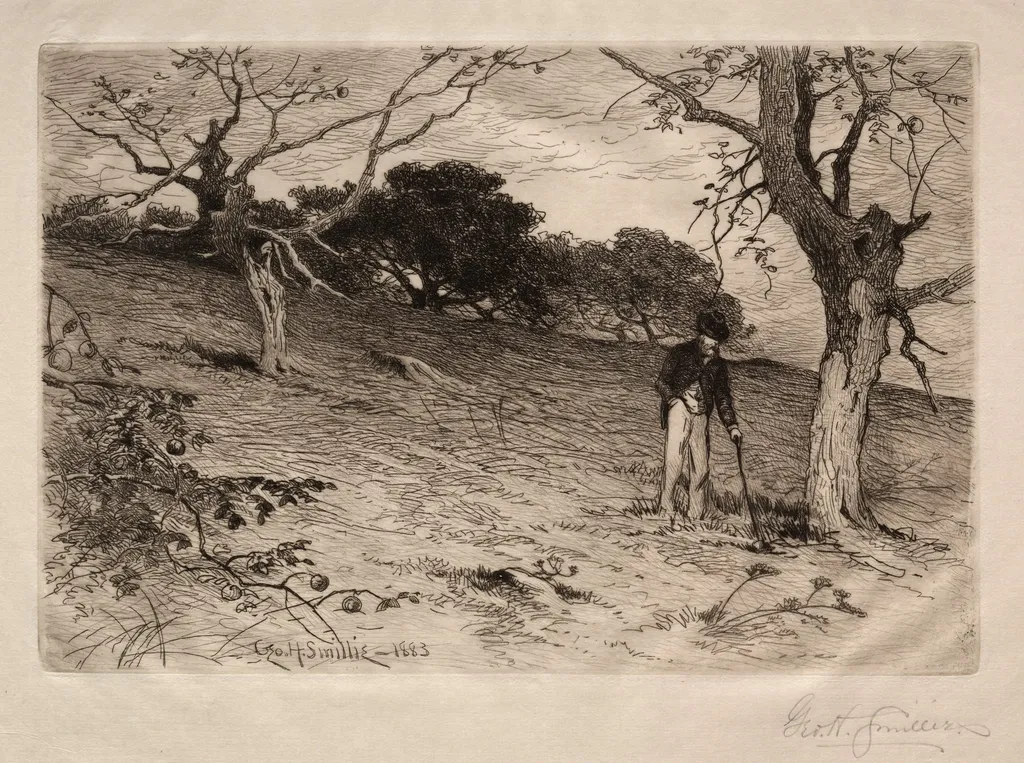
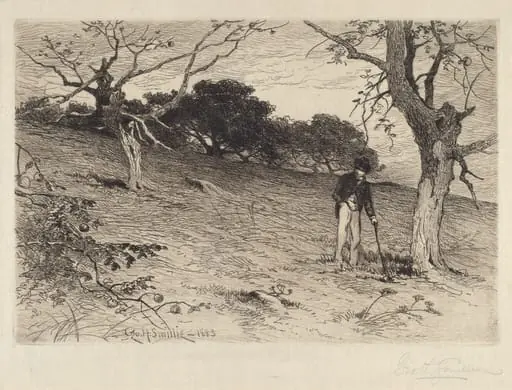
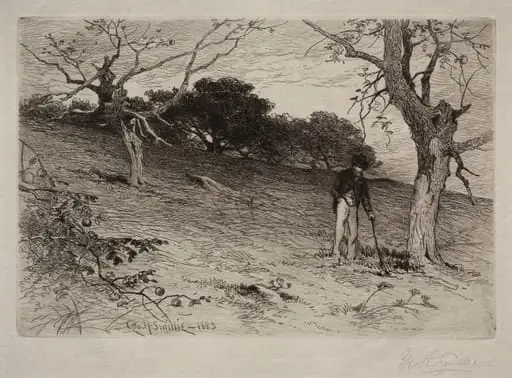
An Old New England Orchard is a print by the Impressionist artist George Henry Smillie. It dates from 1883 and is held in the collection of the Cleveland Museum of Art.
About this work
The artist used fine lines to show light and shadow, making the trees look rough and the air feel still.
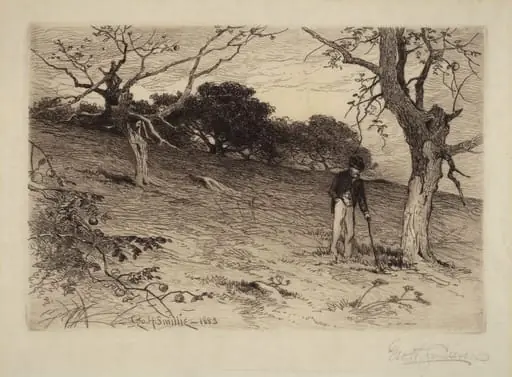
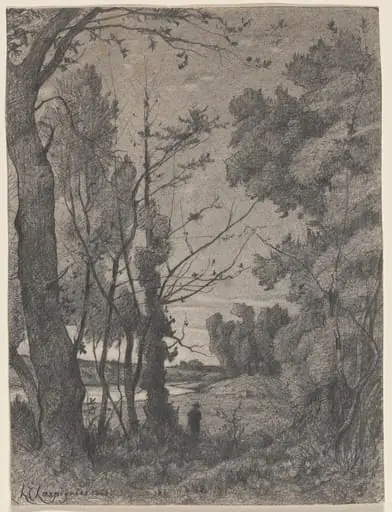
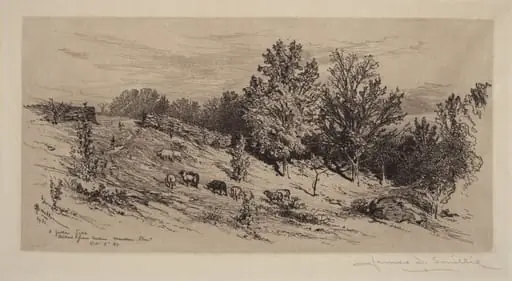
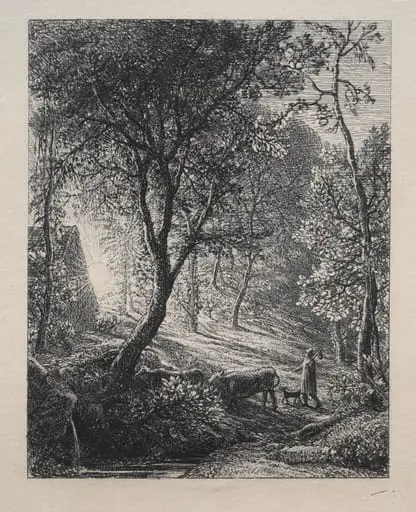
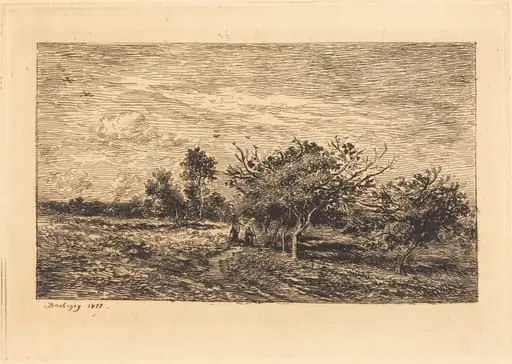
This etching shows a lone figure standing in a quiet orchard. The person is small against gnarled trees with twisted branches, their clothes simple and loose. The ground is covered in dry grass and scattered leaves, and the sky above is soft and blurred.
The artist used fine lines to show light and shadow, making the trees look rough and the air feel still. This style was common in late 19th-century American prints.
Next, look up George Henry Smillie (American, 1840–1921) to see more of his work.
Overview
An Old New England Orchard is an 1883 etching by American artist George Henry Smillie. It depicts a solitary figure amid a quiet orchard, rendered with delicate line work that emphasizes atmosphere over detail. The print is part of the collection at The Cleveland Museum of Art and reflects Smillie’s interest in rural American landscapes during the late 19th century. Its quiet composition and restrained tonality align with the aesthetic values of American printmaking of the period.
Subject & Meaning
The figure, small and undetailed, stands alone among ancient, twisted trees, suggesting solitude and the passage of time. The orchard, neither lush nor barren, evokes a sense of quiet endurance rather than abundance. The lack of narrative or dramatic action invites contemplation of human presence within the natural world, a theme common in American regional art of the era. The figure’s anonymity reinforces a universal, rather than personal, experience.
Technique & Style
Smillie employed fine, controlled etching lines to model form and suggest texture, capturing the gnarled bark of the trees and the dry, brittle ground with subtle gradations. The sky is softly blurred through minimal line density, creating a hazy, still atmosphere. This technique, rooted in the tradition of tonal etching, avoids bold contrasts in favor of muted transitions, enhancing the painting-like quietude of the scene. The approach reflects the influence of European etchers adapted to American subject matter.
History & Provenance
Created in 1883, the print was produced during Smillie’s active period as a printmaker and educator. It entered The Cleveland Museum of Art’s collection through documented acquisition, likely as part of broader efforts in the early 20th century to preserve American graphic arts. Smillie’s prints were circulated among collectors and institutions, contributing to the recognition of etching as a legitimate medium for American artists beyond painting and sculpture.
Context
In the late 19th century, American artists increasingly turned to domestic landscapes as subjects worthy of serious artistic treatment. Smillie’s work emerged alongside the American Etching Revival, which valued craftsmanship and intimate observation over grand narratives. This print reflects a broader cultural shift toward valuing rural life and natural quietude, countering the rapid industrialization of the era with contemplative imagery.
Legacy
Smillie’s etchings, including this one, helped establish a visual language for American rural scenes that prioritized mood over spectacle. Though less widely known today than his contemporaries, his technical precision and restrained compositions influenced later generations of printmakers interested in quiet, observational art. The work remains a quiet example of how printmaking could convey introspection and place with minimal means.
Artist & collection