Artwork
A Fallow Field
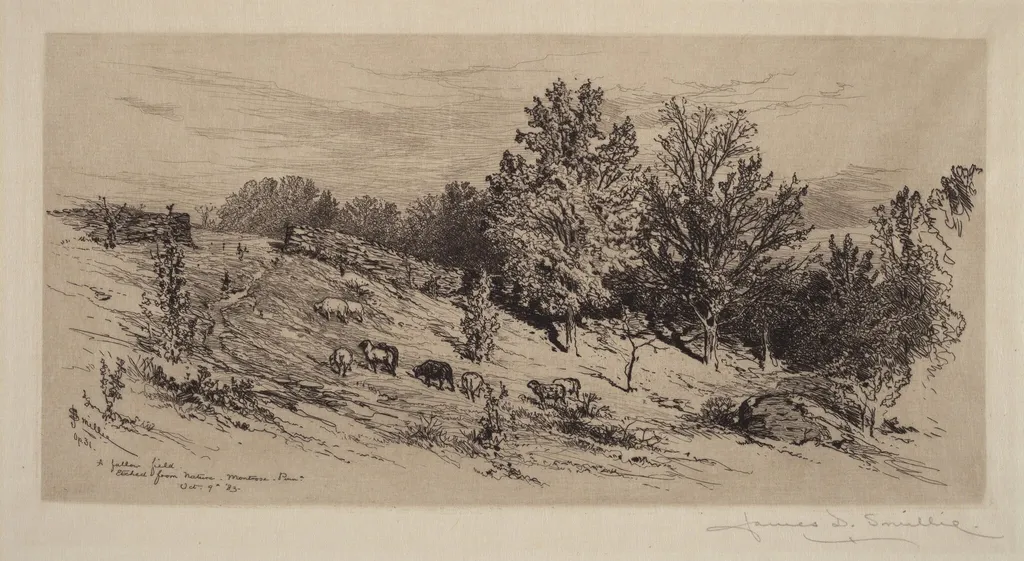
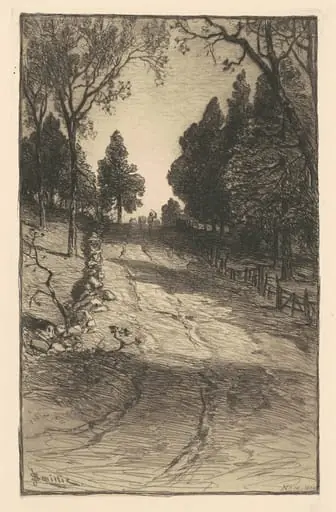
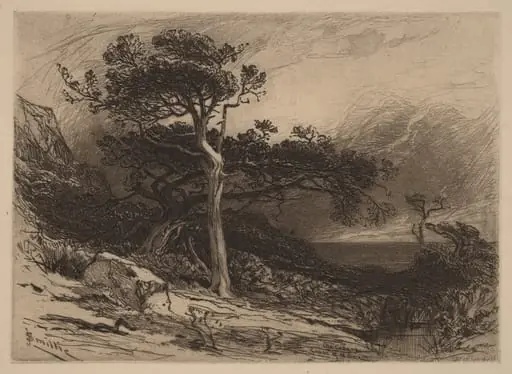
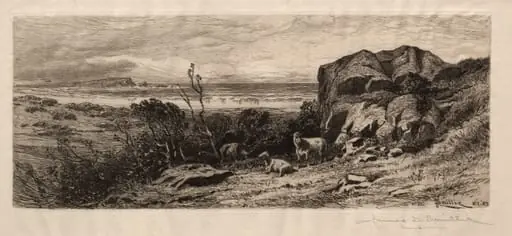
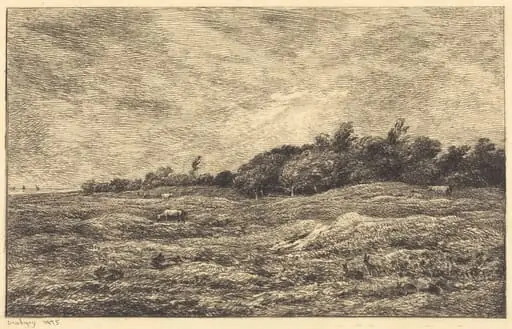
A Fallow Field is an ink print by the Impressionist artist James David Smillie. It dates from 1883 and is held in the collection of the National Gallery of Art.
About this work
Overview
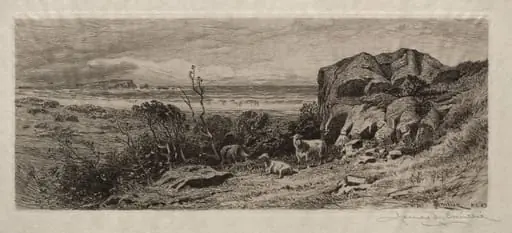
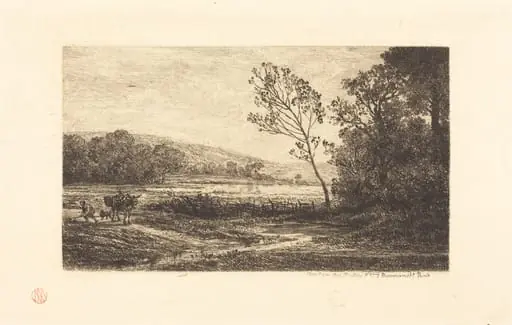
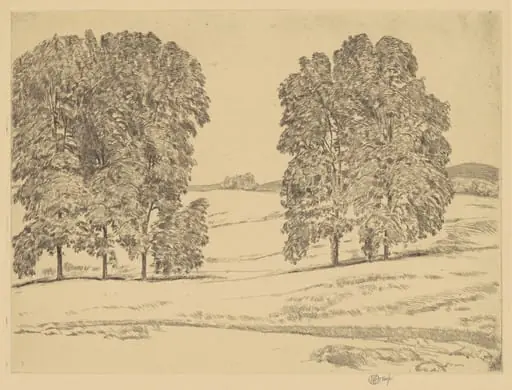
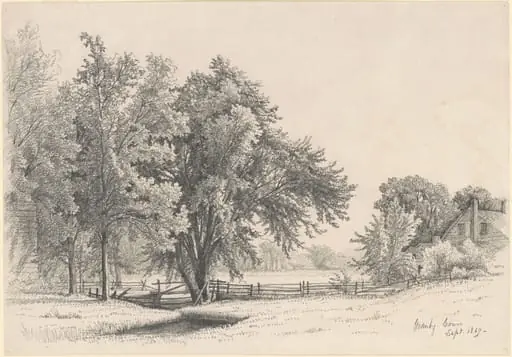
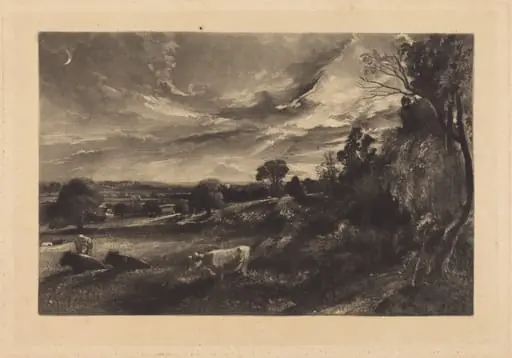
James David Smillie’s 1883 print, titled A Fallow Field, is an etching executed in black ink on wove paper. The composition presents a gently sloping countryside, punctuated by scattered trees and low shrubs, under a cloud‑filled sky. In the lower foreground, a small herd—interpreted as cows or horses—feeds on the grass, lending the scene a quiet, agrarian atmosphere.
Subject & Meaning
The work captures a moment of pastoral stillness, emphasizing the relationship between land and livestock. By placing the animals within an open, cultivated field, Smillie underscores themes of rural labor and seasonal rest, while the muted sky and modest vegetation suggest a tranquil, perhaps contemplative, interlude in the agricultural calendar.
Technique & Style
Smillie employed traditional intaglio etching, allowing fine lines to render delicate tree branches and the subtle contours of the animals. The uniform black ink on the smooth surface of wove paper creates tonal depth, with varying line density suggesting texture in foliage and the undulating ground, characteristic of 19th‑century printmaking that balances detail with atmospheric suggestion.
History & Provenance
Created in 1883, A Fallow Field reflects Smillie’s mature period, during which he produced numerous landscape prints. While specific ownership records are limited, the piece has been catalogued among his etchings that were circulated through print dealers and exhibited in late‑19th‑century British art societies, contributing to his reputation as a skilled printmaker.
Artist & collection

Artist
James David Smillie was an American artist, cofounder of the American Watercolor Society and New York Etching Club. His brother was painter George Henry Smillie.