Artwork
Distant View of Snowdon
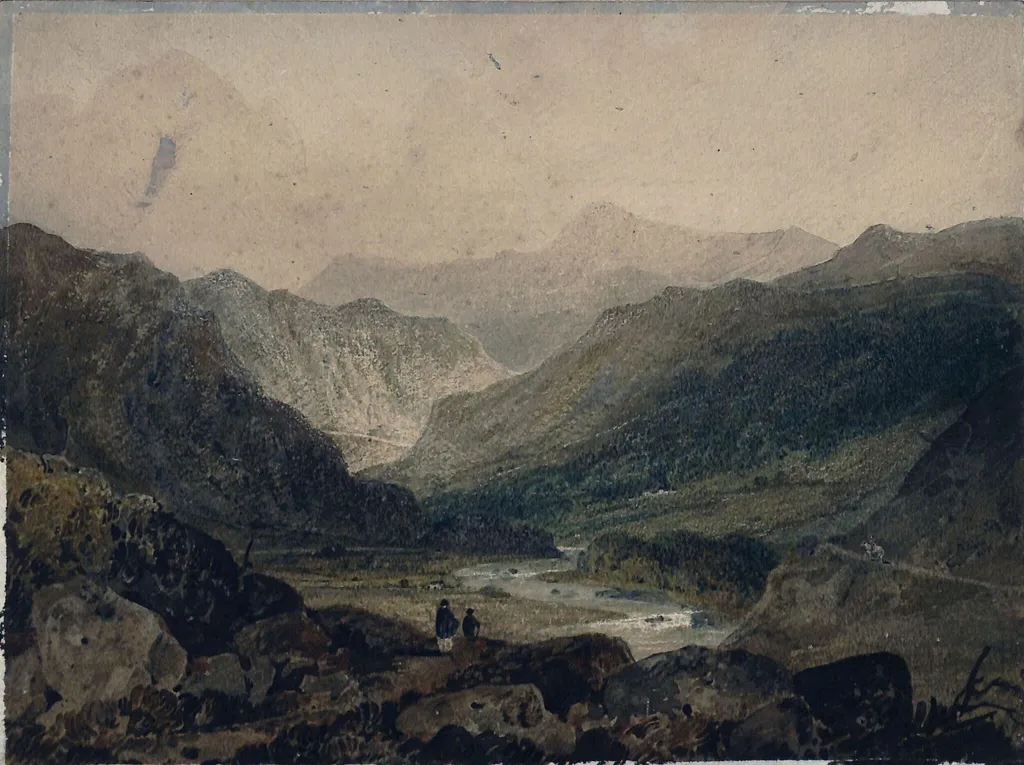
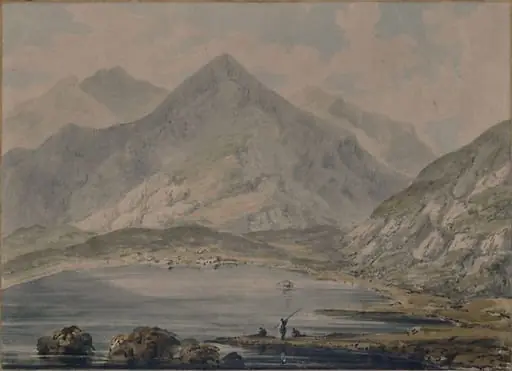
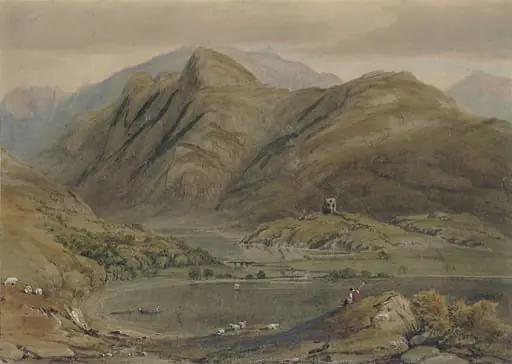
Distant View of Snowdon is a watercolor work on paper by the Neoclassicist artist George Holmes. It dates from 1796 and is held in the collection of the Victoria and Albert Museum.
About this work
Overview
The composition emphasizes spatial depth through muted tones and soft-edged forms, with minimal detail in the far mountains.
Painted in 1796, this watercolour by George Holmes presents a distant panorama of Snowdon, Wales’ highest peak. The composition emphasizes spatial depth through muted tones and soft-edged forms, with minimal detail in the far mountains. The artist’s initials and the title are inscribed on the surface, confirming authorship and intent. The work belongs to a tradition of topographical watercolours that valued quiet observation over dramatic effect.
Subject & Meaning
The scene features two small figures near a winding river, their scale underscoring the vastness of the landscape. The figures are not central but integrated into the environment, suggesting a contemplative relationship between humans and nature. The absence of human structures or activity reinforces a sense of solitude, aligning with early Romantic sensibilities that valued nature’s quiet endurance over human intervention.
Technique & Style
Holmes employed diluted watercolour washes to create hazy, atmospheric transitions between land and sky. The hills are rendered with blurred contours, avoiding sharp definition to suggest distance. Palette choices—earthy browns, subdued greens, and pale blues—enhance the mood of stillness. The technique prioritizes tonal gradation over detail, reflecting a preference for emotional resonance over topographical precision.
History & Provenance
Created in 1796, the work is among Holmes’s lesser-known watercolours, likely made for private circulation rather than public exhibition. Its survival suggests it was preserved within a collector’s circle, possibly connected to Welsh or English antiquarian interests. No major public records document its early ownership, and it remains a quiet example of late 18th-century amateur landscape practice.
Context
In the 1790s, watercolour was gaining traction as a medium for landscape study, particularly among British artists and amateurs. While contemporaries like Turner pushed toward dramatic effects, Holmes’s approach was more restrained, reflecting regional tastes that favored calm, observed nature over theatricality. His work aligns with the broader trend of documenting British scenery without overt sentimentality.
Legacy
Holmes’s painting contributes to a body of modest, unassuming watercolours that document the British landscape before the rise of the Romantic sublime. Though not widely exhibited or reproduced, such works offer insight into how ordinary viewers engaged with natural scenery. They represent a quieter, more personal strand of landscape art that persisted alongside more celebrated movements.
Own this work as a print
Artist & collection
Artist
This British artist painted Welsh landscapes in watercolour during the late 1700s.

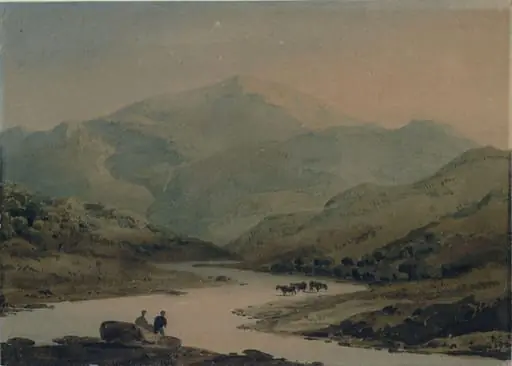 River scene: cattle in shallows
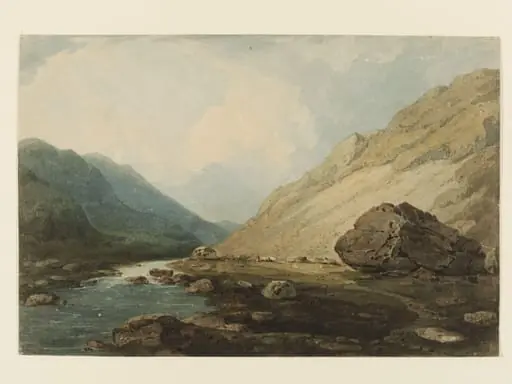 View in the Pass of Llanberis, Wales
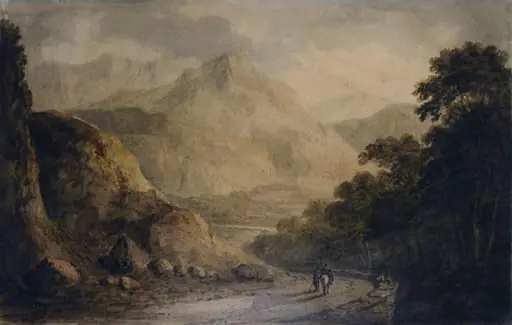 Road leading to Pont Aberglaslyn: View looking into the Vale of Festiniog, North Wales
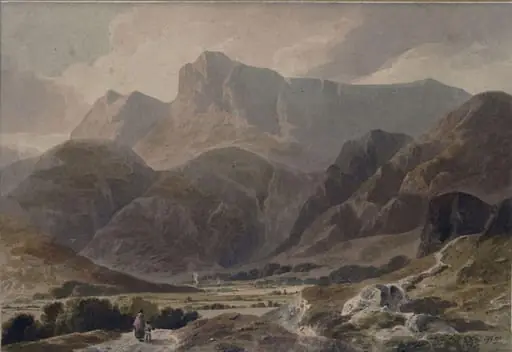 Langdale Pikes in Cumbria
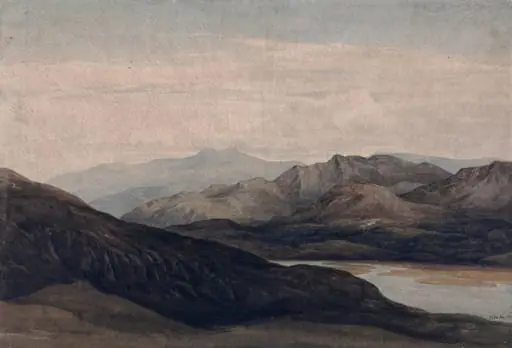 On the river Mawddach, Merionethshire, with Cader Idris in the distance
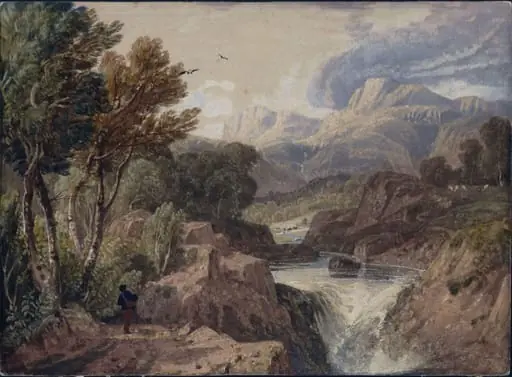 Landscape
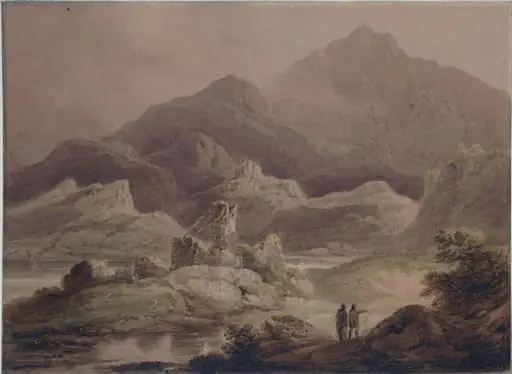 Loch Awe and Ben Cruachan
 Llanberis, North Wales