Artwork
View of Snowdon
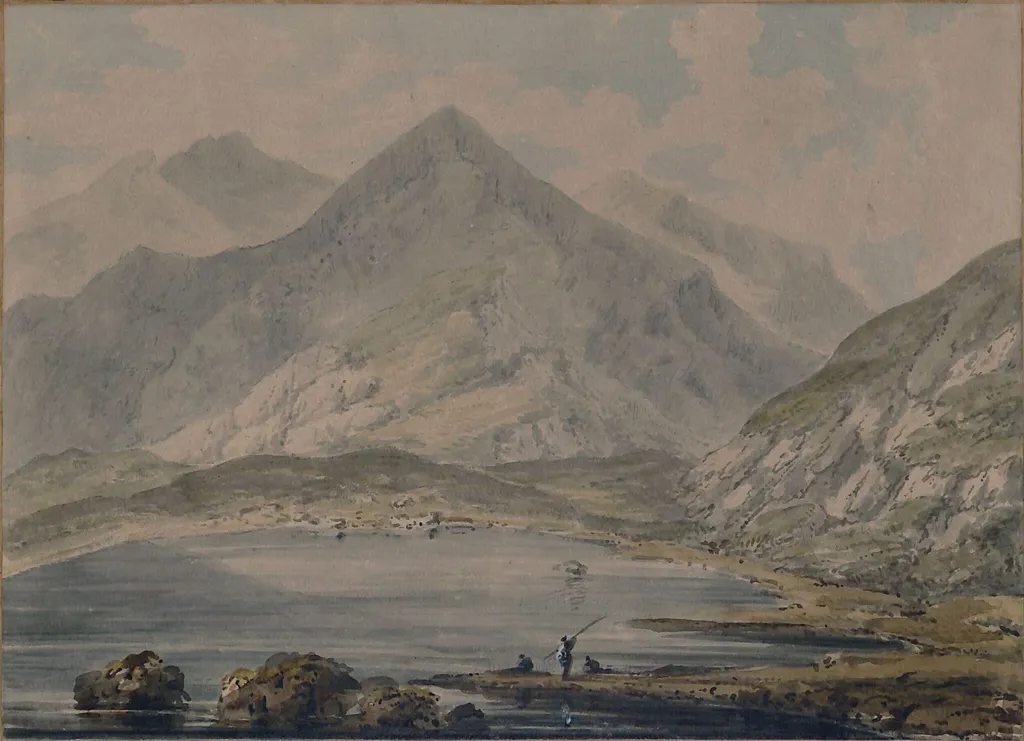
View of Snowdon is a watercolor work on paper by the British Romanticist artist Richard Salvey Booth. It dates from 1800 and is held in the collection of the Victoria and Albert Museum.
About this work
Overview
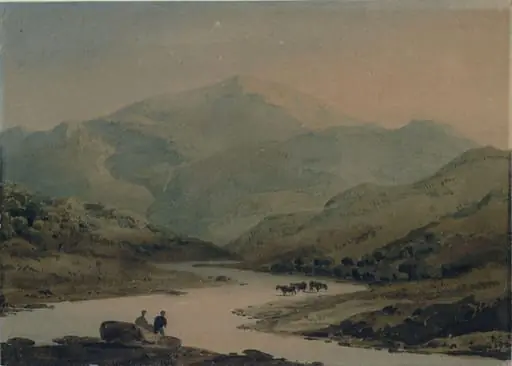
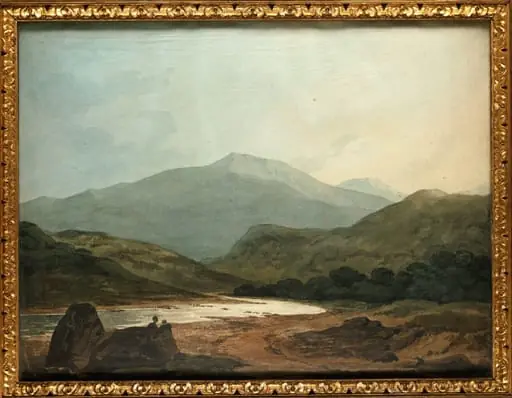
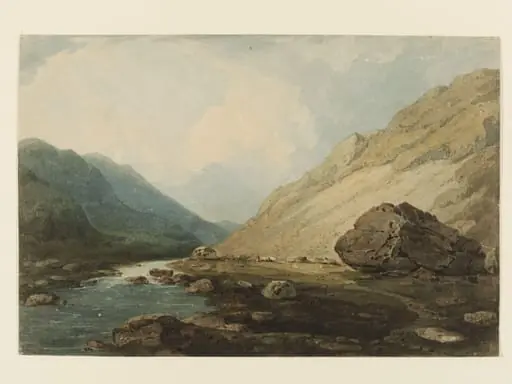
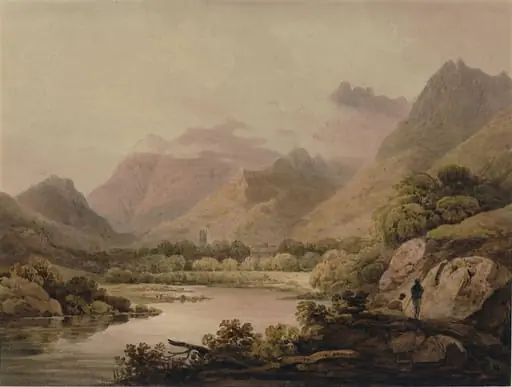
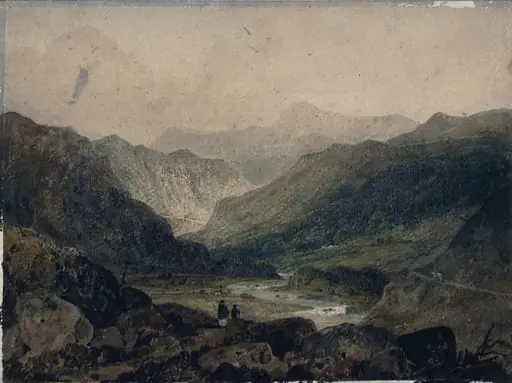
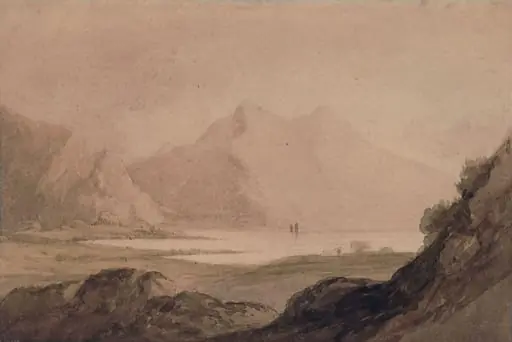
Created in 1800, this watercolour by Richard Salvey Booth captures a quiet mountain scene in Wales. The composition centers on Snowdon, its jagged peak rising above a still lake. The painting’s modest scale and restrained palette reflect the intimate, observational approach common in early 19th-century topographical watercolours, emphasizing atmosphere over dramatic effect.
Subject & Meaning
The painting presents Snowdon not as a symbol of grandeur but as a quiet, enduring presence. A solitary figure near the lakeshore, holding a staff, suggests quiet contemplation or travel, reinforcing the scene’s stillness. The absence of human activity beyond this single form invites a meditative response, aligning with Romantic-era sensibilities toward nature’s subtlety rather than its power.
Technique & Style
Soft gradations in the sky and distant peaks suggest mist, while the lake’s reflection is rendered with minimal detail, enhancing the sense of calm.
Booth employed translucent watercolour washes to achieve a hazy, atmospheric effect. Soft gradations in the sky and distant peaks suggest mist, while the lake’s reflection is rendered with minimal detail, enhancing the sense of calm. The rocky terrain is built with layered, dry-brush strokes, creating texture without harsh lines, characteristic of delicate topographical watercolour practice of the period.
History & Provenance
The work was produced during a period when British artists increasingly turned to domestic landscapes for study and display. While its early ownership is undocumented, its survival in institutional collections suggests it was valued for its precise observation and technical restraint. It is now held in the Victoria and Albert Museum’s collection of British watercolours.
Context
In the early 1800s, watercolour was gaining recognition as a medium for serious artistic expression, particularly in recording natural scenery. Artists like Booth contributed to a growing tradition of topographical art, where accuracy and mood coexisted. This work reflects a shift from purely cartographic aims toward a more personal, sensory engagement with landscape.
Legacy
Booth’s View of Snowdon exemplifies a quiet, understated strand of British landscape art that prioritized observation over spectacle. Though not widely known today, such works helped shape the aesthetic foundations of later landscape traditions, influencing how natural forms were rendered with sensitivity and restraint in 19th-century British art.
Own this work as a print
Artist & collection