Artwork
The Rigor of the Game, Kearsarge Hall, North Conway, New Hampshire
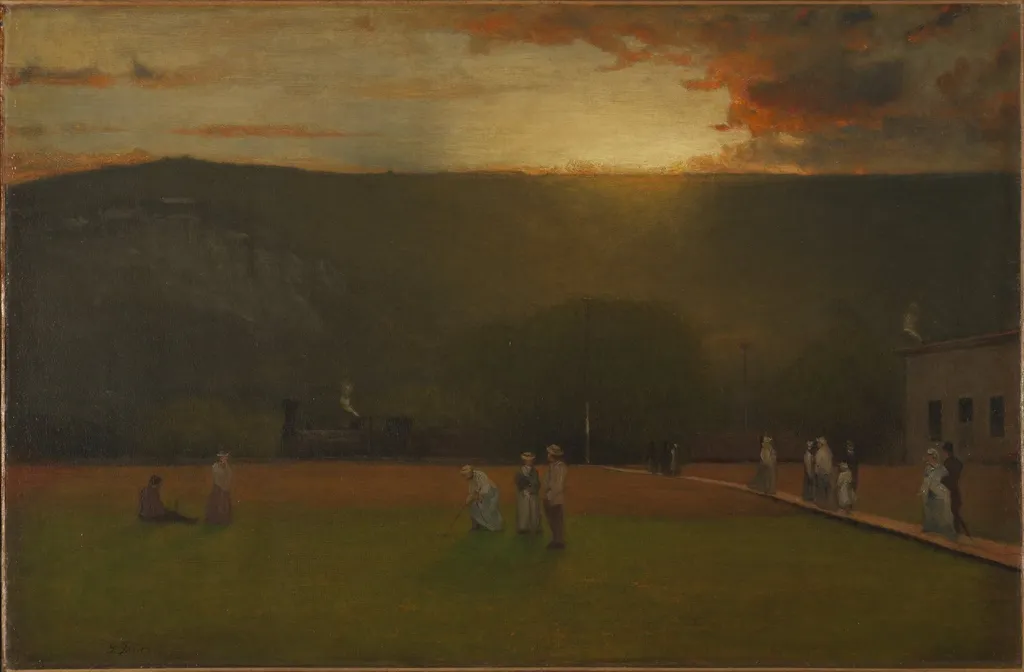
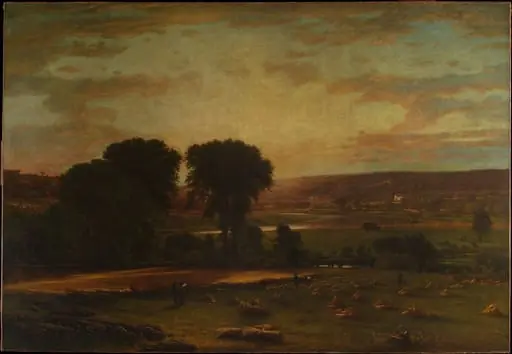
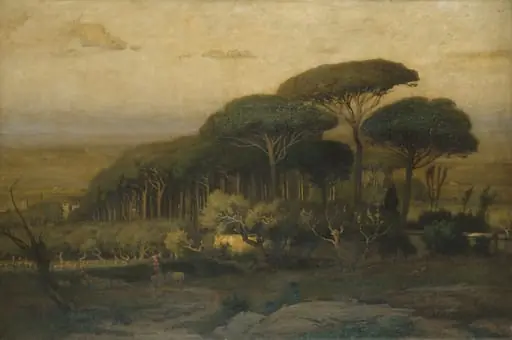
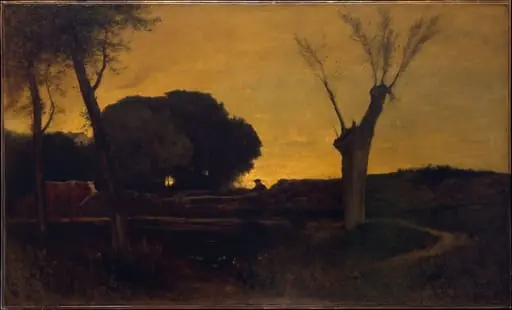
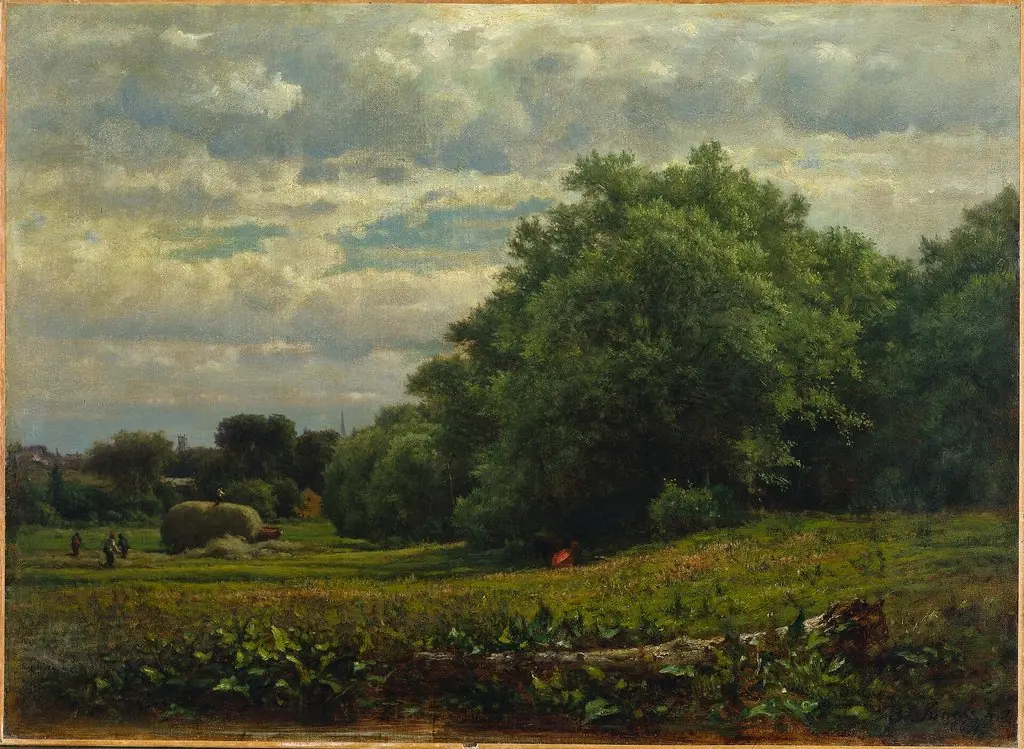
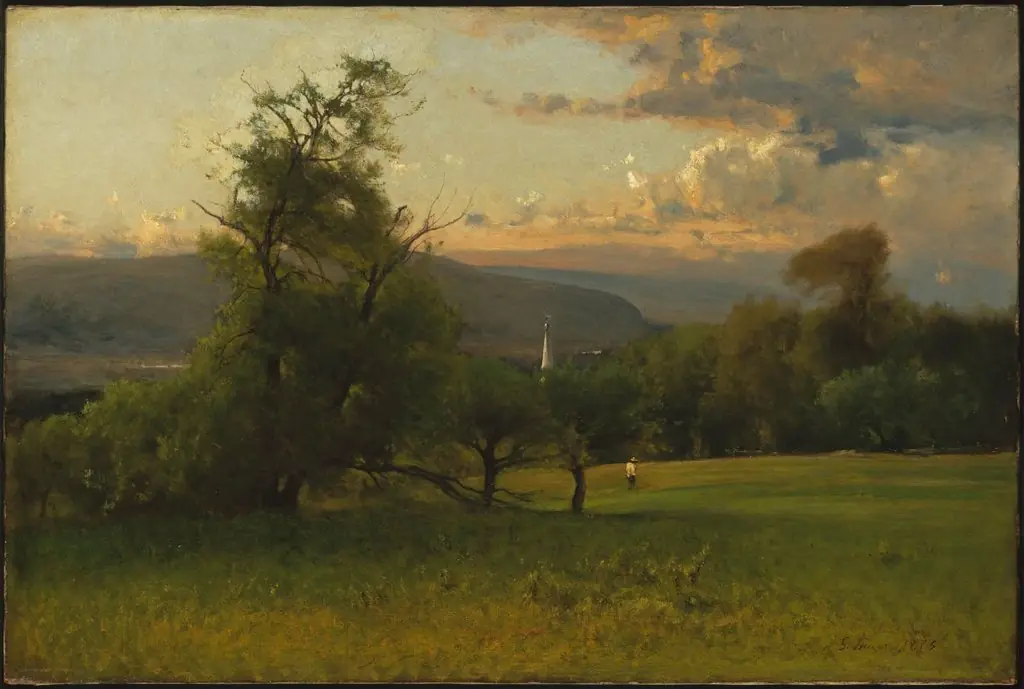
The Rigor of the Game, Kearsarge Hall, North Conway, New Hampshire is an oil painting by the American Impressionist artist George Inness. It dates from 1875 and is held in the collection of the Brooklyn Museum.
About this work
Overview
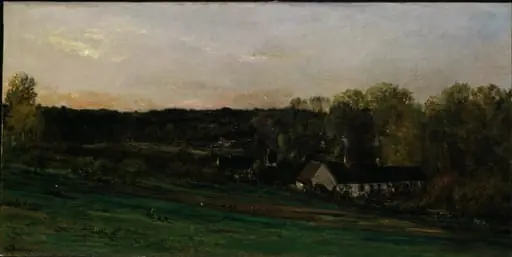
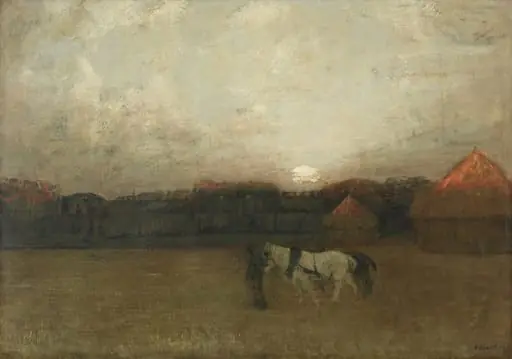
It captures a quiet evening scene at Kearsarge Hall in North Conway, New Hampshire, where figures are dispersed across a sloping field.
Painted in 1875, *The Rigor of the Game* is an oil on canvas landscape by American artist George Inness. It captures a quiet evening scene at Kearsarge Hall in North Conway, New Hampshire, where figures are dispersed across a sloping field. The work reflects Inness’s mature style, moving beyond the detailed realism of the Hudson River School toward a more atmospheric and emotionally resonant approach. It is now part of the Brooklyn Museum’s collection.
Subject & Meaning
The painting portrays a leisurely game unfolding at dusk, with scattered figures engaged in quiet activity near a building with a sloped roof. One individual sits alone on the grass, suggesting solitude amid social presence. The scene avoids dramatic action, instead emphasizing stillness and contemplation. Inness’s interest in Swedenborgian spirituality may inform this sense of quiet reverence, where nature and human presence coexist in subdued harmony.
Technique & Style
Inness employed soft, blended brushwork to dissolve edges between land and sky, creating a hazy, luminous atmosphere. The warm hues of the setting sun contrast with the darker, muted tones of the foreground, enhancing spatial depth through chiaroscuro. Rather than sharp detail, he favored tonal transitions to evoke mood. This approach aligns with his departure from Hudson River School precision toward a more impressionistic, emotionally charged aesthetic.
History & Provenance
Created during Inness’s period of deepening spiritual inquiry and European influence, the painting emerged from his time in New England, where he frequently sought inspiration in rural landscapes. It entered the Brooklyn Museum’s collection in the early 20th century, where it has remained as part of a broader effort to document the evolution of American landscape painting beyond topographical representation.
Context
In the 1870s, American artists were increasingly exploring subjective experience over literal depiction. Inness’s work responded to this shift, integrating philosophical ideas from Swedenborg with the visual language of European tonalism. While often associated with American Impressionism, his style was more introspective than the French movement, favoring mood over optical effects and spiritual resonance over fleeting light.
Legacy
The painting exemplifies Inness’s role in transitioning American landscape art from realism toward emotional and spiritual expression. His use of atmosphere and subdued color influenced later generations of tonalists and early modernists. Though less widely known than his contemporaries, his work contributed to a quieter, more introspective strand in American art that valued inner experience over spectacle.
Artist & collection

Artist
George Inness (May 1, 1825 – August 3, 1894) was an American landscape painter. Now recognized as one of the most influential American artists of the nineteenth century, Inness was influenced by the Hudson River School…