Artwork
George III (1738–1820), When Prince of Wales
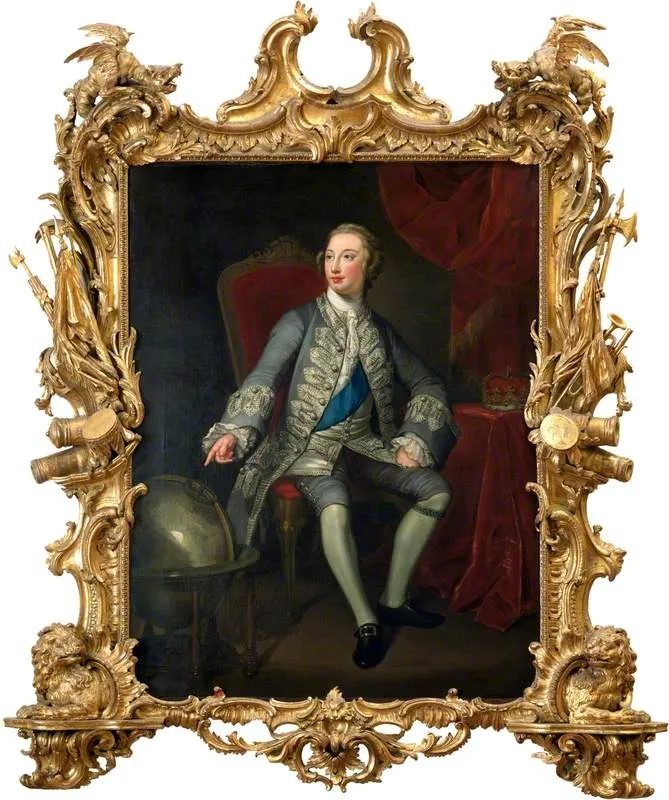
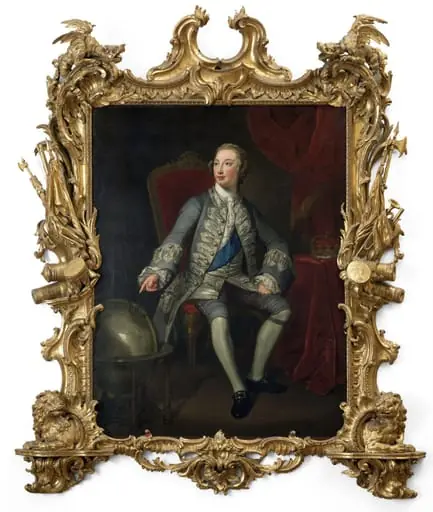
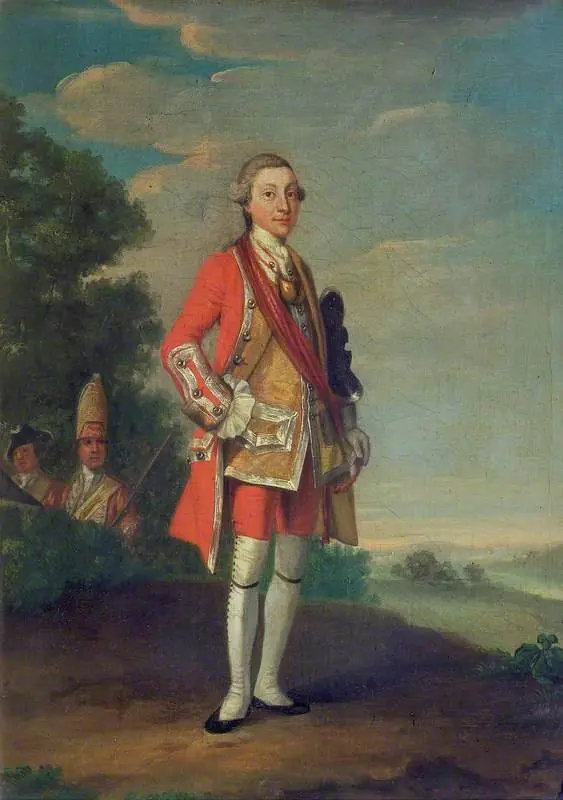
George III (1738–1820), When Prince of Wales is an oil painting by the Rococo painting artist George Knapton. It dates from 1751 and is held in the collection of the Victoria and Albert Museum.
About this work
Overview
This oil painting, created by George Knapton in 1751, portrays George III of Great Britain during his tenure as Prince of Wales. The work is characteristic of the Rococo style and falls within the portrait genre.
Subject & Meaning
The subject, a young George III, is depicted in formal attire, including a dark blue coat with silver buttons, white stockings, and black shoes. Symbolic elements, such as a globe to his left, suggest his future global responsibilities. His relaxed yet contemplative pose, with a hand resting on the chair arm, conveys a sense of introspection.
Technique & Style
Knapton employs chiaroscuro, contrasting a dark background with the subject's illuminated face, to draw attention to George's features. The Rococo influence is evident in the ornate, swirling carvings of the gold frame and the luxurious red curtain behind the prince.
History & Provenance
George Knapton, who later served as Surveyor and Keeper of the King’s Pictures (1765–1778), created this portrait. It is now part of the collection at the Victoria and Albert Museum.
Context
Commissioned during George's principality, the painting reflects the artistic tastes of the mid-18th century British royalty, blending formal portraiture with subtle hints at the subject's impending royal duties.
Legacy
While not widely renowned beyond its historical significance, the portrait provides valuable insight into 18th-century British royal portraiture and the artistic preferences of the era. Its inclusion in the Victoria and Albert Museum underscores its importance as a historical artifact.
Artist & collection

Artist
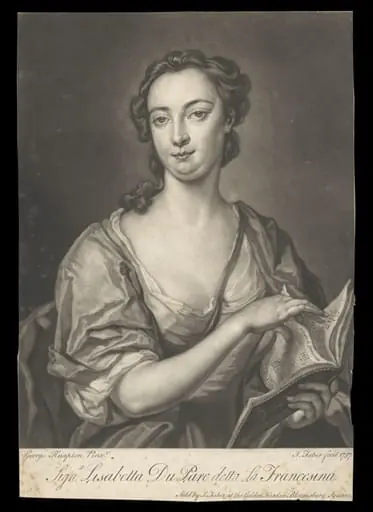
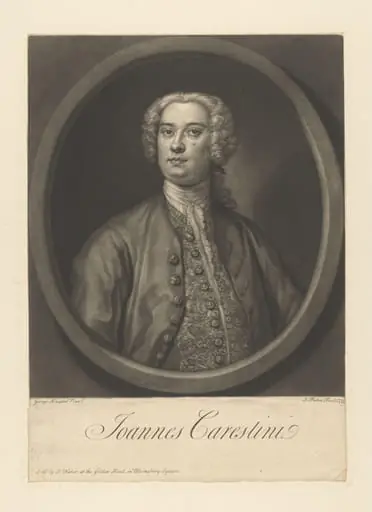
George Knapton (1698 – December 1778) was an English portrait painter who specialised in portrait painting.

 George III when Prince of Wales
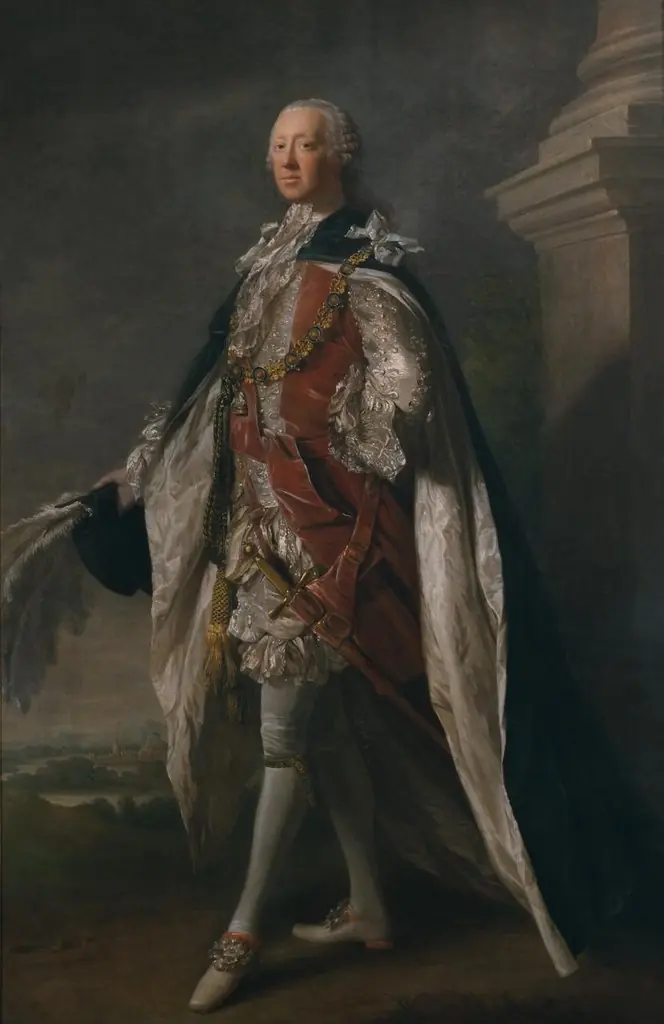 Richard Grenville, 2nd Earl Temple
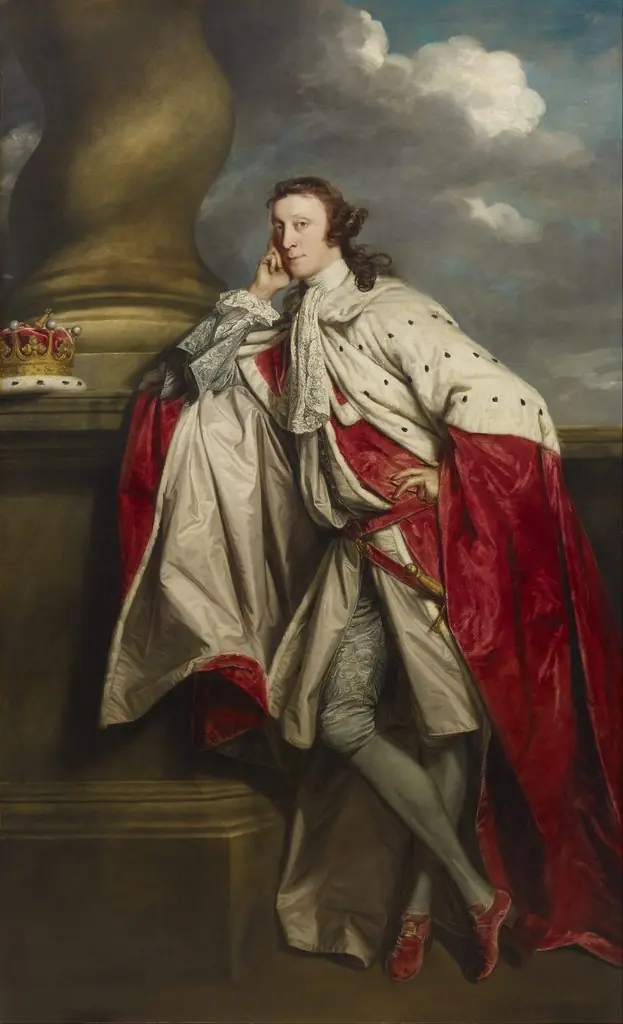 James Maitland, 7th Earl of Lauderdale
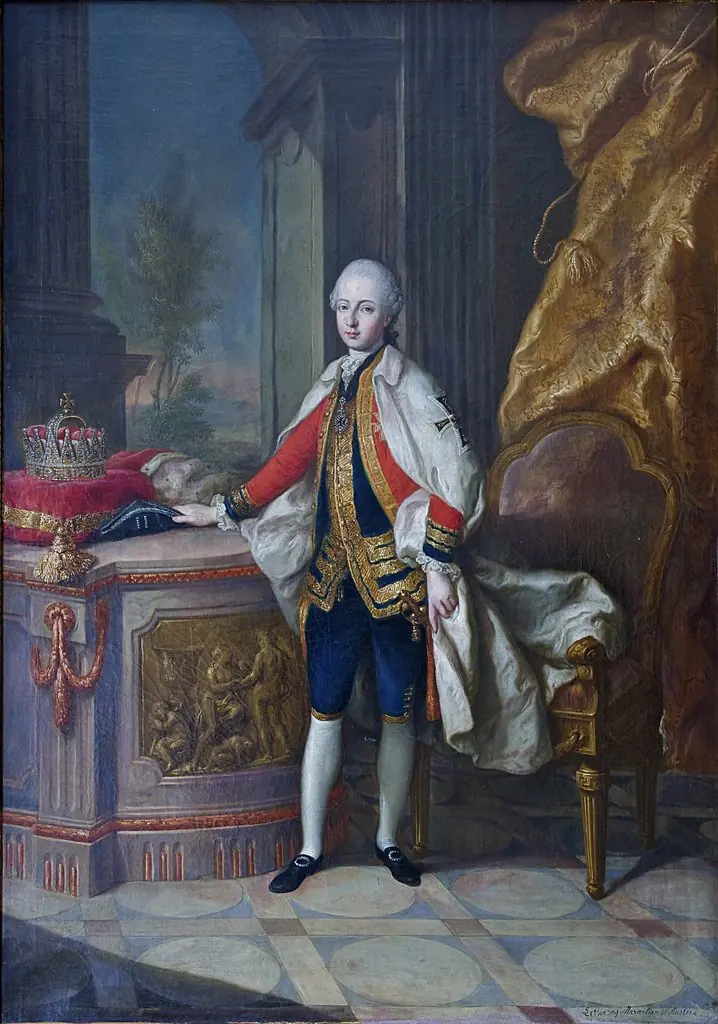 Maximilian, Archduke of Austria (1756-1801)
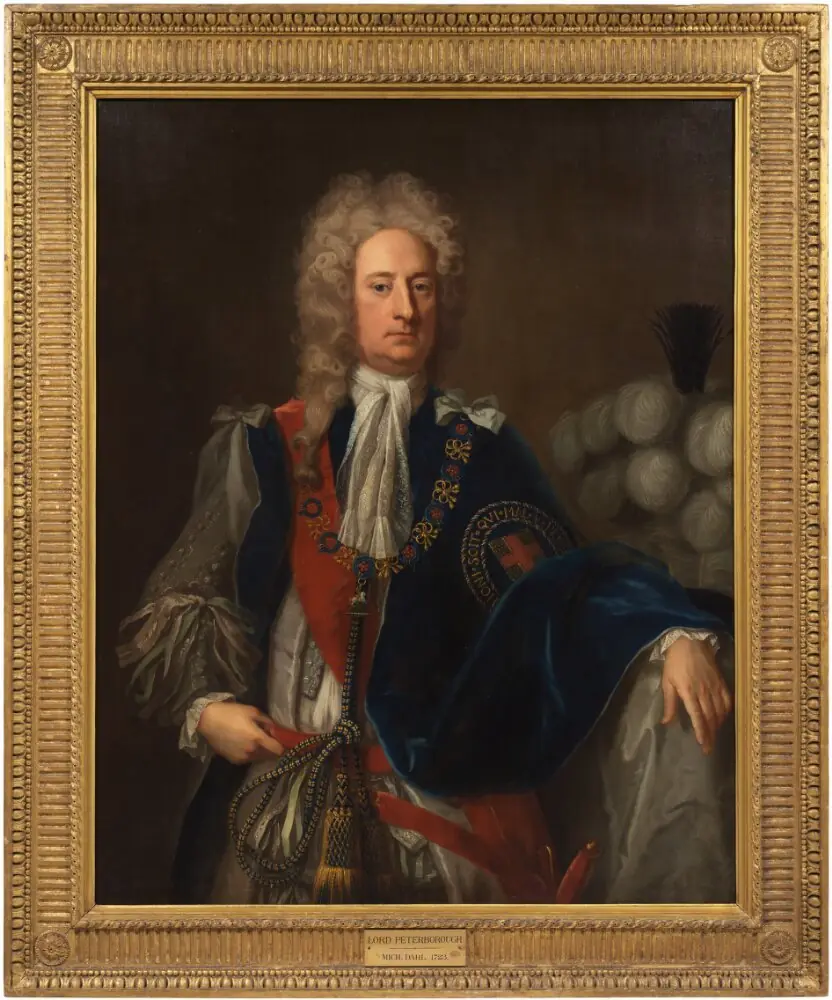 Charles Mordaunt (1658–1735), 3rd Earl of Peterborough and 1st Earl of Monmouth
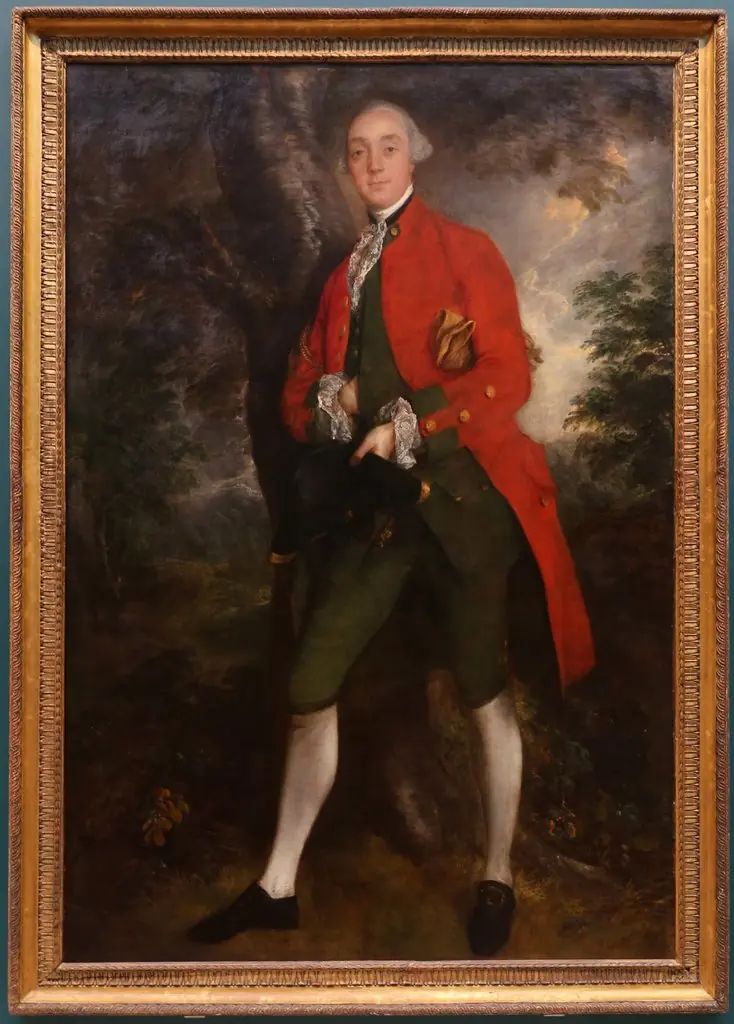 General James Johnston (1721-1797)
 William Augustus (1721–1765), Duke of Cumberland, Son of George II
 Georg II August Kurfürst von Hanover und König von Großbritannien (1683-1760)