Artwork
Untitled
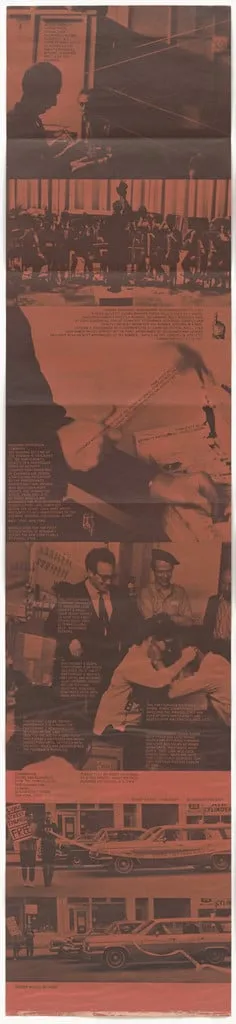
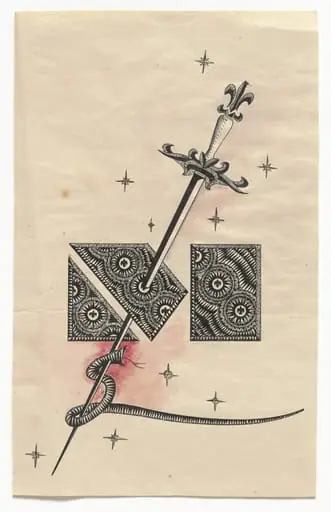
Untitled is an ink print by George Maciunas. It dates from 1965 and is held in the collection of the Museum of Modern Art.
About this work
Overview
Created in 1965, this offset lithograph is one of many graphic works by George Maciunas produced during the height of Fluxus activity.
Created in 1965, this offset lithograph is one of many graphic works by George Maciunas produced during the height of Fluxus activity. As a key organizer of the movement, Maciunas used printmaking to distribute experimental art widely. The piece is part of a series of artist multiples designed to challenge traditional notions of originality and ownership in art, aligning with Fluxus’s ethos of accessibility and anti-commercialism.
Subject & Meaning
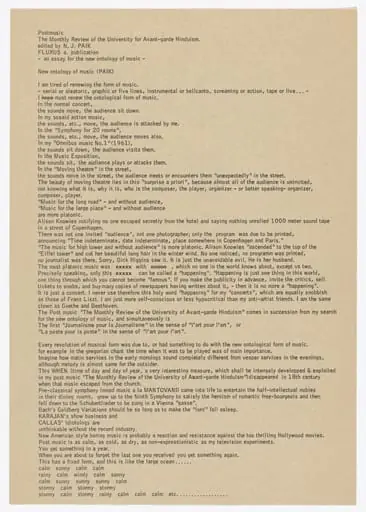
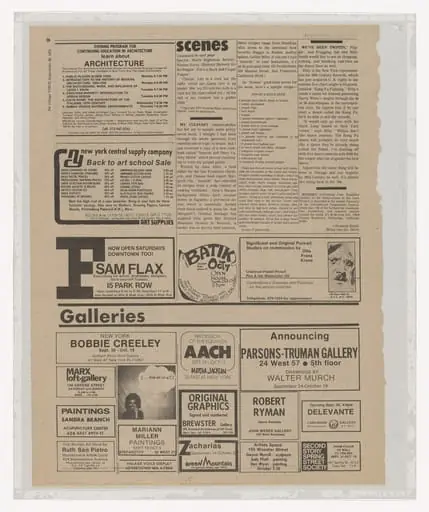
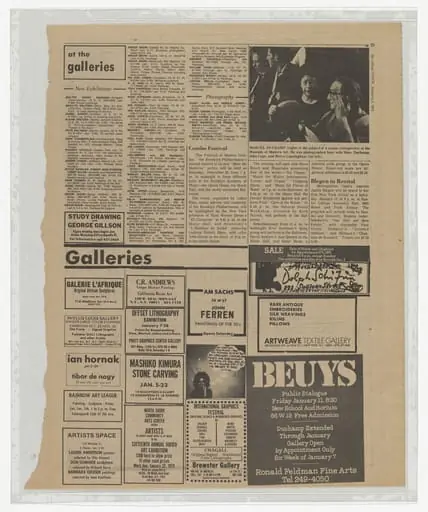
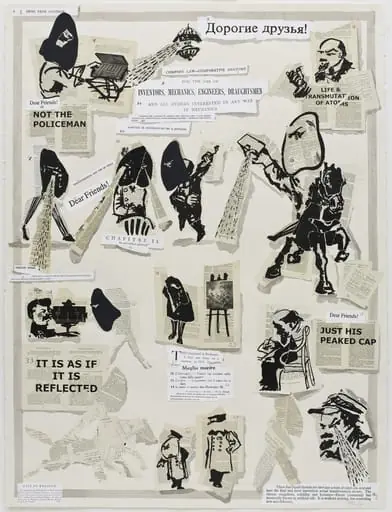
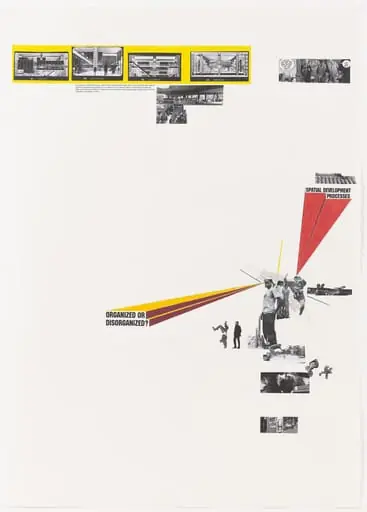
The composition layers black-and-white photographic fragments—urban figures, vehicles, architecture—into a vertical sequence that evokes the rhythm of city life. The overlapping images suggest the anonymity and repetition of modern routines. Faded textual elements, though illegible, imply a critique or commentary embedded within the visual noise, reflecting Maciunas’s interest in disrupting conventional narrative structures in art.
Technique & Style
Using offset lithography, Maciunas reproduced found photographic material with a deliberate, low-fidelity aesthetic. The collage technique combines disparate urban scenes without hierarchical composition, rejecting traditional framing. The faded text and grainy imagery emphasize the mechanical reproduction process, reinforcing Fluxus’s embrace of imperfection and mass production as artistic strategies.
History & Provenance
The work entered The Museum of Modern Art’s collection as part of its broader acquisition of Fluxus materials in the late 1960s and 1970s. Maciunas produced numerous editions of such prints, often distributing them through Fluxus networks rather than commercial galleries. This particular impression is one of many, reflecting the movement’s rejection of singular, precious objects in favor of reproducible, democratic art forms.
Context
In mid-1960s New York, Maciunas positioned Fluxus as a counterpoint to the commercial art world, favoring ephemeral, participatory, and interdisciplinary work. This lithograph emerged alongside mail art, performance scores, and event scores—all aimed at dissolving boundaries between art and life. The piece reflects a broader cultural moment questioning authority, authorship, and the role of the artist in society.
Legacy
Maciunas’s graphic works, including this lithograph, helped redefine printmaking as a vehicle for conceptual and political expression. His emphasis on reproducibility influenced later generations of artists working in zines, mail art, and institutional critique. The piece remains a tangible artifact of Fluxus’s radical reimagining of art’s function and reach beyond the gallery system.
Artist & collection
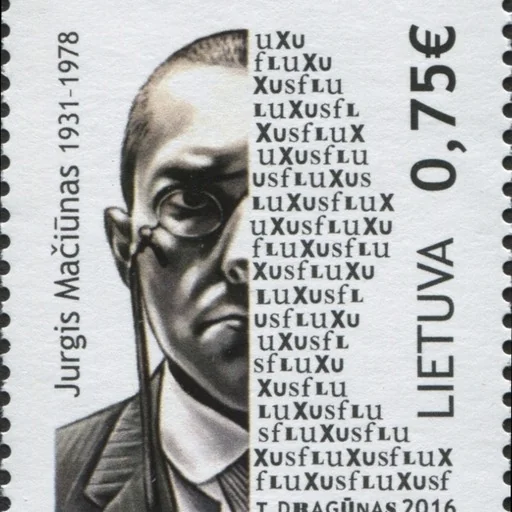
Artist
George Maciunas (English: ; Lithuanian: Jurgis Mačiūnas; November 8, 1931 – May 9, 1978) was a Lithuanian American artist, art historian, and art organizer who was the founding member and central coordinator of Fluxus,…