Artwork
The Baptism of Christ
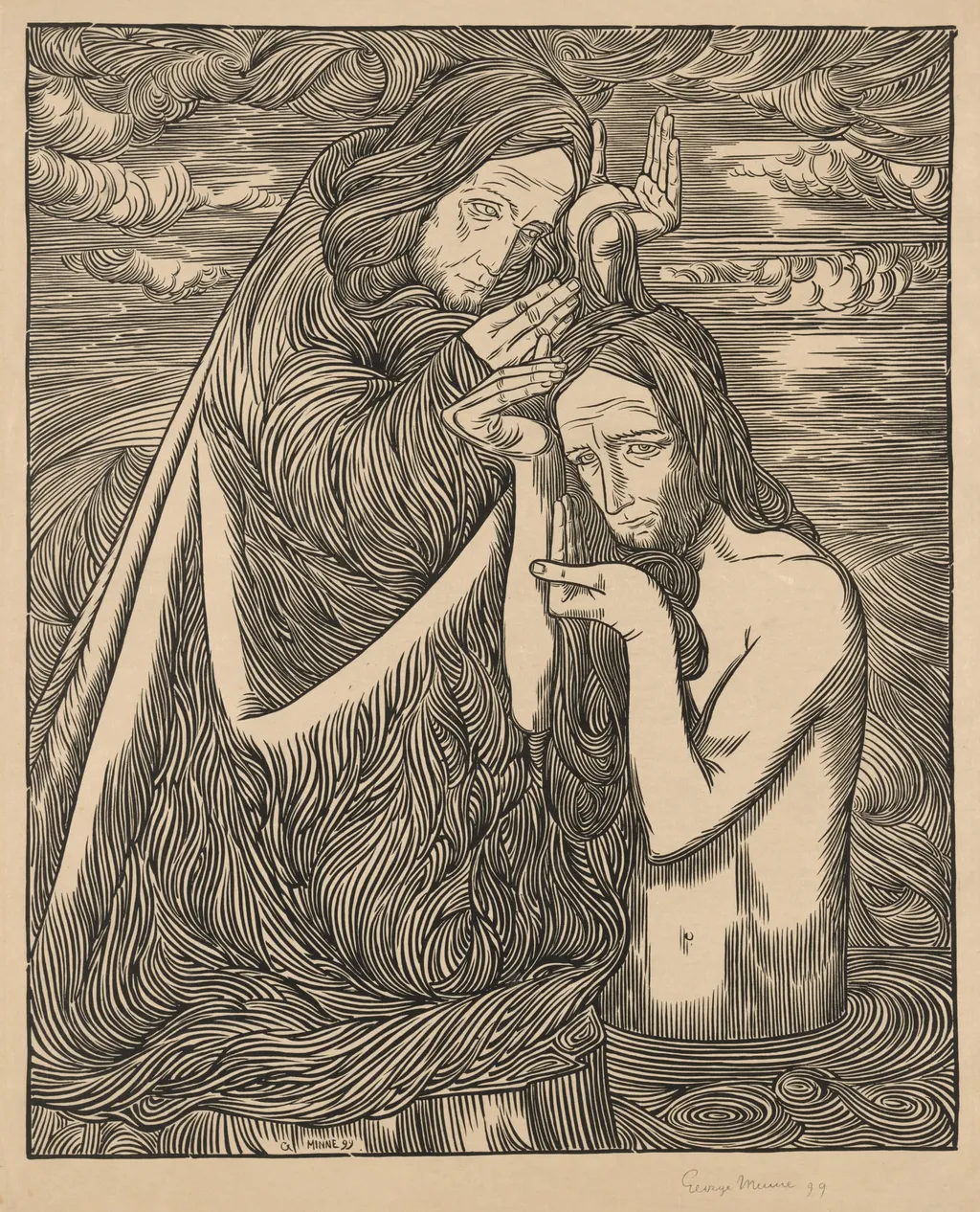
The Baptism of Christ is a print by the Impressionist artist George Minne. It dates from 1899 and is held in the collection of the Cleveland Museum of Art.
About this work
Overview
The artist reduces the scene to two figures and a dense, linear background, stripping away conventional iconography to highlight spiritual stillness.
George Minne’s 1899 print *The Baptism of Christ* presents a quiet, inward-focused interpretation of a biblical moment. Rendered in monochrome ink, the composition emphasizes emotional resonance over narrative detail. The artist reduces the scene to two figures and a dense, linear background, stripping away conventional iconography to highlight spiritual stillness. The work reflects Minne’s broader interest in psychological depth, aligning with late 19th-century Symbolist tendencies in European art.
Subject & Meaning
The scene captures the moment of Christ’s baptism by John the Baptist, yet Minne avoids literal representation. Instead, the figures are defined by posture and gesture: one bends in service, the other stands in quiet submission. Their clasped hands and lowered heads suggest introspection rather than ritual. The absence of facial features and elaborate attire shifts focus to the emotional weight of the act, framing baptism as an internal transformation rather than a public ceremony.
Technique & Style
Minne employs a dense network of swirling, intersecting lines to construct both figures and environment, creating a tactile, almost claustrophobic atmosphere. The entire image is rendered in black ink on a pale ground, with no tonal gradation or shading. This linear approach prioritizes contour and rhythm over modeling, emphasizing the emotional tension through pattern and flow. The technique echoes Art Nouveau’s decorative sensibility but channels it toward psychological expression.
History & Provenance
Created in 1899, the print emerged during Minne’s most productive period, when he was deeply engaged with themes of spirituality and human vulnerability. It entered the Cleveland Museum of Art’s collection in the 20th century, where it remains part of their holdings of European graphic art. The work reflects Minne’s engagement with contemporary avant-garde circles in Vienna and Brussels, though his style remained distinct in its restrained, meditative quality.
Context
Minne worked alongside figures like Klimt and Schiele during a time when artists sought to move beyond naturalism toward symbolic expression. While Viennese Secessionists often embraced ornamental elegance, Minne’s approach was more austere, favoring emotional economy. His prints responded to broader fin-de-siècle interests in mysticism and inner life, aligning with literary Symbolism and the search for meaning beyond the visible world.
Legacy
Though less widely known than his contemporaries, Minne’s prints influenced later generations interested in expressive line and psychological minimalism. *The Baptism of Christ* exemplifies his unique contribution: a form of spiritual abstraction that prioritizes gesture and atmosphere over narrative clarity. The work endures as a quiet testament to the power of restraint in conveying sacred emotion.
Artist & collection
Artist
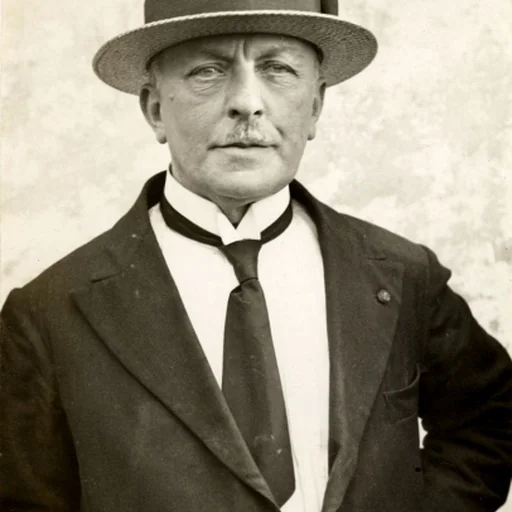
George (Georges) Minne (born Georgius Joannes Leonardus Minne; 30 August 1866 – 18 February 1941) was a Belgian artist and sculptor famous for his idealized depictions of man's inner spiritual conflicts, including the "Kneeling Youth"…

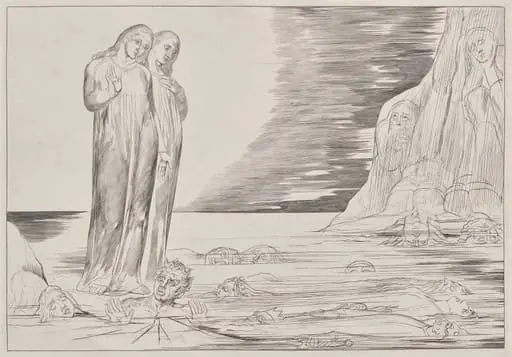 The Circle of the Traitors: Dante's Foot Strriking Bocca degli Abbate, from Dante's Inferno, Canto XXXII Illustration to Dante's The Divine Comedy
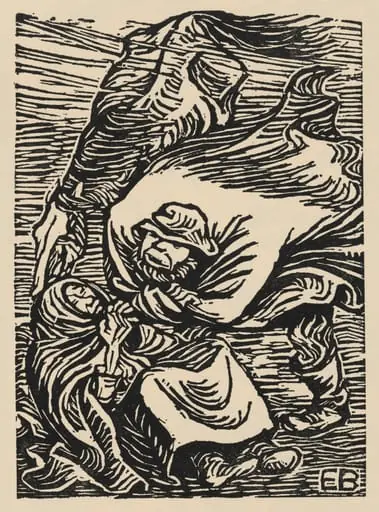 Gruppe im Sturm (Couple in a Storm) from Deutsche Graphiker der Gegenwart (German Printmakers of Our Time)
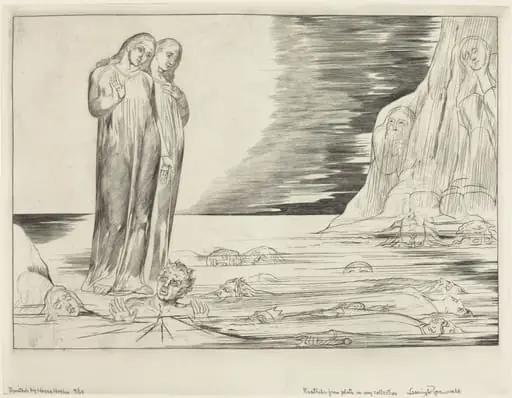 The Circle of the Traitors; Dante's Foot Striking Bocca degli Abbate
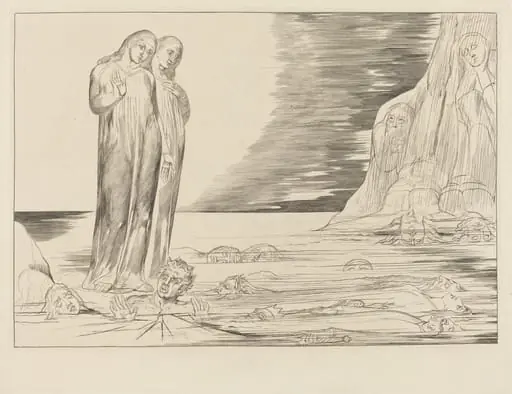 The Circle of the Traitors; Dante's Foot Striking Bocca degli Abbate
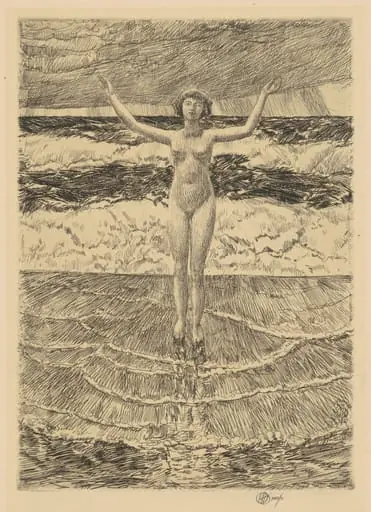 Rain Drops and Surf
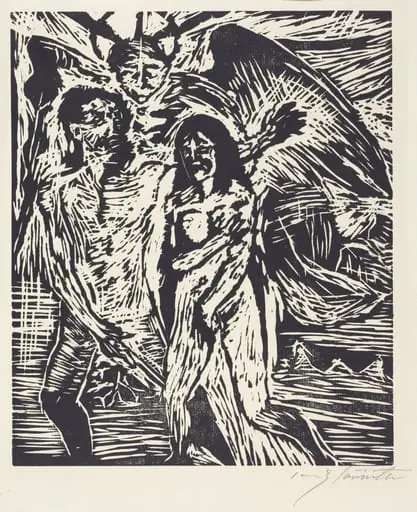 Austreibung aus dem Paradies (The Expulsion from Paradise)
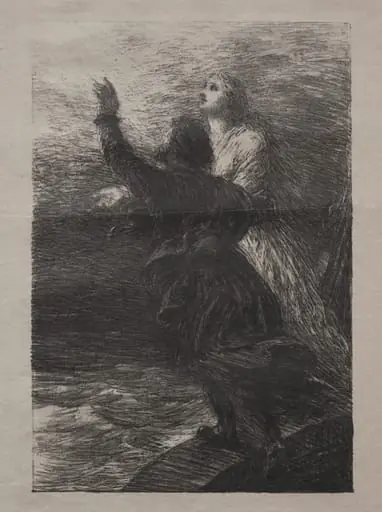 The Flying Dutchman: Act III, The Ecstasy of Senta and the Dutchman
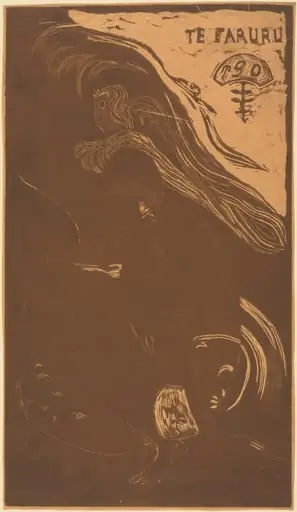 Te Faruru (They are Making Love Here)
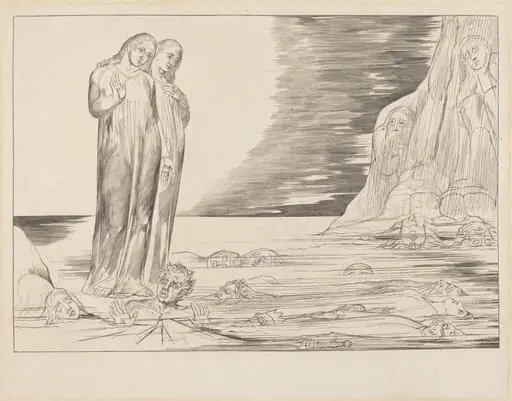 The Circle of the Traitors; Dante's Foot Striking Bocca degli Abbate
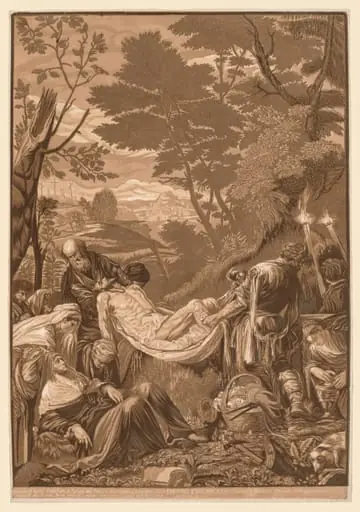 Venetian Set: Entombment of Christ
 The Circle of the Traitors; Dante's Foot Striking Bocca degli Abbate
 The Circle of the Traitors; Dante's Foot Striking Bocca degli Abbate