Artwork
Untitled
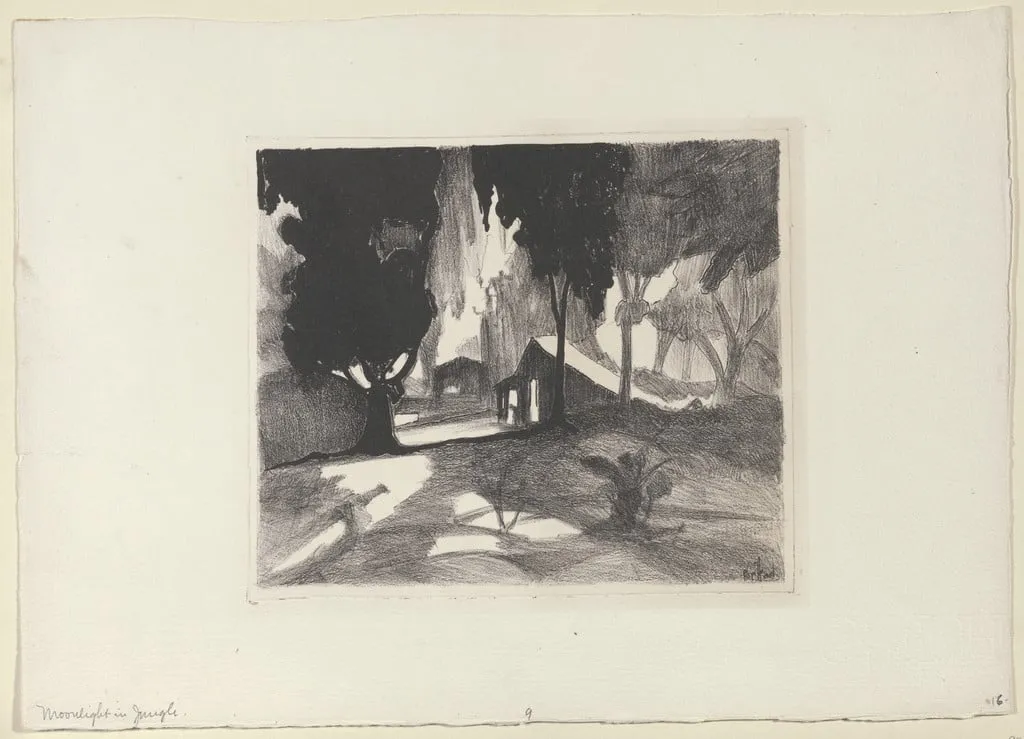
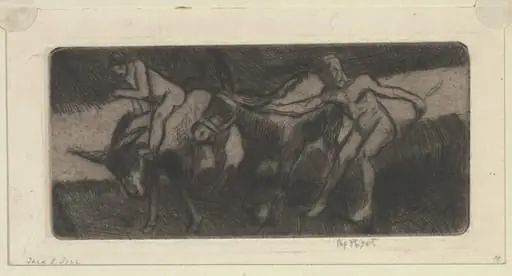
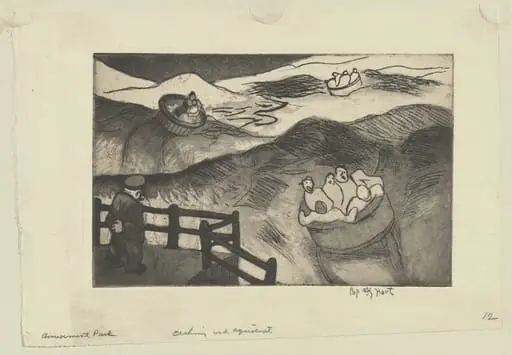
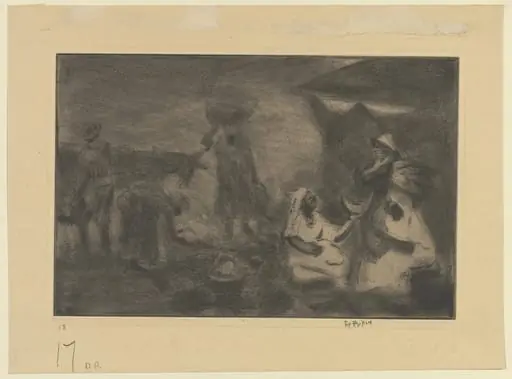
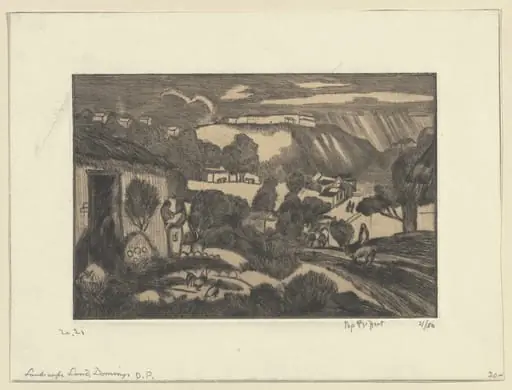
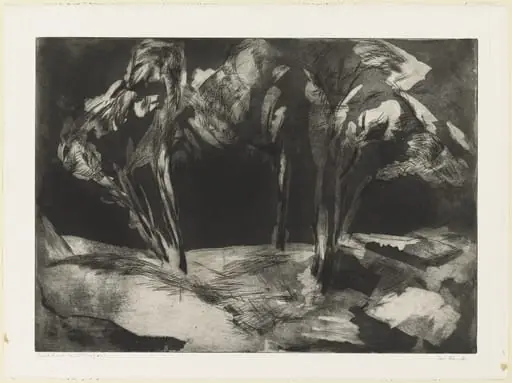
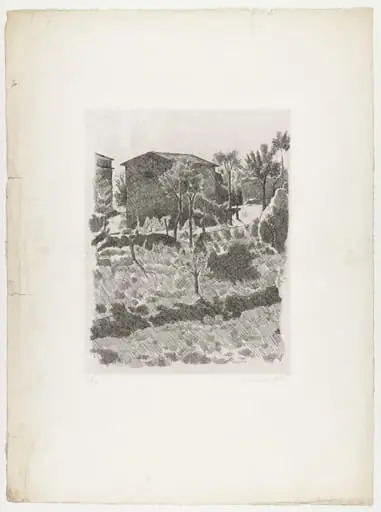
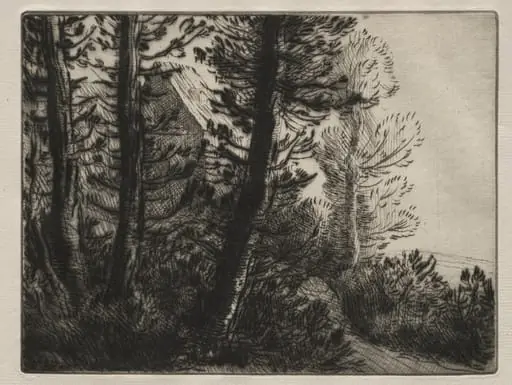
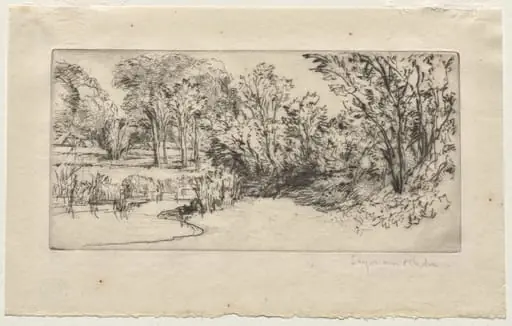
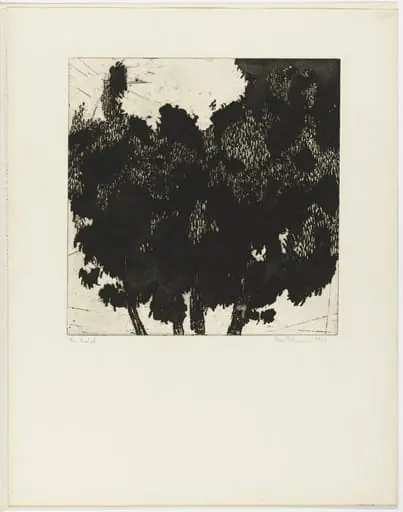
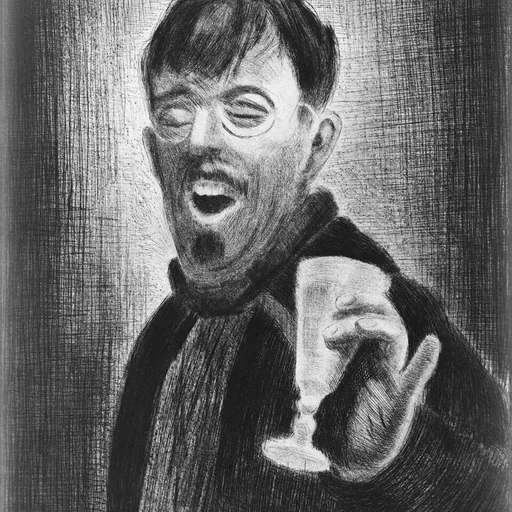
Untitled is an ink print by George Overbury ("Pop") Hart. It dates from 1924 and is held in the collection of the Museum of Modern Art.
About this work
The artist used thick, dark lines to create deep shadows and bright highlights, giving it a dramatic feel.
This sketch shows a quiet night scene with a small house under a bright moon. Trees and bushes fill the background, their shadows stretching across the ground. A bridge curves in the distance, and the light reflects off a body of water.
The artist used thick, dark lines to create deep shadows and bright highlights, giving it a dramatic feel. The title isn’t given, but the style matches a print from 1924.
Want to learn more? Check out lithography to see how this print was made.
Overview
Created in 1924, this lithograph is one of several prints by George Overbury 'Pop' Hart, an American artist known for his landscapes and scenes of rural life. The work belongs to The Museum of Modern Art’s collection and exemplifies Hart’s interest in nocturnal atmospheres and quiet, everyday settings. Its unassuming title reflects the artist’s focus on mood over narrative.
Subject & Meaning
The scene depicts a solitary house illuminated by a full moon, surrounded by dense foliage and a distant arched bridge. A still body of water mirrors the light, enhancing the sense of stillness. No figures are present, suggesting solitude or introspection. The composition invites contemplation rather than storytelling, emphasizing the quiet poetry of a rural night.
Technique & Style
Hart employed bold, expressive lines and strong contrasts between light and dark to shape the scene. The lithographic process allowed him to achieve deep shadows and luminous highlights with a hand-drawn, almost sketch-like quality. The thick outlines and simplified forms reflect a modernist tendency toward abstraction, while retaining a sense of natural observation.
History & Provenance
The print was made during Hart’s most active period as a printmaker, following his earlier work in watercolor and painting. It entered The Museum of Modern Art’s collection in the decades after its creation, likely as part of the institution’s early efforts to document American printmaking. Its provenance remains unbroken since acquisition.
Context
In the 1920s, American artists increasingly turned to printmaking as a means of personal expression, moving away from academic traditions. Hart’s work aligned with this shift, embracing the immediacy of lithography to capture intimate landscapes. His focus on rural scenes contrasted with urban modernism, offering a quieter counterpoint to the era’s dominant themes.
Legacy
Though not widely exhibited, Hart’s lithographs are recognized for their emotional restraint and technical clarity. This print contributes to a broader understanding of early 20th-century American printmaking, particularly the role of nature and atmosphere in modernist visual language. It remains a quiet but significant example of his graphic work.
Artist & collection
Artist
George Overbury "Pop" Hart (May 10, 1868 – September 9, 1933) was an early 20th century American painter and watercolorist.