Artwork
Untitled
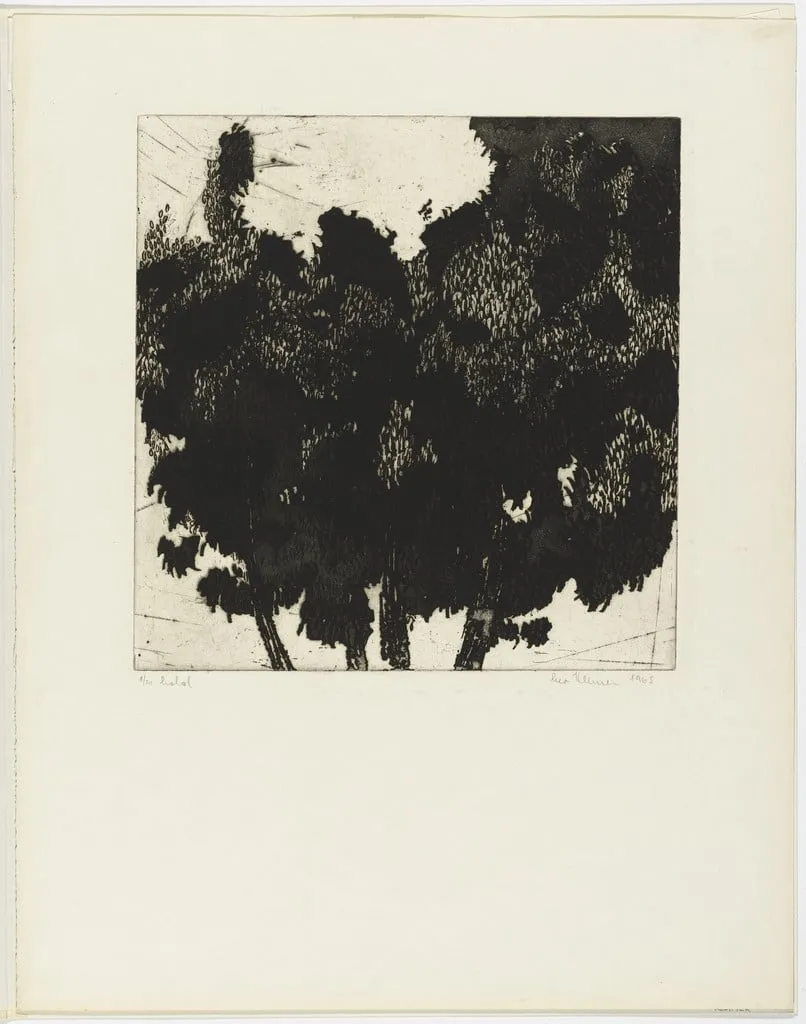
Untitled is an ink print by Lea Kleiner. It dates from 1965 and is held in the collection of the Museum of Modern Art.
About this work
Overview
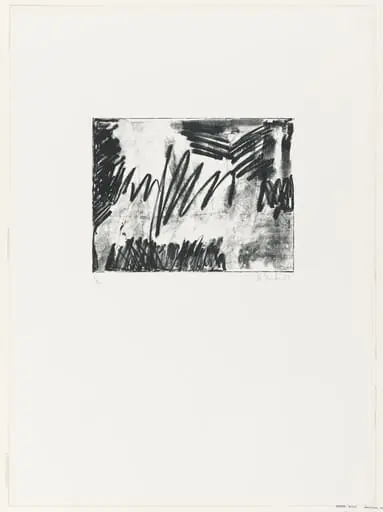
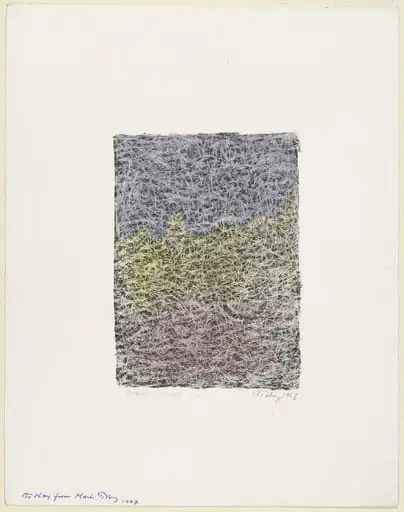
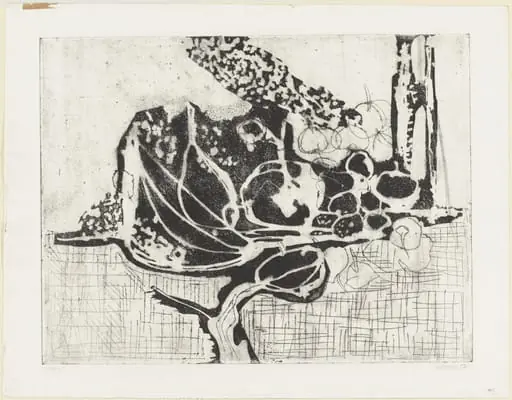
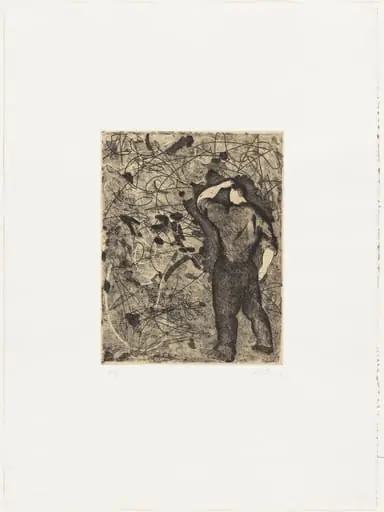
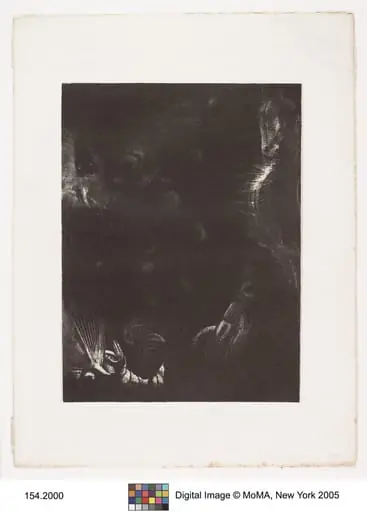
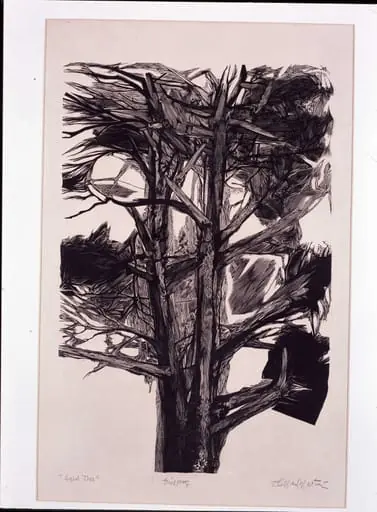
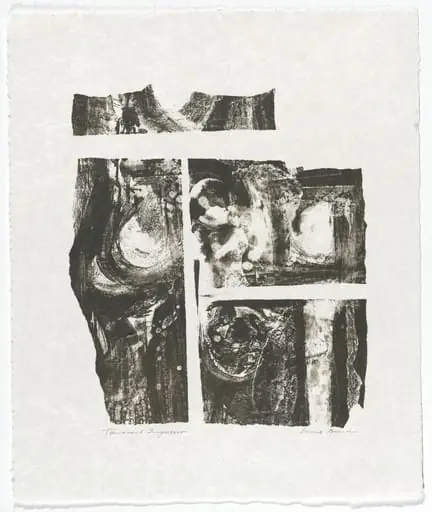
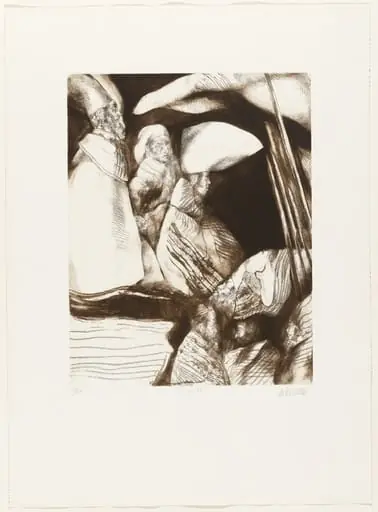
The work is abstract, avoiding figurative representation in favor of dense, organic forms that emerge from a contrast of dark and light fields.
Created in 1965, this print by Lea Kleiner is an etching enhanced with aquatint, a technique that allows for subtle tonal gradations. It resides in the collection of The Museum of Modern Art. The work is abstract, avoiding figurative representation in favor of dense, organic forms that emerge from a contrast of dark and light fields. Its handmade quality suggests direct, physical engagement with the plate.
Subject & Meaning
The composition presents no identifiable subject, instead offering a field of irregular, interwoven shapes that suggest natural phenomena like smoke, roots, or weathered bark. The ambiguity invites interpretation without anchoring it to a specific narrative. The tension between chaos and structure hints at forces of growth or decay, leaving meaning open to the viewer’s perception.
Technique & Style
Kleiner employed etching to define sharp, erratic lines and aquatint to build areas of soft, atmospheric tone. The surface reveals uneven ink application—some zones are nearly opaque, others barely perceptible—achieving depth through controlled imperfection. The texture appears scraped and wiped, emphasizing the artist’s manual intervention and the materiality of the print process.
History & Provenance
The work entered The Museum of Modern Art’s collection shortly after its creation, reflecting institutional interest in postwar printmaking that prioritized process over representation. No earlier ownership records are publicly documented, suggesting it was likely acquired directly from the artist or a gallery exhibition in the mid-1960s.
Context
Made during a period when many artists moved away from strict abstraction toward more gestural, material-driven forms, Kleiner’s print aligns with broader trends in American printmaking. It shares affinities with the expressive use of texture seen in contemporaries like Robert Rauschenberg and Cy Twombly, though it remains distinctly focused on the quiet intensity of monochrome.
Legacy
Though not widely reproduced, the work contributes to the understanding of mid-century printmaking as a space for experimental mark-making. Its inclusion in MoMA’s collection affirms its role in documenting how artists expanded the possibilities of etching beyond traditional line work, embracing tonal ambiguity and tactile surface as expressive tools.
Artist & collection