Artwork
Webster Replying to Hayne
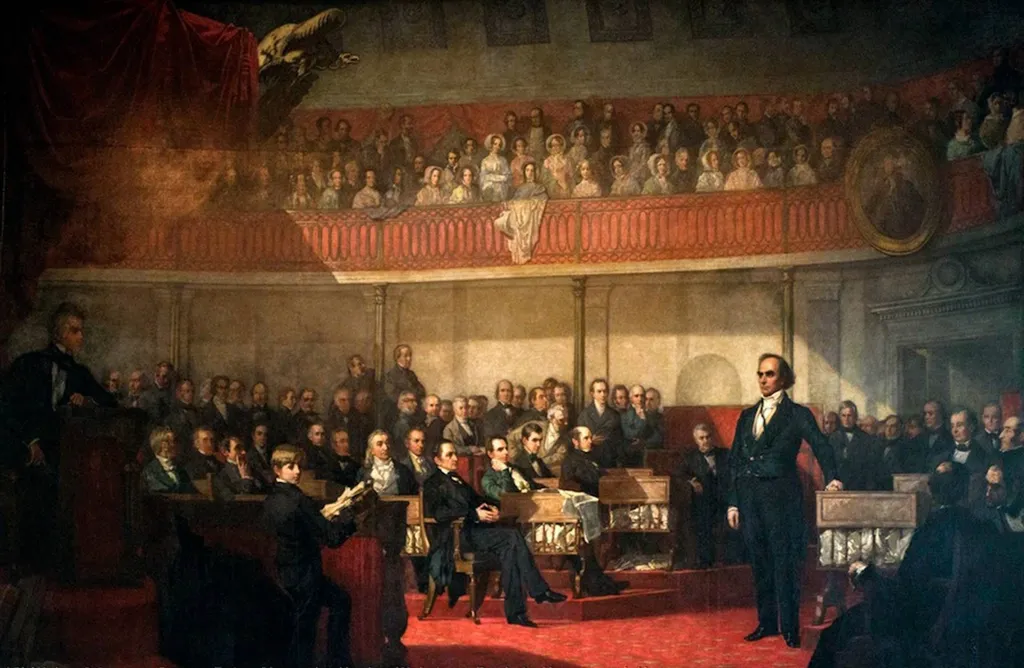
Webster Replying to Hayne is an oil painting by the American Folk Art artist George P. A. Healy. It dates from 1851 and is held in the collection of the Museum of Fine Arts Boston.
About this work
Overview
The work belongs to a series of historical scenes he produced during the mid-19th century, reflecting his interest in national identity and political discourse.
George Peter Alexander Healy painted *Webster Replying to Hayne* in 1851, capturing a pivotal moment in U.S. Senate history. An American artist trained in Europe, Healy specialized in portraits of public figures and maintained studios in Paris and Chicago. The work belongs to a series of historical scenes he produced during the mid-19th century, reflecting his interest in national identity and political discourse.
Subject & Meaning
The painting illustrates Daniel Webster’s 1830 reply to Robert Hayne during a Senate debate over states’ rights and federal authority. Webster’s impassioned defense of the Union is rendered as a moment of moral clarity amid a packed chamber. The composition emphasizes his central position and the rapt attention of listeners, underscoring the gravity of the constitutional principles at stake in the exchange.
Technique & Style
Healy employed a realistic approach, with careful attention to facial expressions, formal attire, and spatial depth. The figures are arranged in orderly rows, guiding the viewer’s eye toward the speaker. Lighting focuses on Webster, while the background balcony adds dimension without distraction. The palette remains subdued, reinforcing the solemnity of the occasion and the artist’s commitment to historical accuracy.
History & Provenance
Commissioned as part of a series on American political figures, the painting entered the Museum of Fine Arts, Boston’s collection in the late 19th century. It was among several works Healy produced after returning from Europe, where he had painted European elites. The piece reflects a broader 19th-century American effort to visually document its political heritage through portraiture and historical narrative.
Context
Created during rising sectional tensions before the Civil War, the painting resonated with contemporary anxieties about national unity. Healy’s depiction of Webster’s speech served as a visual reminder of federalist ideals at a time when states’ rights rhetoric was gaining momentum. The work aligns with a cultural movement to elevate historical events into enduring civic symbols.
Legacy
Though not widely exhibited today, the painting remains a documented example of 19th-century American historical portraiture. It contributes to the understanding of how visual art was used to reinforce political narratives in the antebellum era. Healy’s approach influenced later artists seeking to depict public life with dignity and narrative clarity.
Artist & collection
Artist
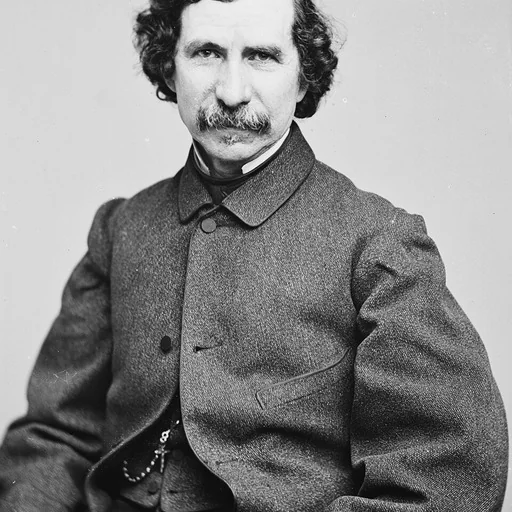
George Peter Alexander Healy (July 15, 1813 – June 24, 1894) was an American portrait painter.

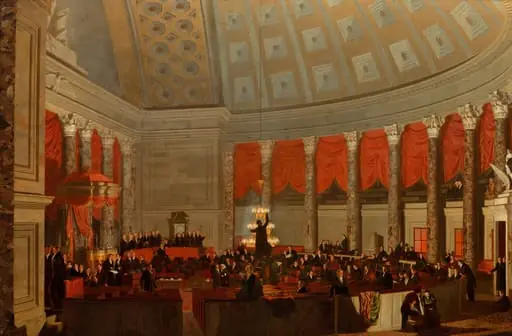 The House of Representatives
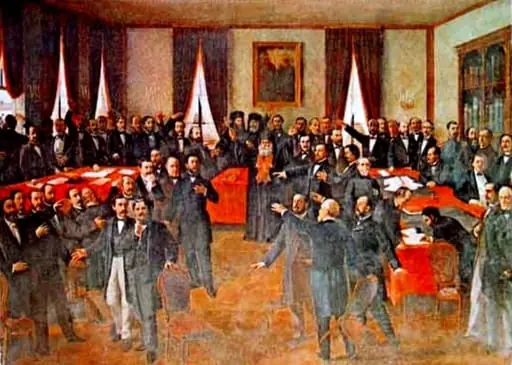 Proclamarea Unirii
 The Leaders of the Irish Confederation in Council
 En omrejsende projektmager foreviser et musikalsk menageri
 First State Election in Detroit, Michigan, 1837
 Finsbury Chapel, Moorfields
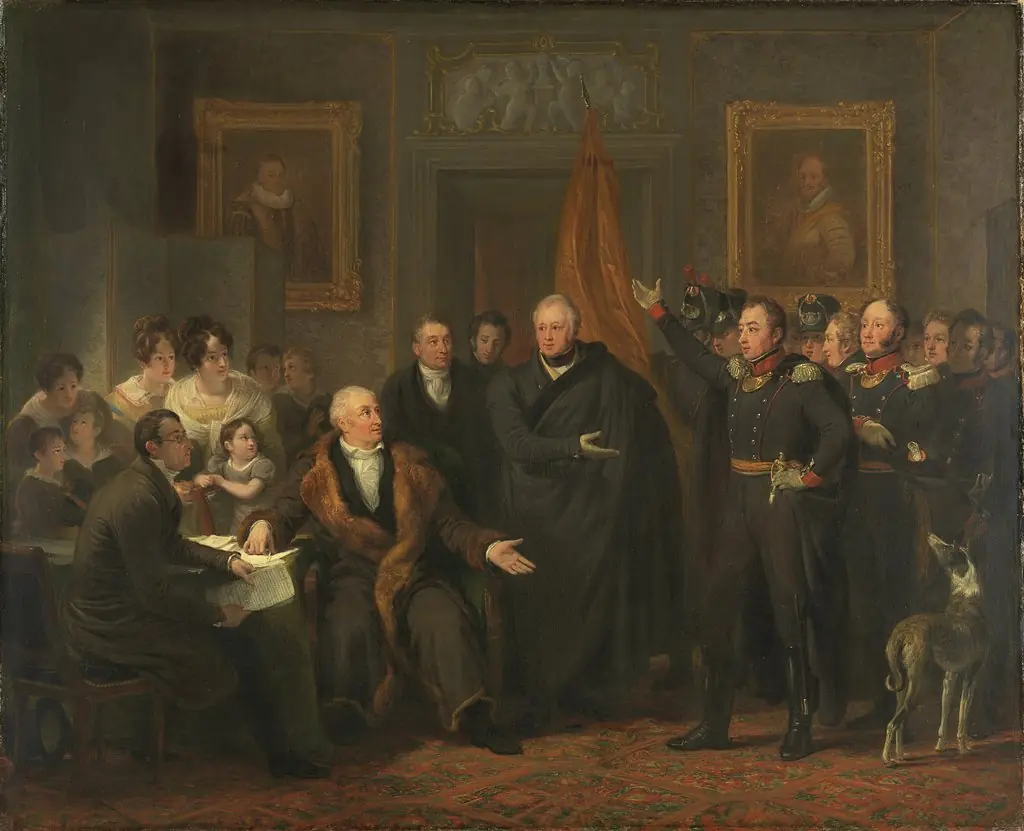 Triumvirate Assuming Power in the Name of the Prince of Orange, 21 November 1813
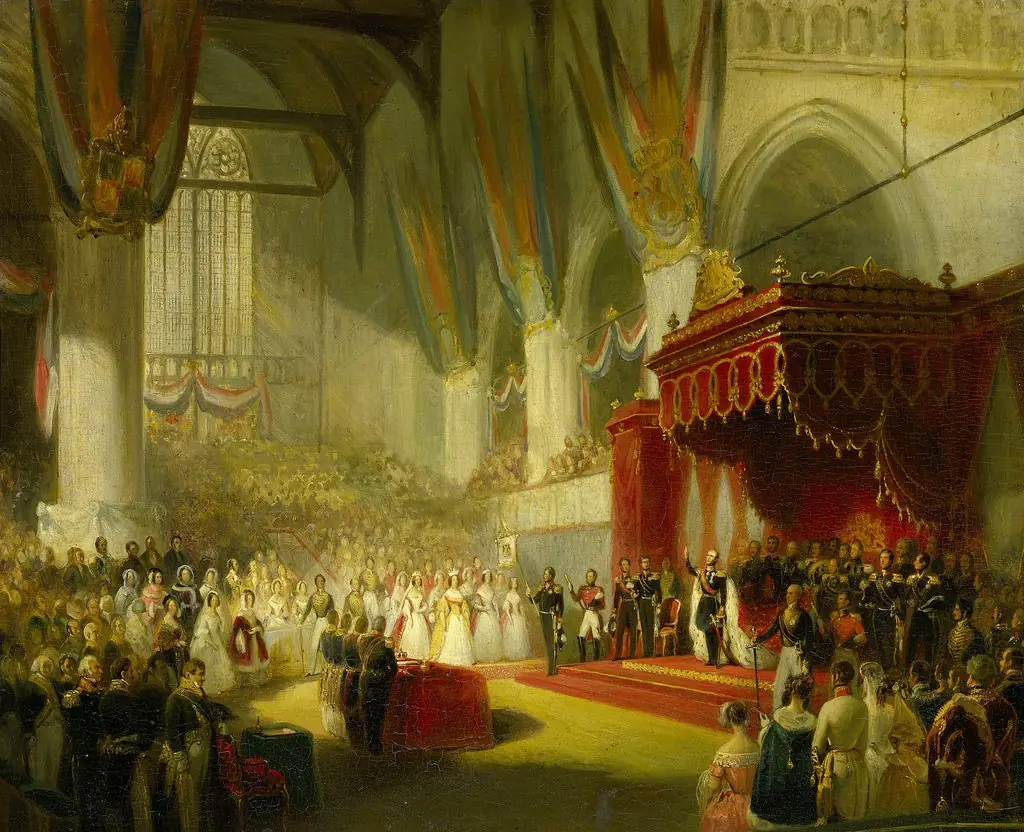 The Inauguration of King William II in the Nieuwe Kerk in Amsterdam on 28 November 1840
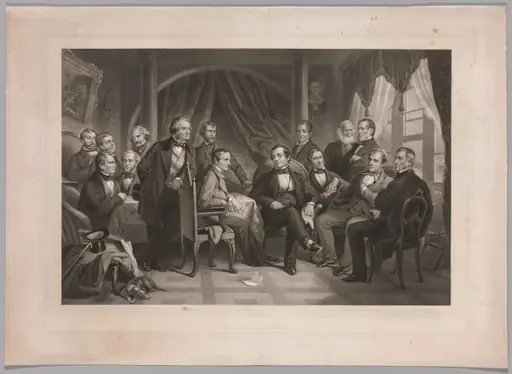 Washington Irving and his Literary Friends at Sunnyside
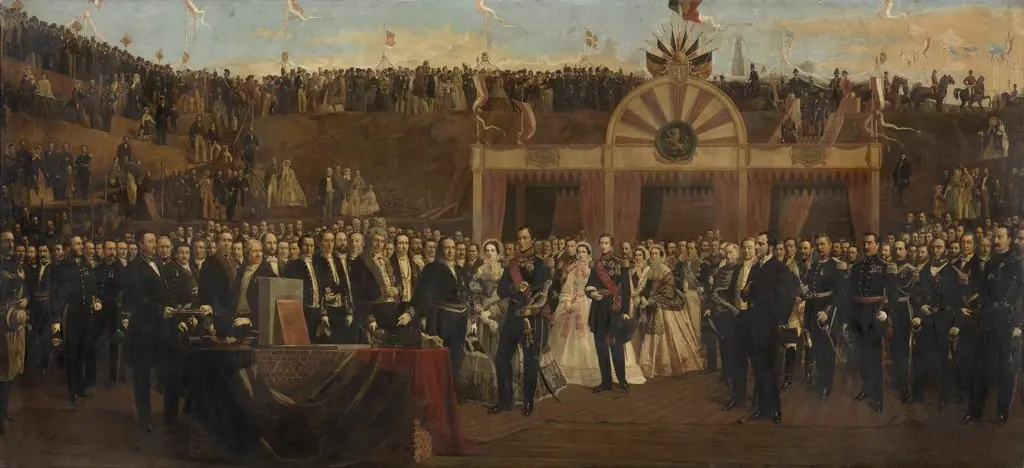 First Bricklaying of the Kattendijkdok in Antwerp
 Abraham Lincoln
 Ventura de la Vega reading a play at the Teatro del Príncipe