Artwork
Norham Castle
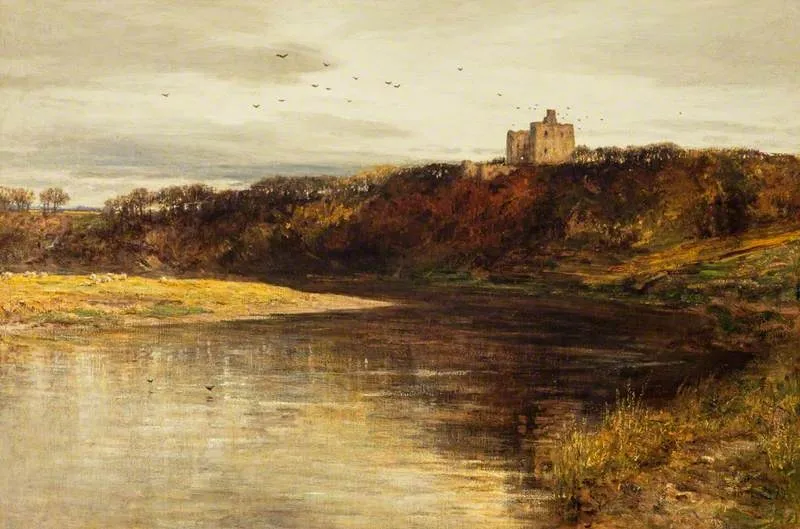
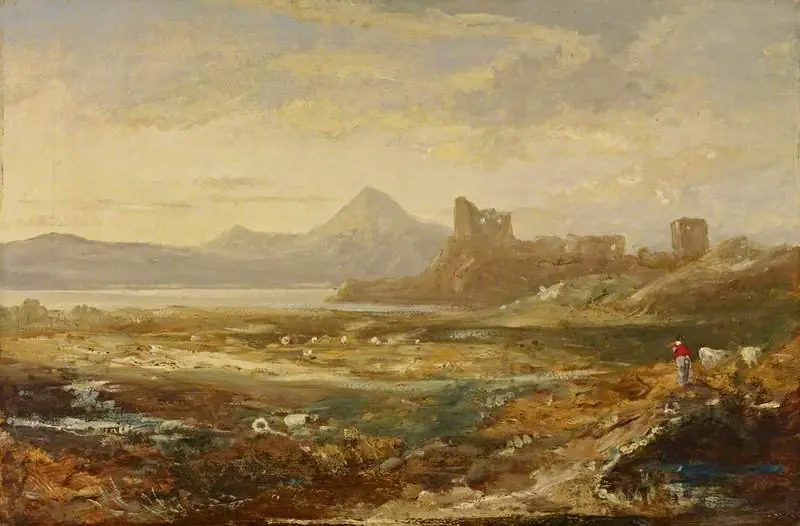
Norham Castle is an oil painting by the Impressionist artist George Reid. It dates from 1890 and is held in the collection of the National Galleries Scotland.
About this work
Overview
The composition emphasizes stillness and the subtle interplay of natural light, capturing the castle in a moment of calm rather than grandeur.
Painted in 1890, Norham Castle is an oil-on-canvas work by Scottish artist George Reid. It presents a quiet, atmospheric view of the historic fortress situated on a hillside along the River Tweed. The composition emphasizes stillness and the subtle interplay of natural light, capturing the castle in a moment of calm rather than grandeur. The painting resides in the collection of the Scottish National Gallery.
Subject & Meaning
Norham Castle, a medieval stronghold on the Anglo-Scottish border, is rendered not as a symbol of power but as a weathered presence within the landscape. Its stone towers and walls are softened by time and vegetation, suggesting decay and endurance. The surrounding trees and still river reinforce a sense of solitude, reflecting a contemplative mood rather than historical narrative or romanticized heroism.
Technique & Style
Reid employed layered oil glazes and varied brushwork to suggest texture in stone, foliage, and water. The surface shows deliberate shifts in stroke density—fine details in the castle’s masonry contrast with looser, broader applications in the trees and sky. Colors are restrained: muted ochres, olive greens, and soft grays dominate, creating a harmonious tonal range that enhances the painting’s quiet, autumnal atmosphere.
History & Provenance
The painting was completed in 1890 and entered the collection of the Scottish National Gallery shortly thereafter. It was likely acquired as part of a broader effort to document Scottish architectural heritage through contemporary landscape painting. No significant changes in ownership are recorded, and it has remained in public display since its acquisition.
Context
Reid worked during a period when Scottish artists were increasingly turning to native landscapes and historic sites as subjects, moving away from grand historical or mythological themes. Norham Castle aligns with this trend, reflecting a growing interest in regional identity and the quiet dignity of the countryside. The painting’s subdued palette and intimate scale reflect broader aesthetic shifts in late 19th-century British art.
Legacy
Though not widely reproduced, Norham Castle remains a representative example of George Reid’s approach to landscape painting—measured, observant, and attuned to atmospheric nuance. It contributes to the understanding of how Scottish artists of the era engaged with heritage sites not as monuments, but as living elements within a changing natural world.
Artist & collection