Artwork
A Portrait of Welby Sherman Asleep in a Chair
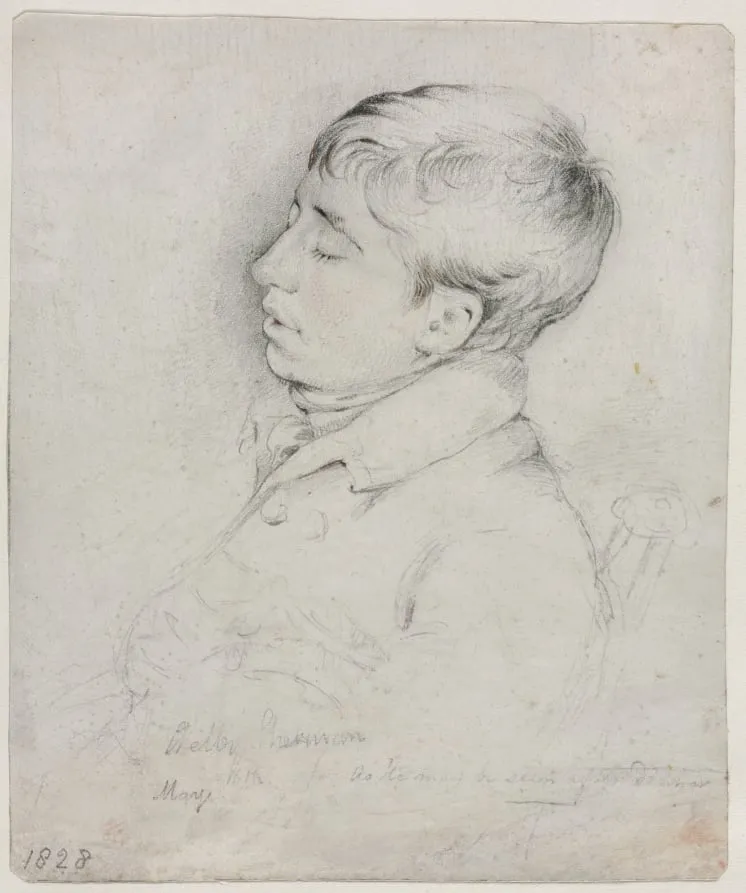
A Portrait of Welby Sherman Asleep in a Chair is a drawing by the Romanticist artist George Richmond. It dates from 1828 and is held in the collection of the Cleveland Museum of Art.
About this work
The drawing uses soft pencil shading to shape his face, with tiny dashes of dark wash for eyelashes and a faint pink tint on his lips.
A young man dozes in a wooden chair, jacket buttoned, cravat still tied. His head tilts forward, lips slightly parted.
This is Welby Sherman, an artist friend of the painter, caught mid-nap—maybe after dinner, as the inscription jokes. The drawing uses soft pencil shading to shape his face, with tiny dashes of dark wash for eyelashes and a faint pink tint on his lips.
For more quiet portraits like this, look up subject: england, 19th century.
Overview
George Richmond created this intimate drawing as a candid study of his friend Welby Sherman, captured in a moment of quiet repose. Executed in graphite and light washes, the work reflects a personal, informal exchange between artist and sitter rather than a formal commission. The inscription humorously notes the context—post-dinner drowsiness—anchoring the image in everyday life.
Subject & Meaning
Welby Sherman, a fellow artist, is shown slumped slightly in a rigid chair, head tilted forward, eyes closed, and lips parted. His attire—cravat and buttoned jacket—suggests he has not fully disrobed, implying a brief pause in social activity. The scene conveys vulnerability and trust, transforming a mundane lapse into a tender observation of human stillness.
Technique & Style
Richmond employed fine graphite hatching to model the soft contours of Sherman’s face, avoiding harsh lines in favor of gradual tonal transitions. Delicate black wash defines subtle features like eyelashes and the bridge of the nose, while faint pink wash on the lips and cheeks introduces a whisper of warmth. The restraint in medium mirrors the quietude of the subject.
History & Provenance
The drawing originated within Richmond’s circle of artist friends in mid-19th century England. Its personal inscription and informal nature suggest it was kept among private papers rather than exhibited publicly. No record of early public display exists, and its survival reflects its value as a personal memento rather than a public work.
Context
In an era when portraiture often emphasized status or idealized form, Richmond’s sketch stands apart for its unvarnished realism. Such drawings were common among British artists as preparatory studies or private gifts, offering a counterpoint to grander academic works. This piece aligns with a broader trend of intimate, observational drawing in Victorian artistic circles.
Legacy
Though not widely published or exhibited, the drawing endures as an example of quiet, empathetic observation in 19th-century British art. It reveals how artists used drawing not only for practice but to record fleeting, authentic moments among peers—valuing humanity over grandeur.
Artist & collection
Artist
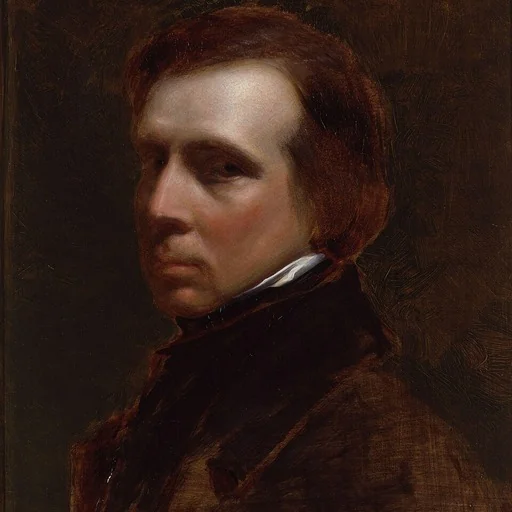
George Richmond (28 March 1809 – 19 March 1896) was an English painter and portraitist.

 Dr. Louis Martinet
 John Cheney
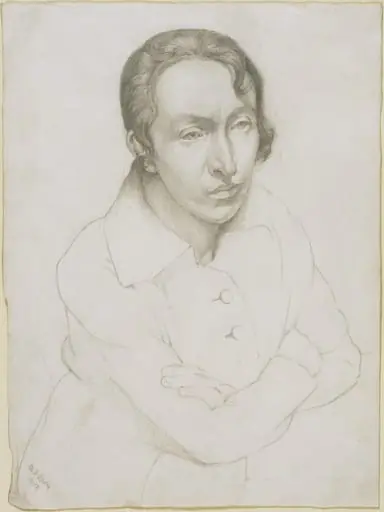 Untitled
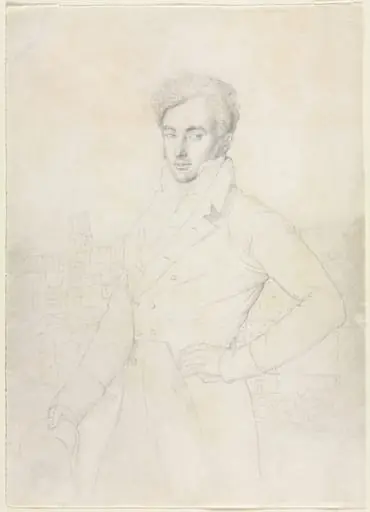 Portrait of a Young Man Standing on the Quirinal with the Turris Comitum in the Background
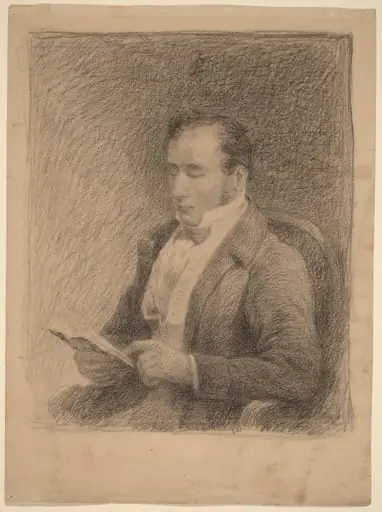 R. Strong
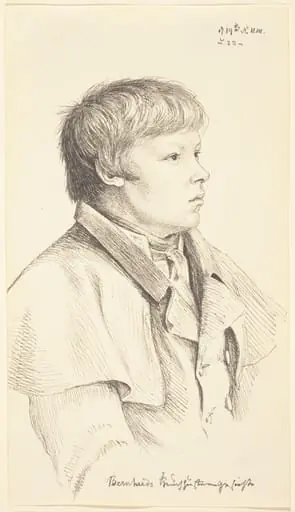 Bernhard's Whooping Cough Face
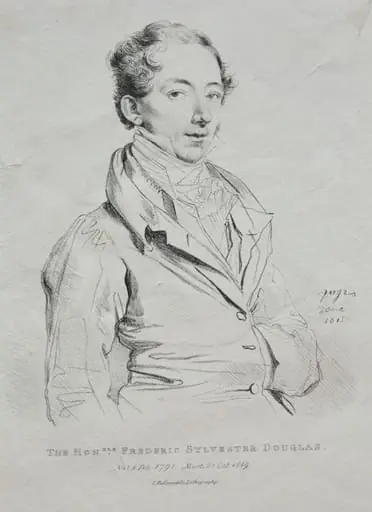 Honorable Frederic Sylvester Douglas
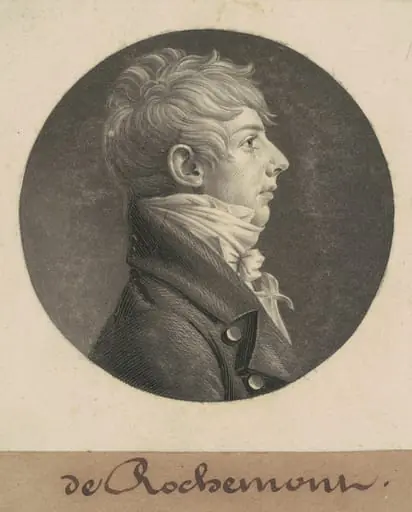 de Rochemont
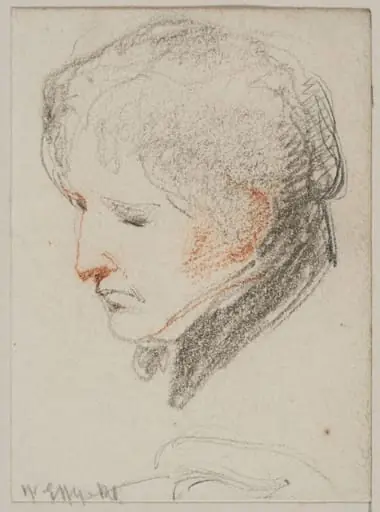 Portrait of William Etty
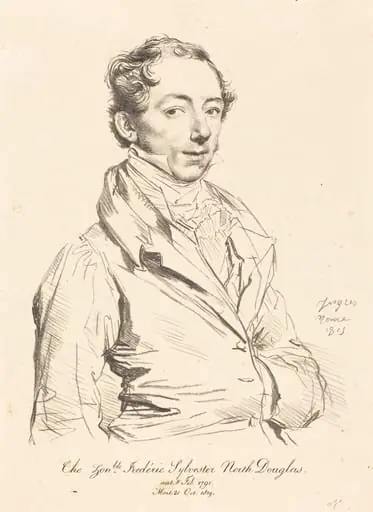 Frederic Sylvester Douglas
 Self-Portrait
![Shepard Alonzo Mount, Age Twenty-Three [recto], by William Sidney Mount](https://artifactworldgallery.com/img/william-sidney-mount--shepard-alonzo-mount-age-twenty-three-recto--adf0b3e0763f0137-w320.webp) Shepard Alonzo Mount, Age Twenty-Three [recto]
Shepard Alonzo Mount, Age Twenty-Three [recto]