Artwork
Crowninshield's Wharf
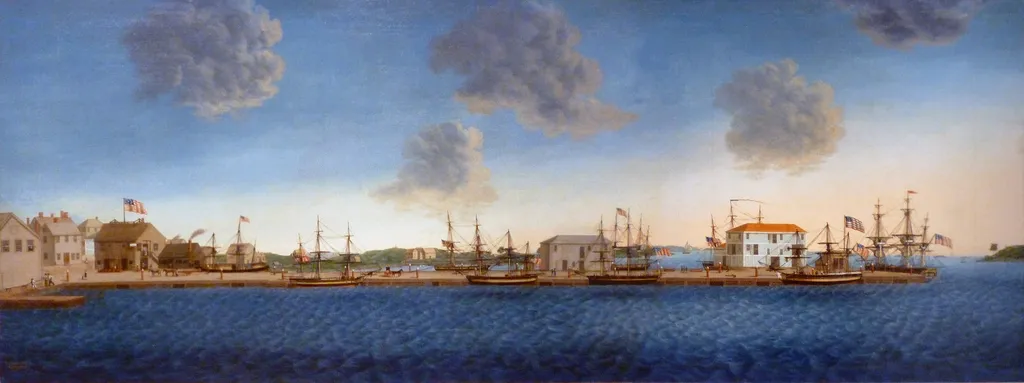
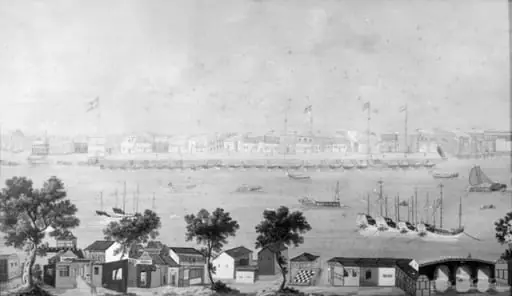
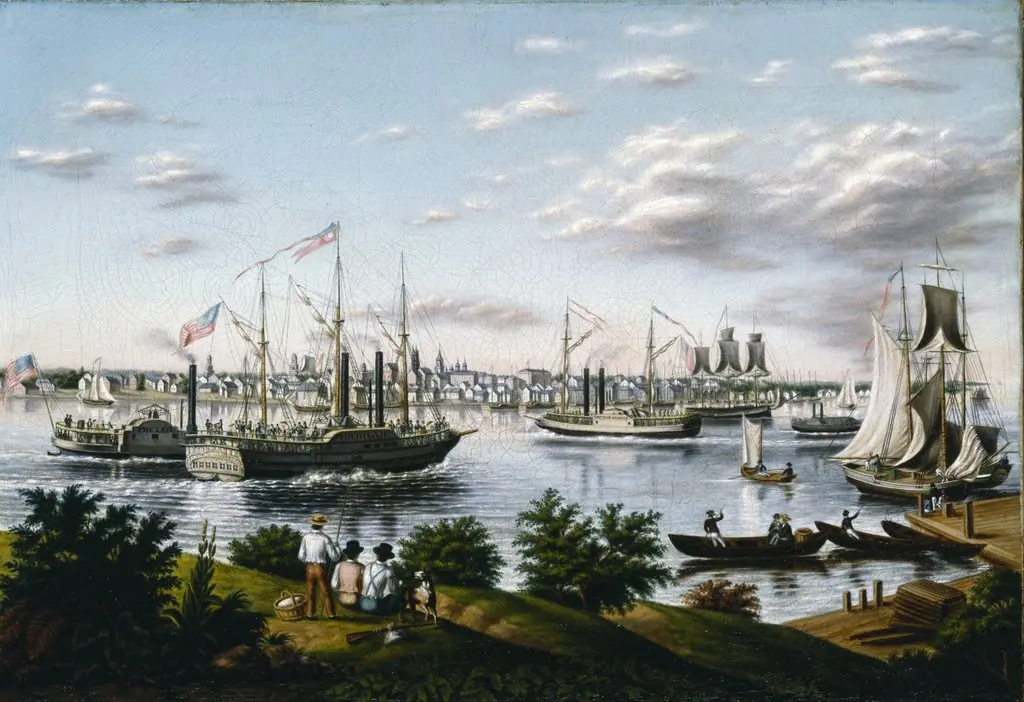
Crowninshield's Wharf is an oil painting by the American Folk Art artist George Ropes. It dates from 1806 and is held in the collection of the Peabody Essex Museum.
About this work
Overview
This oil-on-canvas work captures a quiet moment at a bustling local dock, reflecting his lifelong engagement with Salem’s harbor economy and its visual rhythms.
George Ropes Jr., a Salem-based artist active in the early 19th century, painted *Crowninshield's Wharf* in 1806. Known for his precise depictions of maritime life, Ropes drew from personal experience, having grown up in a seafaring family. This oil-on-canvas work captures a quiet moment at a bustling local dock, reflecting his lifelong engagement with Salem’s harbor economy and its visual rhythms.
Subject & Meaning
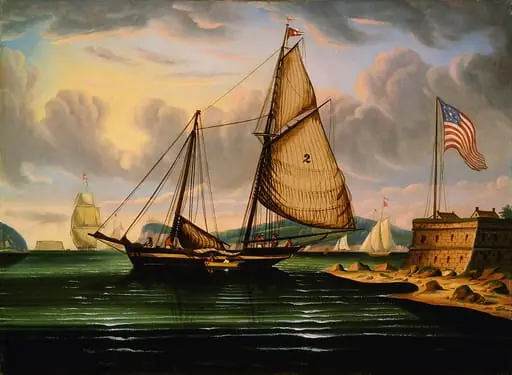
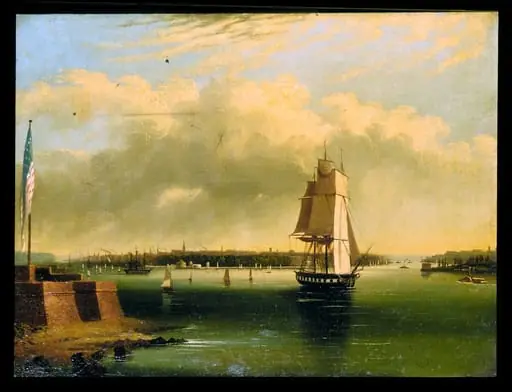
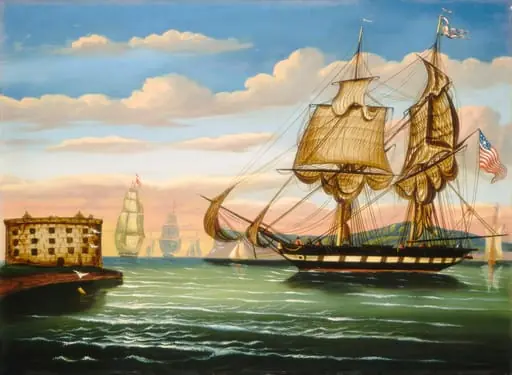
The painting portrays Crowninshield’s Wharf in Salem, Massachusetts, with a cluster of ships, warehouses, and flag-draped buildings. The presence of American flags signals national identity and commercial pride, while the calm waters and setting sun suggest a pause in daily activity. Ropes does not dramatize the scene but instead records its quiet order, emphasizing the wharf as a functional, lived-in space rather than a symbolic monument.
Technique & Style
Ropes employed a restrained, observational style rooted in folk tradition, with careful attention to architectural detail and natural light. The sky’s warm hues and soft reflections on the water indicate an awareness of atmospheric effects, though without the dramatic contrasts of academic chiaroscuro. His brushwork is deliberate but unembellished, prioritizing clarity and spatial accuracy over emotional intensity.
History & Provenance
Created in 1806, the painting emerged from Ropes’s deep ties to Salem’s maritime community. Born into a family of shipowners and captains, he spent most of his life in the town, observing its docks firsthand. Though deaf-mute from childhood, he received early training from Michele Felice Corné and gained local recognition for his ability to render maritime subjects with fidelity and precision.
Context
In early 19th-century New England, maritime commerce defined regional identity. Paintings like this served as visual records of economic activity, often commissioned by merchants or shipowners. Ropes’s work aligns with a broader trend of local artists documenting port life, distinct from European traditions, reflecting a uniquely American interest in everyday scenes tied to trade and navigation.
Legacy
Ropes’s oeuvre, including *Crowninshield’s Wharf*, remains a valuable resource for understanding early American port culture. His paintings are held in regional collections as examples of folk realism, valued not for innovation but for their honest documentation of a vanishing maritime world. His deafness did not hinder his artistic voice; instead, it may have sharpened his visual focus on the silent rhythms of harbor life.
Artist & collection

Artist
George Ropes Jr. (1788–1819) was an American artist, known for his maritime oil paintings. The son of a sea captain, and the nephew of a ship owner (Jerathmiel Peirce), in Salem, Massachusetts, George Ropes Jr. was a…