Artwork
Mambrino
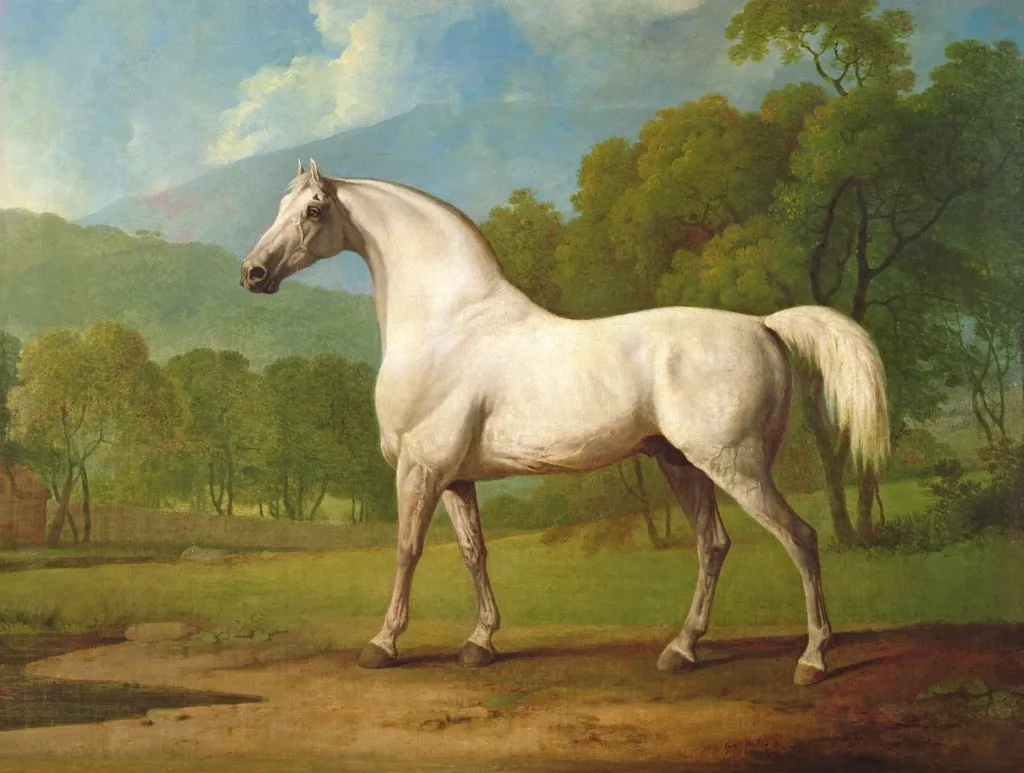
Mambrino is an oil painting by George Stubbs. It dates from 1797 and is held in the collection of the Tate Britain.
About this work
Overview
Stubbs, largely self-taught, focused his career on the accurate representation of animals, diverging from the portrait and historical traditions of his peers.
Painted in 1797 by George Stubbs, *Mambrino* is an oil-on-canvas portrait of a white stallion. Stubbs, largely self-taught, focused his career on the accurate representation of animals, diverging from the portrait and historical traditions of his peers. This work exemplifies his lifelong dedication to capturing the physical presence of horses through close observation and anatomical study, rather than idealized convention.
Subject & Meaning
The painting centers on a single, alert white horse named Mambrino, standing calmly in an open landscape. Its poised stance and elevated head suggest dignity and vitality, reflecting the animal’s value as a breeding stallion. Unlike mythological or allegorical equestrian portraits, Stubbs presents the horse as a subject worthy of attention in its own right, emphasizing biological truth over symbolic narrative.
Technique & Style
Stubbs employed precise brushwork and careful modulation of light to render the horse’s musculature and coat texture. Subtle chiaroscuro defines the form without dramatic contrast, creating a quiet realism. The background remains softly modeled, allowing the animal to dominate the composition. His method combined scientific observation with painterly control, avoiding theatricality in favor of quiet, sustained focus on the subject’s physicality.
History & Provenance
Completed near the end of Stubbs’s career, *Mambrino* was part of a series of equine portraits commissioned by aristocratic patrons. It entered the Tate Britain collection in the 20th century, having passed through private hands since its creation. The painting’s survival and preservation reflect its status as a significant example of Stubbs’s mature style and his contribution to British animal painting.
Context
In late 18th-century Britain, interest in horse breeding and racing surged alongside scientific inquiry into anatomy. Stubbs’s work aligned with this cultural moment, bridging art and natural philosophy. While contemporaries like Reynolds emphasized human grandeur, Stubbs turned his attention to the animal kingdom, producing studies that were both aesthetically compelling and informally scientific.
Legacy
Stubbs’s anatomical precision and commitment to depicting animals as they are, rather than as symbols, influenced later naturalist art and veterinary illustration. *Mambrino* stands as a testament to his singular focus: elevating the horse to the status of a subject deserving of serious artistic attention. His approach laid groundwork for a more empirical tradition in animal portraiture.
Artist & collection
Artist
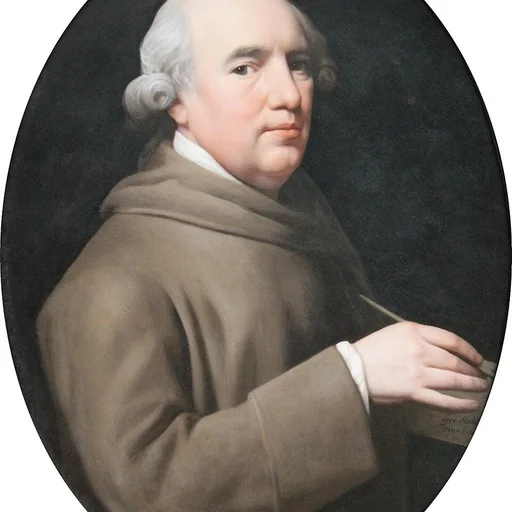
George Stubbs (25 August 1724 – 10 July 1806) was an English painter, best known for his paintings of horses.

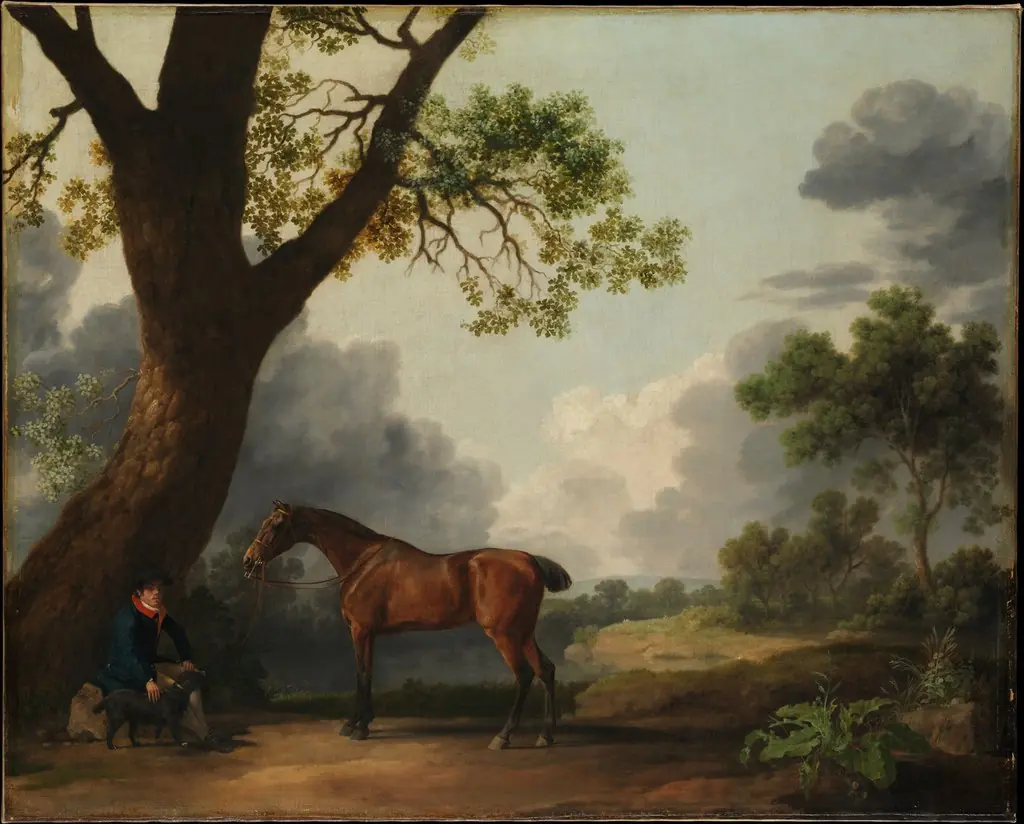 The Third Duke of Dorset's Hunter with a Groom and a Dog
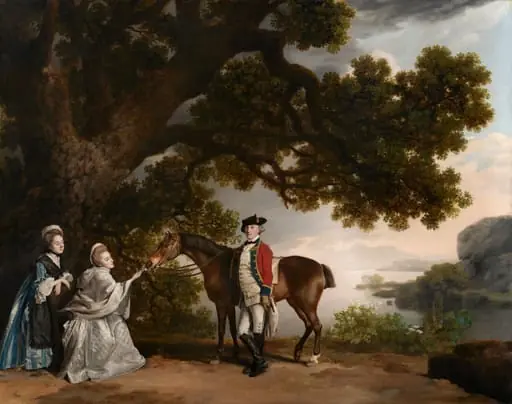 Captain Samuel Sharpe Pocklington with His Wife, Pleasance, and possibly His Sister, Frances
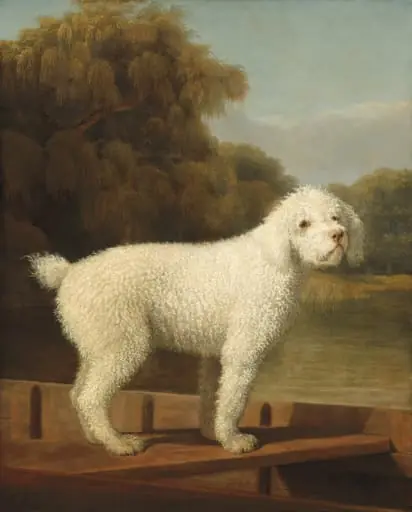 White Poodle in a Punt
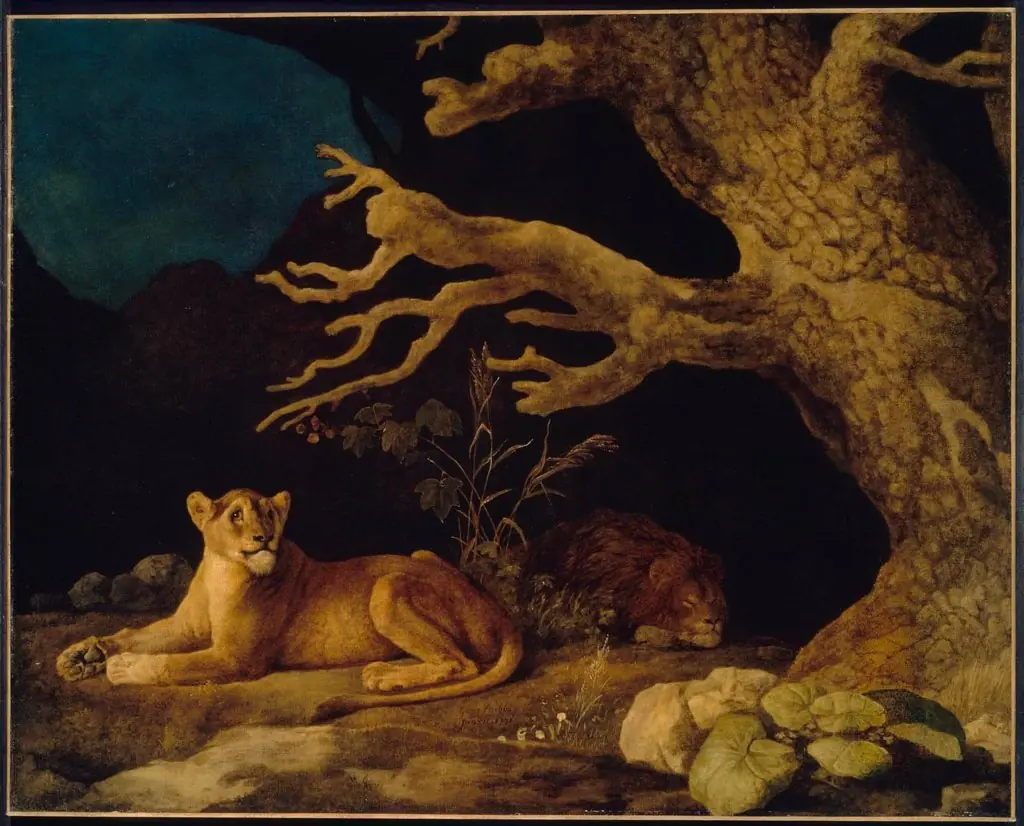 Lion and Lioness
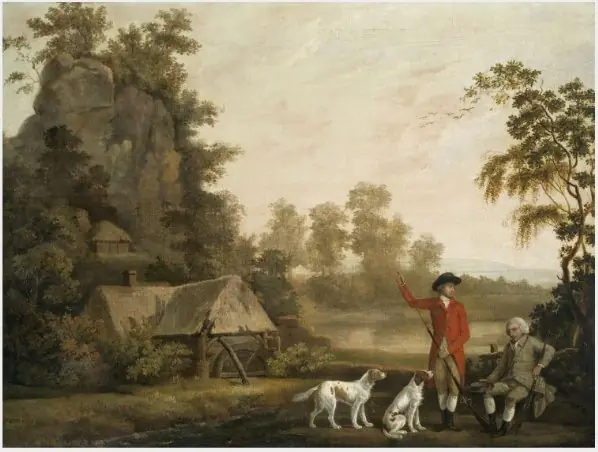 Sportsmen at Rest
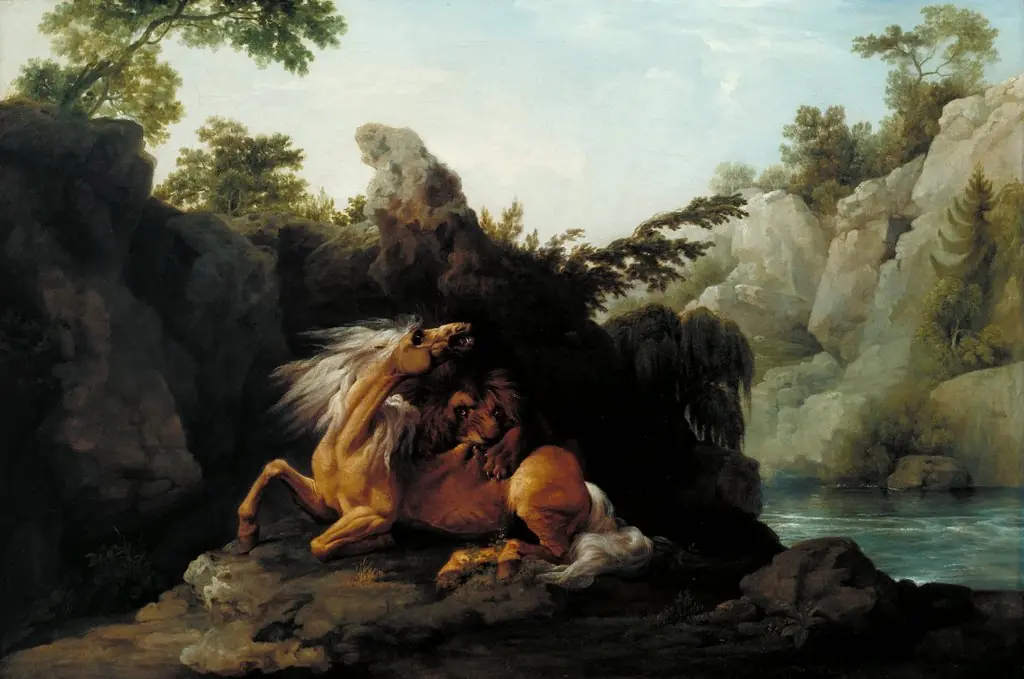 Horse Devoured by a Lion
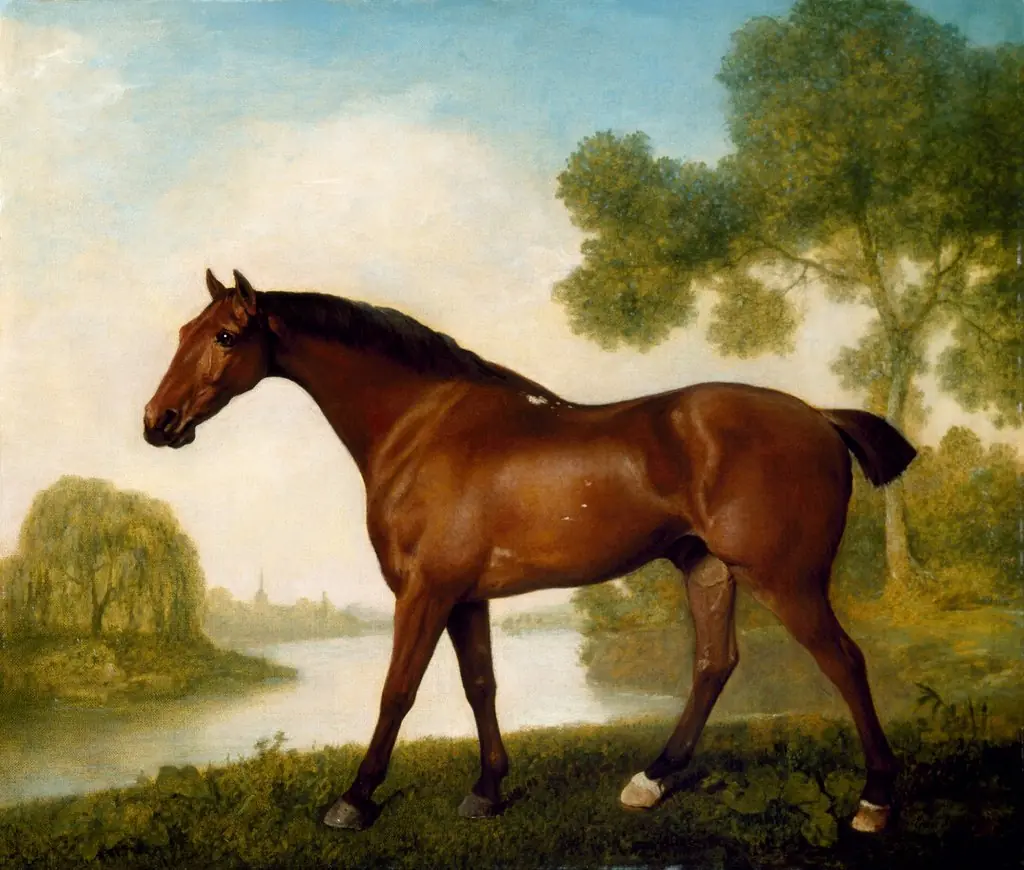 Truss, A Hunter
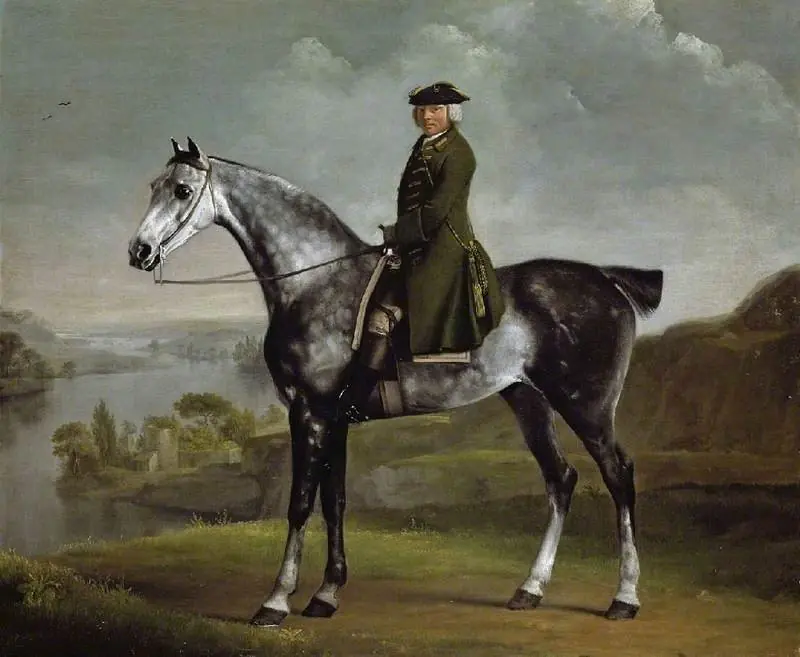 Joseph Smyth Esq, Lieutenant of Whittlebury Forest, Northamptonshire, on a dapple grey horse
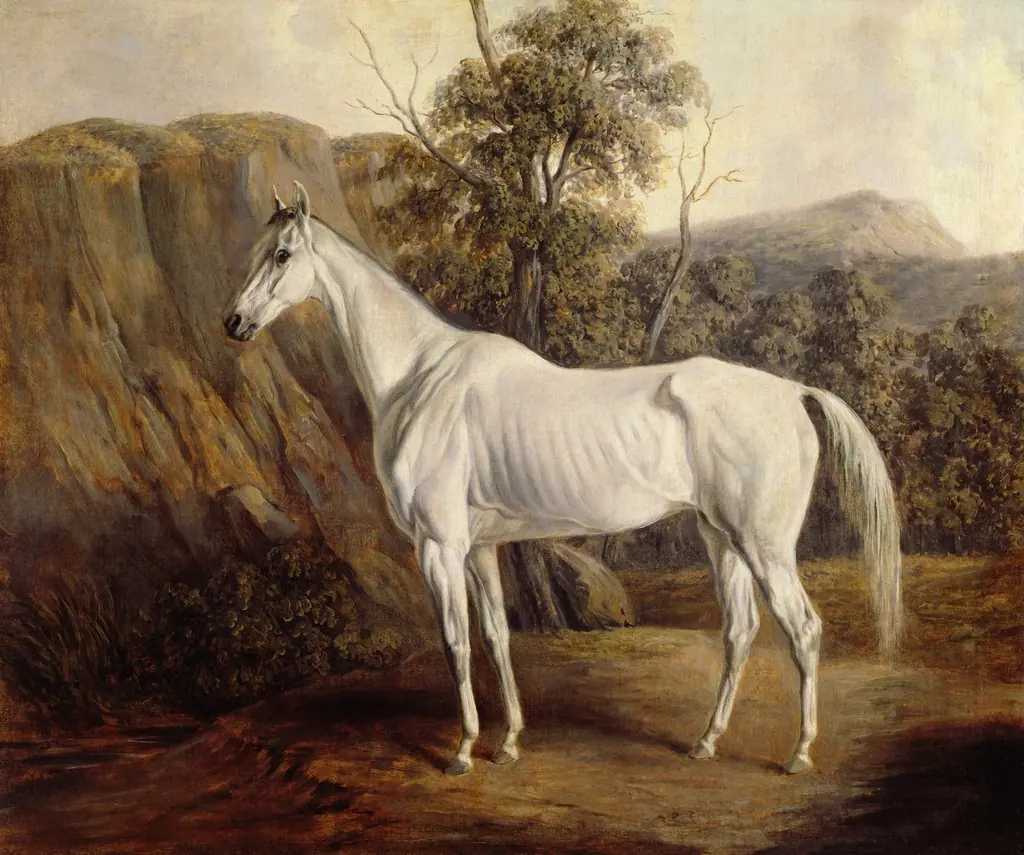 Bolivia
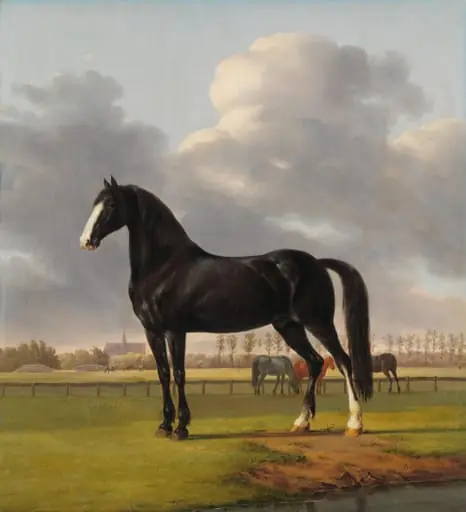 Adriaan van der Hoop’s Trotter ‘De Vlugge’ (The Fast One) in a Meadow
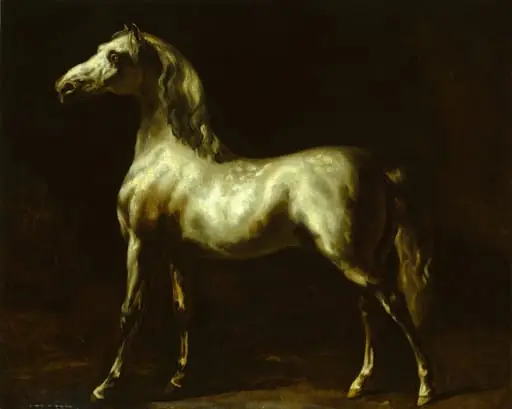 Gray Stallion
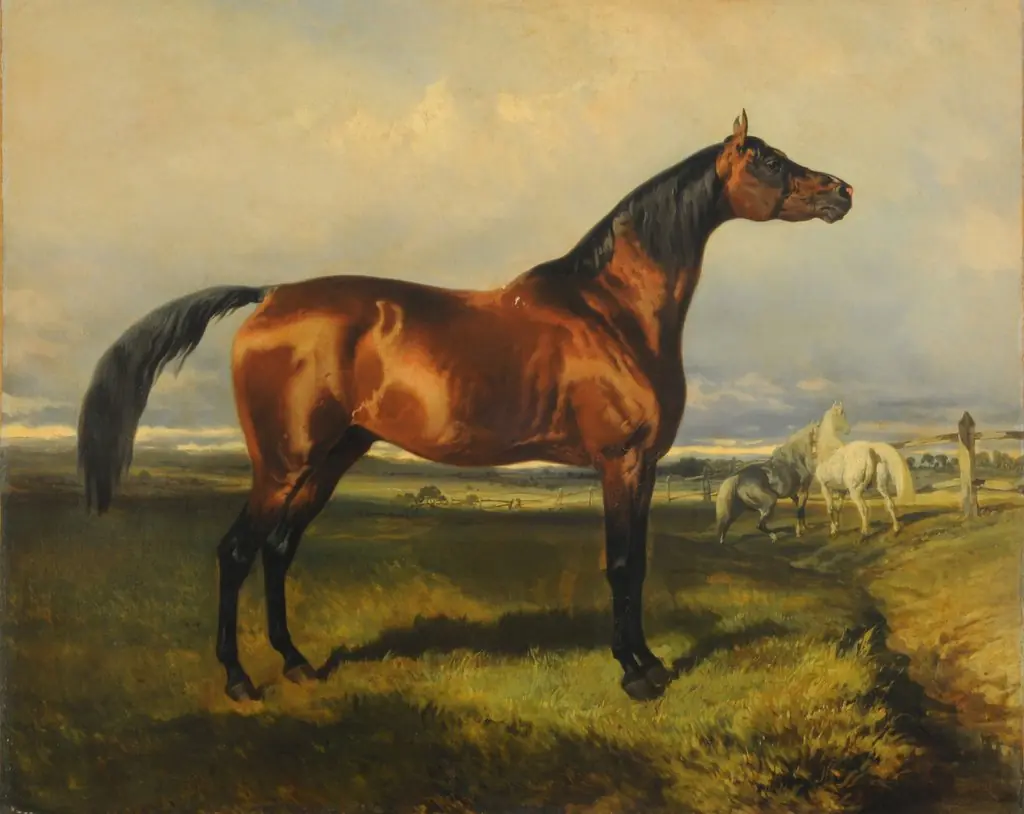 Horses in freedom
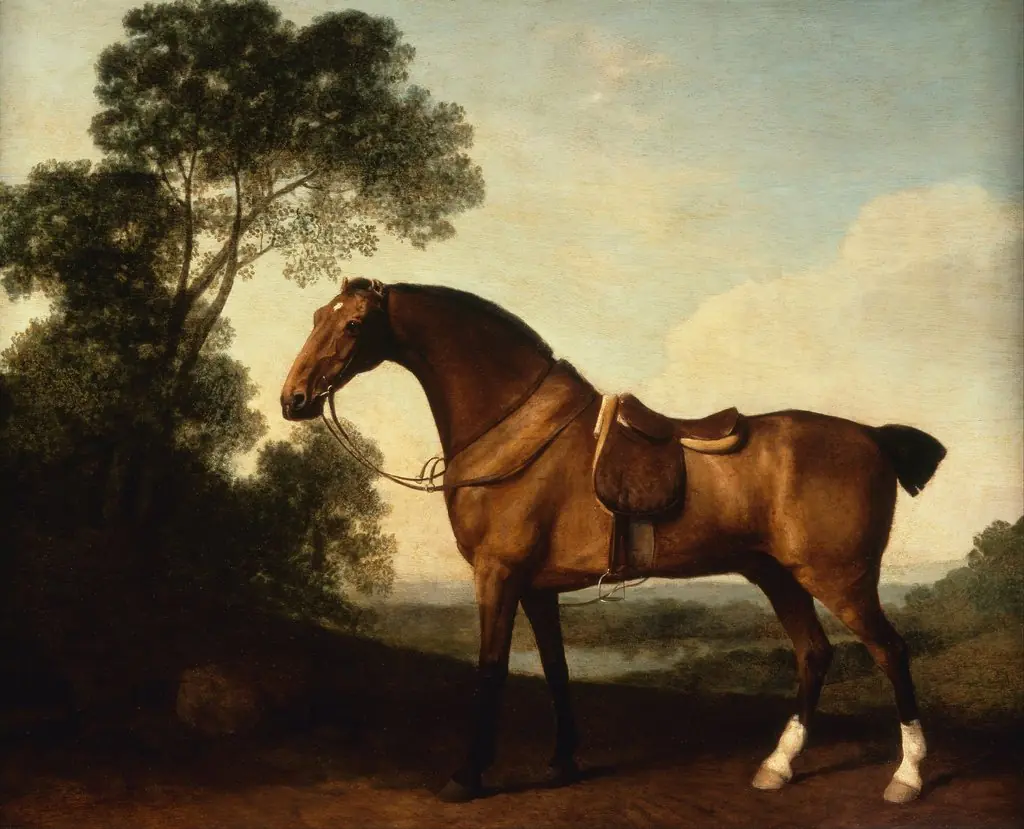 A Saddled Bay Hunter
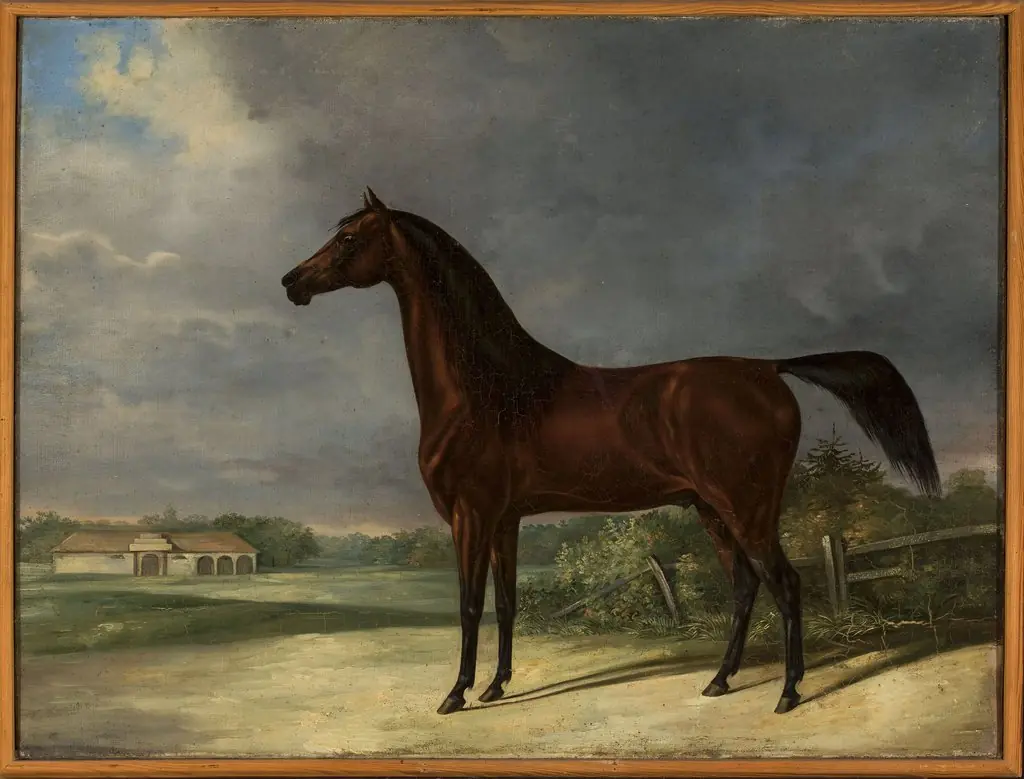 Bay horse
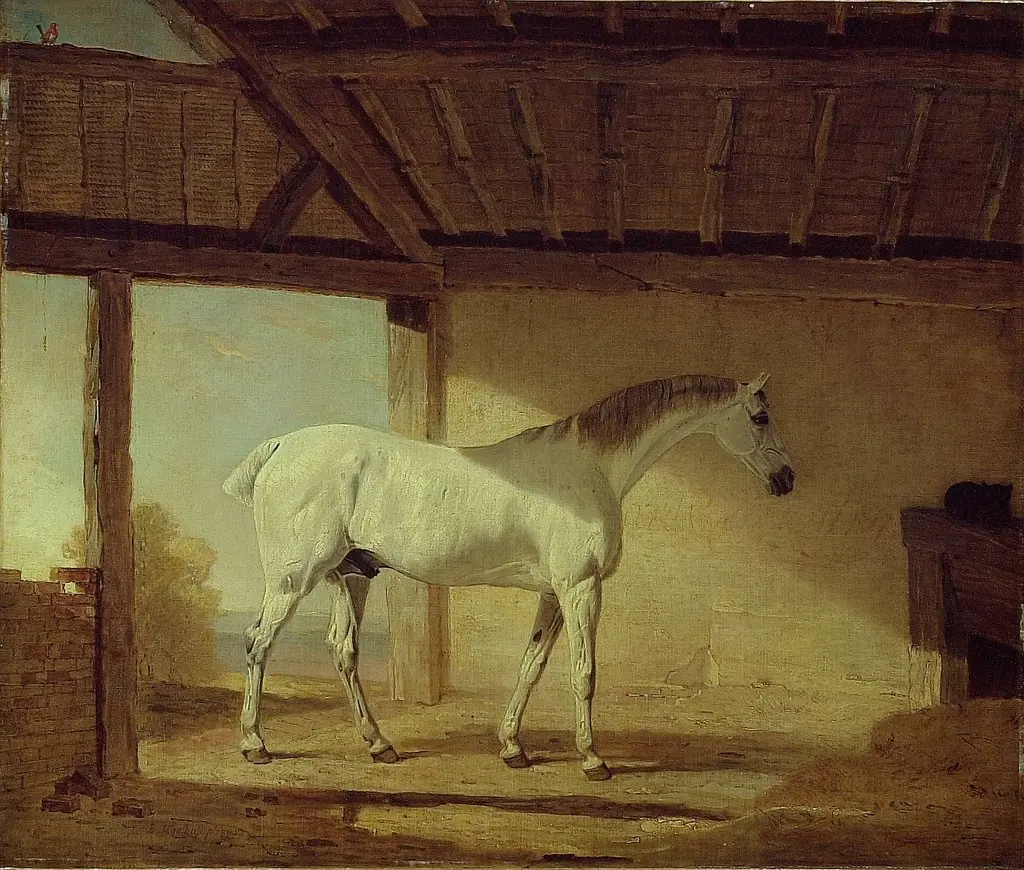 The Earl of Coventry's Horse
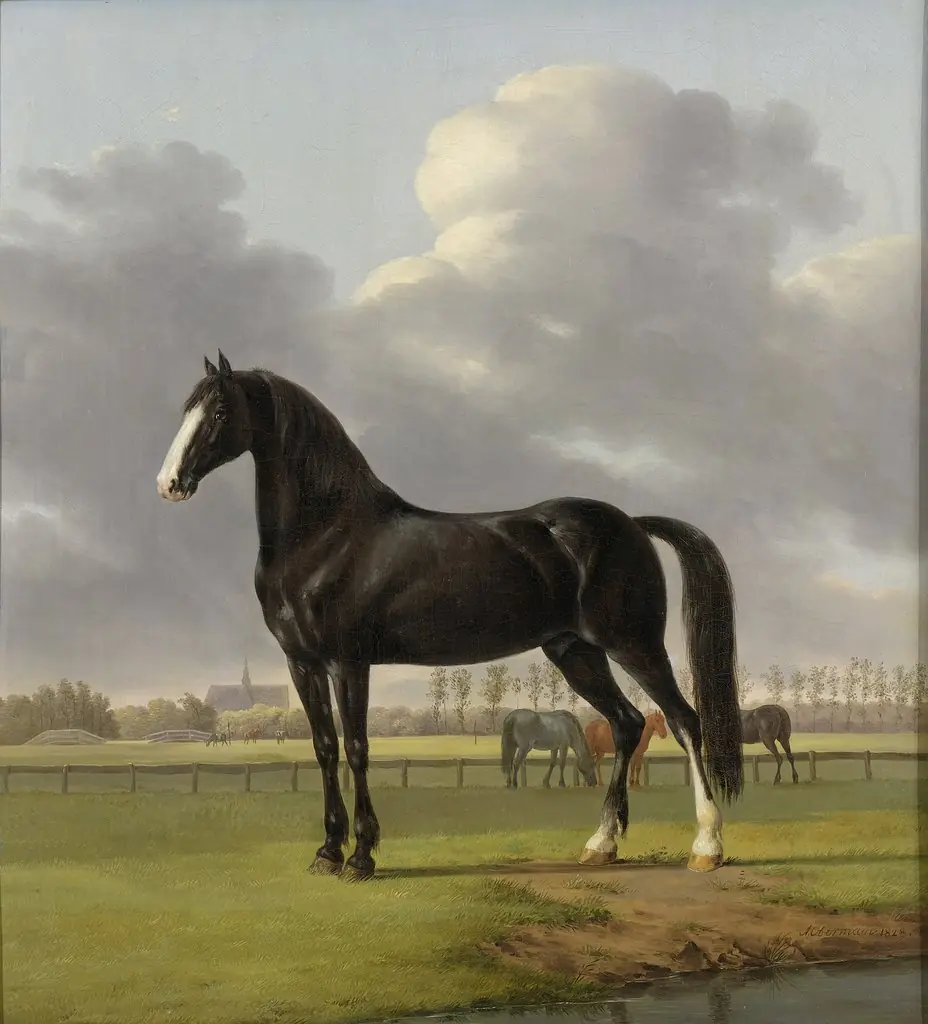 Adriaan van der Hoop’s Trotter ‘De Vlugge’ (The Fast One) in a Meadow
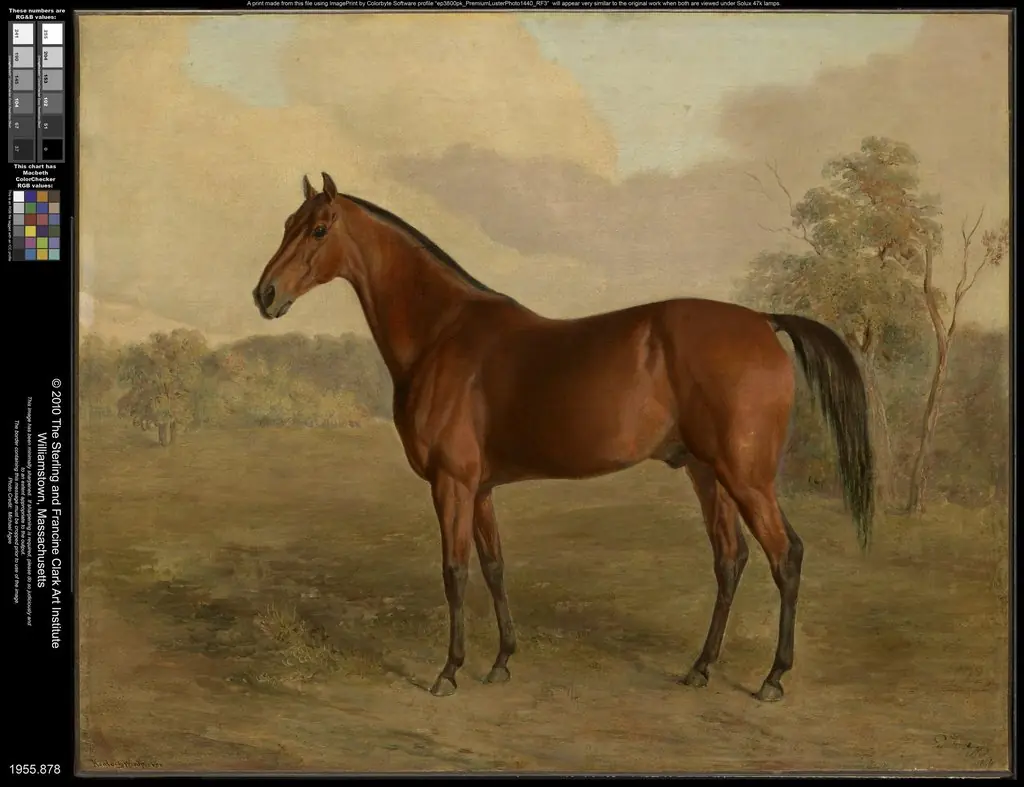 Kentucky Woodpecker
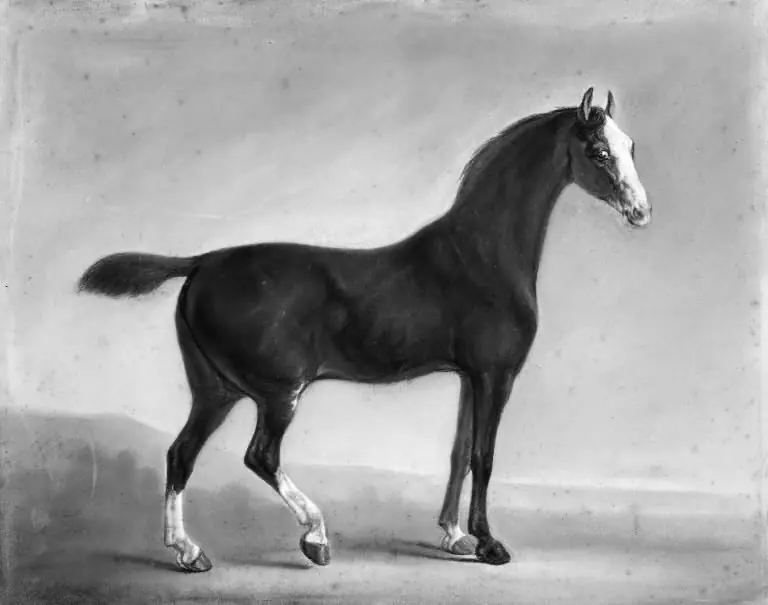 Standing Brown Horse
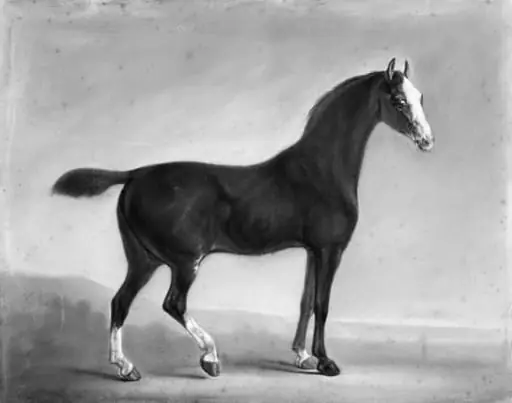 Standing Brown Horse