Artwork
Untitled
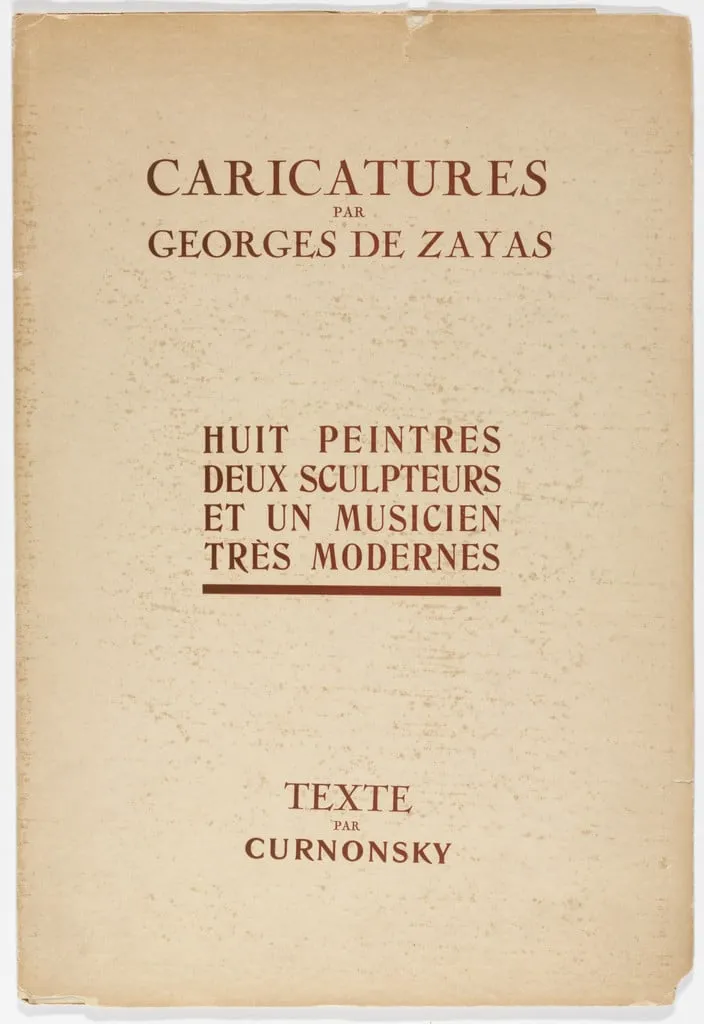
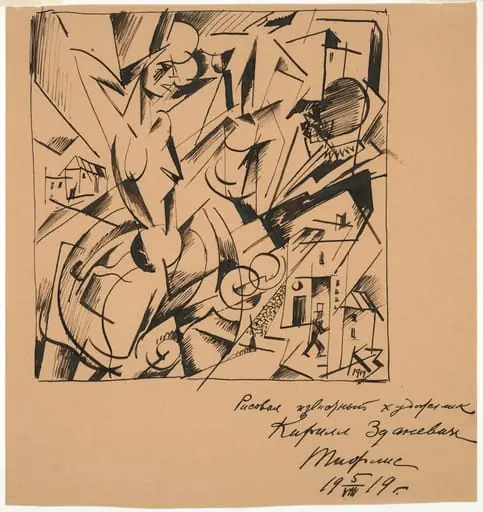
Untitled is an ink print by Georges de Zayas. It dates from 1919 and is held in the collection of the Museum of Modern Art.
About this work
You see eleven black-and-white prints in a slim folder—each one a sharp, exaggerated face of a painter, sculptor, or composer from 1919.
You see eleven black-and-white prints in a slim folder—each one a sharp, exaggerated face of a painter, sculptor, or composer from 1919.
De Zayas drew these like quick, witty sketches, but they’re actually lithographs: ink pressed from stone. The lines look hand-drawn, yet each copy is identical. That mix of rough energy and print precision feels very modern for the time.
If you like how these feel, look up lithography.
Overview
Created in 1919, this portfolio comprises eleven lithographs by Mexican-born artist Georges de Zayas, produced after his relocation to New York in 1907. Each print is a monochrome portrait of a contemporary artist or musician, rendered with the spontaneity of a sketch yet executed through the disciplined process of stone lithography. The works were compiled as a cohesive set, reflecting de Zayas’s engagement with the avant-garde circles of early 20th-century Manhattan.
Subject & Meaning
The portfolio depicts eleven figures from the New York art and music scene of 1919, including painters, sculptors, and composers. De Zayas rendered them with caricatural exaggeration—distorting features to emphasize personality rather than likeness. These are not satirical attacks but affectionate, witty character studies, capturing the individuality of creatives within a rapidly evolving cultural landscape.
Technique & Style
Though the images appear as rapid pen-and-ink drawings, they were produced using lithographic stone, allowing for multiple identical impressions. De Zayas exploited the medium’s capacity for fine, expressive lines, preserving the spontaneity of sketching while achieving the uniformity of print. The contrast between gestural energy and mechanical precision reflects a modernist interest in the tension between hand and machine.
History & Provenance
De Zayas, born in 1882 into a prominent Mexican family with ties to law and literature, began his career illustrating for major American publications. The portfolio emerged during his peak years in New York, when he was actively contributing to periodicals like *Collier’s* and the *New York Herald Tribune*. It was likely produced for private circulation among artistic peers rather than mass distribution.
Context
In 1919, New York was a hub for transatlantic modernism, with artists and writers challenging traditional forms. De Zayas’s portraits align with contemporaneous efforts to capture the spirit of creative individuals through stylized representation. His work resonates with the caricature traditions of Europe and the emerging American interest in personality-driven portraiture beyond academic realism.
Legacy
Though not widely exhibited during his lifetime, de Zayas’s portfolio remains a distinctive example of early 20th-century printmaking that bridges illustration and fine art. Its blend of wit, technical control, and cultural observation offers insight into the networks of artists who shaped modernism in America. The works are now held in institutional collections as documents of artistic community at a pivotal moment.
Artist & collection
Artist
George de Zayas (1882–1967) was a Mexican caricature artist, best known for work that appeared in Collier's, Harper's Bazaar, and the magazine section of the New York Herald Tribune.