Artwork
Study for 'A Sunday on the Island of La Grand Jatte': Couple Walking
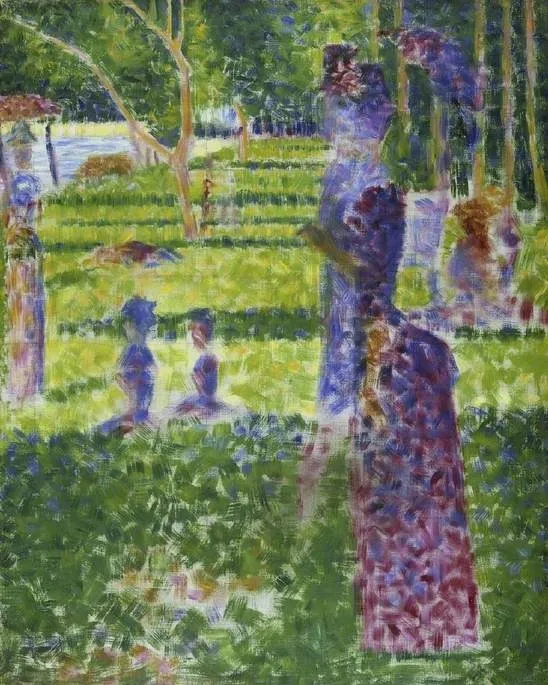
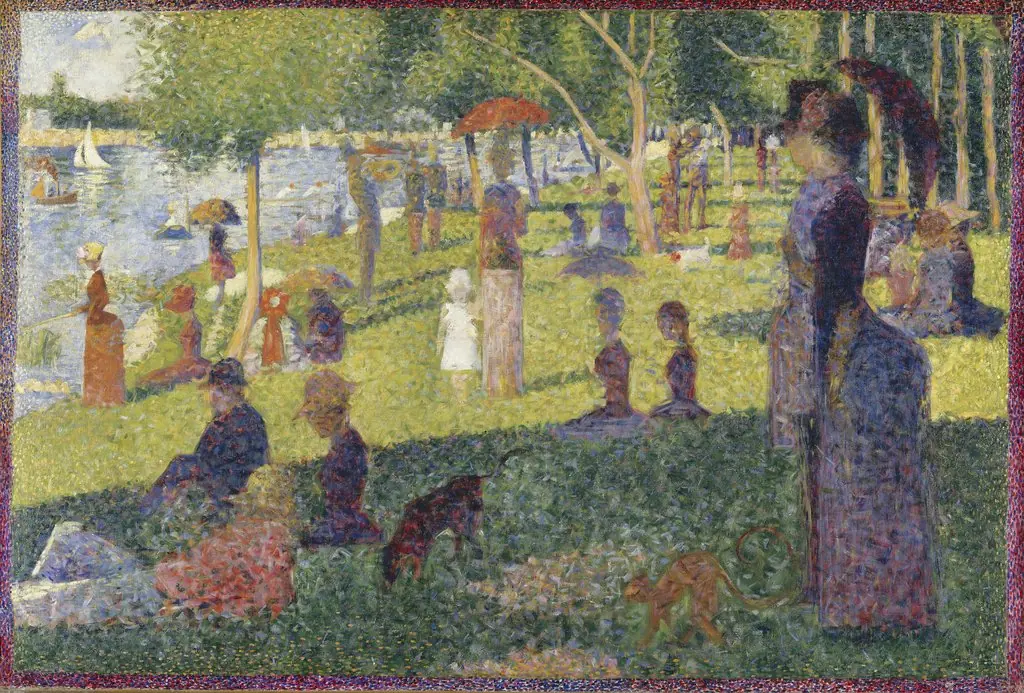
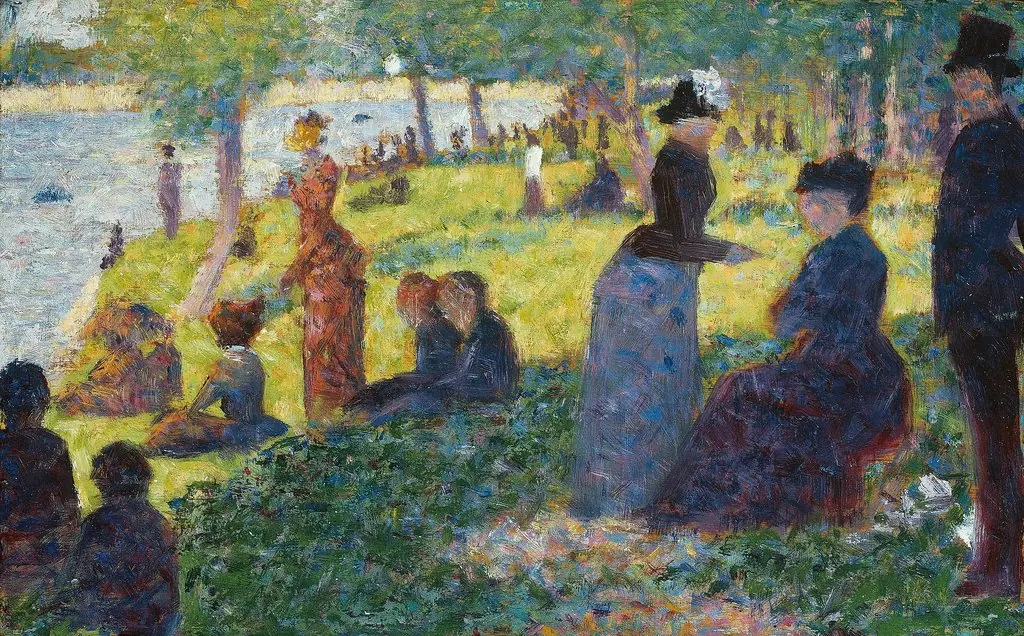
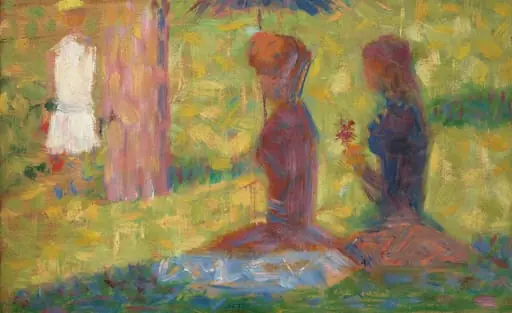
Study for 'A Sunday on the Island of La Grand Jatte': Couple Walking is an oil painting by Georges Seurat. It dates from 1885 and is held in the collection of the Fitzwilliam Museum.
About this work
Overview
It focuses on a single couple walking through a park, capturing their form and posture with deliberate, small brushstrokes.
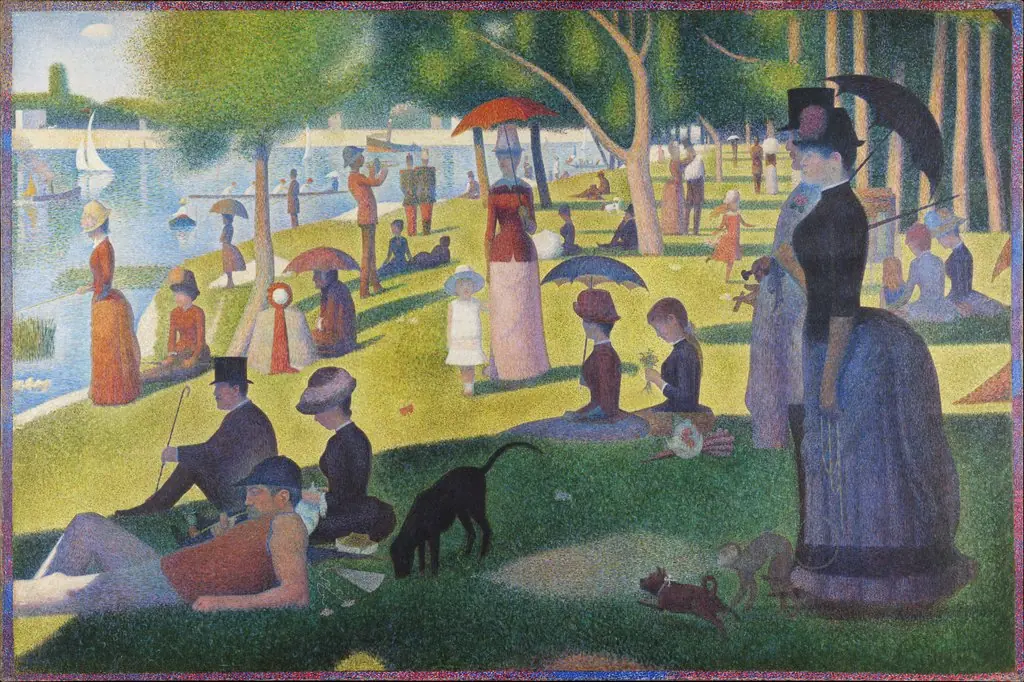
This oil study, dated around 1885, was made by Georges Seurat as part of his preparation for the larger painting A Sunday Afternoon on the Island of La Grande Jatte. It focuses on a single couple walking through a park, capturing their form and posture with deliberate, small brushstrokes. The work reflects Seurat’s systematic approach to composition and color, serving as a controlled experiment within his broader project to translate optical theory into visual form.
Subject & Meaning
The couple, dressed in formal early summer attire—a woman in a dark dress and hat, the man in a suit and top hat—move calmly through a shaded path. Their stillness contrasts with the implied motion of distant figures, suggesting a quiet rhythm of urban leisure. Seurat avoids narrative drama; instead, he presents everyday life as a structured, almost ritualized experience, emphasizing the dignity of ordinary moments in public space.
Technique & Style
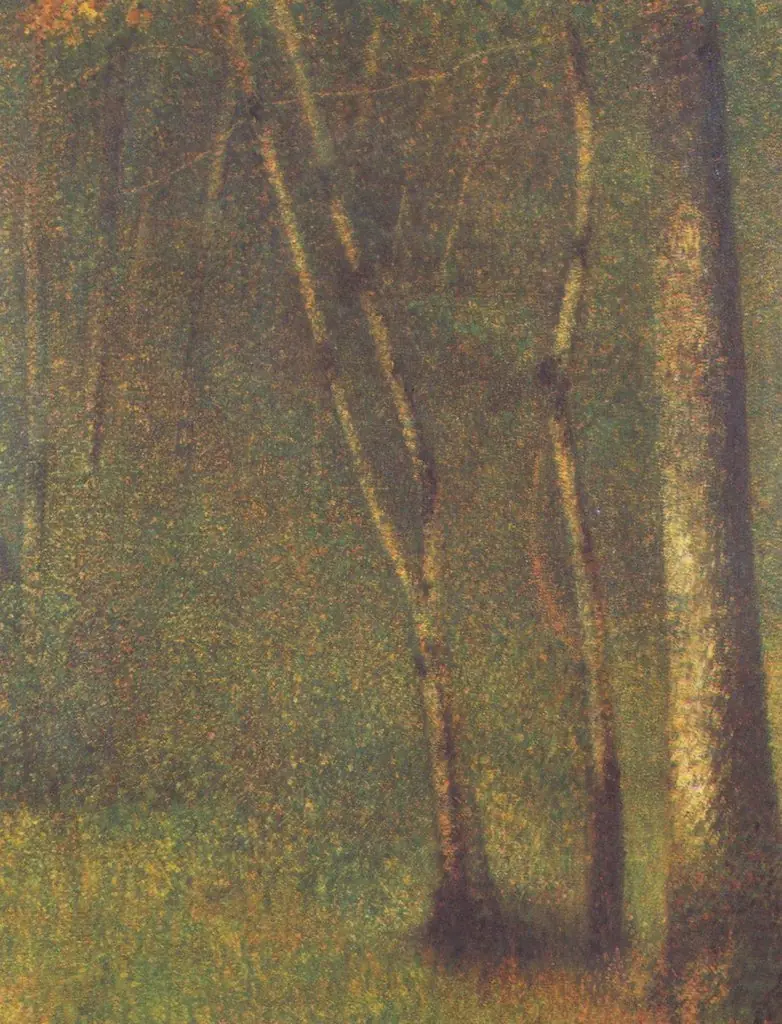
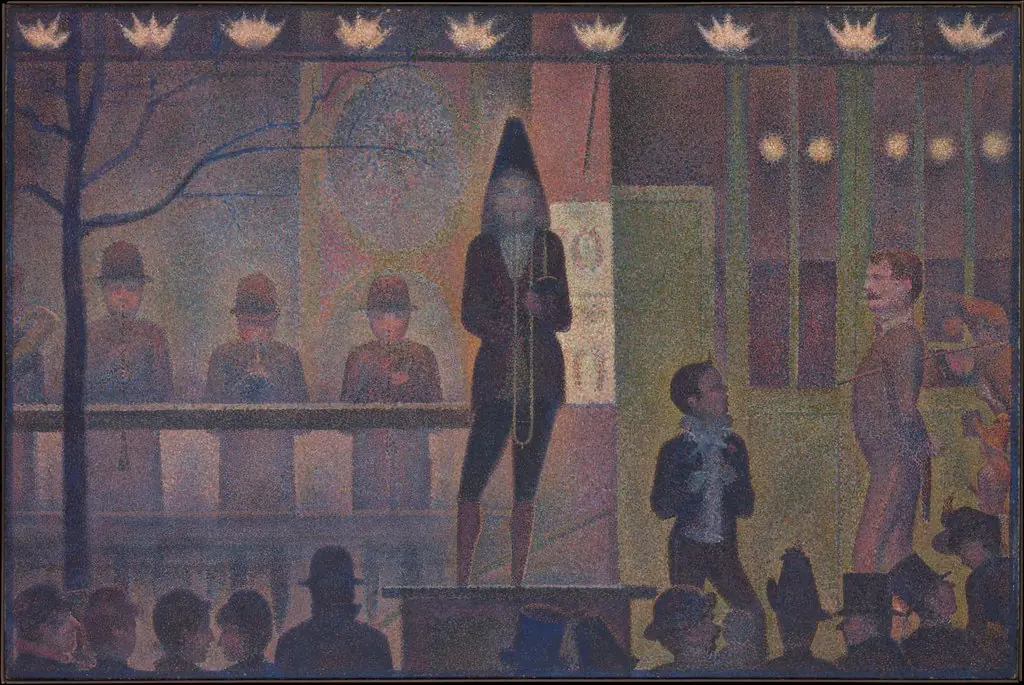
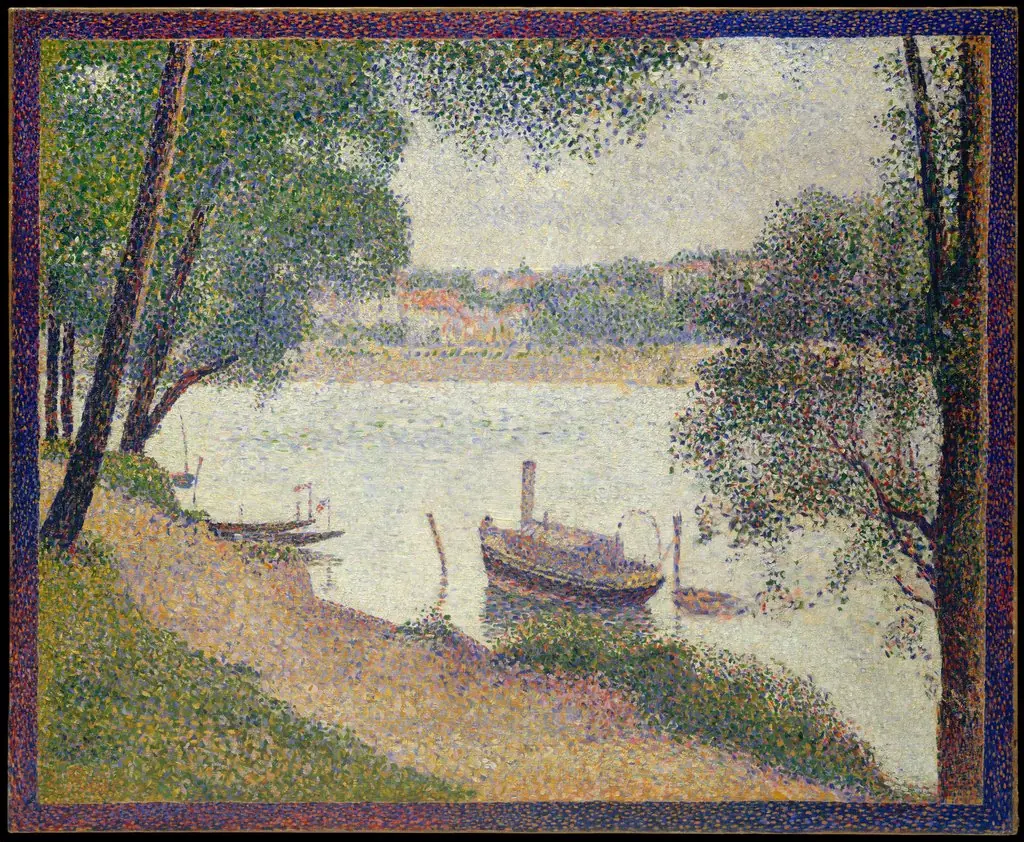
Seurat applied oil paint using tiny, methodical strokes of pure color, avoiding blending. This technique, rooted in chromoluminarism, relies on optical mixing: colors interact visually when viewed from a distance. The brushwork builds form and atmosphere without outlines, creating a sense of luminous depth. The study’s precision reveals Seurat’s scientific interest in perception, treating painting as a disciplined inquiry into light and color.
History & Provenance
Created during Seurat’s intensive preparatory phase for his monumental canvas, this study was retained by the artist and later entered the collection of the Fitzwilliam Museum in Cambridge. It remains one of the most carefully preserved examples of his working process, offering insight into how he refined figures and spatial relationships before executing the final composition.
Context
In mid-1880s Paris, public parks like La Grande Jatte became symbols of middle-class recreation. Seurat’s studies respond to this social shift, documenting how people occupied leisure spaces with formality and restraint. His approach diverged from the spontaneity of Impressionism, favoring structure and permanence. The study reflects broader intellectual currents in science, optics, and the desire to systematize artistic practice.
Legacy
This study exemplifies the foundation of Neo-Impressionism, influencing later artists who sought to ground painting in perceptual science. Its meticulous technique and conceptual rigor helped redefine the role of the preparatory sketch—not as a rough outline, but as a finished investigation. Today, it stands as a key document in understanding Seurat’s contribution to modern art’s shift toward analytical composition.
Artist & collection
Artist
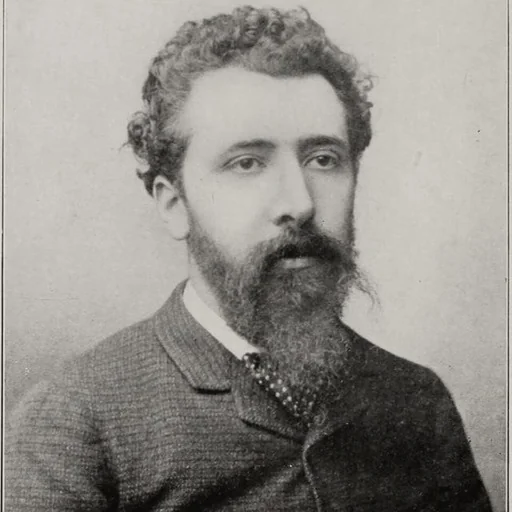
Georges Pierre Seurat (UK: SUR-ah, -ə, US: suu-RAH; French: ; 2 December 1859 – 29 March 1891) was a French post-Impressionist artist.