Artwork
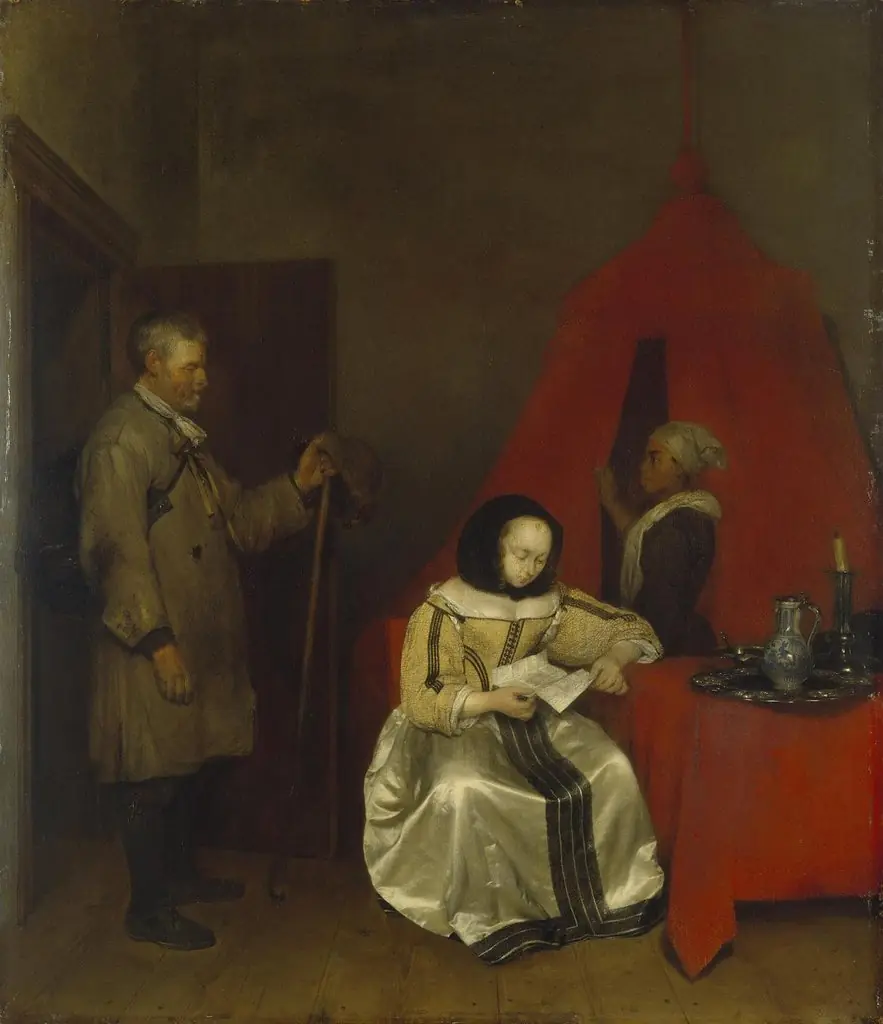
Sitting Lady Reading a Letter with a man
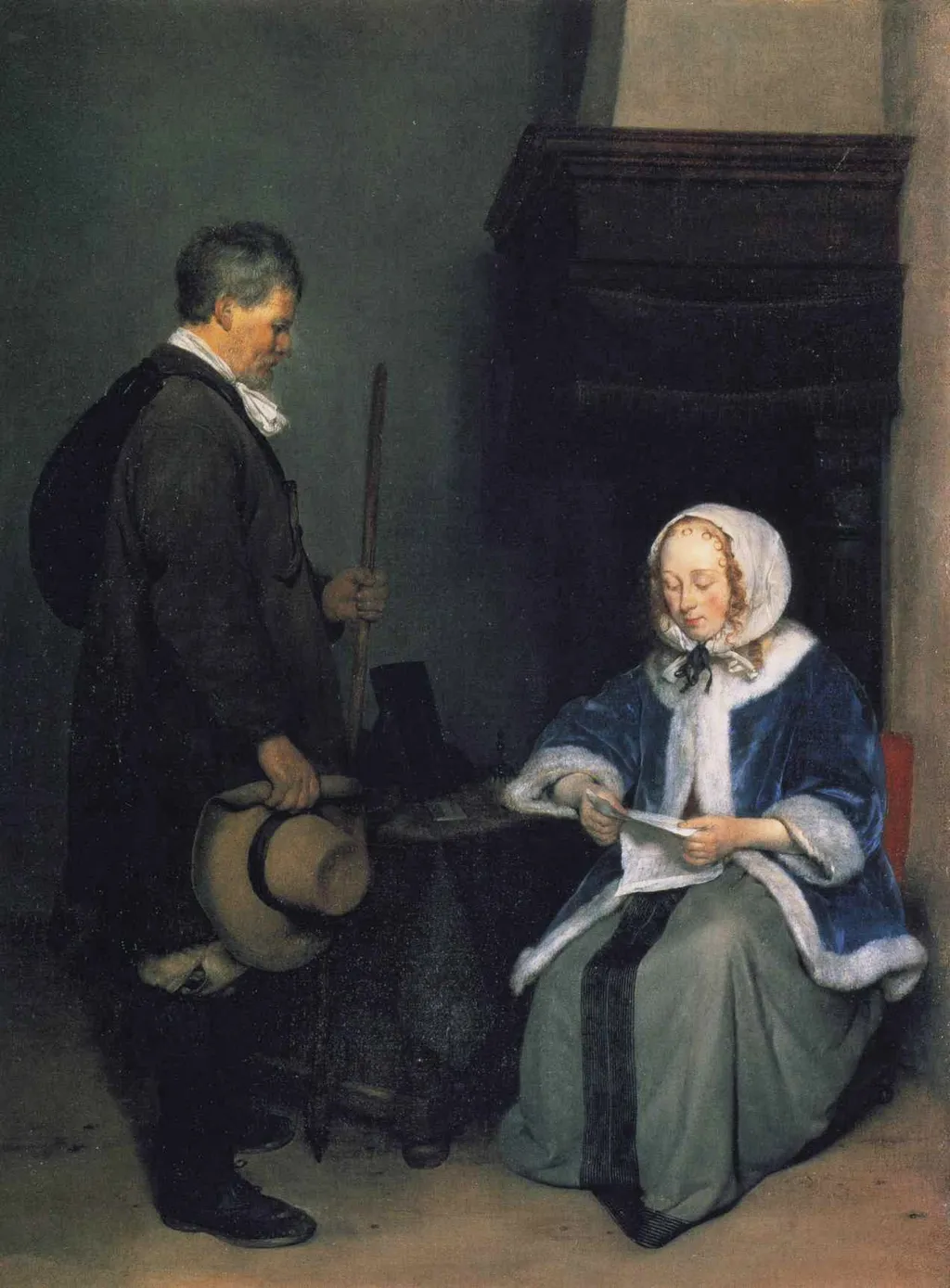
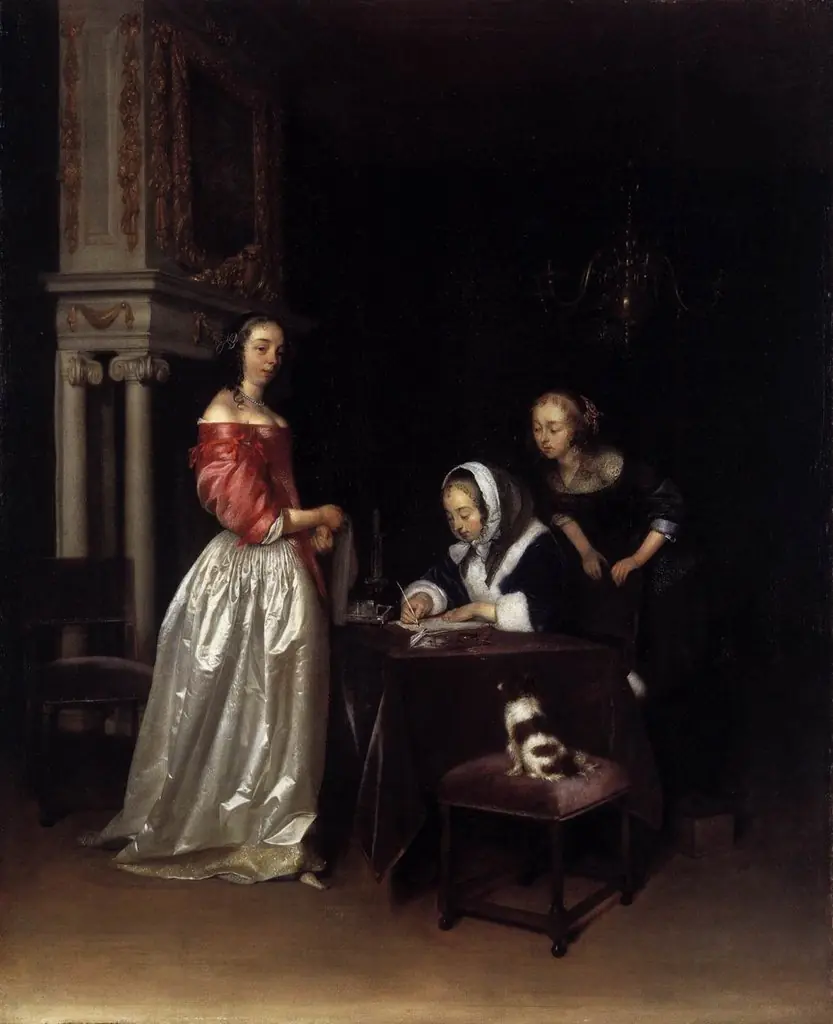
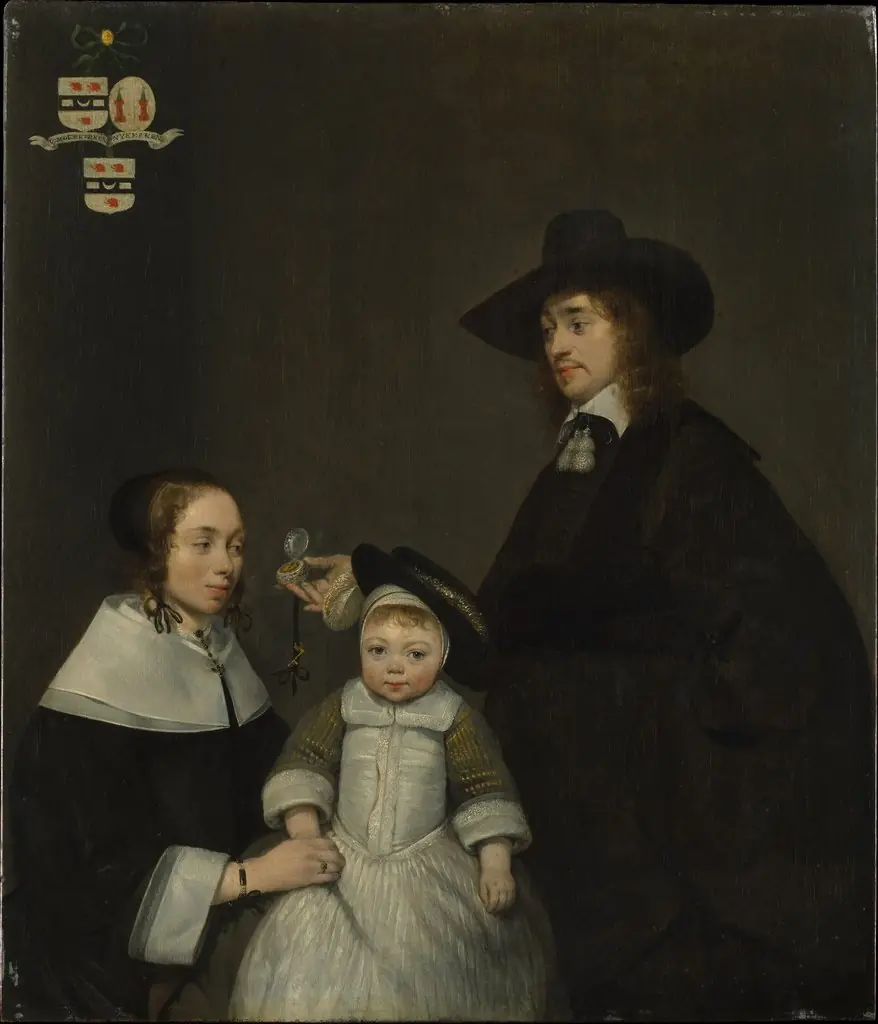
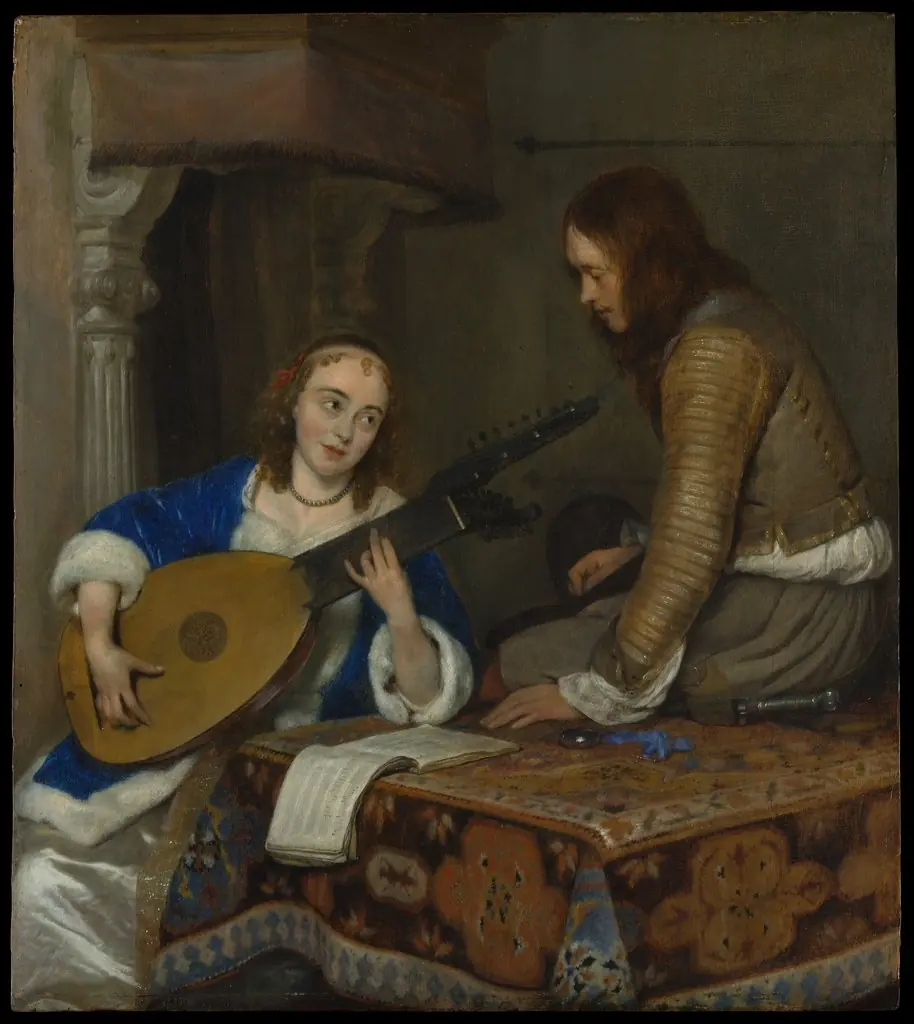
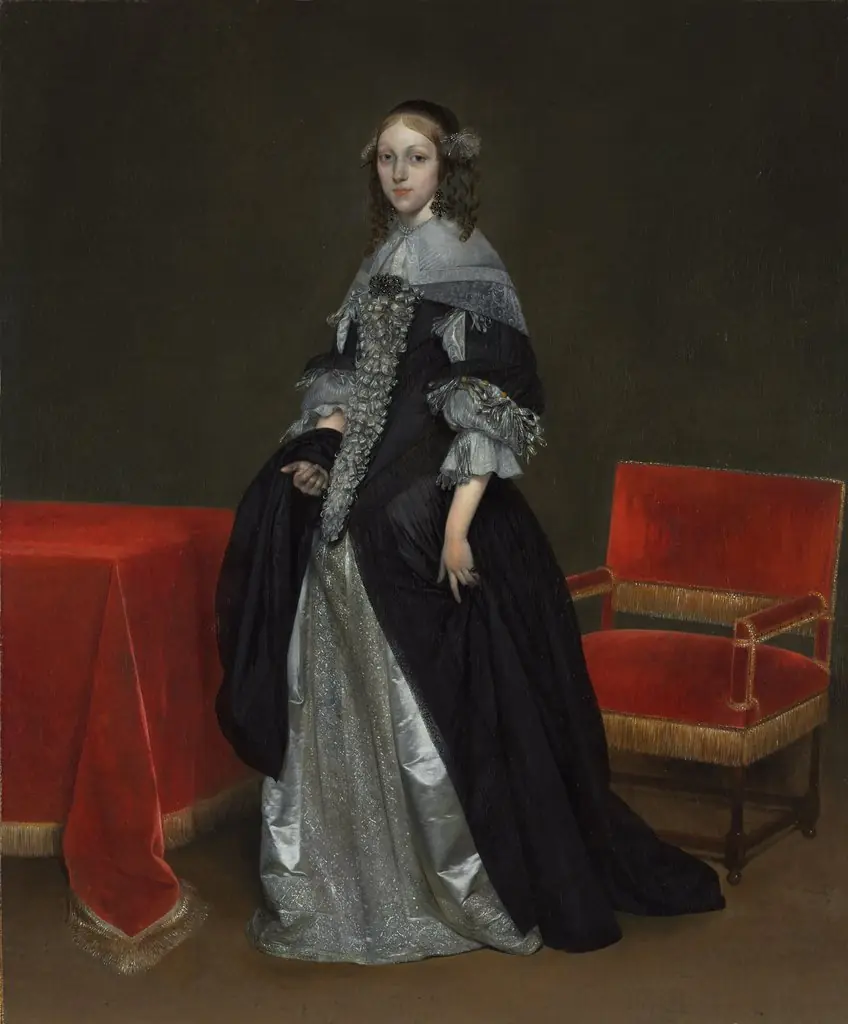
Sitting Lady Reading a Letter with a man is an oil painting by the Dutch Golden Age artist Gerard ter Borch. It dates from 1658 and is held in the collection of the Museum of Fine Arts of Lyon.
About this work
Overview
Painted in 1658 by Gerard ter Borch, this oil-on-canvas work captures a quiet domestic encounter between a woman reading a letter and a man standing beside her.
Painted in 1658 by Gerard ter Borch, this oil-on-canvas work captures a quiet domestic encounter between a woman reading a letter and a man standing beside her. Ter Borch, known for his refined depictions of upper-class interiors, renders the scene with restrained elegance. The composition emphasizes stillness and unspoken tension, characteristic of his approach to everyday moments in 17th-century Dutch life.
Subject & Meaning
The painting portrays a private moment of introspection and silent observation. The woman, absorbed in the letter, suggests emotional weight in her reading, while the man, hat and cane in hand, appears poised yet hesitant. Their physical proximity and divergent gazes imply an unspoken relationship—perhaps familial or romantic—where communication is implied rather than expressed, reflecting the era’s nuanced social codes.
Technique & Style
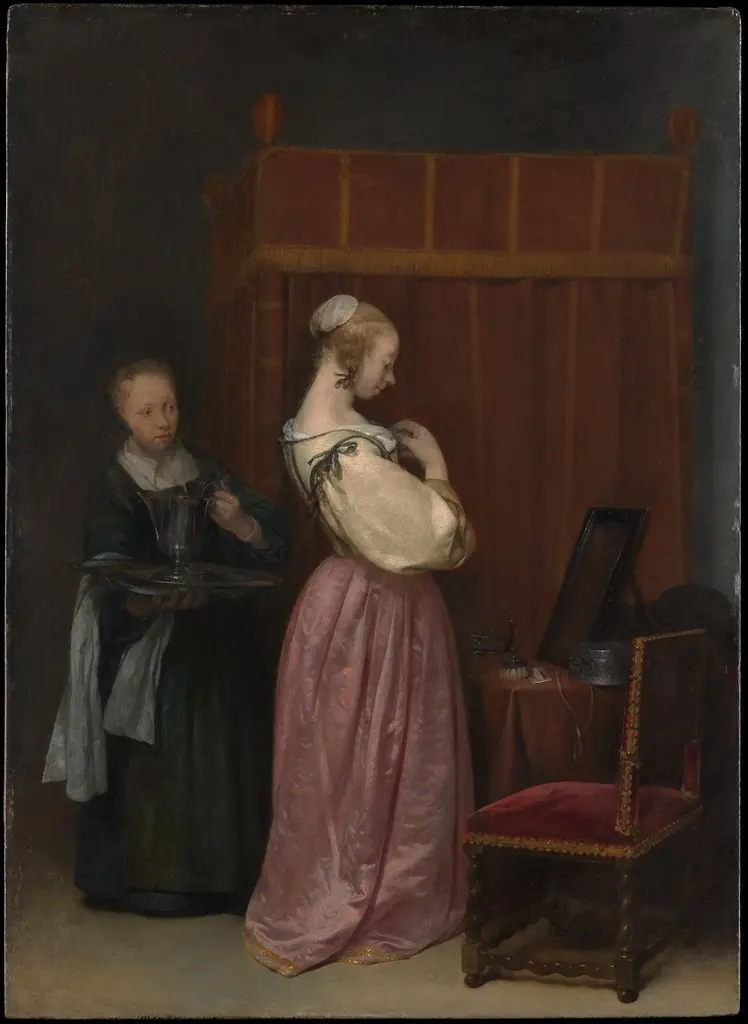
Ter Borch employs chiaroscuro to define form and mood, contrasting the woman’s luminous blue coat against the room’s dim, earth-toned surroundings. Fine brushwork captures the texture of fur trim and fabric folds, while subtle shifts in light guide the viewer’s attention to the letter and the figures’ expressions. The composition avoids dramatic action, favoring quiet realism and psychological restraint, hallmarks of his mature style.
History & Provenance
The painting entered the collection of the Museum of Fine Arts of Lyon in the 19th century, likely through acquisitions of Dutch Golden Age works by French collectors. Its attribution to ter Borch has remained consistent since its documentation in early museum records. No significant alterations or reworkings are recorded, preserving the artist’s original intent and surface quality.
Context
Created during the height of Dutch genre painting, the work reflects a broader cultural interest in private, interior life. Unlike grand historical or religious scenes, ter Borch focused on the quiet rituals of the middle and upper classes—reading, writing, conversing. His attention to detail and emotional subtlety aligned with contemporaries like Vermeer, though his palette and compositional calm remain distinct.
Legacy
Ter Borch’s ability to convey psychological depth through minimal gesture influenced later genre painters, particularly in the Netherlands. While not widely exhibited outside specialized collections, this painting exemplifies his contribution to the evolution of intimate portraiture. Its understated power continues to inform scholarly study of 17th-century Dutch social behavior and visual narrative.
Own this work as a print
Artist & collection
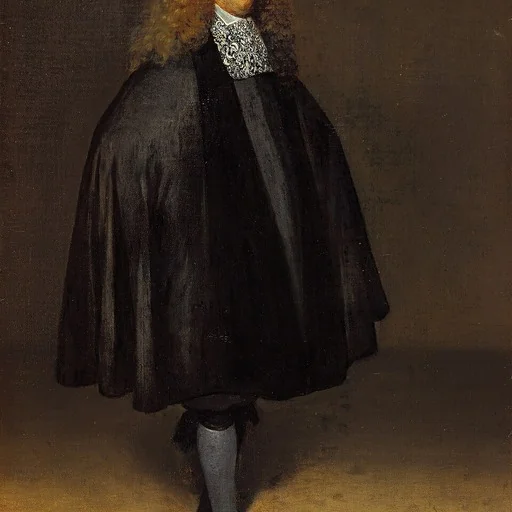
Artist
Gerard ter Borch (Dutch: ; December 1617 – 8 December 1681), also known as Gerard Terburg (Dutch: ), was a Dutch Golden Age painter mainly of genre subjects.