Artwork
Rural Postman
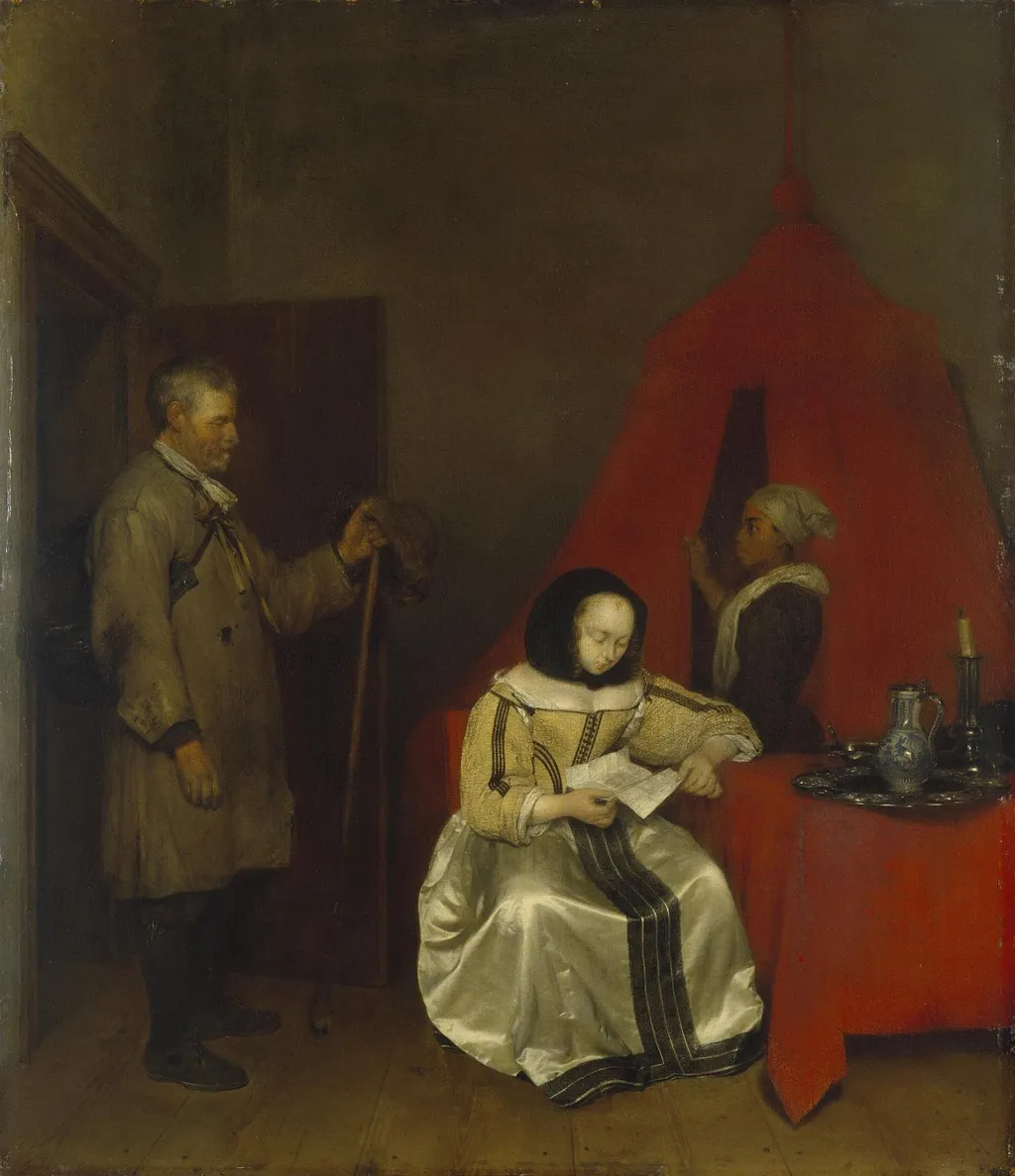
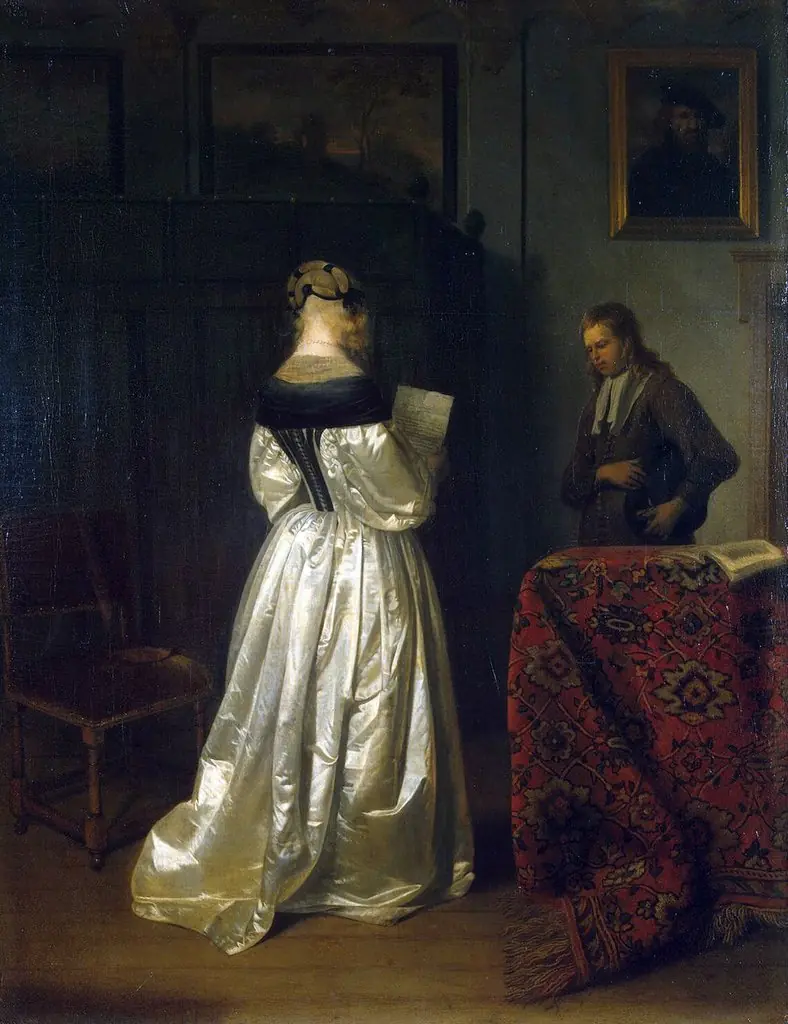
Rural Postman is an oil painting by the Dutch Golden Age artist Gerard ter Borch. It dates from 1654 and is held in the collection of the Hermitage Museum.
About this work
Overview
Painted in 1654 by Gerard ter Borch, this oil on panel work portrays a quiet domestic moment in a Dutch household. A man in a tan coat stands in a doorway, leaning on a walking stick, while two women sit at a table. The scene captures an unguarded pause in daily life, characteristic of ter Borch’s focus on intimate, restrained interactions within private spaces.
Subject & Meaning
The figures engage in silent, individual actions: one woman holds a sheet of paper, possibly a letter, while the other sits still, her posture attentive.
The figures engage in silent, individual actions: one woman holds a sheet of paper, possibly a letter, while the other sits still, her posture attentive. The man’s presence suggests a postal delivery, yet no explicit exchange occurs. The painting evokes the quiet significance of everyday communication, emphasizing stillness over narrative drama, and the subtle weight of correspondence in domestic life.
Technique & Style
Ter Borch employs fine brushwork to render textures—delicate lace, smooth porcelain, woolen fabric—with precision. Light falls softly across the figures, modeling forms without harsh contrasts. The composition is balanced and contained, with muted tones and a restrained palette that enhance the scene’s calm atmosphere. His attention to gesture and spatial depth reflects a refined sensitivity to psychological nuance.
History & Provenance
The painting entered the collection of the State Hermitage Museum in Saint Petersburg, where it remains today. While its early ownership is undocumented, its presence in the Hermitage since the 18th century aligns with broader European interest in Dutch genre painting during that period. Its attribution to ter Borch has been consistently supported by stylistic analysis and archival records.
Context
In mid-17th century Holland, domestic interiors became a favored subject as urban prosperity expanded. Ter Borch’s works stood apart for their understated emotional depth and meticulous detail, contrasting with more theatrical genre scenes. The inclusion of Kraak porcelain, a luxury import from China, subtly signals the household’s modest affluence and the global trade networks shaping Dutch life.
Legacy
Ter Borch’s influence extended to contemporaries such as Vermeer, particularly in the treatment of light and quiet psychological tension. *Rural Postman* exemplifies a shift in genre painting toward introspection, away from moralizing or anecdotal storytelling. Its enduring presence in major collections underscores its role in defining the quiet realism that became a hallmark of Dutch art in the Golden Age.
Own this work as a print
Artist & collection
Artist
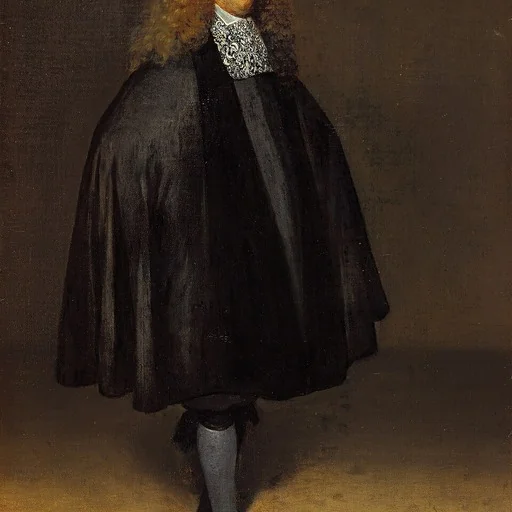
Gerard ter Borch (Dutch: ; December 1617 – 8 December 1681), also known as Gerard Terburg (Dutch: ), was a Dutch Golden Age painter mainly of genre subjects.

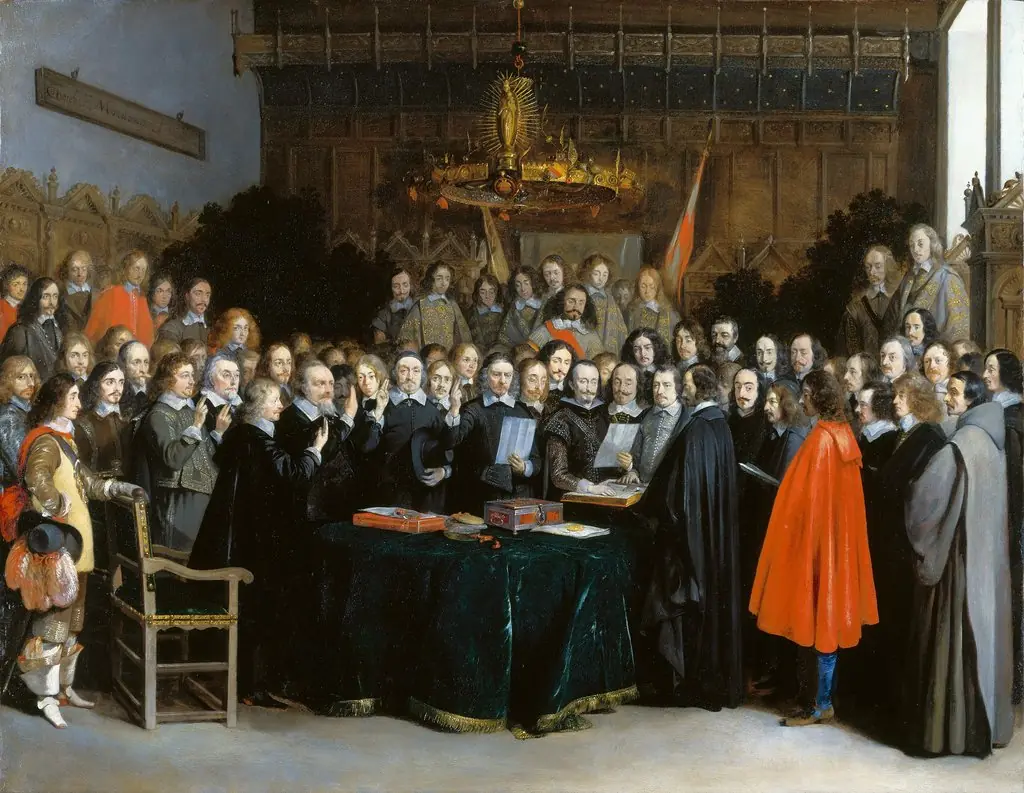
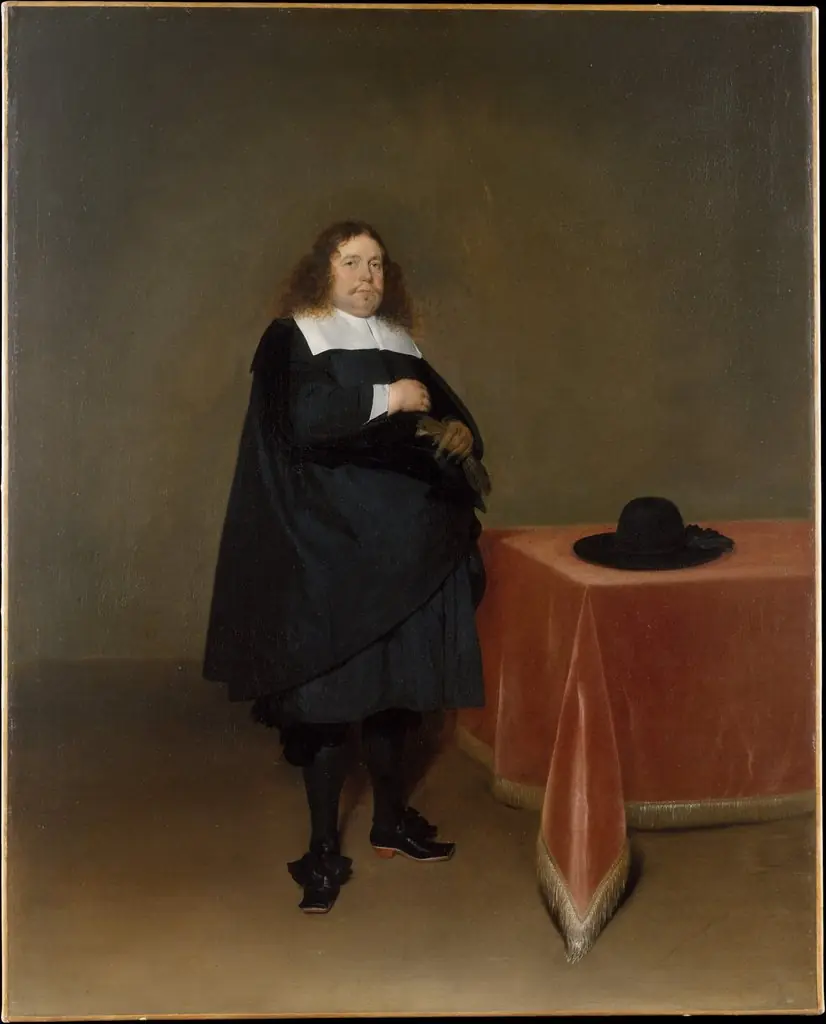
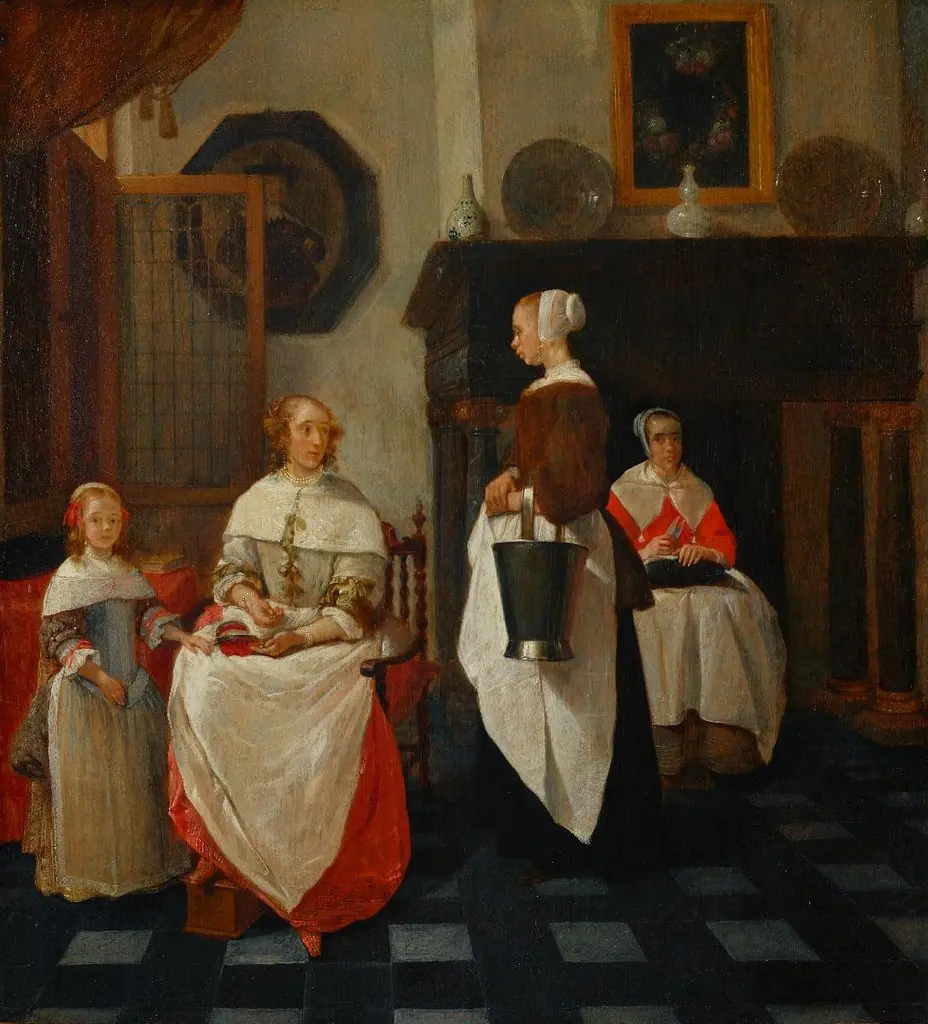 Interieur mit drei Frauen und einem Mädchen
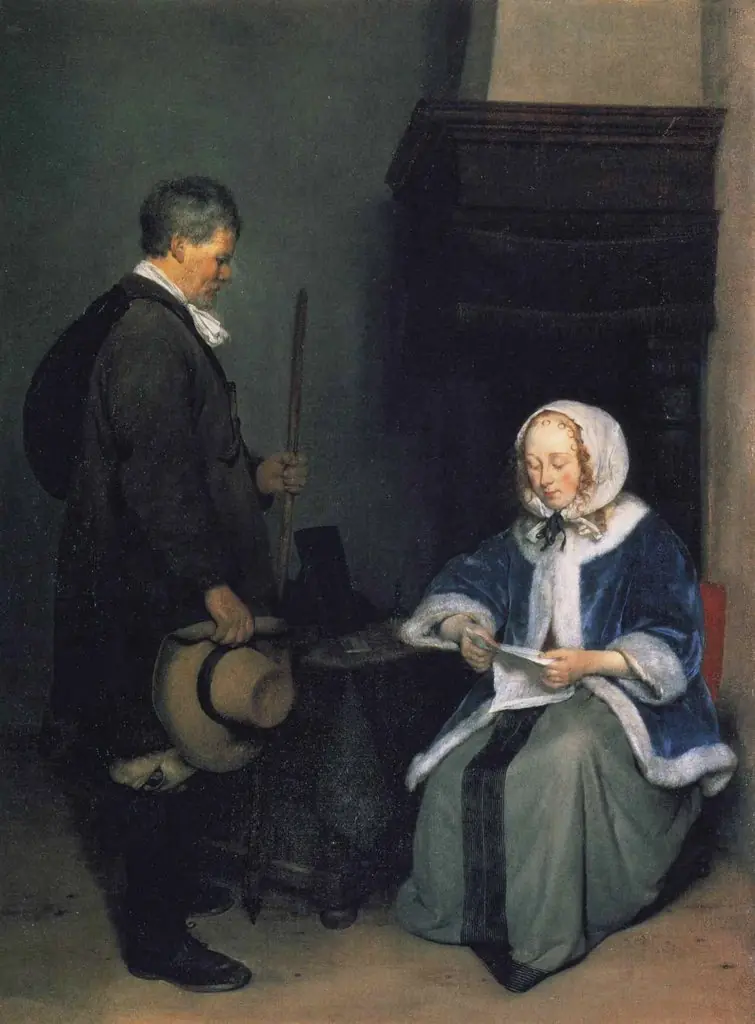 Sitting Lady Reading a Letter with a man
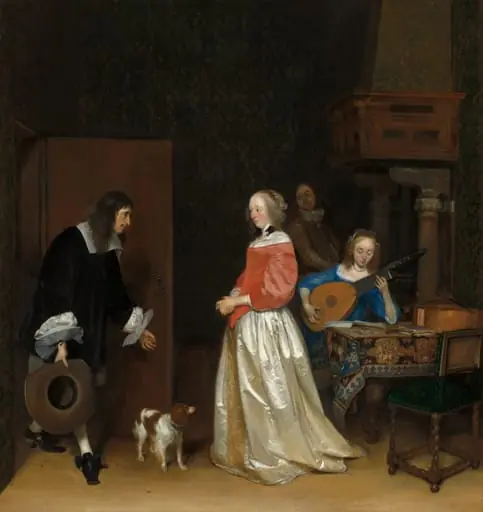 The Suitor's Visit
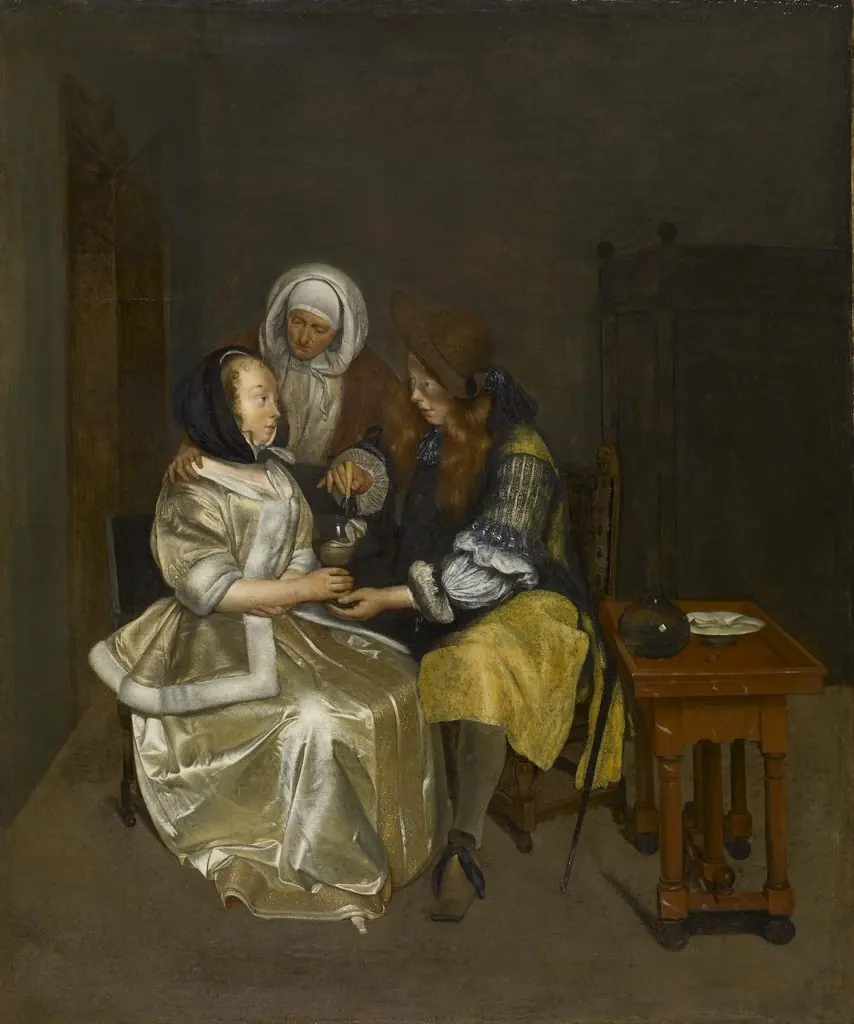 A Glass Of Lemonade
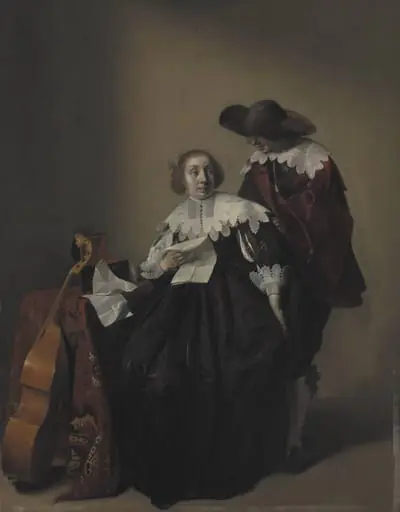 A Seated Woman with a Letter, a Gentleman Standing by Her
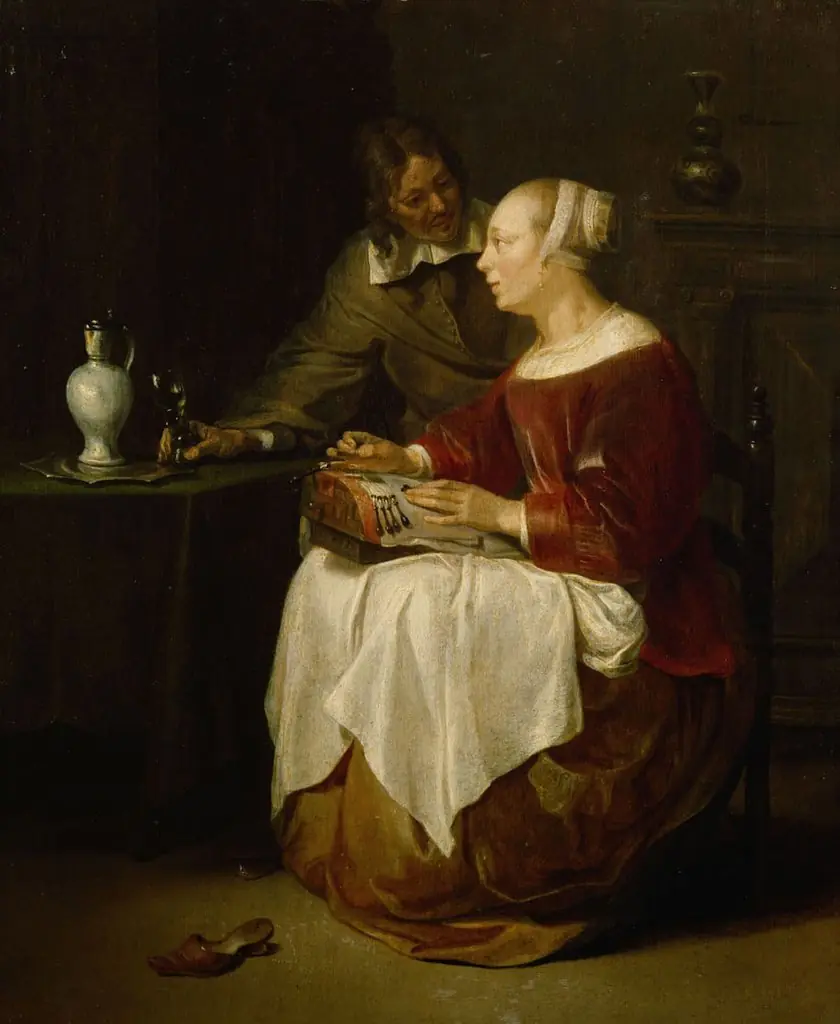 The Lace Maker
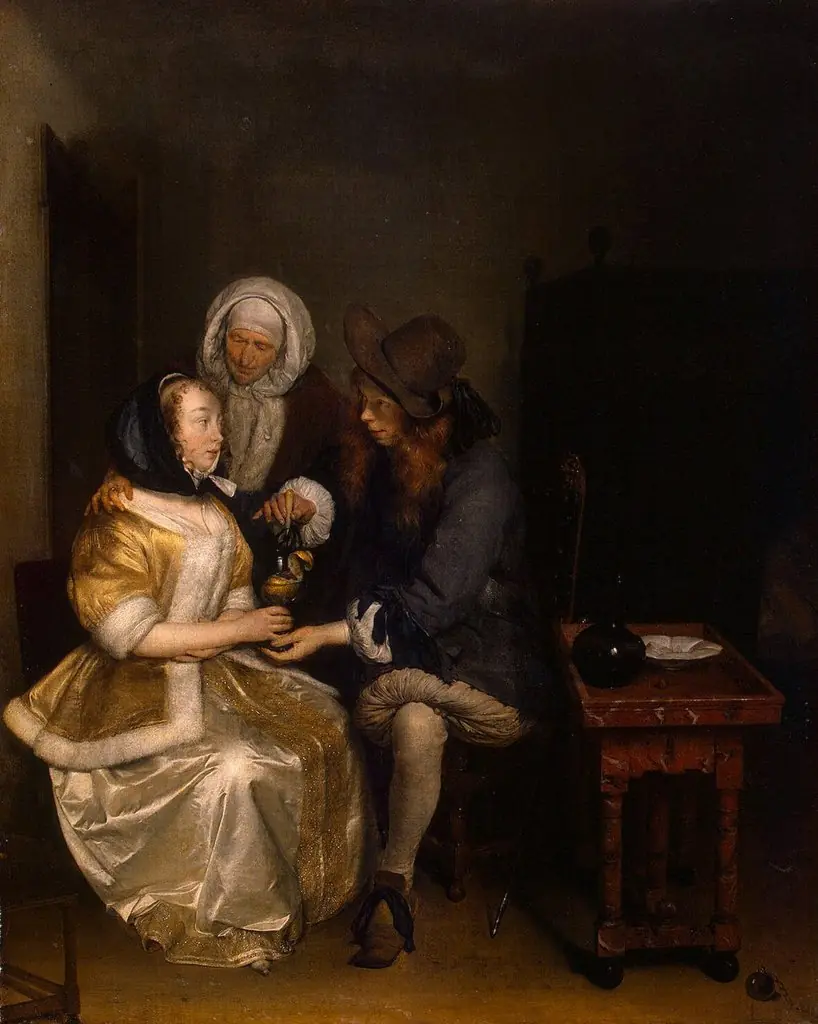 Glass of Lemonade
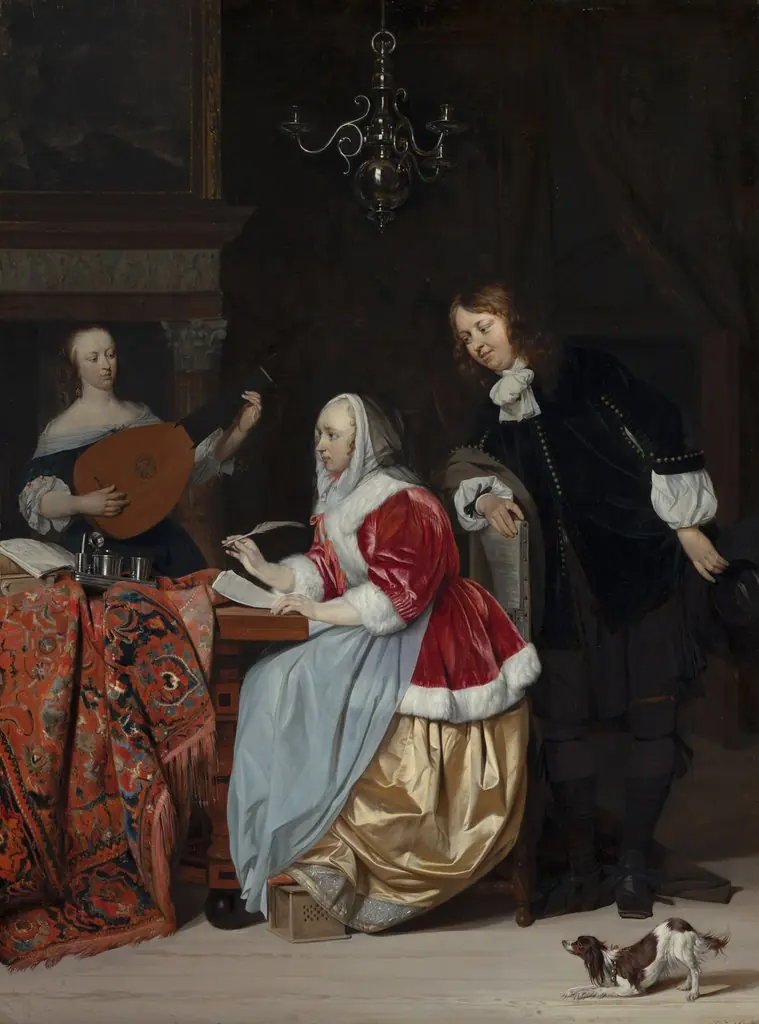 A young Woman Writing Music
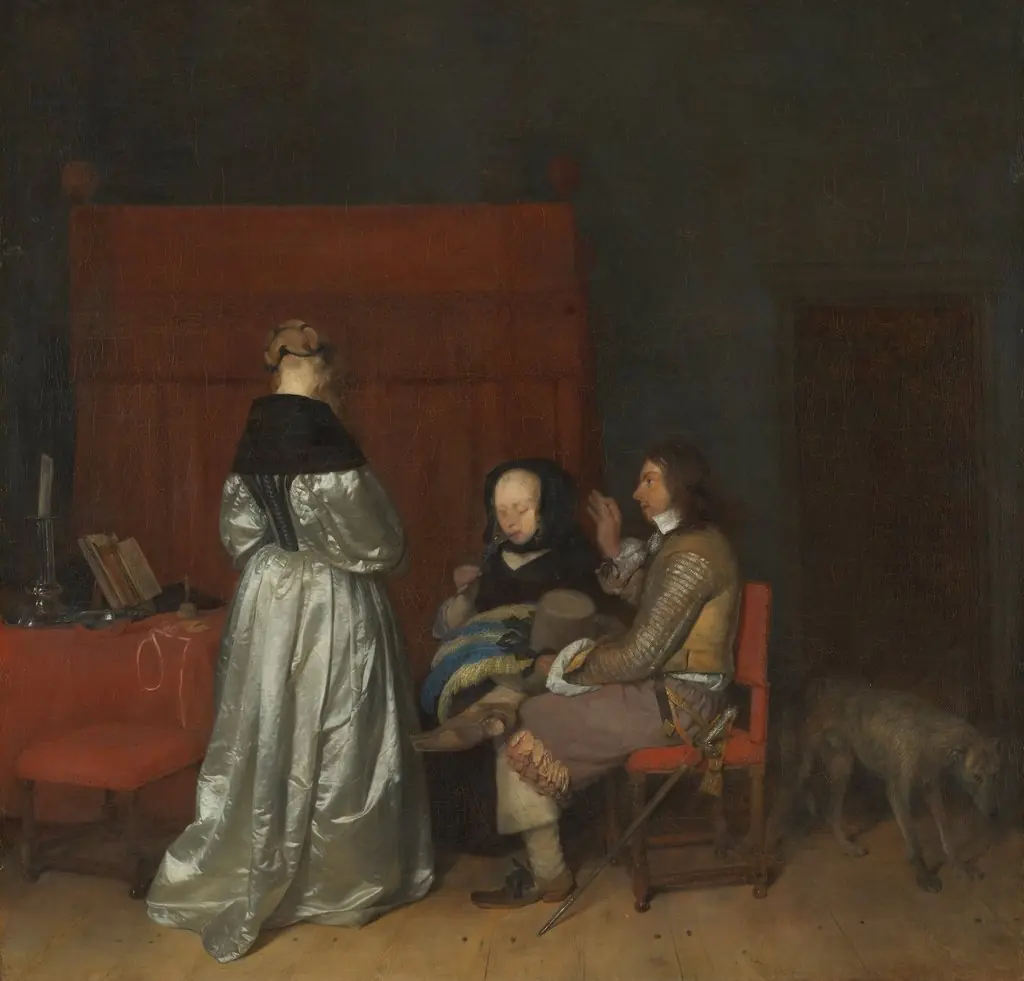 The Gallant Conversation, known as Paternal Admonition
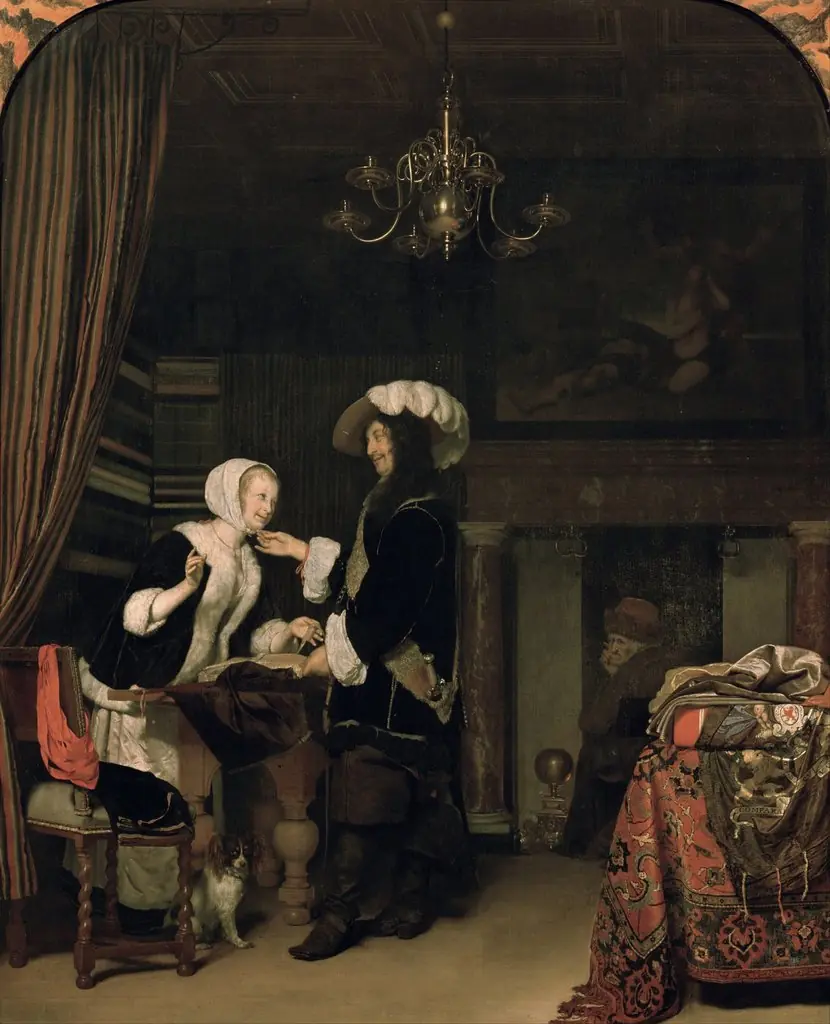 Officer in a Cloth Shop
 Messenger