Artwork
Pastoral Landscape with Ruins
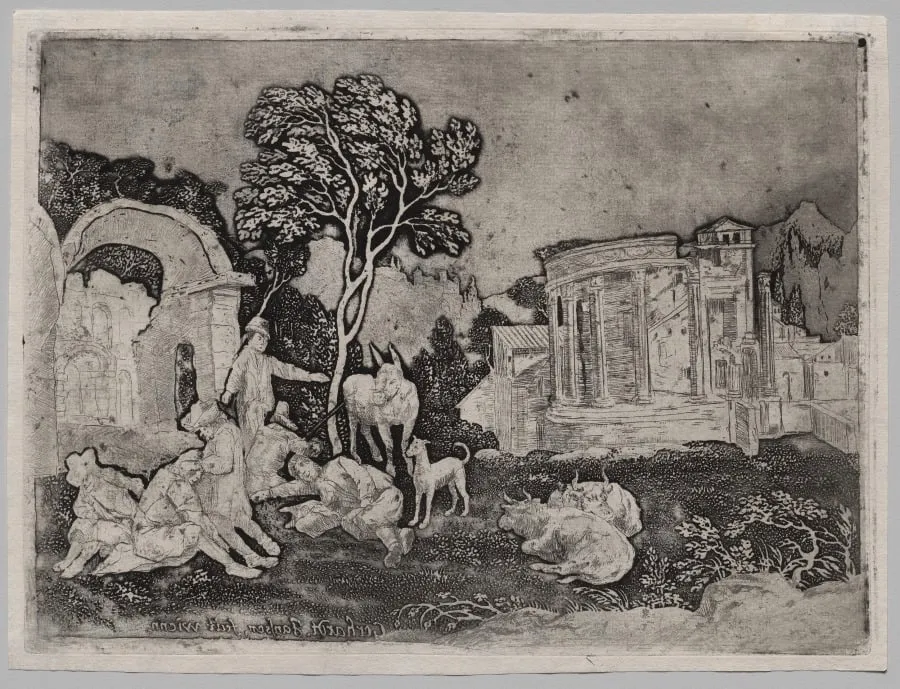
Pastoral Landscape with Ruins is a print by the Baroque artist Gerhardt Janssen. It dates from 1722 and is held in the collection of the Cleveland Museum of Art.
About this work
Overview
This print by Janssen presents a quiet rural scene with rolling hills, fragmented stone ruins, and small figures tending livestock beneath a muted sky.
This print by Janssen presents a quiet rural scene with rolling hills, fragmented stone ruins, and small figures tending livestock beneath a muted sky. Unlike contemporary prints that use dark lines on light paper, Janssen’s work inverts the convention: light forms emerge from a deep, shadowed ground, creating an unusual luminosity that draws the eye to the figures and structures as if illuminated from within.
Subject & Meaning
The scene evokes a tranquil, timeless countryside, where human activity is subtle and harmonious with nature’s decay. The crumbling towers suggest the passage of time, while the herders and animals imply continuity. There is no overt narrative, but the quietude and soft glow of the figures lend the image a meditative quality, as if the landscape itself holds a quiet memory.
Technique & Style
Janssen developed a distinctive method that reversed the standard etching approach, producing light forms against a dark field. This effect, resembling a photographic negative, may stem from his training in reverse glass painting, where pigment is applied to the back of glass and viewed from the front. The result is an internal glow, with figures appearing as if lit by an unseen source, a technique unmatched in early modern printmaking.
History & Provenance
The print is one of a small group of works attributed to Janssen, whose career remains poorly documented. No other artist of the period employed this reversed tonal method, suggesting it was a personal innovation. The print’s survival in limited numbers hints at its niche appeal, possibly circulated among collectors familiar with experimental techniques or regional artistic circles.
Context
While contemporaries like Rembrandt explored chiaroscuro through dramatic contrasts of light and shadow, Janssen pursued a quieter, more diffuse illumination. His approach diverged from the theatricality common in Dutch and Flemish prints, instead favoring a subdued, almost ethereal atmosphere. This places his work in dialogue with regional traditions of glass painting and landscape observation rather than mainstream printmaking norms.
Legacy
Janssen’s technique remained isolated, with no direct followers or widespread adoption. Its uniqueness underscores his role as an experimental outlier rather than a trendsetter. Today, the print is valued not for influence but for its singular visual language—a quiet anomaly in early modern print history, where light is not cast from without, but born from within.
Artist & collection

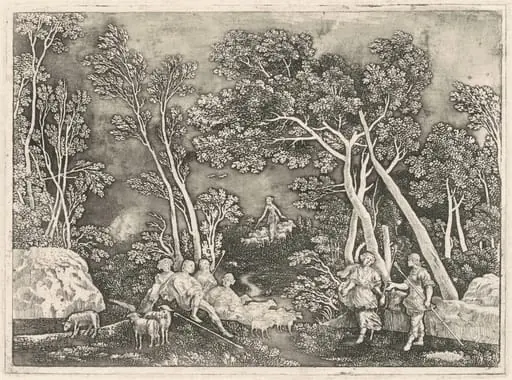 Nymphs in a Landscape
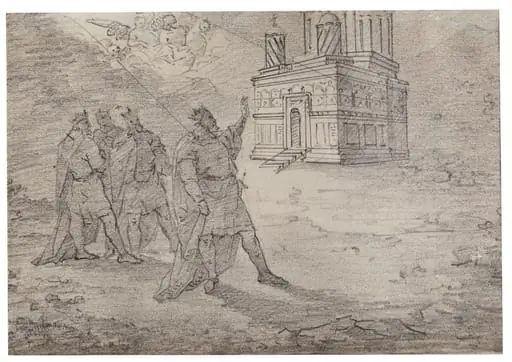 Neagoe Basarab în fața mânăstirii Curtea de Argeș
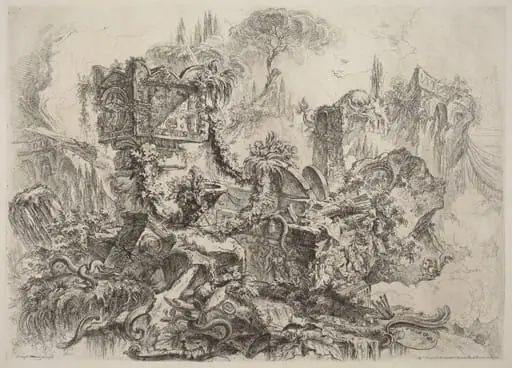 The Tomb of Nero
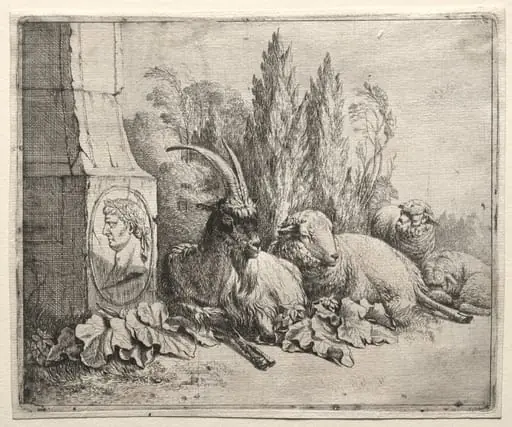 Bust at the Bottom of a Pyramid
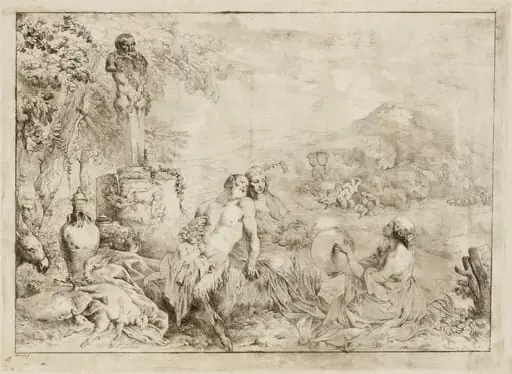 Landscape with a Satyr Family and Classical Sculpture
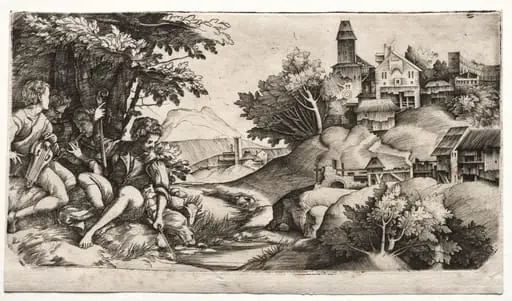 Shepherds in a Landscape
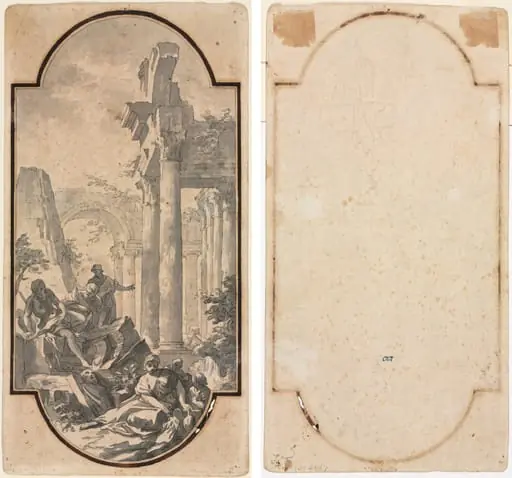 Figures Near the Ruins of a Corinthian Temple (recto); Fragment of an Arch (tracing from recto) (verso)
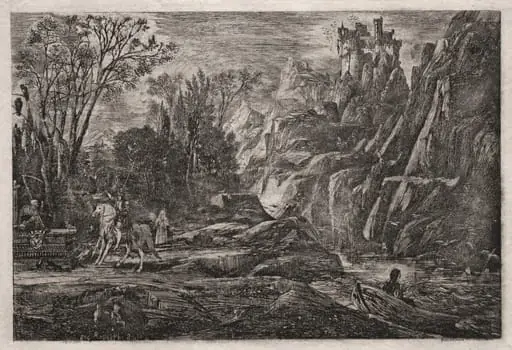 The Knight and Death
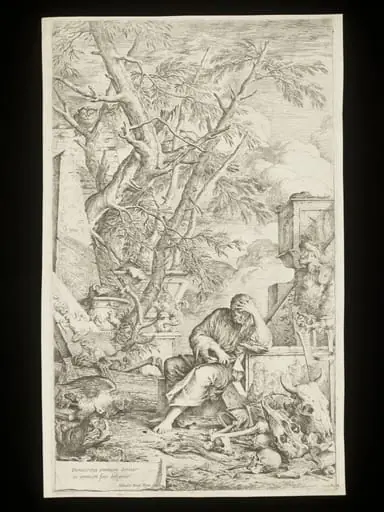 Democritus
![The Triumph of Julius Caesar [no.7 and 8 plus 2 columns], by Andrea Andreani](https://artifactworldgallery.com/img/andrea-andreani--the-triumph-of-julius-caesar-no-7-and-8-plus-2-columns--75ccf1616a5609e2-w320.webp) The Triumph of Julius Caesar [no.7 and 8 plus 2 columns]
The Triumph of Julius Caesar [no.7 and 8 plus 2 columns]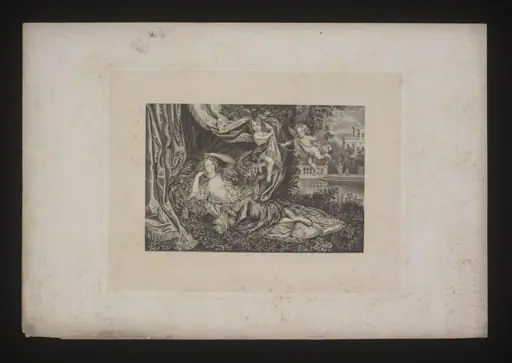 Print showing Nell Gwyn and her sons
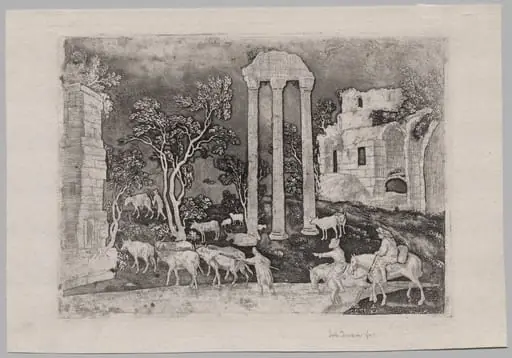 Pastoral Landscape with Ruins and a Ford