Artwork
Bust at the Bottom of a Pyramid
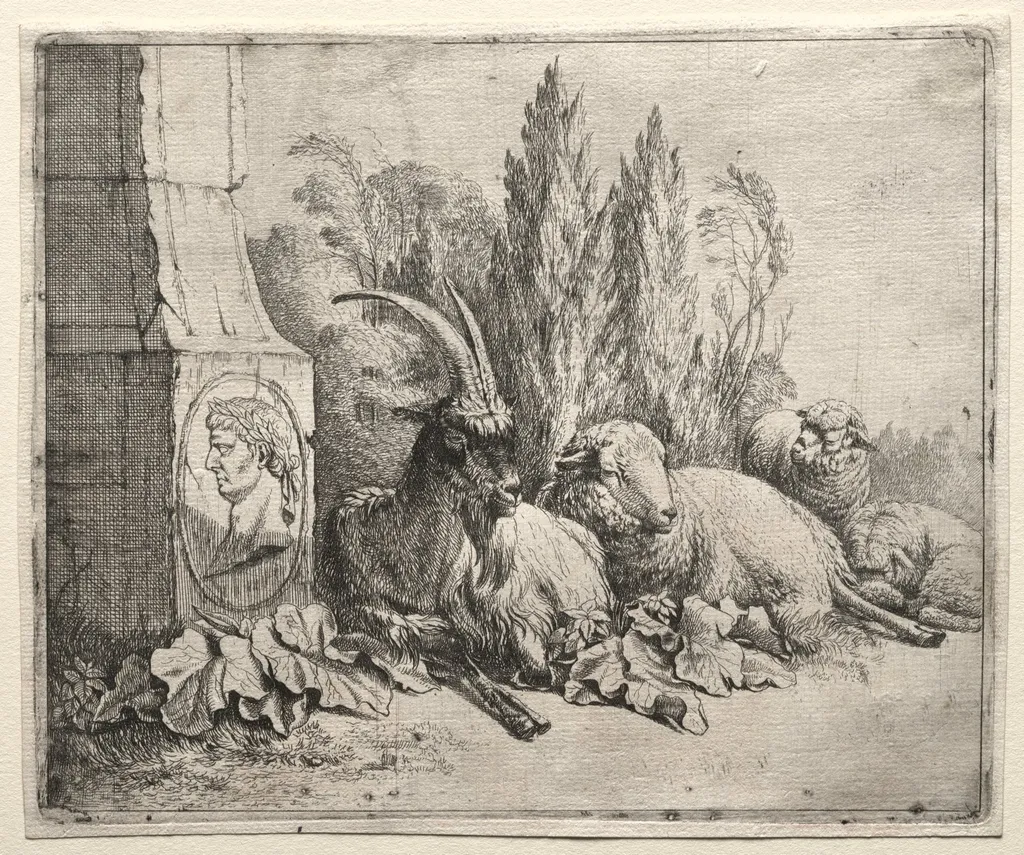
Bust at the Bottom of a Pyramid is a print by the Baroque artist Johann Heinrich Roos. It dates from 1665 and is held in the collection of the Cleveland Museum of Art.
About this work
Overview
Created in 1665 by Johann Heinrich Roos, this etching depicts a human bust partially submerged in a rocky formation, surrounded by pastoral elements.
Created in 1665 by Johann Heinrich Roos, this etching depicts a human bust partially submerged in a rocky formation, surrounded by pastoral elements. The work is held in the collection of The Cleveland Museum of Art. Its composition blends human presence with natural surroundings, suggesting a quiet tension between the figure and the landscape. The medium—etching—allows for fine, controlled lines that define form and shadow with precision.
Subject & Meaning
A man’s profile, serene yet obscured, lies half-buried in earth, evoking themes of mortality or forgotten identity. Behind him, a ram with prominent horns stands alert, while two sheep graze undisturbed. The looming, twisted tree adds an element of unease. The scene resists clear narrative, instead inviting contemplation of human existence within the rhythms of nature, possibly alluding to classical or allegorical traditions of the time.
Technique & Style
Roos employed etching to achieve sharp, incised lines and nuanced tonal contrasts. The rocky mound is rendered with dense hatching, while the ram’s horns and tree branches are defined by crisp, angular strokes. Soft gradients suggest distance and atmosphere, contrasting with the stark clarity of the central figure. The technique emphasizes texture and form, characteristic of Baroque printmaking’s focus on detail and dramatic lighting.
History & Provenance
The work dates to the mid-17th century, a period when Roos was active in producing animal and landscape prints. It entered The Cleveland Museum of Art’s collection through documented acquisition, though its earlier ownership remains unrecorded in public sources. As a print, it likely circulated among collectors and artists, reflecting the period’s interest in naturalistic imagery and symbolic composition.
Context
Roos worked within a German artistic tradition that valued detailed observation of nature, often blending it with allegorical undertones. His contemporaries in the Baroque era used similar contrasts between calm and tension, but Roos’s focus on the quiet, almost surreal integration of human and animal forms sets this piece apart. It reflects broader European interests in classical symbolism and the moral dimensions of the natural world.
Legacy
Though not widely reproduced, the print exemplifies Roos’s skill in merging naturalism with subtle narrative ambiguity. It contributes to the understanding of 17th-century printmaking as a medium for introspective, non-dramatic storytelling. The work continues to be studied for its quiet tension and the way it invites viewers to consider the relationship between humanity and the natural environment.
Artist & collection
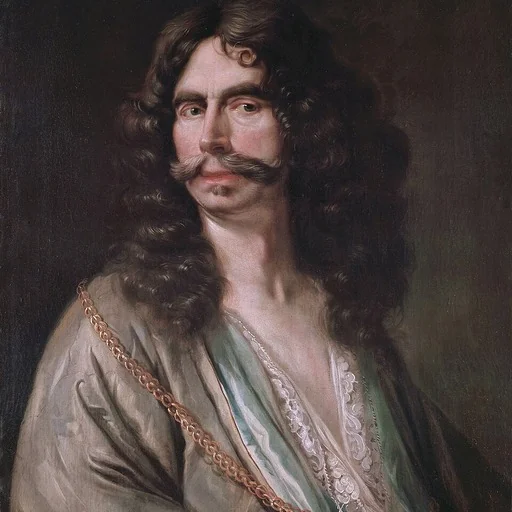

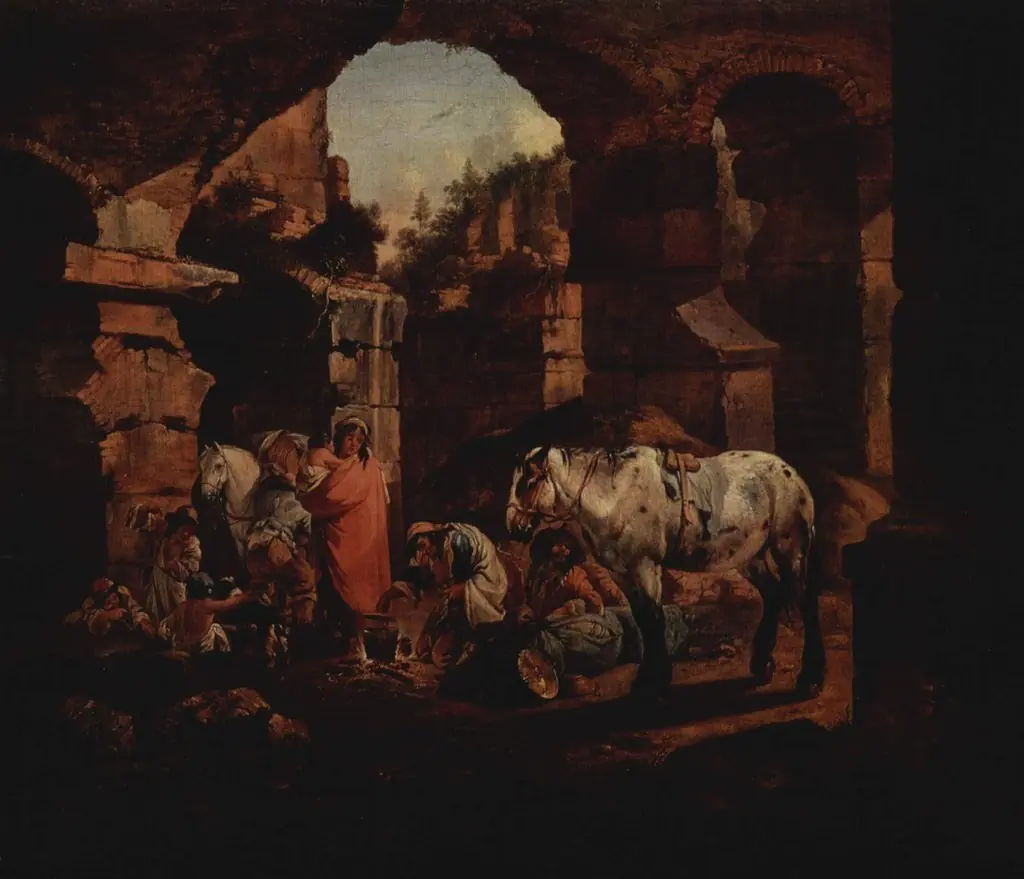
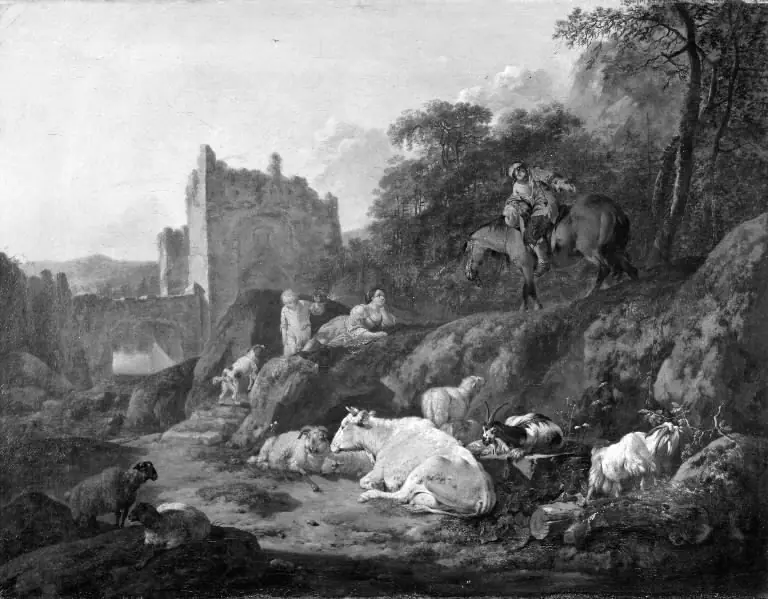
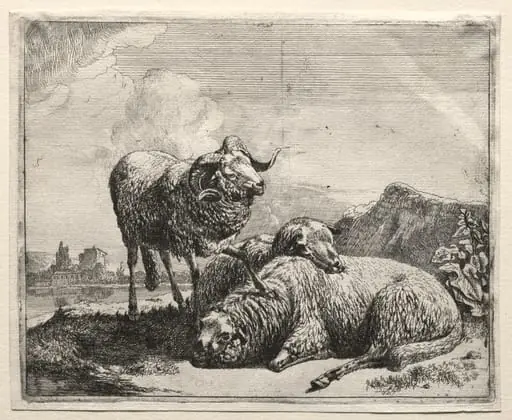 Ram and Two Sheep
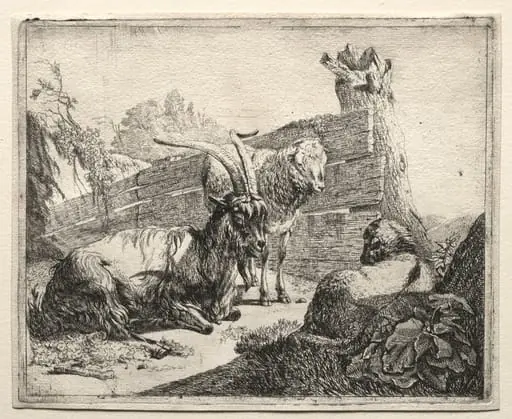 The Hedgerow
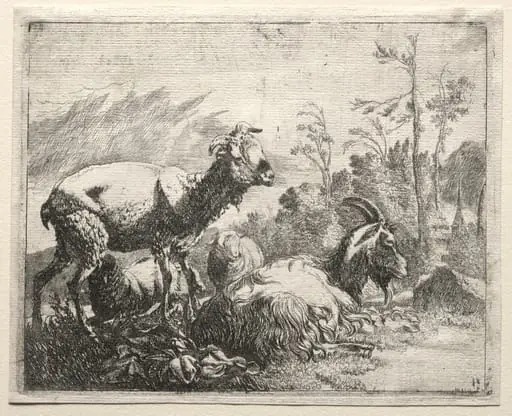 Goats
Goats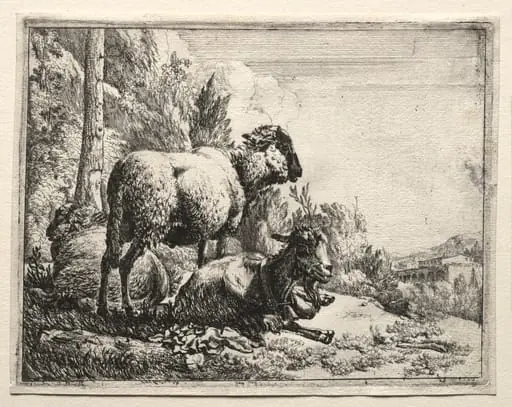 Goat with Bell
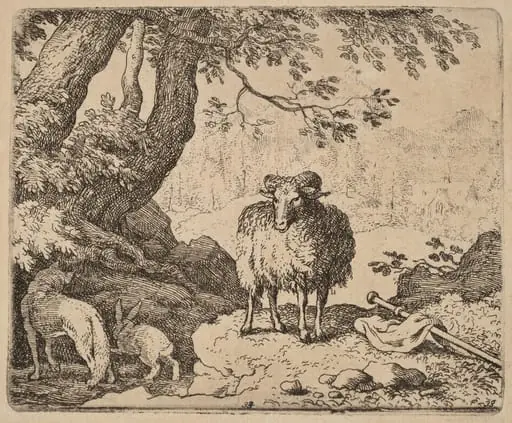 Reynard Returns Home, Accompanied by the Ram and the Rabbit
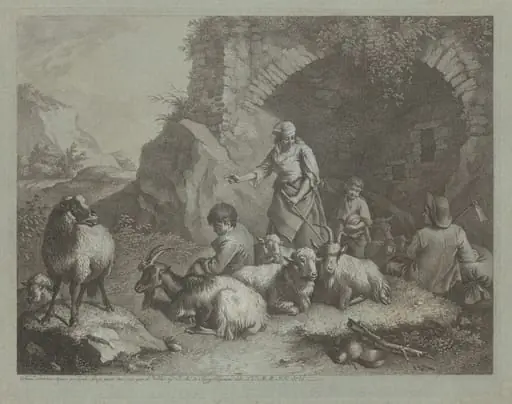 Woman, Shepherd Boys, and Sheep near an Arch
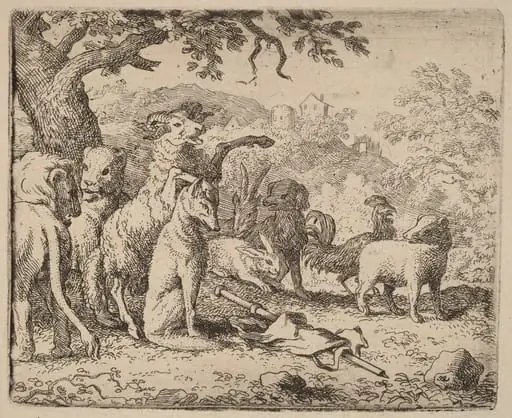 The Ram Blesses Reynard
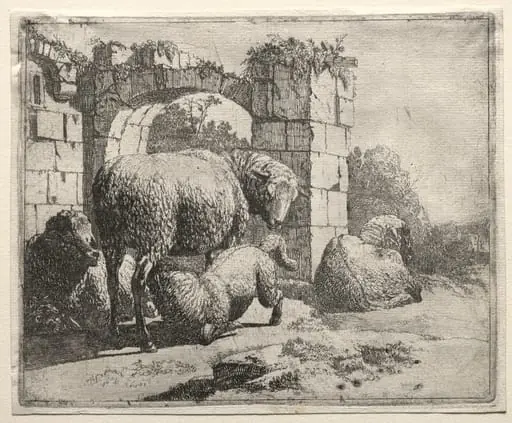 Sheep Near the Ruins of an Arch
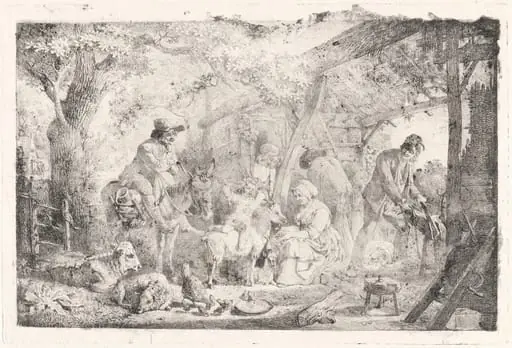 The Little Cavalier (Le Petit Cavalier)
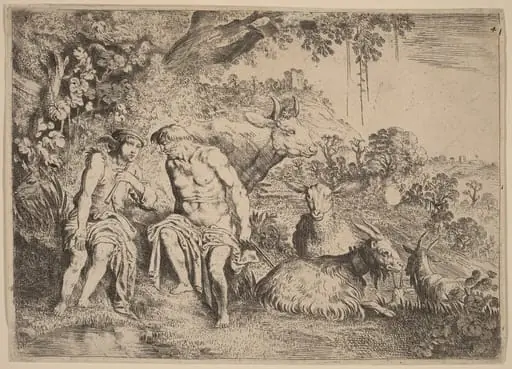 Mercury Lulling Argus to Sleep
 Viehstück
 Standing Ox, Two Sheep, and a Goat