Artwork
Shepherds in a Landscape
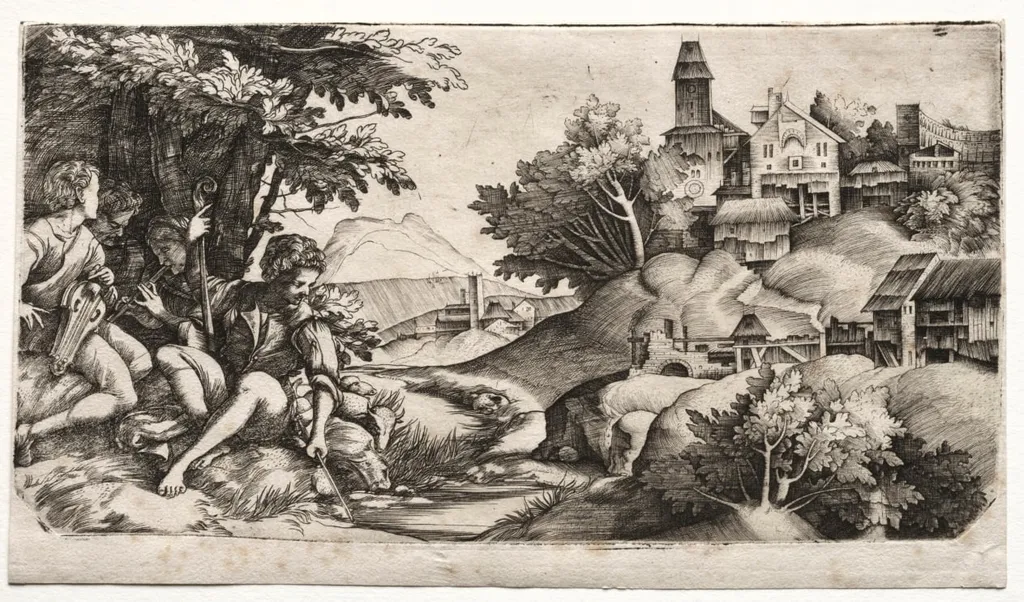
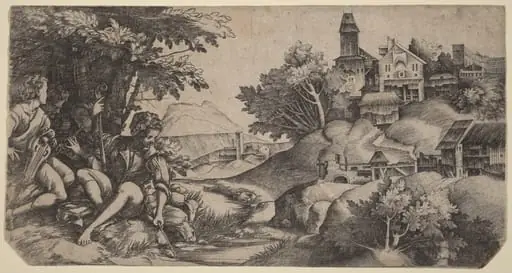
Shepherds in a Landscape is a print by the Renaissance artist Giulio Campagnola. It is held in the collection of the Cleveland Museum of Art. This print depicts a group of shepherds resting in a wooded landscape, accompanied by musical instruments.
About this work
Overview
Originally begun by Giulio Campagnola, the composition was later completed by his son Domenico, who added the figures of the musicians.
This print depicts a group of shepherds resting in a wooded landscape, accompanied by musical instruments. Originally begun by Giulio Campagnola, the composition was later completed by his son Domenico, who added the figures of the musicians. The work reflects a Renaissance fascination with pastoral themes, blending two distinct artistic hands into a single image that balances stillness and movement within an idealized natural setting.
Subject & Meaning
The scene evokes the mythic ideal of Arcadia—a timeless rural refuge from urban complexity. The shepherds, engaged in quiet repose and music, symbolize harmony with nature and a simpler way of life. Their presence contrasts with the implied pressures of city living, though the image avoids overt moralizing. Instead, it invites contemplation of serenity, using music and landscape as quiet metaphors for inner peace.
Technique & Style
Giulio Campagnola’s contribution emphasizes delicate linear engraving, with fine, controlled strokes defining foliage and terrain. Domenico’s added figures employ bolder, more expressive lines, particularly in the drapery and instrument details. The overall composition avoids naturalistic depth; forms hover in a flattened, atmospheric space. Soft transitions between tones suggest sfumato, though achieved through ink rather than paint, enhancing the dreamlike quality of the scene.
History & Provenance
The print was initiated by Giulio Campagnola, a Venetian engraver known for his innovative use of the stipple technique. After his death, his son Domenico, also an artist, completed the work by adding the musical figures. This collaborative process was uncommon and reflects familial artistic continuity. The print circulated among collectors in northern Italy and Germany, valued for its technical refinement and poetic subject matter.
Context
In early 16th-century Venice, pastoral imagery gained popularity among humanist circles drawn to classical ideals. Artists and patrons sought to reconcile ancient literary visions of rural life with contemporary aesthetics. This print aligns with a broader trend of blending myth and observation, though it prioritizes mood over narrative. Its ambiguity reflects a shift from literal representation toward evocative, interiorized landscapes.
Legacy
The print influenced later engravers who explored collaborative authorship and atmospheric landscape design. Its layered execution—two artists, two styles—became a model for examining artistic inheritance and stylistic dialogue. Though not widely reproduced, it remains a key example of how printmaking could convey poetic ambiguity, bridging the gap between Renaissance idealism and emerging Mannerist sensibilities.
Artist & collection

Artist
Giulio Campagnola (Italian: ; c. 1482 – c. 1515) was an Italian engraver and painter, whose few, rare, prints translated the rich Venetian Renaissance style of oil paintings of Giorgione and the early Titian into the…

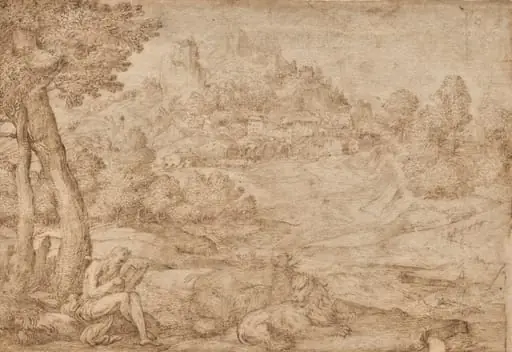 Saint Jerome in a Landscape
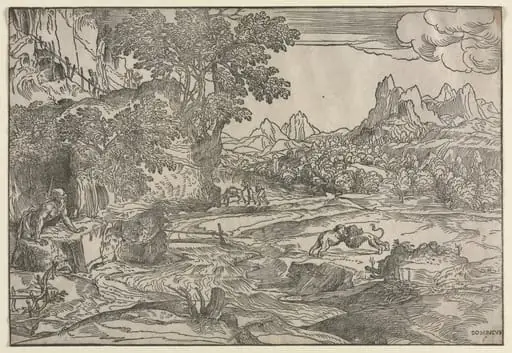 Landscape with Saint Jerome and Two Lions
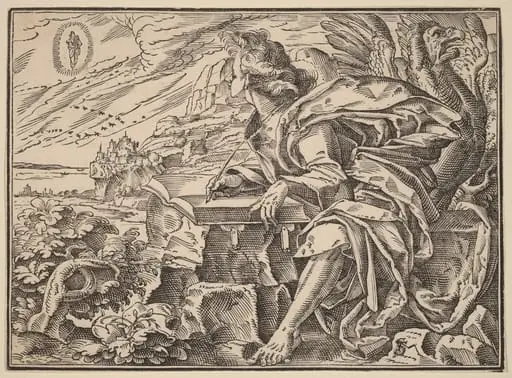 The Four Horsemen of the Apocalypse
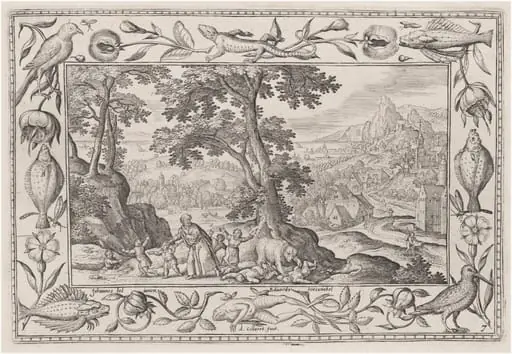 The Mocking Children Cursed by Elijah and Eaten by a She-Bear
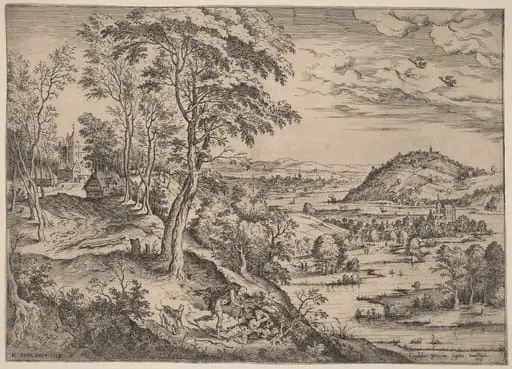 Cephalus and Procris
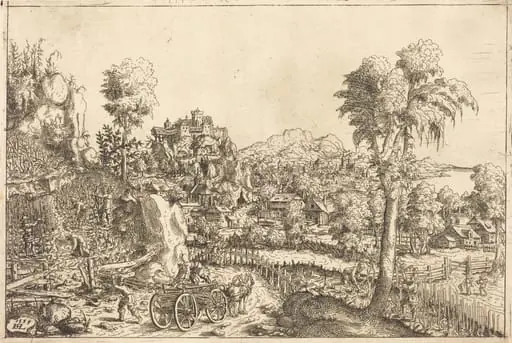 Landscape with a Vineyard
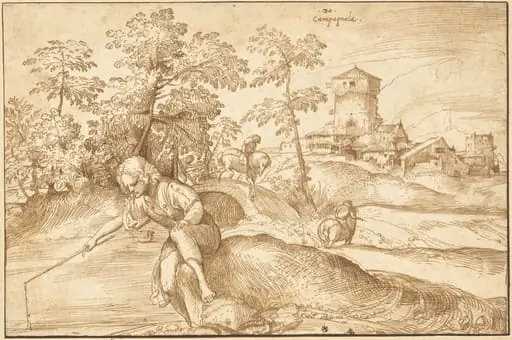 Landscape with a Boy Fishing
 Pharaoh’s Daughter Finding Moses
 Nymphs in a Landscape
 River Landscape with Tobias and the Angel
 Augustus and the Tiburtine Sibyl
 Shepherds in a Landscape