Artwork
Cheveaux des Ardennes
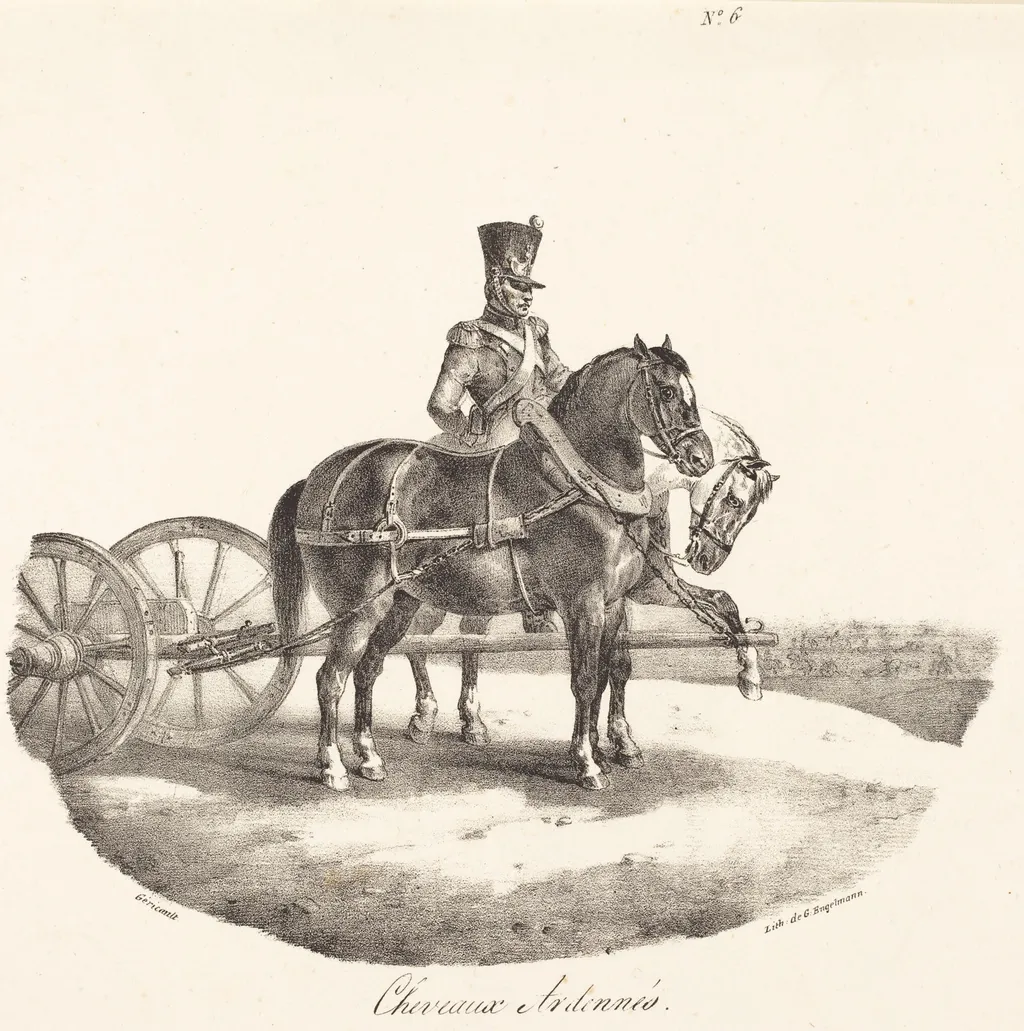
Cheveaux des Ardennes is an ink print by the Romanticist artist Théodore Géricault. It dates from 1822 and is held in the collection of the National Gallery of Art.
About this work
Lithography uses greasy ink on stone, letting artists draw directly with crayon.
This work shows four horses standing in a loose line on rocky ground. The one in front is a dark brown horse with a white blaze. The others are lighter shades, all facing slightly different ways.
This print is a lithograph by Gericault, made in 1822. Lithography uses greasy ink on stone, letting artists draw directly with crayon. Gericault used this method to capture the horses’ muscles and energy quickly.
Look up lithography to see how this stone-based print works.
Overview
Created in 1822, *Chevaux des Ardennes* is a lithographic print on wove paper by French artist Théodore Géricault. The work presents a small group of four horses positioned on a rocky surface, each rendered in varying shades of brown and oriented slightly differently, giving the composition a sense of natural arrangement.
Subject & Meaning
The image focuses on equine figures, portraying them with a blend of realistic detail and expressive vigor. Géricault’s interest in the anatomy and motion of animals is evident in the way the horses’ musculature and stances convey both stillness and latent energy, reflecting broader Romantic concerns with nature and dynamism.
Technique & Style
Executed through lithography, the print was produced by drawing directly onto a limestone slab with greasy crayon, then treating the stone so that ink adhered only to the drawn areas. This method allowed Géricault to capture swift, gestural lines and subtle tonal variations, emphasizing the texture of the horses’ coats and the rugged ground.
History & Provenance
The lithograph emerged during a period when Géricault was experimenting with printmaking as a means of expanding his visual language beyond painting. While the work was not part of a larger series, it exemplifies his early 1820s output and contributes to his reputation as an innovator within the Romantic movement.
Context
At the time of its creation, lithography was gaining popularity among French artists for its capacity to reproduce images quickly and with a degree of spontaneity. Géricault’s adoption of the medium aligns with contemporary trends that favored direct, expressive drawing techniques, situating the print within the evolving practices of early 19th‑century French art.
Artist & collection
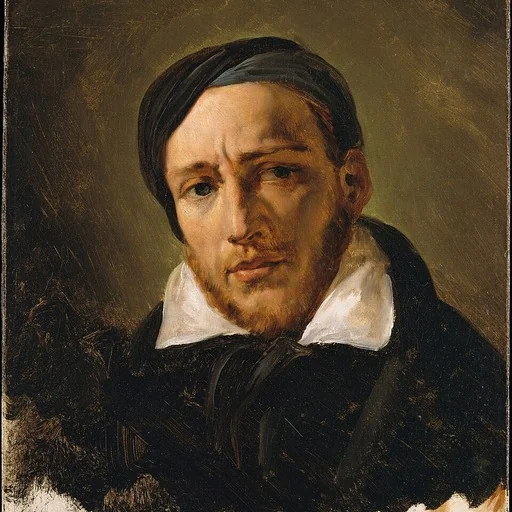
Artist
Jean-Louis André Théodore Géricault (French: ; 26 September 1791 – 26 January 1824) was a French painter and lithographer.