Artwork
Cuirassiers Charging
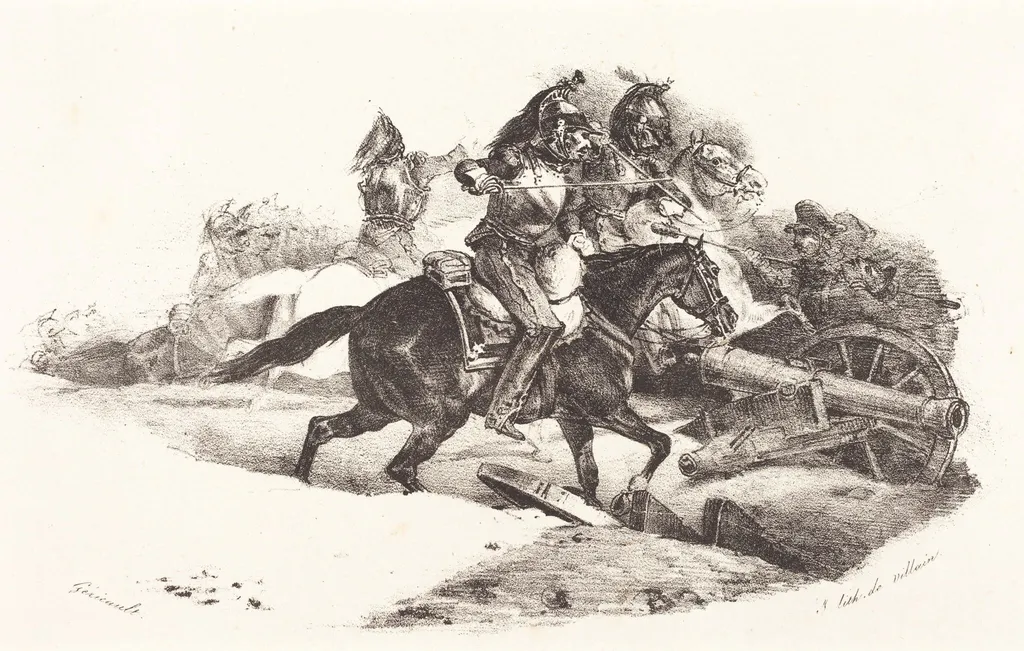
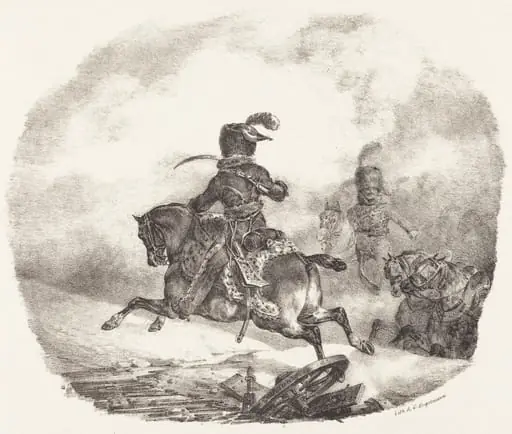
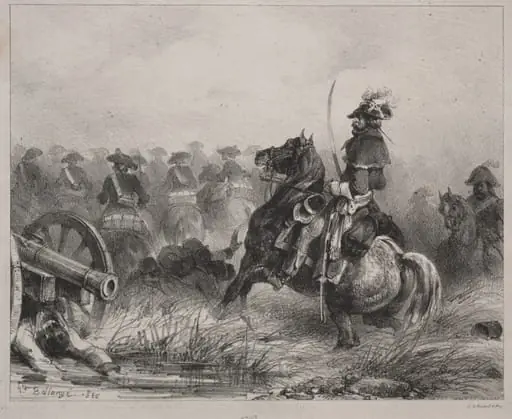
Cuirassiers Charging is an ink print by the Romanticist artist Théodore Géricault. It dates from 1823 and is held in the collection of the National Gallery of Art.
About this work
Overview
Created in 1823, *Cuirassiers Charging* is a lithographic print on wove paper by French artist Théodore Géricault. Executed near the end of his short life, the work exemplifies the dramatic intensity that characterizes his contribution to early Romantic art, focusing on a moment of violent motion rather than static composition.
Subject & Meaning
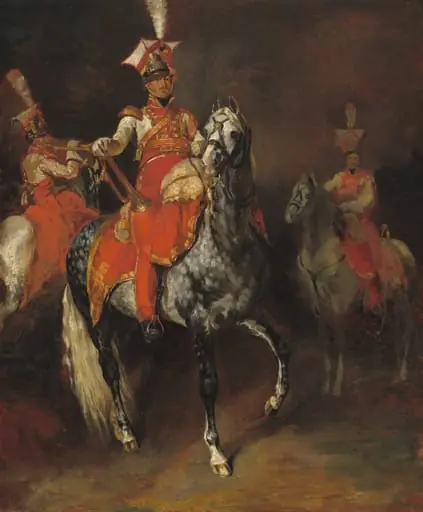
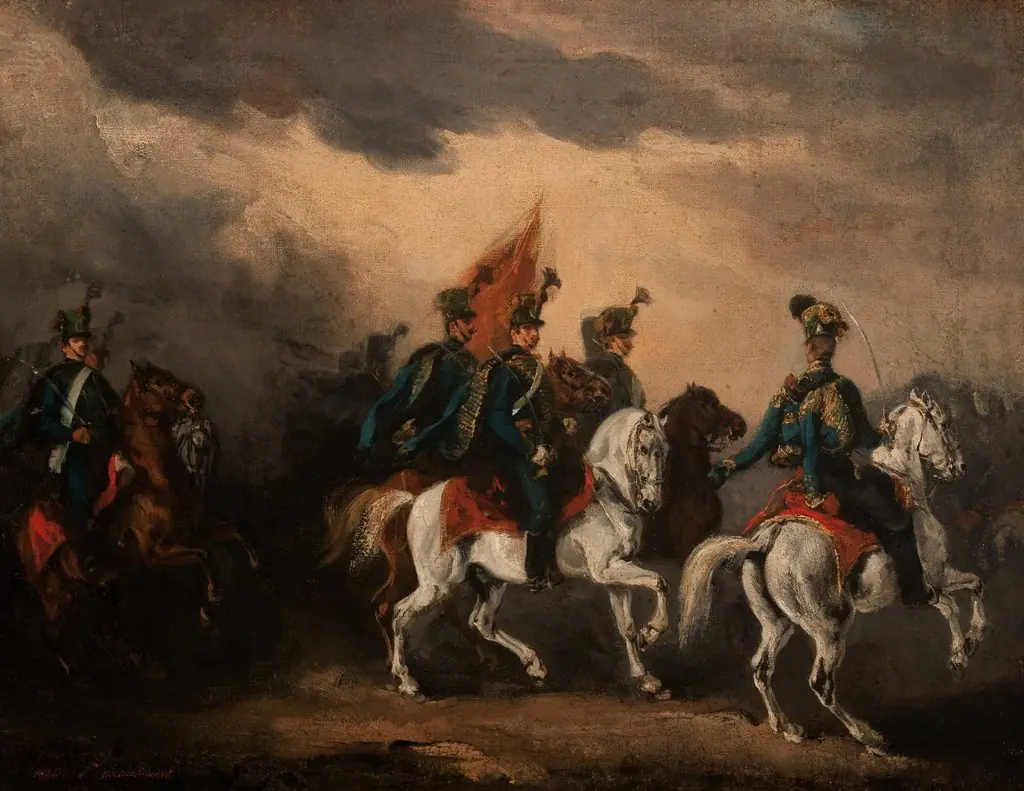
The image depicts a trio of cavalrymen in full armor, their horses thundering forward with swords raised. One horse dominates the foreground, kicking up a cloud of dust, while the other two trail closely. In the distance a fallen soldier lies beside a shattered wagon, and additional figures scramble amid the chaos, suggesting the brutal reality of battle.
Technique & Style
Géricault employed the lithographic process to render swift, gestural lines that convey speed and turbulence. The sketch‑like quality of the marks, combined with stark contrasts of light and shadow, heightens the sense of immediacy and emotional upheaval, aligning with the Romantic preference for expressive, rather than polished, visual effects.
History & Provenance
The print was produced shortly before Géricault’s death in 1824, marking one of his final forays into printmaking. It was issued as a single work on wove paper, a material favored for its smooth surface, which allowed the artist’s rapid strokes to be reproduced with clarity. Its subsequent ownership records trace through several European collections, reflecting its continued scholarly interest.
Artist & collection
Artist
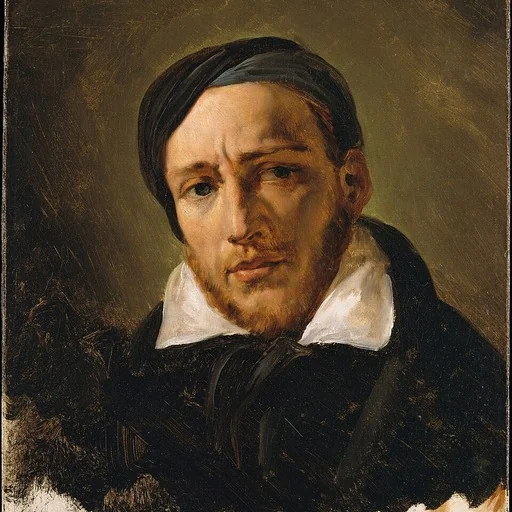
Jean-Louis André Théodore Géricault (French: ; 26 September 1791 – 26 January 1824) was a French painter and lithographer.