Artwork
Light Artillery Officer of the Imperial Guard (Officier d'artillerie legerie de la garde imperiale)
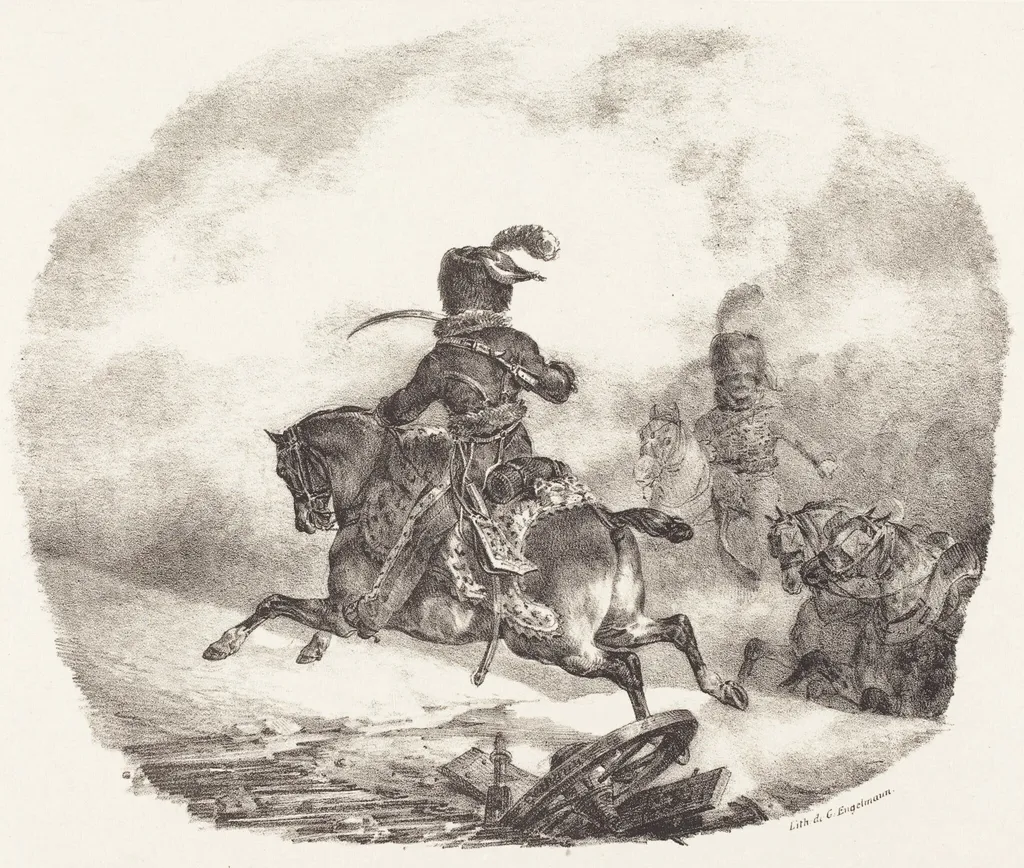
Light Artillery Officer of the Imperial Guard (Officier d'artillerie legerie de la garde imperiale) is an ink print by the Romanticist artist Théodore Géricault. It dates from 1823 and is held in the collection of the National Gallery of Art.
About this work
Overview
Executed during Géricault’s later years, the work reflects his engagement with printmaking as a medium for dynamic portraiture.
Created in 1823 by Théodore Géricault, this lithograph on thin paper captures a cavalry officer of Napoleon’s Imperial Guard. Executed during Géricault’s later years, the work reflects his engagement with printmaking as a medium for dynamic portraiture. Unlike his larger paintings, this piece conveys intensity through simplified forms and stark contrasts, characteristic of his experimental approach to lithography.
Subject & Meaning
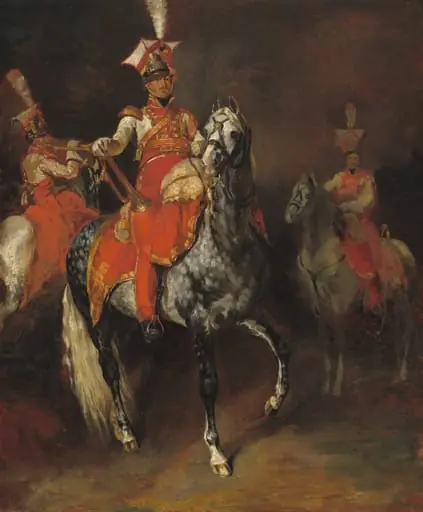
The figure is a light artillery officer, mounted and armed, clad in the distinctive uniform of the Imperial Guard, including a tall shako with a plume. He rides with urgency, sword raised, amid a group of distant cavalrymen. The scene evokes military discipline under pressure, not triumph. Géricault’s focus on the individual within the chaos suggests a humanist perspective on war, avoiding glorification while honoring the soldier’s presence.
Technique & Style
Géricault employed lithography to achieve bold, expressive lines and sharp tonal contrasts. The dark uniform and hat stand out against the lighter, loosely rendered background, emphasizing the rider’s silhouette. Rapid, energetic strokes suggest motion and turbulence, while minimal detail in the background implies depth without clutter. The technique aligns with Romantic ideals, prioritizing emotional immediacy over polished finish.
History & Provenance
Produced in 1823, the lithograph emerged after Géricault’s return from England and during a period of personal and political reflection. It was likely part of a series of military portraits he explored as he distanced himself from the grand historical themes of his earlier career. The work remained within private collections in France, with no public exhibition record until the late 19th century.
Context
In post-Napoleonic France, military imagery carried complex associations—nostalgia for empire, anxiety over national identity. Géricault, though not a royalist, was drawn to the physicality and discipline of soldiers. This lithograph reflects a broader cultural interest in individual military figures, distinct from state-sponsored propaganda, offering a more intimate, psychologically charged portrayal.
Legacy
Though less known than his paintings, this lithograph exemplifies Géricault’s influence on 19th-century printmaking. His use of lithography to convey movement and psychological weight inspired later artists, including Daumier, who adopted similar techniques for social commentary. The work stands as a quiet but potent bridge between Romanticism and the emerging realism of the mid-century.
Artist & collection
Artist
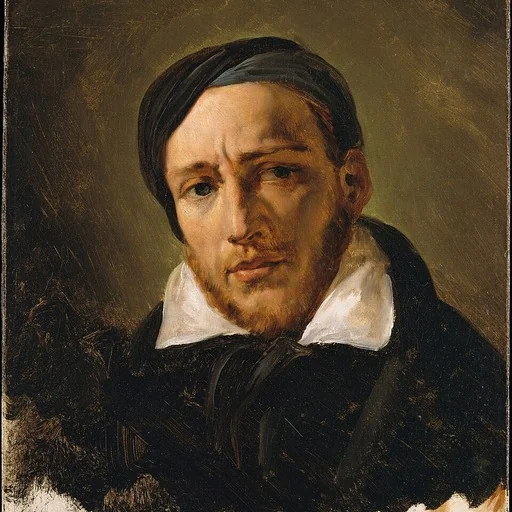
Jean-Louis André Théodore Géricault (French: ; 26 September 1791 – 26 January 1824) was a French painter and lithographer.

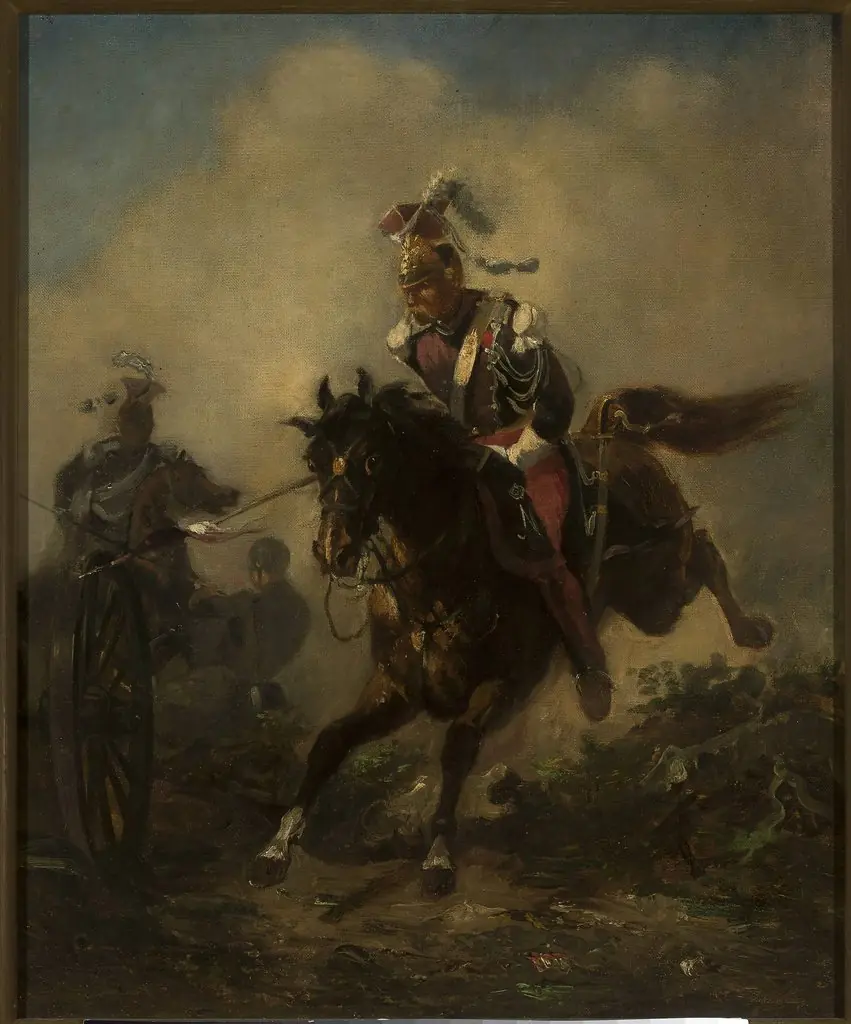 Light cavalryman charging
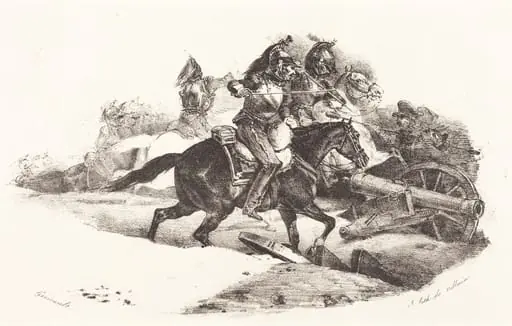 Cuirassiers Charging
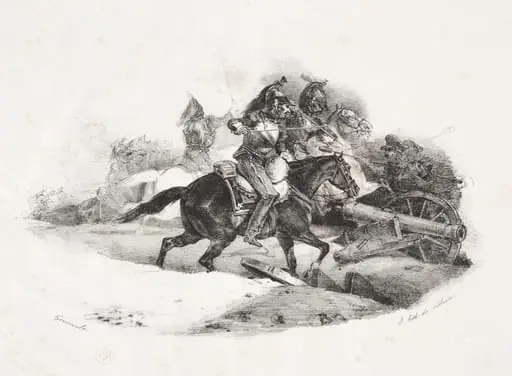 Cuirassiers Charging an Artillery Battery
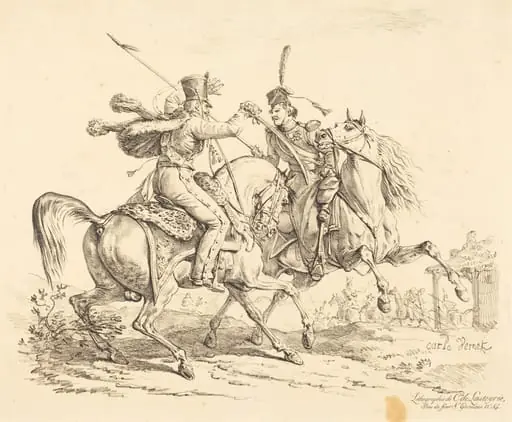 Hussard Striking a Cosack
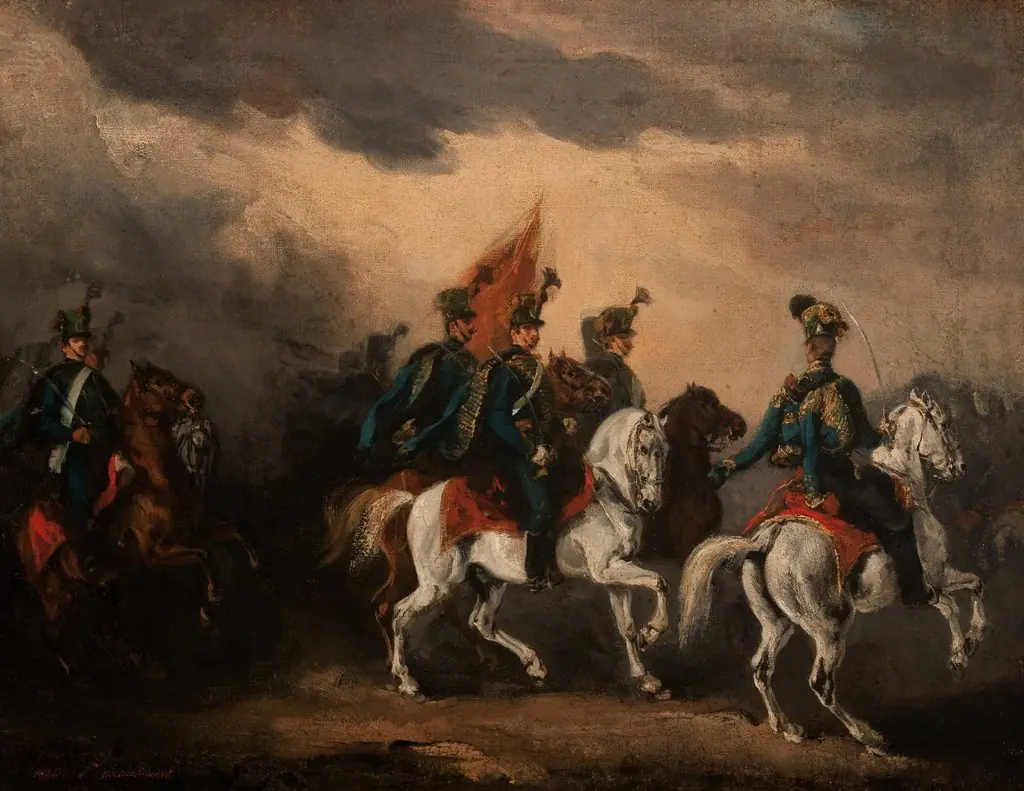 Blue Hussars
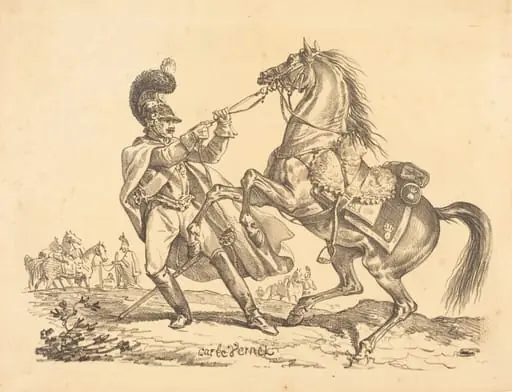 Cuirassier retenant son cheval qui se cabre
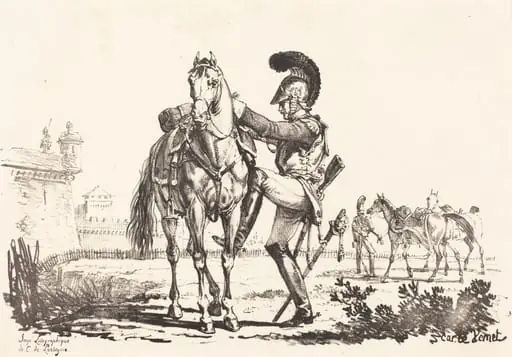 Carabinier Mounting a Horse
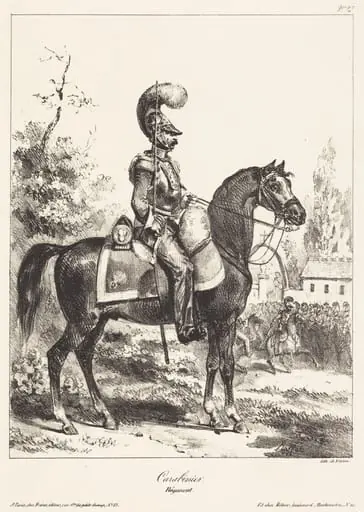 Carabinier
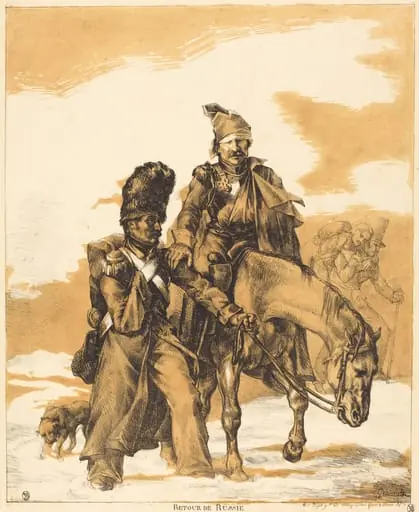 Retreat from Russia (Retour de Russie)
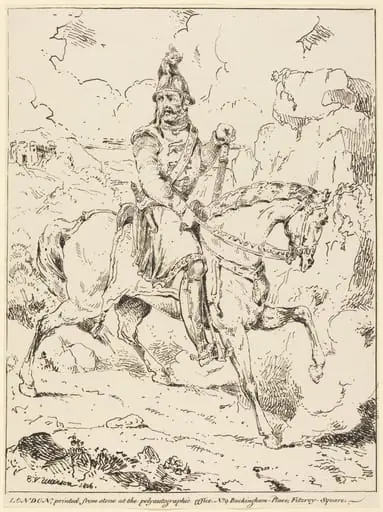 Knight in Armor on Horseback
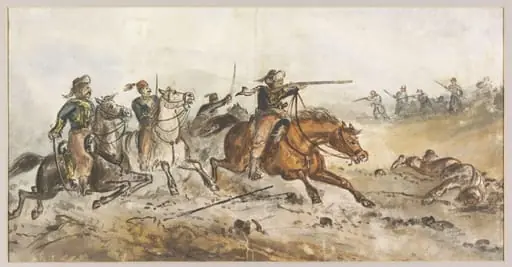 Turkish irregular cavalry charging Russian infantry
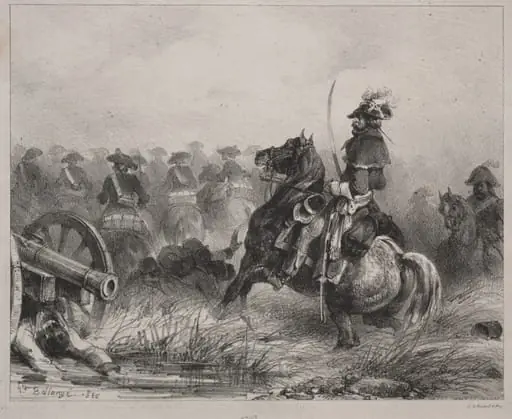 Cavalry Scene