Artwork
Foot Combat with Daggers
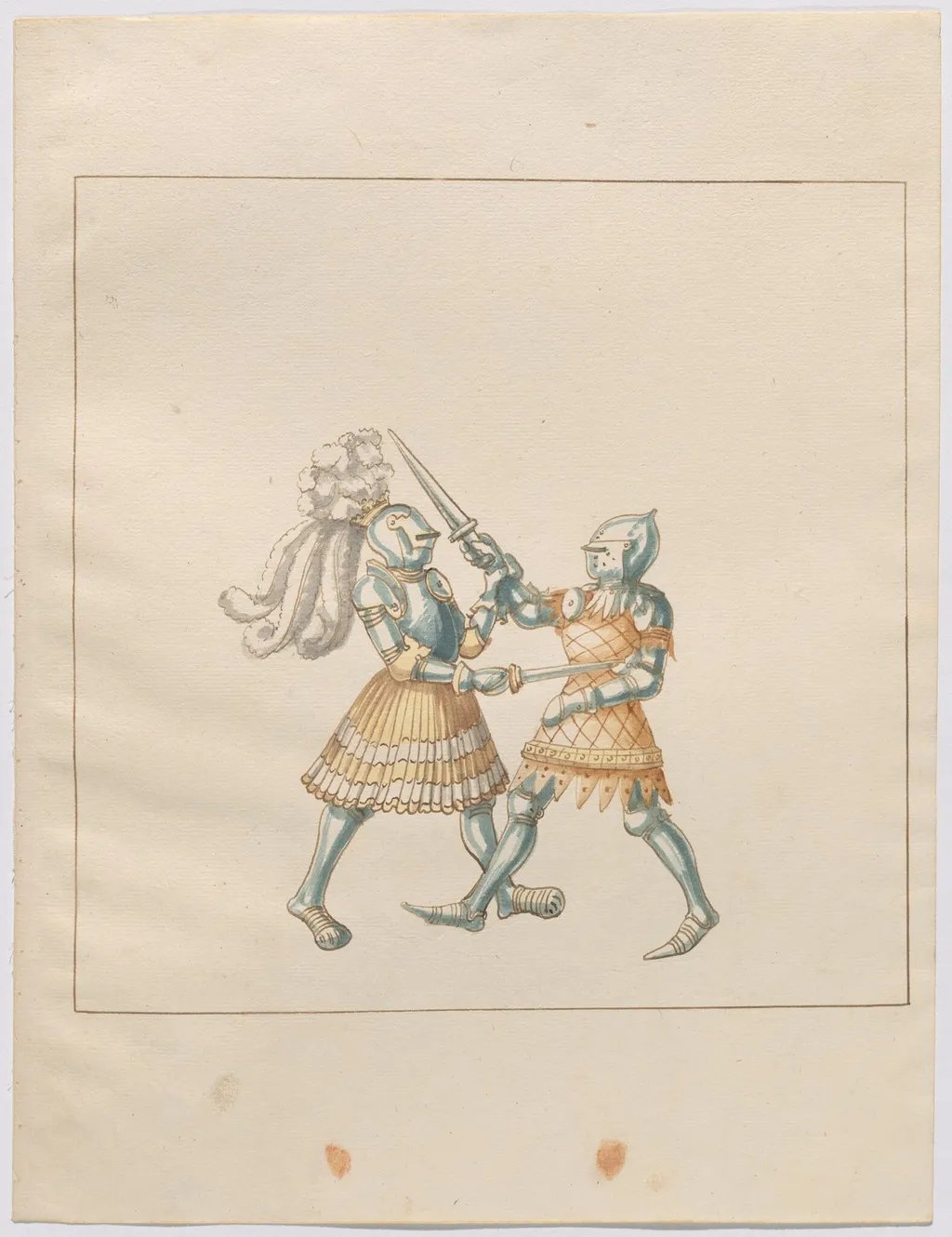
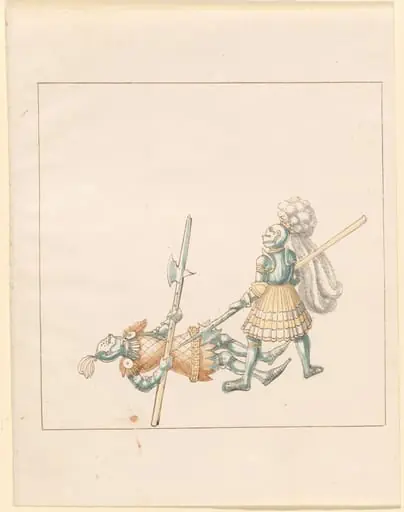
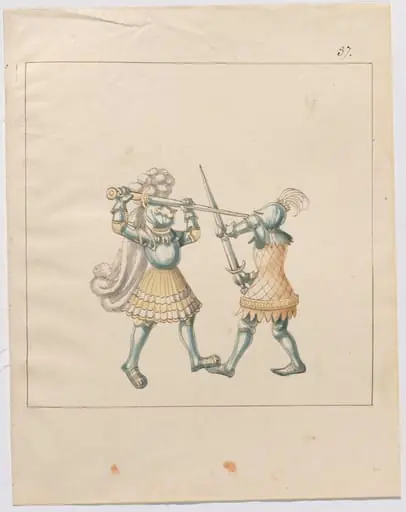
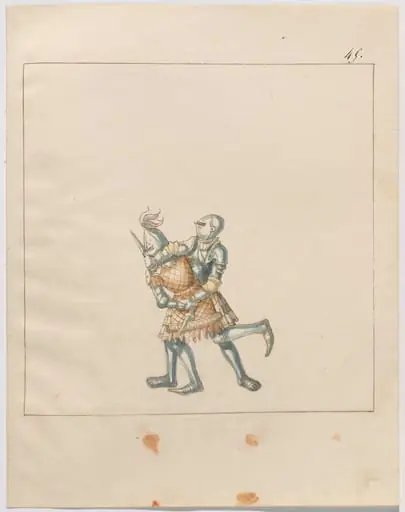
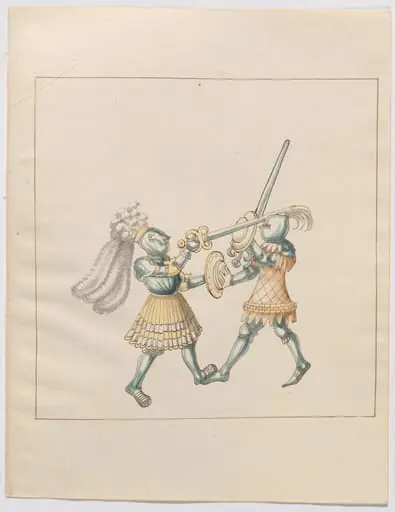
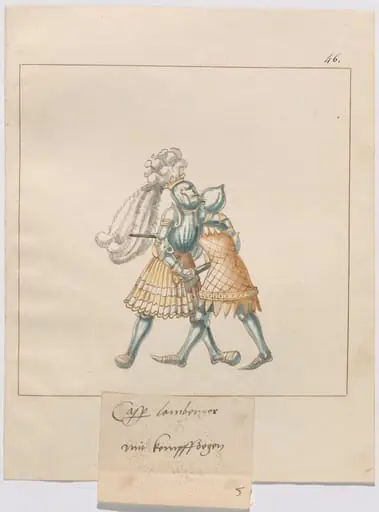
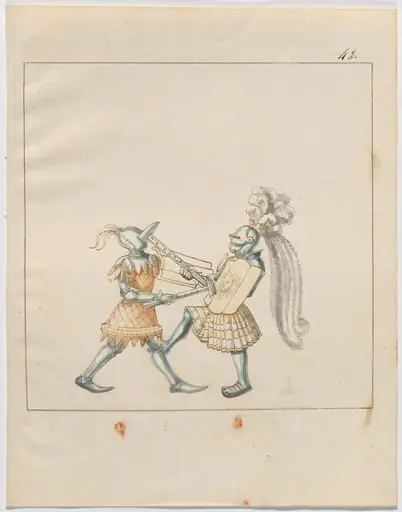
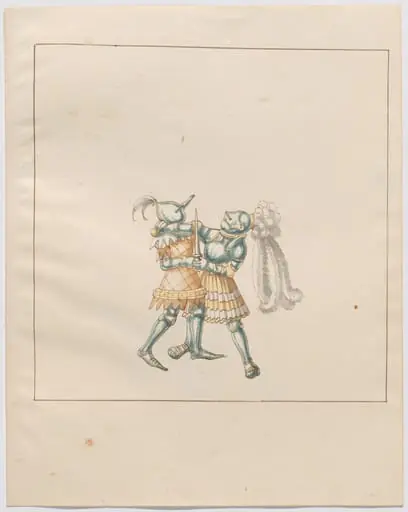
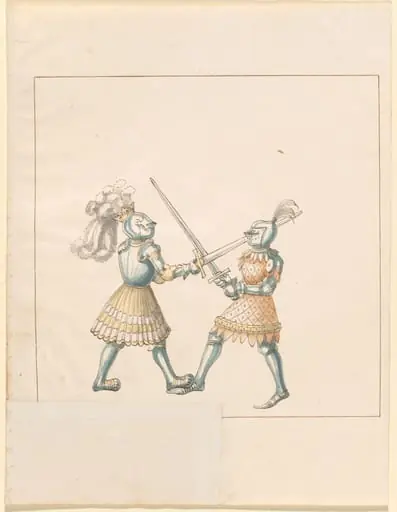
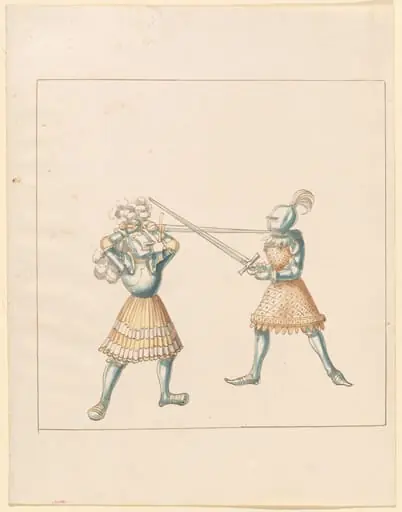
Foot Combat with Daggers is an ink drawing by the Renaissance artist German 16th Century. It dates from 1514 and is held in the collection of the National Gallery of Art. This 16th-century German drawing captures two armored combatants engaged in close-quarters dagger fighting.
About this work
Overview
The composition emphasizes motion and balance, revealing a disciplined, technical exchange rather than chaotic violence.
This 16th-century German drawing captures two armored combatants engaged in close-quarters dagger fighting. Executed in pen and black ink with watercolor on laid paper, it reflects the practical training methods of the time. The composition emphasizes motion and balance, revealing a disciplined, technical exchange rather than chaotic violence. The medium’s fragility and subtle wear suggest its use as a study or instructional aid.
Subject & Meaning
The figures, clad in padded undergarments beneath plate armor, demonstrate techniques suited for mobility and precision. Their postures—lunging and parrying—illustrate a codified system of combat, likely drawn from fencing manuals of the period. The deliberate dotting of the eyes ensures focus and expression, underscoring the drawing’s intent as a pedagogical record rather than mere decoration.
Technique & Style
The artist employed fine pen lines to define armor joints and fabric folds, while diluted watercolor washes modeled volume and shadow. The blue pigment has faded unevenly, revealing where moisture affected the paper over centuries. These material traces, combined with the controlled brushwork, indicate a skilled hand working from direct observation or lived experience.
History & Provenance
The drawing’s origin is tied to German martial traditions of the Renaissance, possibly created by a fencing master or apprentice. Its survival suggests it was preserved within a scholarly or military circle. Though its exact provenance remains undocumented, its condition and style align with other known training materials from the period, held in European collections.
Context
In 16th-century Germany, dagger combat was a vital component of civilian and military training, especially in urban settings where shields were impractical. This drawing reflects the rise of written fencing treatises and the growing formalization of martial arts. The emphasis on agility over brute force mirrors broader shifts in European combat philosophy during the era.
Legacy
The drawing stands as a rare visual record of pre-modern hand-to-hand combat techniques. It contributes to the understanding of how martial knowledge was transmitted visually before photography. Its preservation in institutions like the National Gallery of Art allows ongoing study of Renaissance combat culture through material and stylistic analysis.
Artist & collection

Artist
A German artist from the late 1500s drew lively scenes of knights clashing in parades and mock battles.

![Abraham Entertaining the Angels [verso], by German 16th Century](https://artifactworldgallery.com/img/german-16th-century--abraham-entertaining-the-angels-verso--69d1b25f4eba0a53-w320.webp)