Artwork
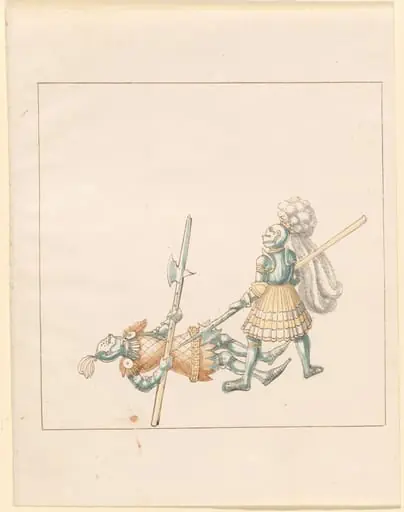
Foot Combat with Halberds
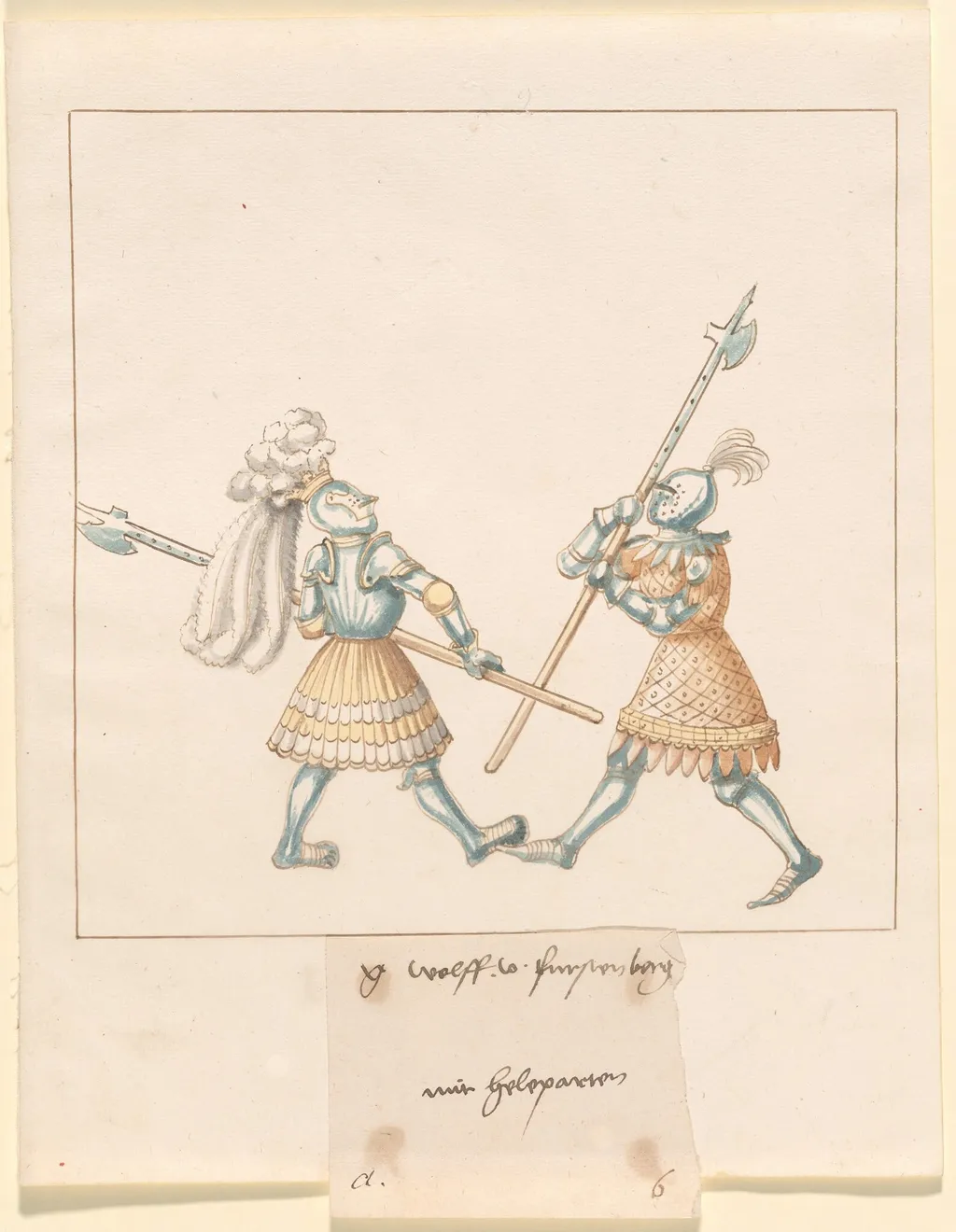
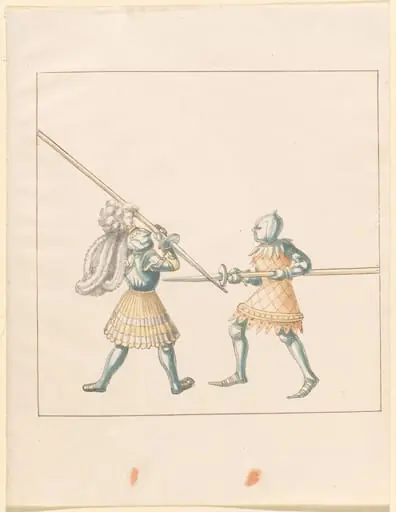
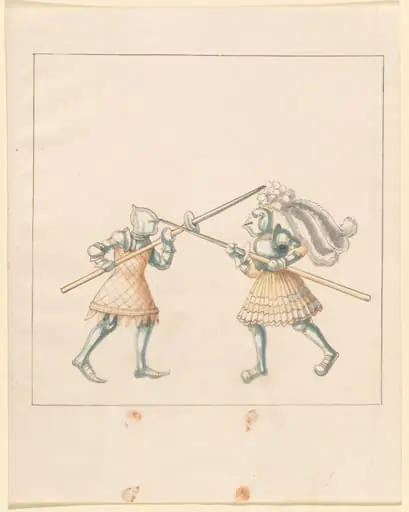
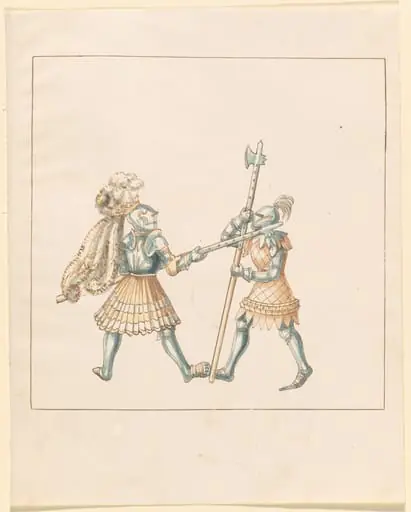
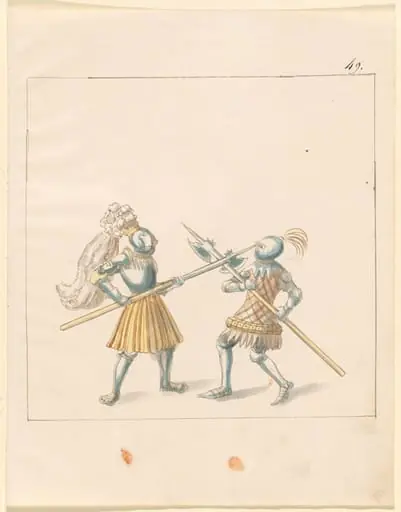
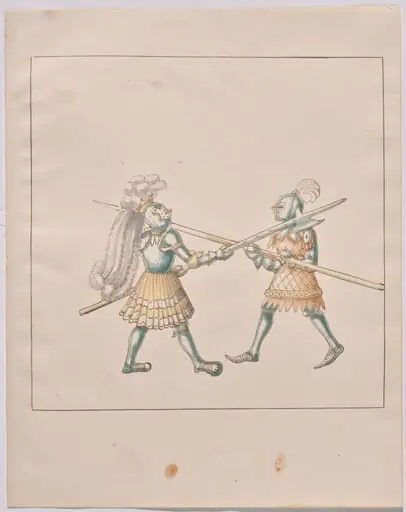
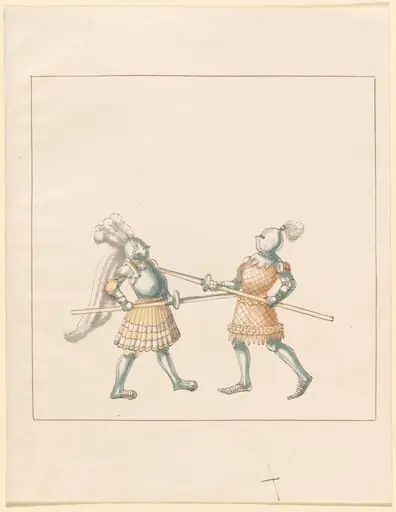
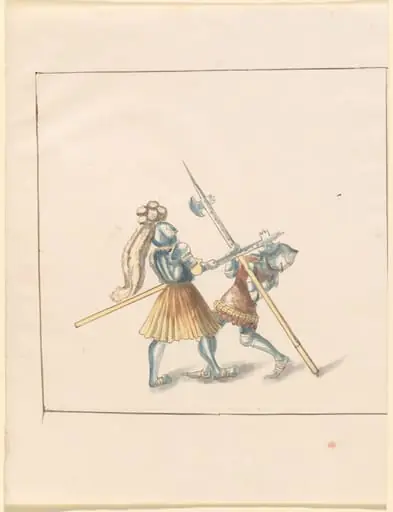
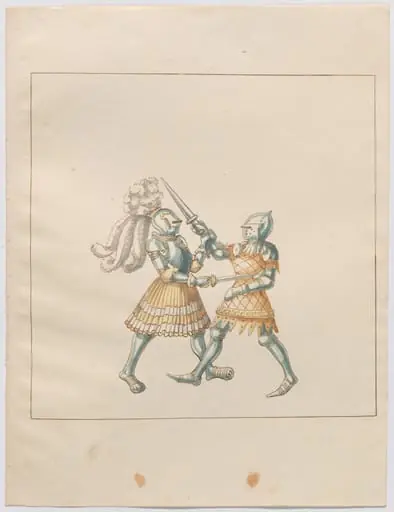
Foot Combat with Halberds is an ink drawing by the Renaissance artist German 16th Century. It dates from 1514 and is held in the collection of the National Gallery of Art. This ink and watercolor drawing depicts two armored combatants locked in struggle with halberds.
About this work
Overview
This ink and watercolor drawing depicts two armored combatants locked in struggle with halberds. Executed on laid paper, it measures 33.9 by 26 centimeters and originates from 16th-century Germany. The work is a detailed study of martial posture and equipment, rendered with precision in monochrome ink heightened by subtle washes of color.
Subject & Meaning
The scene captures two knights in close-quarters combat, their halberds crossed in dynamic tension. Their ornate armor and feathered helmets suggest ceremonial or tournament settings rather than battlefield conditions. The focus on gear and motion implies an interest in the aesthetics of martial skill, possibly as a record of chivalric display or training.
Technique & Style
The artist employed fine pen lines to define the complex surfaces of plate armor, with watercolor washes adding depth to folds and metallic reflections. Details such as rivets, articulations, and plumes are rendered with meticulous care. The composition is tightly framed, emphasizing the physicality of the struggle without background distraction.
History & Provenance
The drawing is held in the collection of the National Gallery of Art in Washington, D.C. Its origin is traced to German artistic circles of the 1500s, though the artist’s identity remains unconfirmed. It likely served as a preparatory study or independent record of armored combat, common among artisans documenting military equipment.
Context
In 16th-century Germany, detailed drawings of armor and combat were produced for nobility, armorers, and military theorists. This piece reflects a broader cultural interest in the form and function of knightly equipment, even as firearms began to reshape warfare. Such works preserved the visual language of chivalry amid its declining practical relevance.
Legacy
The drawing endures as a precise visual archive of Renaissance armor design and martial gesture. It contributes to scholarly understanding of how combat was studied, represented, and idealized in early modern Europe. Its survival underscores the value placed on technical accuracy in artistic documentation of military culture.
Artist & collection

Artist
A German artist from the late 1500s drew lively scenes of knights clashing in parades and mock battles.

![Abraham Entertaining the Angels [verso], by German 16th Century](https://artifactworldgallery.com/img/german-16th-century--abraham-entertaining-the-angels-verso--69d1b25f4eba0a53-w320.webp)