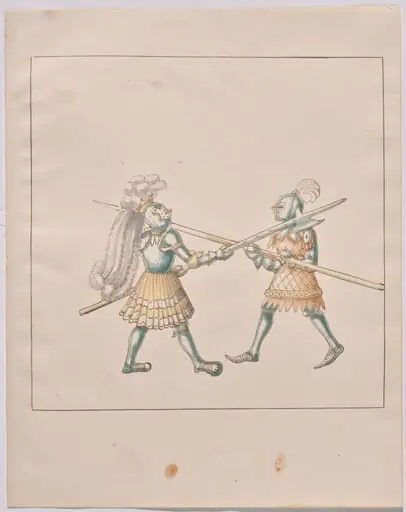
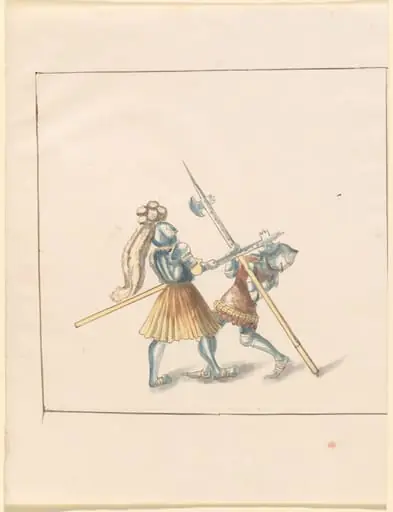
Artwork
Foot Combat with Halberds
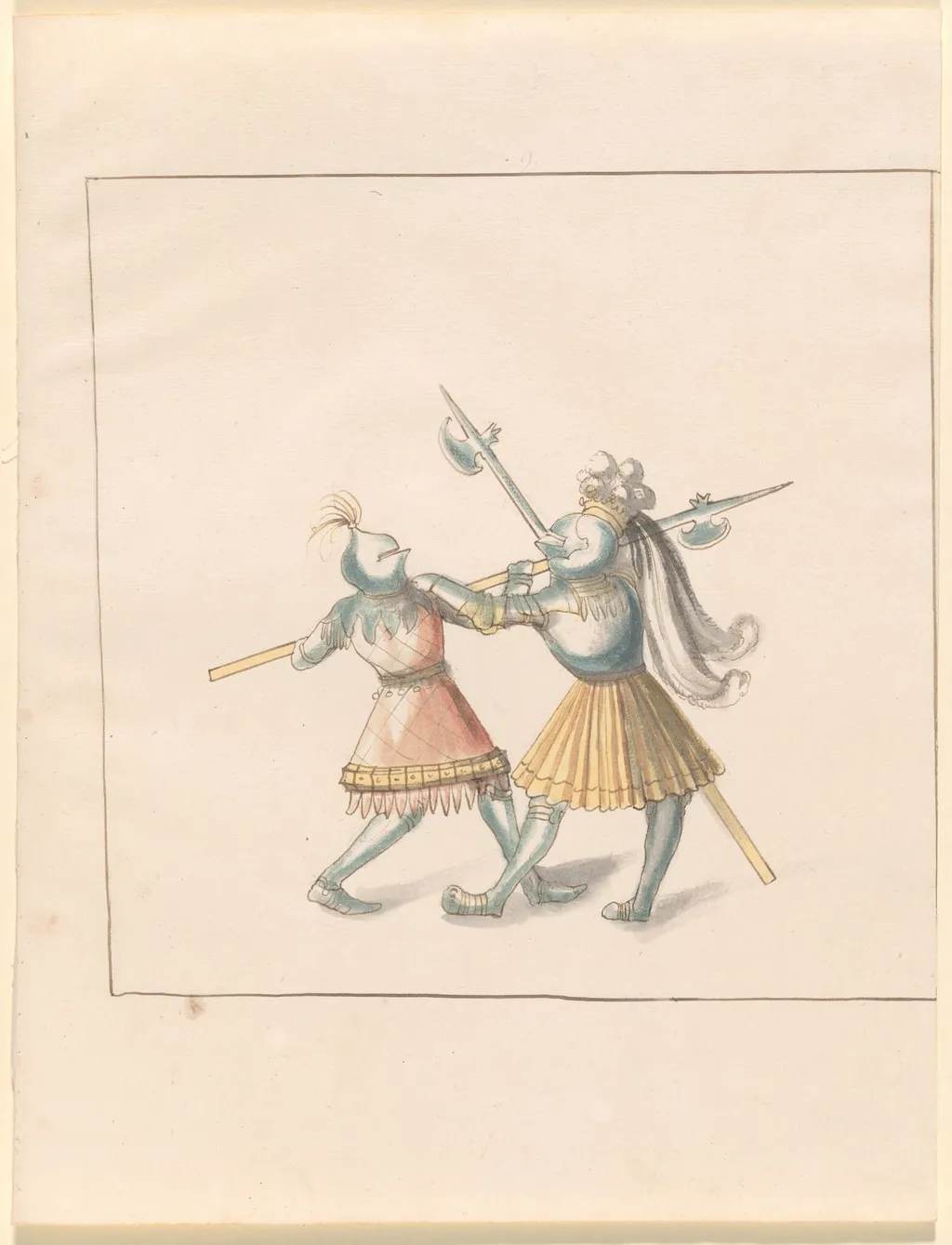
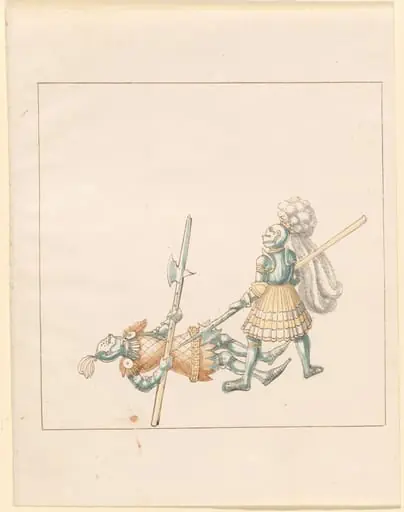
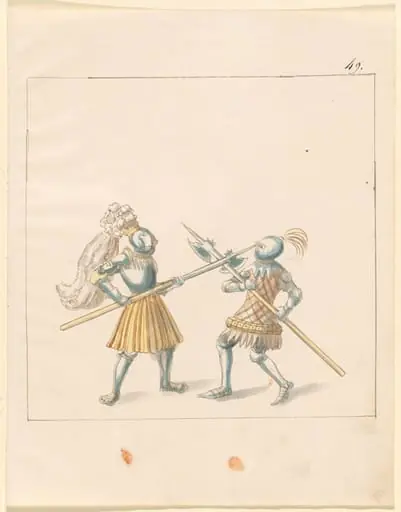
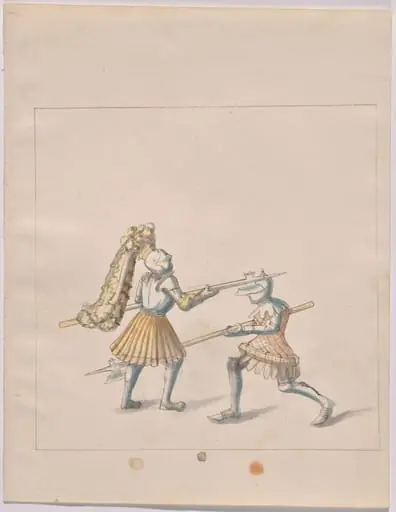
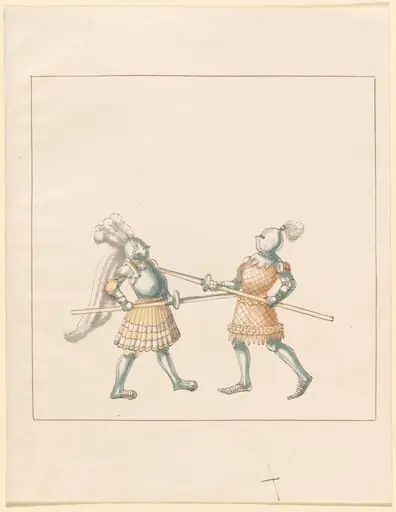
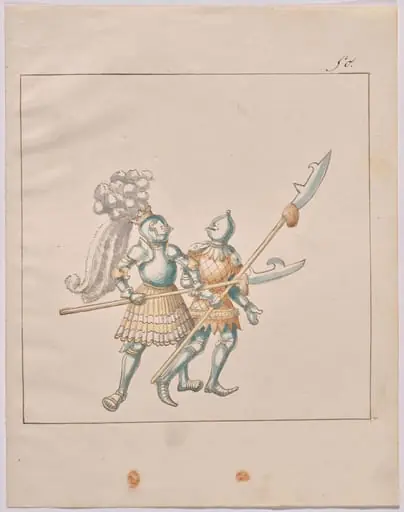
Foot Combat with Halberds is an ink drawing by the Renaissance artist German 16th Century. It dates from 1514 and is held in the collection of the National Gallery of Art. This 16th-century German drawing captures two armored combatants locked in a duel with halberds.
About this work
Overview
The work belongs to a tradition of detailed martial studies, likely produced for documentation or artistic practice rather than public display.
This 16th-century German drawing captures two armored combatants locked in a duel with halberds. Executed in pen and black ink with watercolor over black chalk on laid paper, it measures 33.9 by 26 centimeters. The work belongs to a tradition of detailed martial studies, likely produced for documentation or artistic practice rather than public display. Its precision suggests close observation of real or staged combat.
Subject & Meaning
The scene portrays two knights in full armor, engaged in a controlled yet intense exchange with long polearms. Their plumed helmets and articulated suits indicate high status, possibly nobility or professional soldiers. The focus on technique over narrative implies an interest in martial skill, perhaps as a study of movement, balance, or armor functionality within the context of Renaissance martial culture.
Technique & Style
The artist employed fine ink lines to define form and structure, then applied transparent watercolor washes in layers to model volume and suggest metallic surfaces. The ink acted as a barrier, containing and guiding the pigments—a technique akin to glazing. This method allowed for subtle tonal transitions while preserving the clarity of the underdrawing, reflecting a disciplined approach to color and detail.
History & Provenance
Created in Germany during the early 1500s, the drawing likely originated in a courtly or military workshop where artists recorded armor and combat techniques. Its survival suggests it was valued as a reference or study. It entered the collection of the National Gallery of Art in Washington, D.C., where it remains part of a broader archive of European graphic arts from the period.
Context
In early 16th-century Germany, detailed drawings of armored combat served both artistic and practical purposes. Artists documented armor designs for patrons, while martial manuals sought to preserve fighting techniques amid evolving warfare. This work reflects a culture where visual precision supported the transmission of knowledge, bridging art, technology, and military practice.
Legacy
Though not widely known outside specialist circles, the drawing exemplifies the sophistication of German Renaissance graphic arts. Its technical clarity and attention to mechanical detail influenced later studies of the human form in motion and armor design. It remains a valuable record of how artists engaged with the material culture of warfare during a period of rapid change.
Artist & collection

Artist
A German artist from the late 1500s drew lively scenes of knights clashing in parades and mock battles.

![Abraham Entertaining the Angels [verso], by German 16th Century](https://artifactworldgallery.com/img/german-16th-century--abraham-entertaining-the-angels-verso--69d1b25f4eba0a53-w320.webp)