Artwork
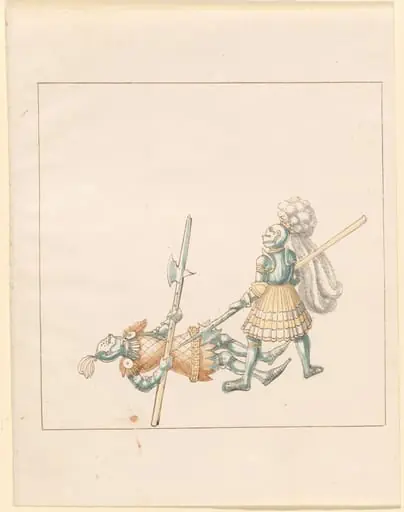
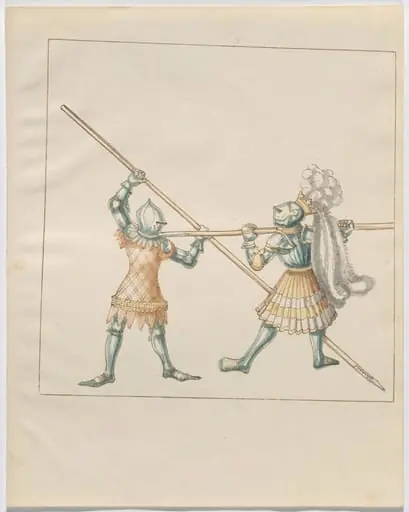
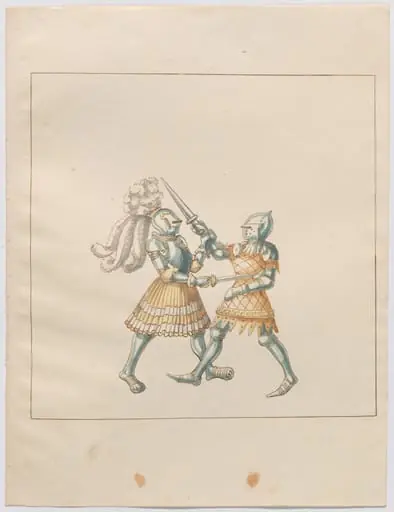
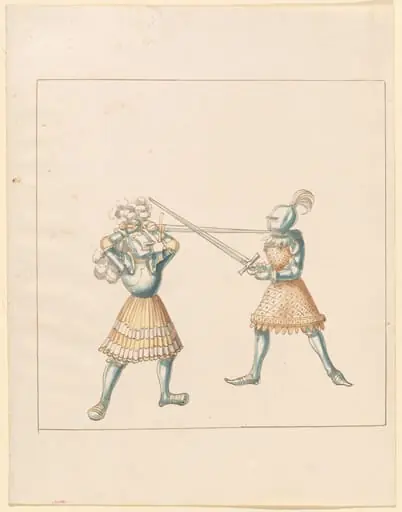
Foot Combat with Halberds
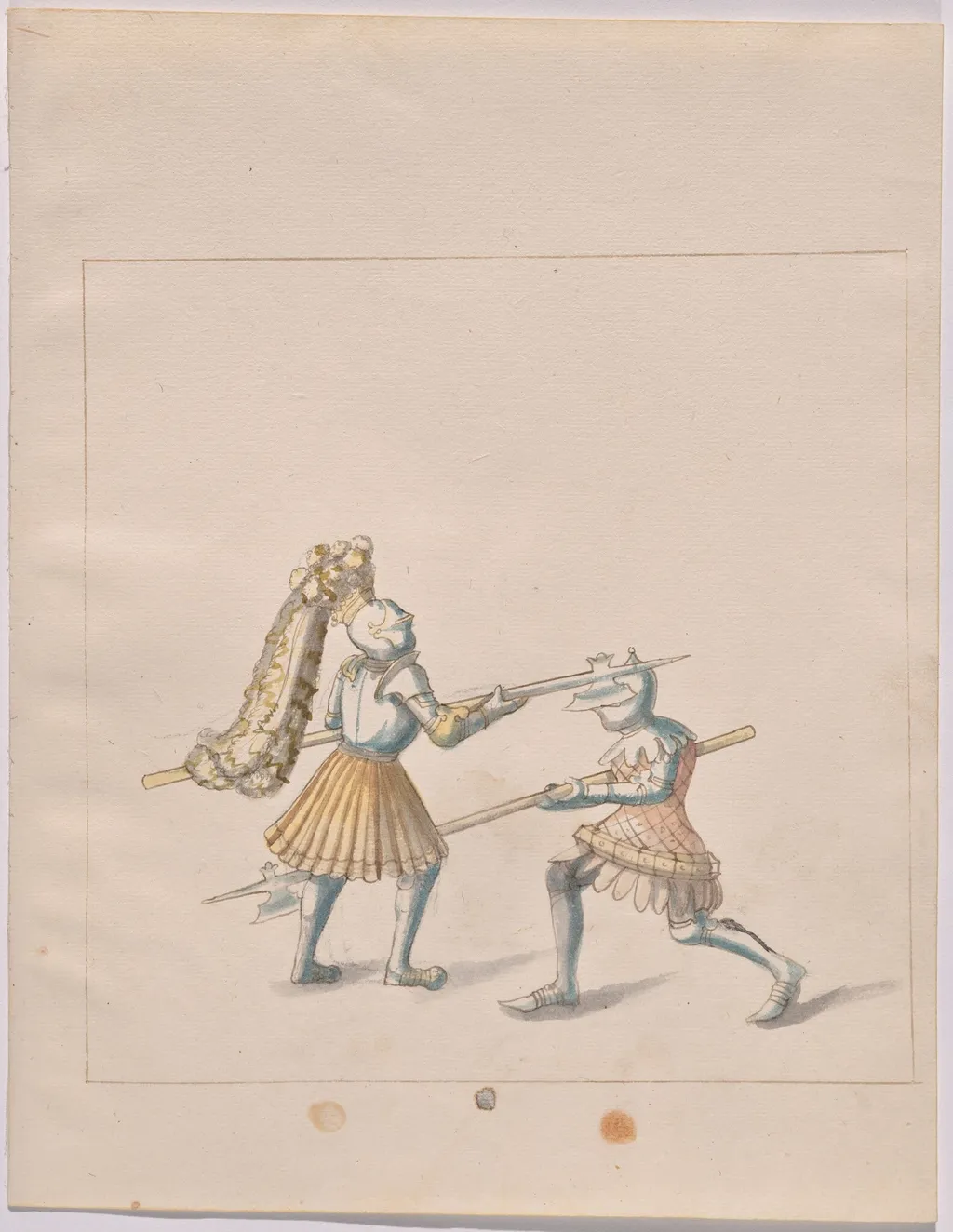
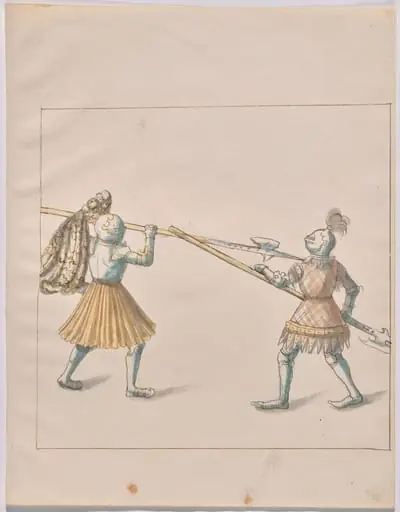
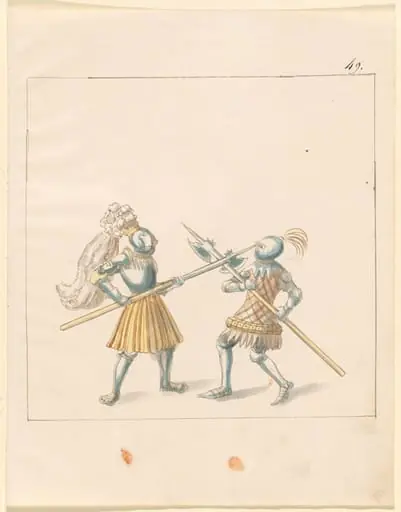
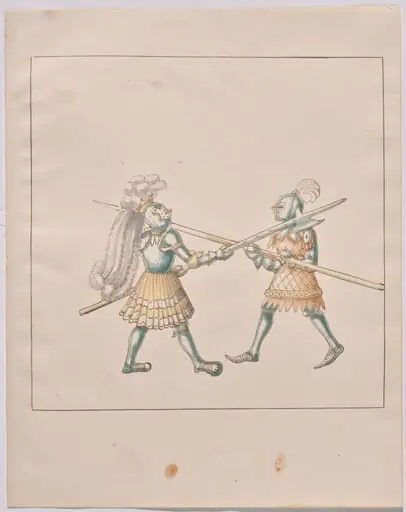
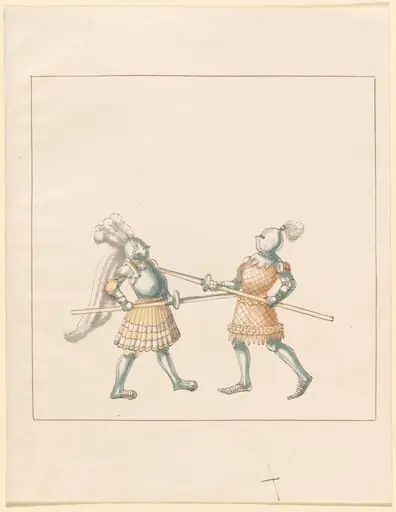
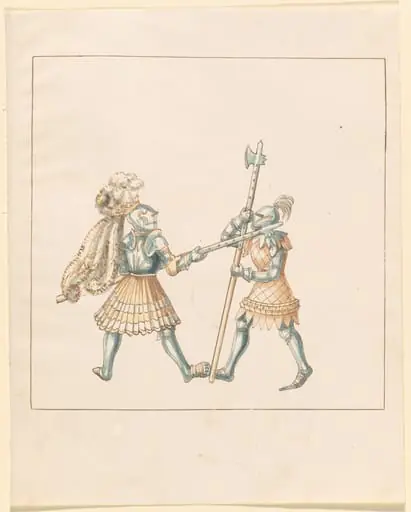
Foot Combat with Halberds is an ink drawing by the Renaissance artist German 16th Century. It dates from 1514 and is held in the collection of the National Gallery of Art.
About this work
Overview
This small drawing, executed in pen and black ink with watercolor over black chalk, captures a close-quarters duel between two armored knights.
This small drawing, executed in pen and black ink with watercolor over black chalk, captures a close-quarters duel between two armored knights. Corrected with white gouache and showing traces of erased lines, it measures 33.9 by 26 centimeters. Created on laid paper, the work exemplifies the precision and revision common in 16th-century German draftsmanship, likely intended as a study or preparatory sketch.
Subject & Meaning
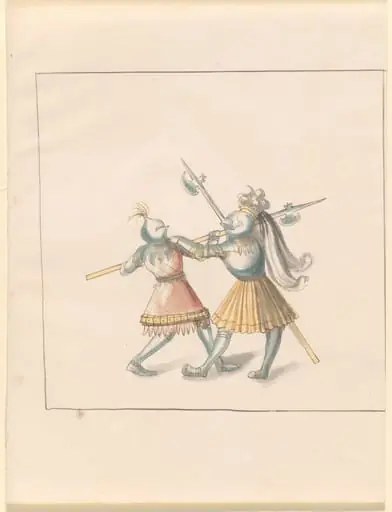
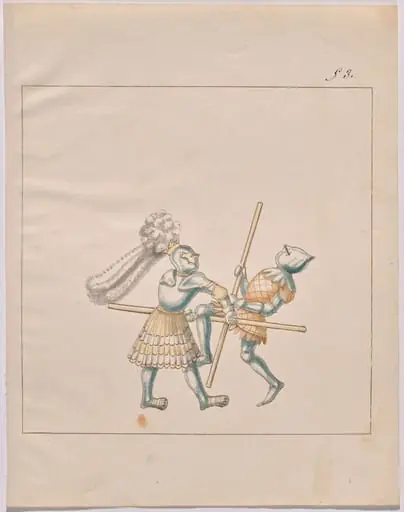
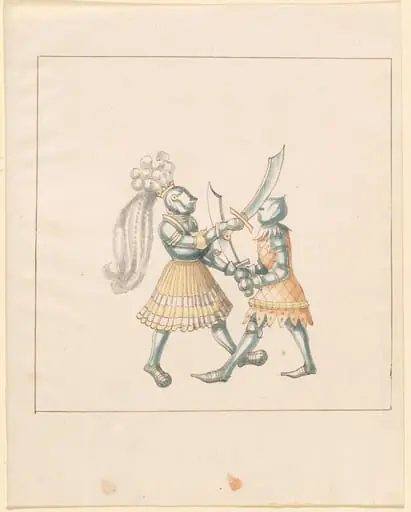
The scene portrays two fully armed combatants locked in a dynamic struggle with halberds, their weapons crossed at the center. Elaborate plumed helmets and articulated armor suggest noble or professional warriors, possibly drawn from contemporary military practice or chivalric tradition. The intimate framing emphasizes physical tension rather than narrative context, focusing on the mechanics of combat rather than its broader symbolism.
Technique & Style
The artist employed bold ink lines to define forms, then added translucent watercolor washes to suggest shadow and volume. White gouache was used selectively to correct or enhance highlights, notably on the curvature of one helmet. Traces of erased chalk lines remain visible near the left knight’s arm, revealing a process of adjustment. The restrained palette and controlled brushwork reflect a disciplined approach to anatomical and mechanical detail.
History & Provenance
The drawing originates from 16th-century Germany, a period rich in martial illustration and armor studies. Its survival suggests it was valued as a working drawing, possibly by a court artist or artisan involved in armor design. It entered the collection of the National Gallery of Art in Washington, D.C., where it is preserved as an example of Renaissance draftsmanship focused on martial culture.
Context
In early modern Germany, drawings of armed combat served practical and artistic purposes—aiding armorers, training soldiers, or documenting martial arts. This piece aligns with a tradition of detailed studies of weaponry and posture, often made for patrons interested in chivalry or military technology. Unlike grand battle scenes, it isolates the individual encounter, reflecting a growing interest in the human element of warfare.
Legacy
The drawing remains a testament to the skill of anonymous draftsmen who documented martial life with precision. Its survival offers insight into how weapons, armor, and movement were studied before the rise of printed manuals. Today, it contributes to scholarly understanding of Renaissance visual culture, particularly the intersection of art, technology, and combat practice in Central Europe.
Artist & collection

Artist
A German artist from the late 1500s drew lively scenes of knights clashing in parades and mock battles.

![Abraham Entertaining the Angels [verso], by German 16th Century](https://artifactworldgallery.com/img/german-16th-century--abraham-entertaining-the-angels-verso--69d1b25f4eba0a53-w320.webp)