Artwork
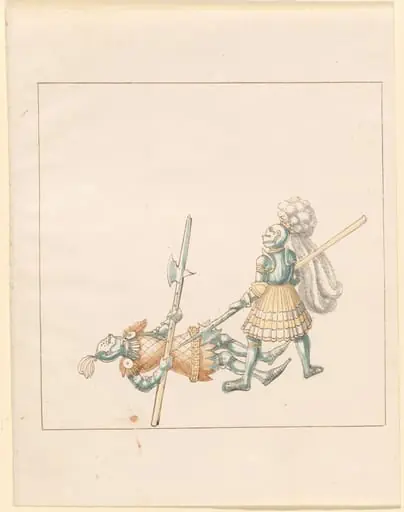
Foot Combat with Spears and Buckler Shields
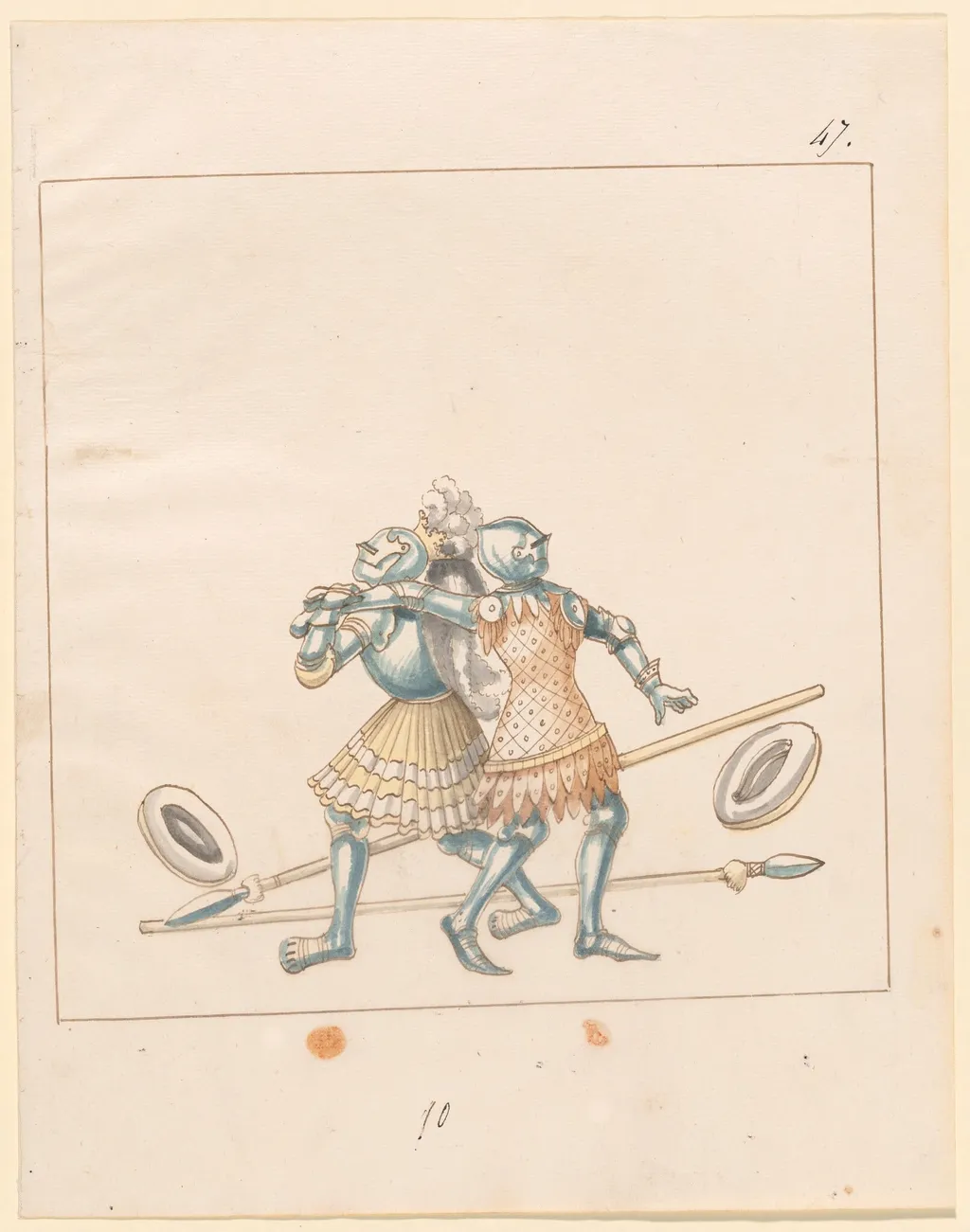
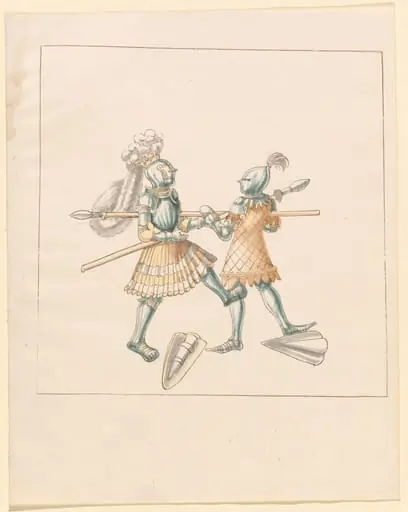
Foot Combat with Spears and Buckler Shields is an ink drawing by the Renaissance artist German 16th Century. It dates from 1514 and is held in the collection of the National Gallery of Art.
About this work
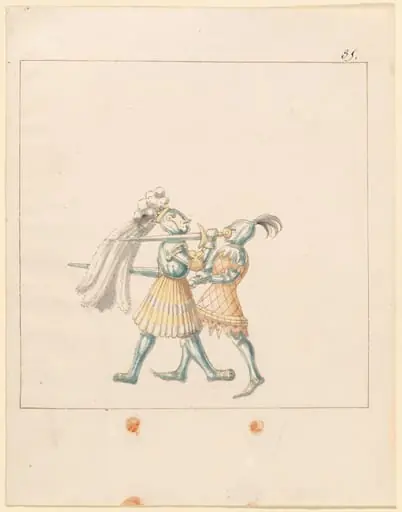
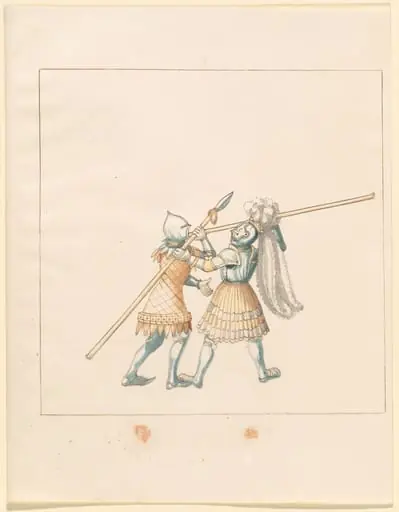
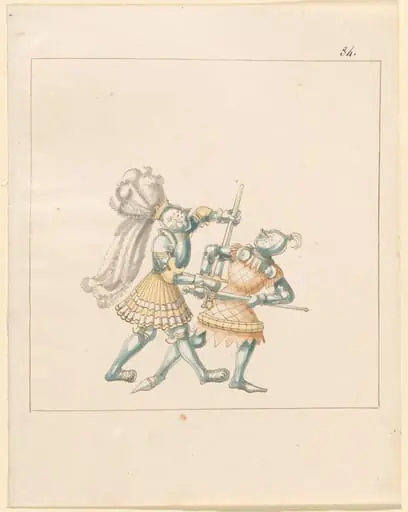
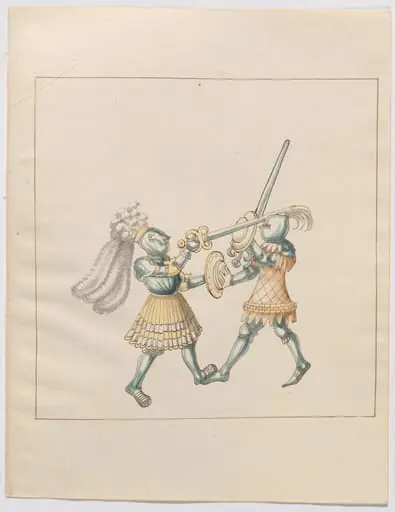
This shows two armored men with spears and small round shields. Their helmets have tall, curling plumes. They stand back-to-back, ready to fight.
This page was drawn for a fencing manual from around 1515. It mixes ink with thin watercolor washes to show light on metal. The artist even labeled each move with numbers.
Look for the same style in drawings at the National Gallery of Art, Washington.
Overview
The composition emphasizes tactical positioning and precise detail, reflecting its instructional purpose within martial training literature.
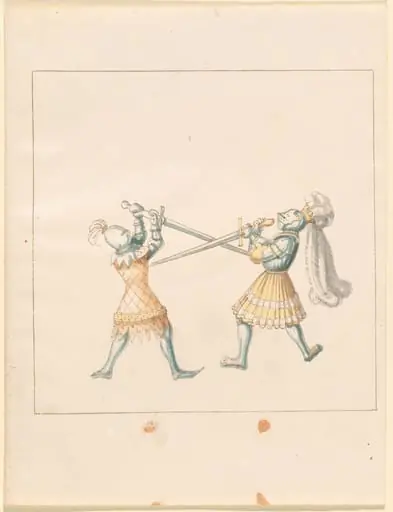
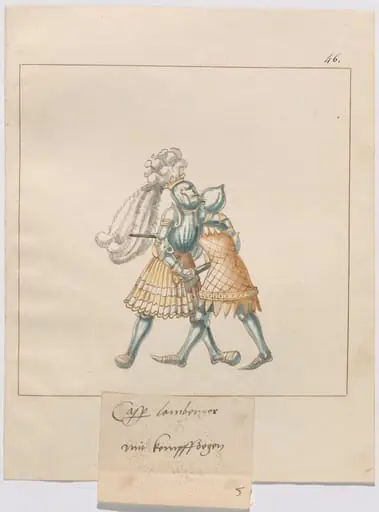
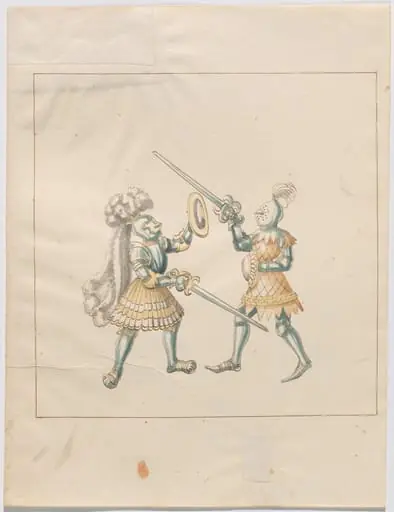
This ink and watercolor drawing, created circa 1515, illustrates two armored combatants in a defensive posture, each holding a spear and a small round buckler shield. Executed on laid paper, it originates from a German fencing manual of the early 16th century. The composition emphasizes tactical positioning and precise detail, reflecting its instructional purpose within martial training literature.
Subject & Meaning
The figures stand back-to-back, suggesting mutual protection in close-quarters combat. Their posture implies readiness to defend against multiple attackers, a common scenario in armored dueling manuals of the period. The arrangement conveys a systematized approach to defense, where coordination and spatial awareness are as vital as weapon skill. Numbers beside each figure likely correspond to specific techniques or sequences in the manual.
Technique & Style
The artist employed pen and black ink with delicate watercolor washes to suggest the reflective surfaces of armor and the texture of fabric beneath. Subtle gradations in tone model the curvature of helmets and breastplates, while fine linework defines rivets and joints. The plumes on the helmets are rendered with fluid, rhythmic strokes, adding movement to the static forms. Annotations in ink identify key actions, reinforcing the drawing’s pedagogical function.
History & Provenance
Created in the German-speaking regions around 1515, the drawing was part of a larger manuscript intended to document fencing techniques. Such manuals were circulated among professional fighters and noble trainees. The work’s survival suggests it was valued for its clarity and detail. Its current location traces to collections that acquired early martial treatises in the 19th and 20th centuries, including institutions like the National Gallery of Art.
Context
This drawing emerged during a period when printed fencing manuals were becoming more common in Europe, particularly in Germany and Italy. Artists and masters collaborated to produce illustrated guides that combined practical instruction with visual precision. The use of watercolor to indicate light on metal reflects an emerging interest in naturalistic representation within technical illustration, bridging art and martial science.
Legacy
The drawing exemplifies a tradition of martial illustration that influenced later European combat treatises. Its combination of annotated figures and tonal modeling set a standard for clarity in instructional art. Similar compositions appear in other 16th-century manuals, and its stylistic features remain identifiable in collections of Renaissance martial texts, particularly those preserved in German and American institutions.
Artist & collection

Artist
A German artist from the late 1500s drew lively scenes of knights clashing in parades and mock battles.

![Abraham Entertaining the Angels [verso], by German 16th Century](https://artifactworldgallery.com/img/german-16th-century--abraham-entertaining-the-angels-verso--69d1b25f4eba0a53-w320.webp)