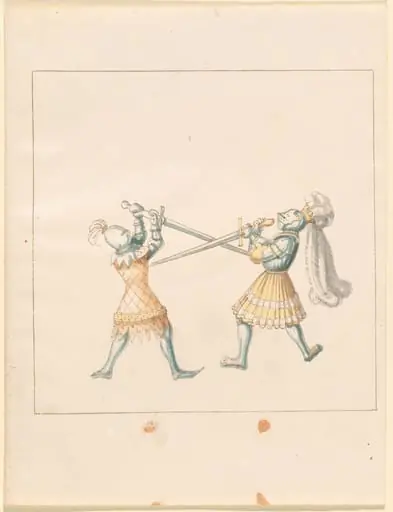
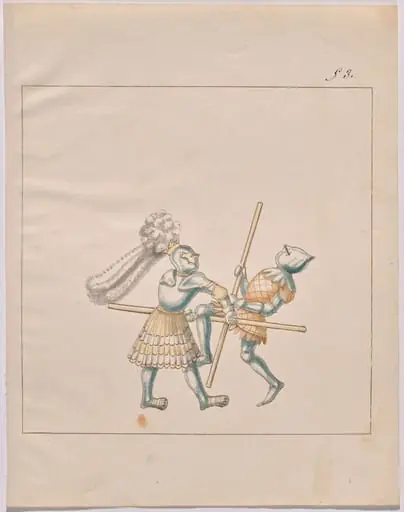
Artwork
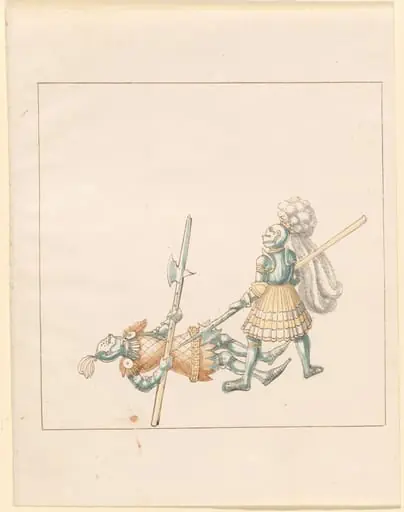
Foot Combat with Spears and Tartsche Shields
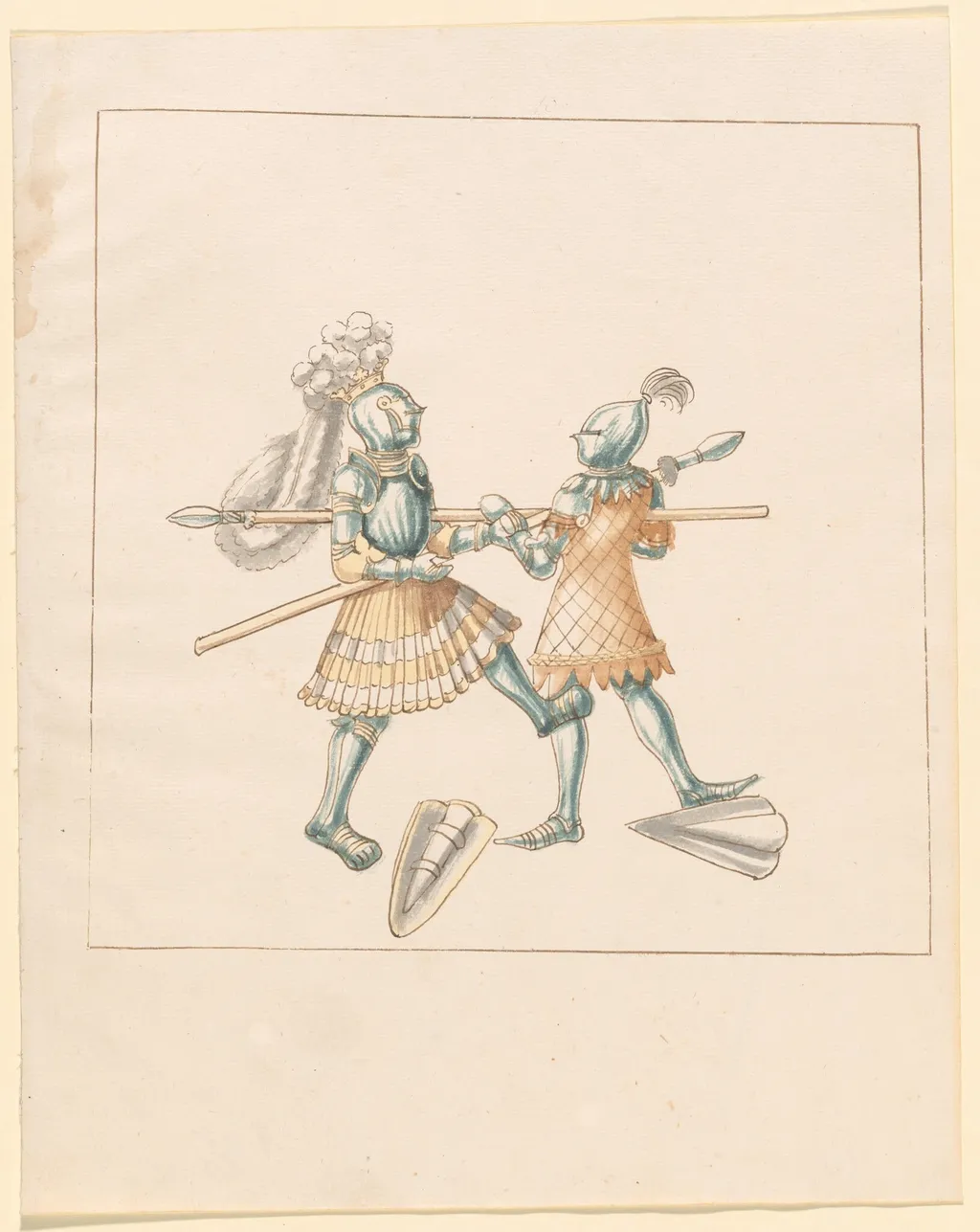
Foot Combat with Spears and Tartsche Shields is an ink drawing by the Renaissance artist German 16th Century. It dates from 1514 and is held in the collection of the National Gallery of Art.
About this work
This artwork is similar to others from the same time period, and to learn more, you can look at the work of the artist: German 16th Century.
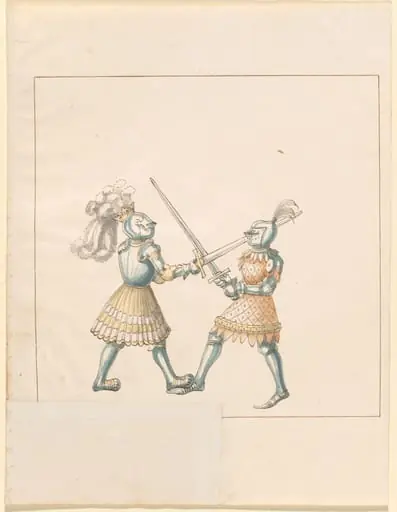
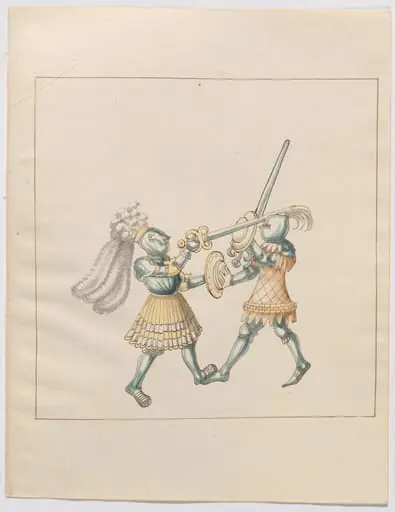
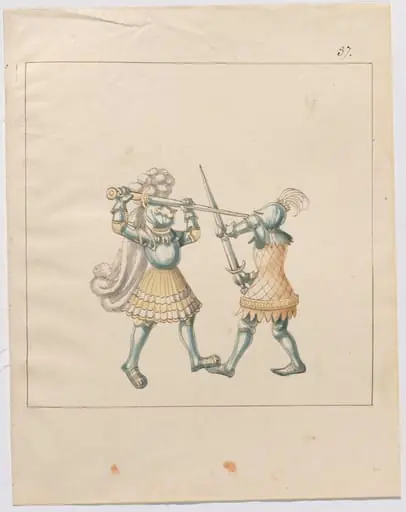
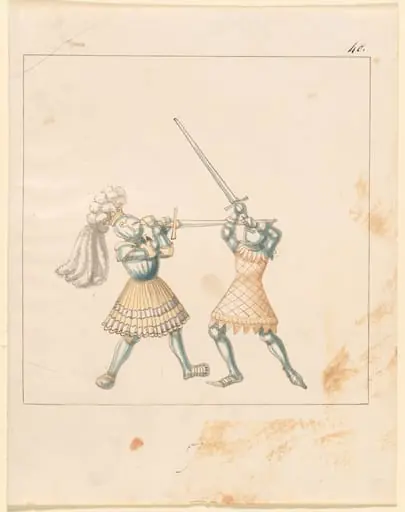
You see two armored German soldiers fighting with spears and shields.
They are dressed in 16th-century armor, which is very detailed.
The artist paid close attention to the armor and the way the soldiers hold their spears.
The soldiers are using Tartsche shields, which were commonly used in medieval warfare.
This type of shield was often used by German soldiers during this time period.
It's interesting to see how the artist depicted the shields and spears in action.
This artwork is similar to others from the same time period, and to learn more, you can look at the work of the artist: German 16th Century.
Overview
The drawing titled *Foot Combat with Spears and Tartsche Shields* presents a close‑up view of two German foot soldiers locked in melee. Executed in pen and black ink with watercolor on laid paper, the work dates to the early 1500s, around 1512–1515, and exemplifies a German illustration of contemporary warfare.
Subject & Meaning
Both figures are shown in full plate armor, each gripping a long spear and a characteristic Tartsche shield—a shallow, oval shield favored by German infantry of the period. The composition emphasizes the physicality of hand‑to‑hand combat and the practical combination of offensive spears with defensive shields that defined early‑16th‑century battlefield tactics.
Technique & Style
The artist employs fine pen lines to delineate the intricate plates, rivets, and joints of the armor, while washes of watercolor add subtle tonal variation to the metal surfaces and the cloth of the shields. The use of laid paper provides a textured ground that enhances the drawing’s tactile quality and aids in rendering depth.
History & Provenance
Created in Germany during the reign of Emperor Maximilian I, the piece belongs to a broader corpus of martial illustrations produced for military manuals and training guides of the era. Its survival on paper suggests it was likely part of a larger instructional compilation, though the original author remains unidentified.
Context
The depiction aligns with contemporary German military manuals that sought to codify infantry techniques, particularly the integration of spears and Tartsche shields in foot combat. Such visual records served both as instructional tools for soldiers and as documentation of evolving armament practices in the Holy Roman Empire.
Artist & collection

Artist
A German artist from the late 1500s drew lively scenes of knights clashing in parades and mock battles.

![Abraham Entertaining the Angels [verso], by German 16th Century](https://artifactworldgallery.com/img/german-16th-century--abraham-entertaining-the-angels-verso--69d1b25f4eba0a53-w320.webp)