Artwork
Foot Combat with War Hammers and Tartsche Shields
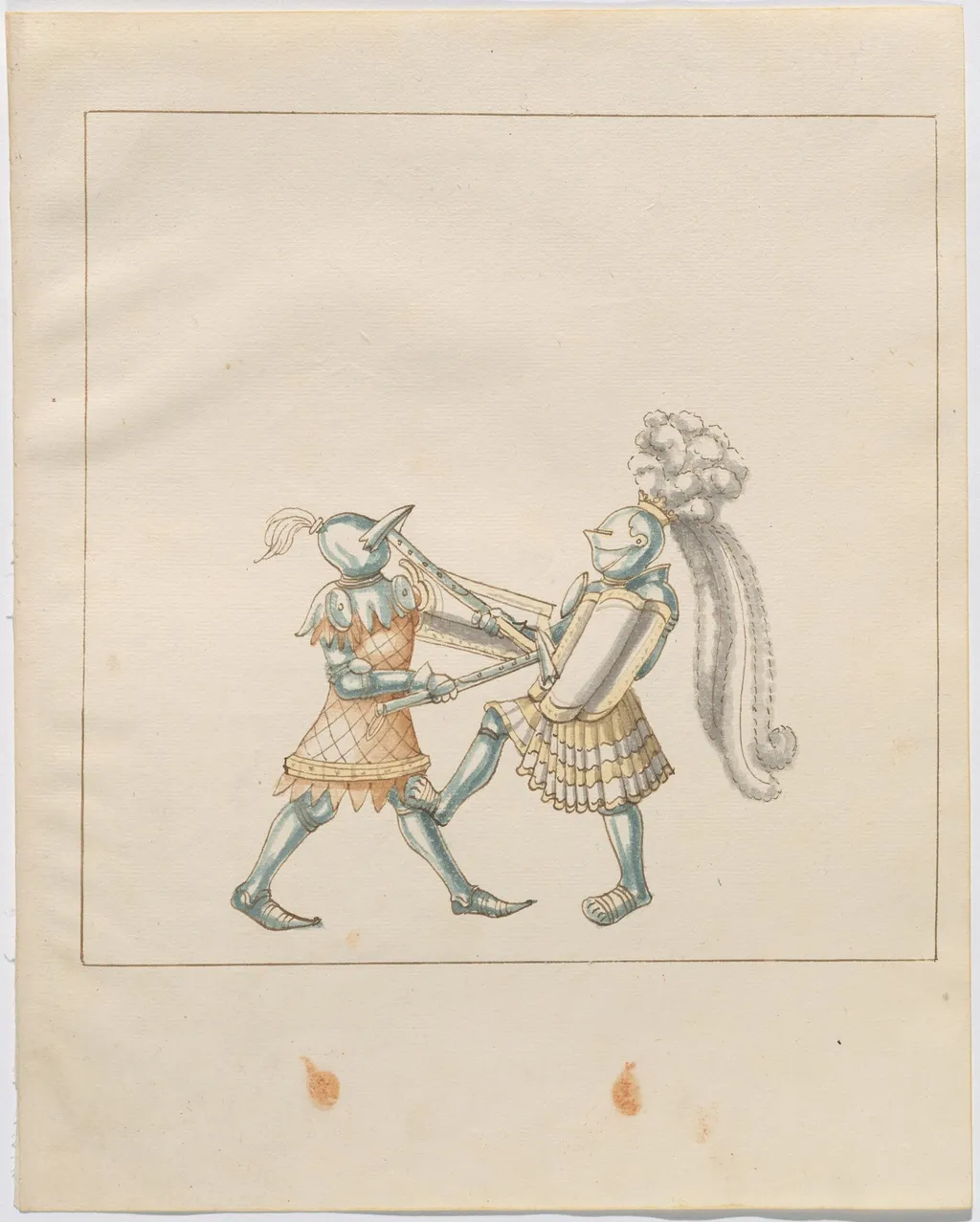
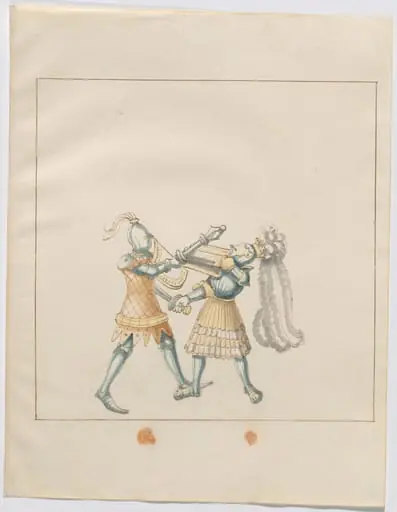
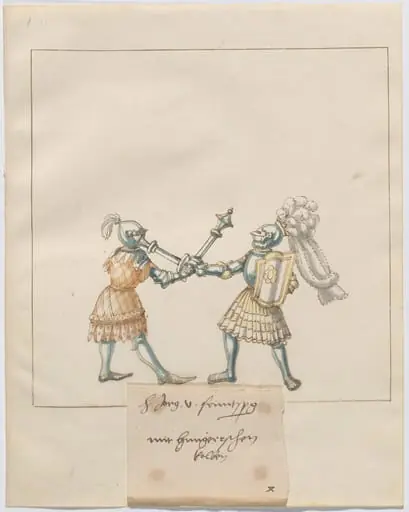
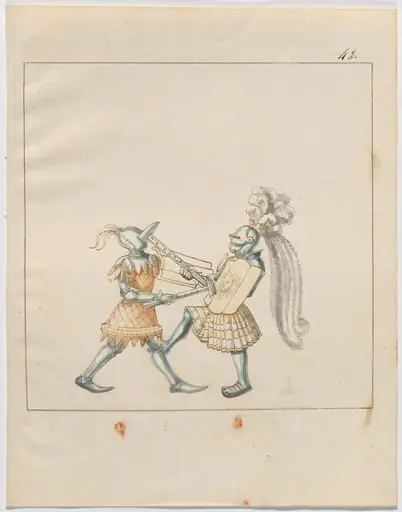
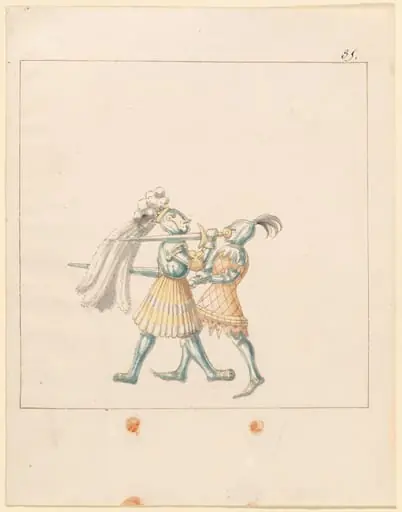
Foot Combat with War Hammers and Tartsche Shields is an ink drawing by the Renaissance artist German 16th Century. It dates from 1514 and is held in the collection of the National Gallery of Art. Created in 1515, this German drawing by Julius Lessing Rosenwald portrays a close‑quarters duel between two heavily armored combatants.
About this work
That level of detail wasn’t easy in 1515—artists had to grind pigments by hand and layer them carefully.
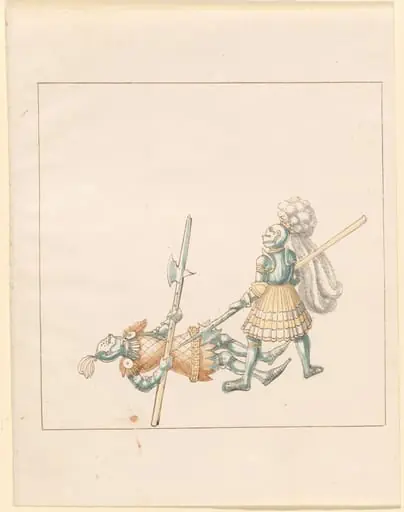
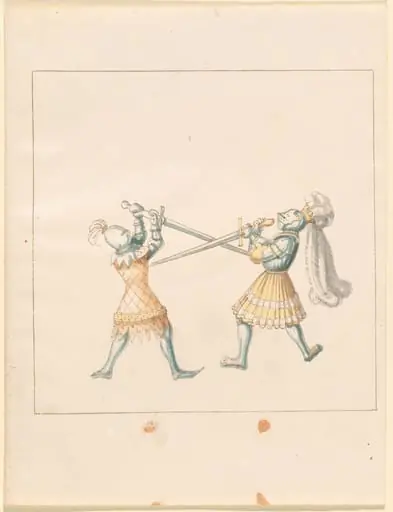
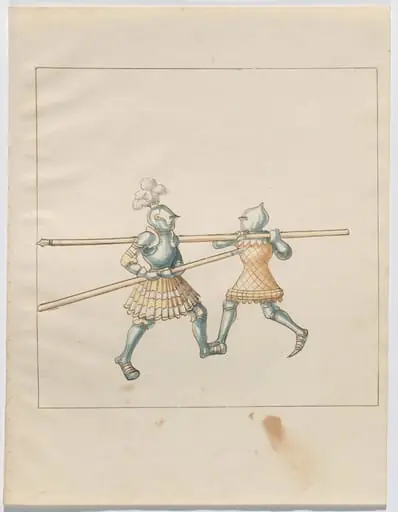
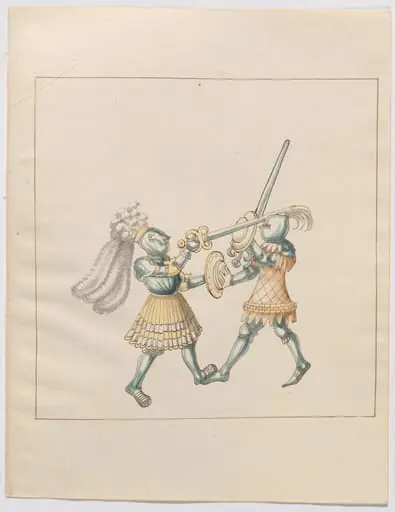
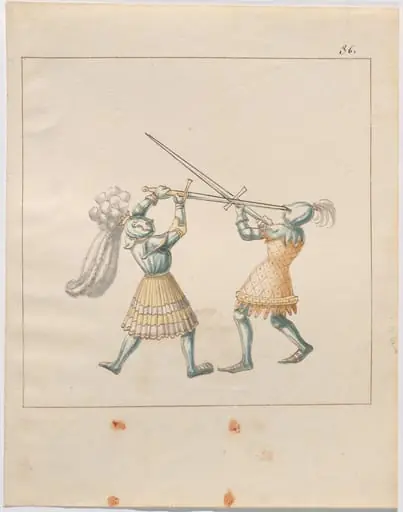
This ink-and-watercolor drawing shows two fighters locked in combat. They wear heavy armor and hold war hammers and round shields called tartsche. The artist used fine lines and thin glazes of color to build up their armor plate.
The armor looks almost real enough to wear. That level of detail wasn’t easy in 1515—artists had to grind pigments by hand and layer them carefully.
Look for more German armor drawings at the National Gallery of Art, Washington.
Overview
Created in 1515, this German drawing by Julius Lessing Rosenwald portrays a close‑quarters duel between two heavily armored combatants. Executed with pen, black ink, and watercolor on laid paper, the work captures the intensity of foot combat, emphasizing the metallic sheen of armor and the distinctive round tartsche shields each fighter wields.
Subject & Meaning
The composition focuses on two figures locked in a violent exchange, each brandishing a war hammer while defending with a tartsche shield. The scene reflects contemporary martial practices, illustrating the balance of offensive force and defensive protection that characterized early‑sixteenth‑century battlefield tactics.
Technique & Style
Rosenwald employs fine, controlled ink lines to delineate the intricate plates of armor, while translucent watercolor washes suggest the reflective quality of metal. The layered application of pigment, achieved by hand‑grinding and careful glazing, creates a realistic texture that conveys both the weight and the craftsmanship of the protective gear.
History & Provenance
The drawing originates from early Renaissance Germany and is attributed to the artist Julius Lessing Rosenwald, a known illustrator of military subjects. It entered the collection of the National Gallery of Art in Washington, where it is displayed alongside other period German armor studies.
Context
During the early 1500s, German armorial art flourished as a means of documenting evolving warfare technology. This work belongs to a broader tradition of detailed martial illustrations that served both instructional purposes for soldiers and decorative interests for patrons fascinated by chivalric combat.
Artist & collection

Artist
A German artist from the late 1500s drew lively scenes of knights clashing in parades and mock battles.

![Abraham Entertaining the Angels [verso], by German 16th Century](https://artifactworldgallery.com/img/german-16th-century--abraham-entertaining-the-angels-verso--69d1b25f4eba0a53-w320.webp)