Artwork
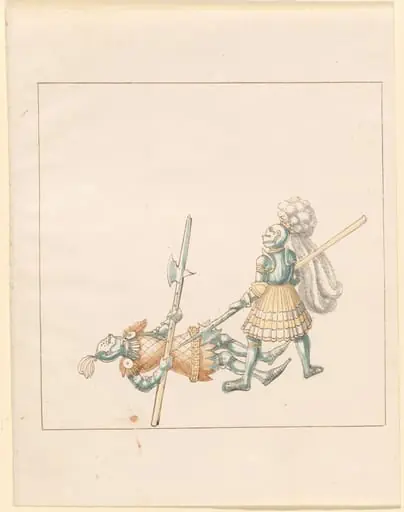
Foot Combat with Pikes
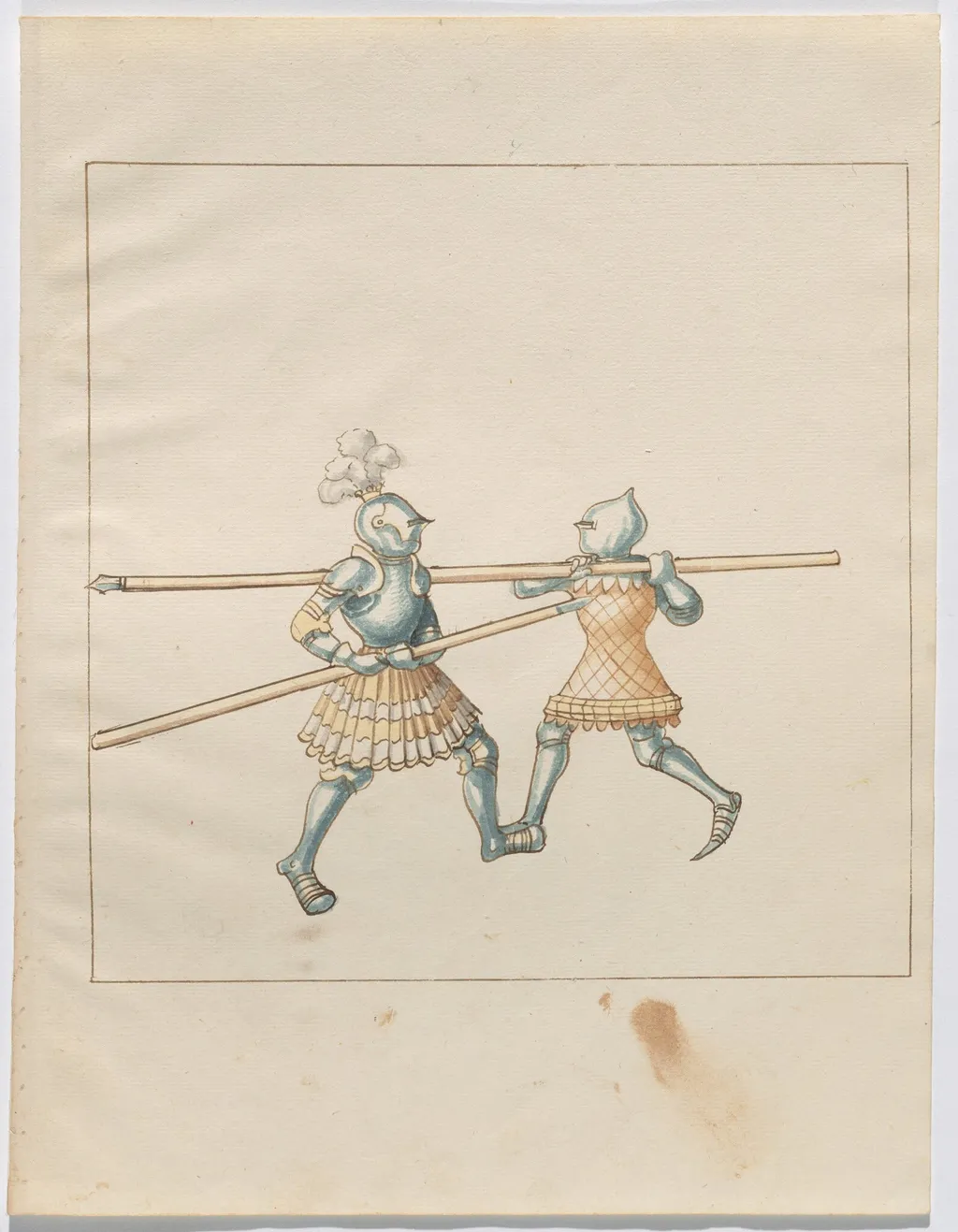
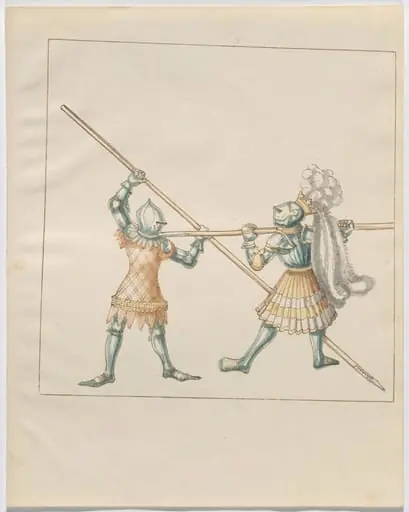
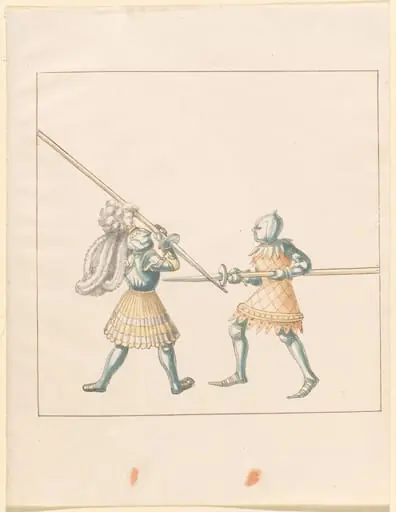
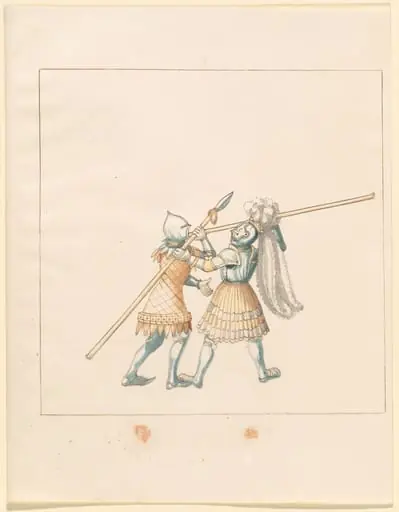
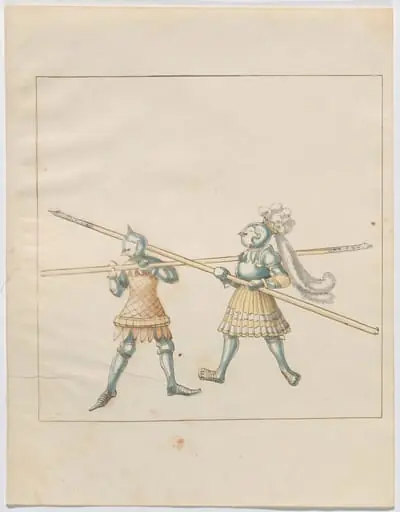
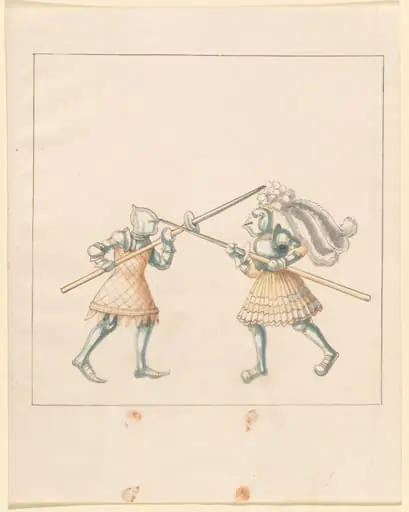
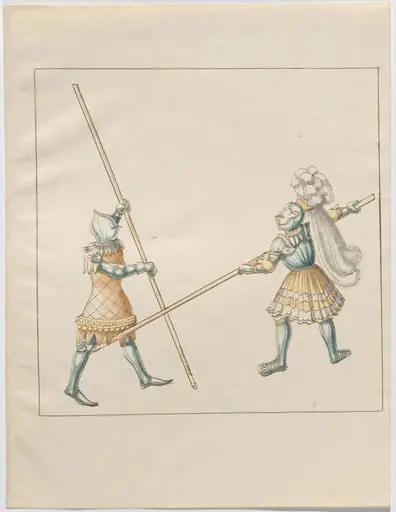
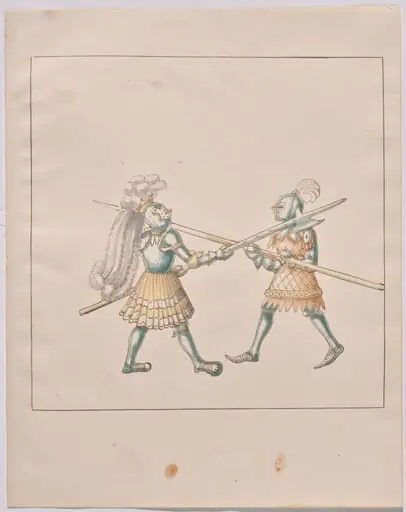
Foot Combat with Pikes is an ink drawing by the Renaissance artist German 16th Century. It dates from 1514 and is held in the collection of the National Gallery of Art. This ink and watercolor drawing, created around 1515, captures a close-quarters battle between infantrymen wielding long pikes.
About this work
Overview
The work reflects the practice of German artists studying military formations and equipment, likely as preparatory studies for larger compositions.
This ink and watercolor drawing, created around 1515, captures a close-quarters battle between infantrymen wielding long pikes. Executed on laid paper, it measures 33.8 by 26.3 centimeters. The work reflects the practice of German artists studying military formations and equipment, likely as preparatory studies for larger compositions. The medium’s simplicity underscores its function as a working sketch rather than a finished piece.
Subject & Meaning
The scene portrays a dense group of armored soldiers engaged in hand-to-hand combat, their bodies locked in dynamic, interlocking poses. The focus is not on individual identity but on the mechanics of warfare: the thrusting pikes, overlapping shields, and layered armor. It conveys the chaos and coordination of infantry tactics, offering insight into how such battles were understood and visualized by contemporary artists.
Technique & Style
Fine black ink lines define the figures and weapons, with subtle washes of watercolor adding tonal depth to armor and shadows. Traces of black chalk suggest initial sketching. Faces are minimized, emphasizing posture and equipment. The artist’s precision in rendering armor joints and pike shafts indicates close observation of real military gear, prioritizing functional accuracy over expressive detail.
History & Provenance
The drawing is attributed to a German artist active in the early 16th century, though the maker’s identity remains unconfirmed. It entered the collection of the National Gallery of Art in Washington, D.C., where it is held as part of a broader group of Renaissance military studies. Its survival suggests it was valued as a reference, possibly within a workshop or courtly collection.
Context
In early 1500s Germany, detailed studies of soldiers and weaponry were common among artists responding to the evolving nature of warfare. The rise of professional infantry and the prominence of pike formations made such subjects relevant. This drawing aligns with a tradition of observational sketching used to document equipment and movement, bridging artistic practice and military documentation.
Legacy
The drawing stands as a testament to the role of preparatory studies in Renaissance art. Its focus on anatomical arrangement and material detail influenced how later artists approached battle scenes. Though not widely exhibited, it remains a key example of how visual culture engaged with the realities of early modern combat, preserving tactical knowledge through art.
Artist & collection

Artist
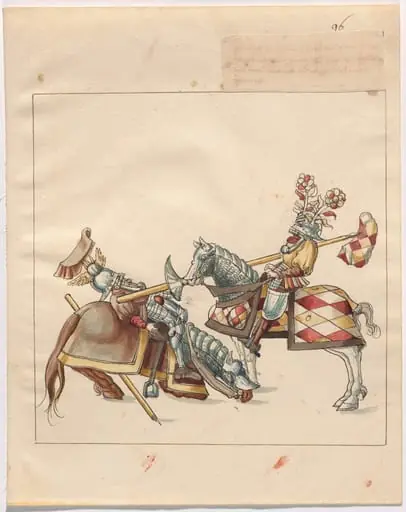
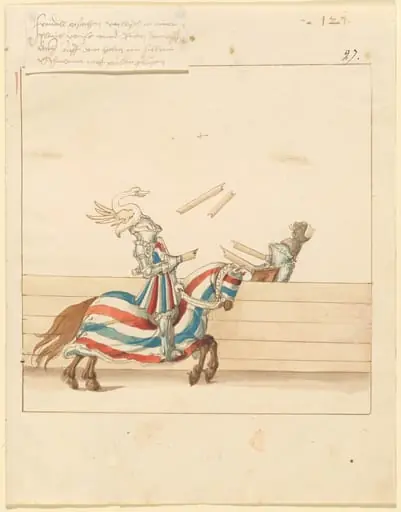
A German artist from the late 1500s drew lively scenes of knights clashing in parades and mock battles.

![Abraham Entertaining the Angels [verso], by German 16th Century](https://artifactworldgallery.com/img/german-16th-century--abraham-entertaining-the-angels-verso--69d1b25f4eba0a53-w320.webp)