Artwork
Playing Card
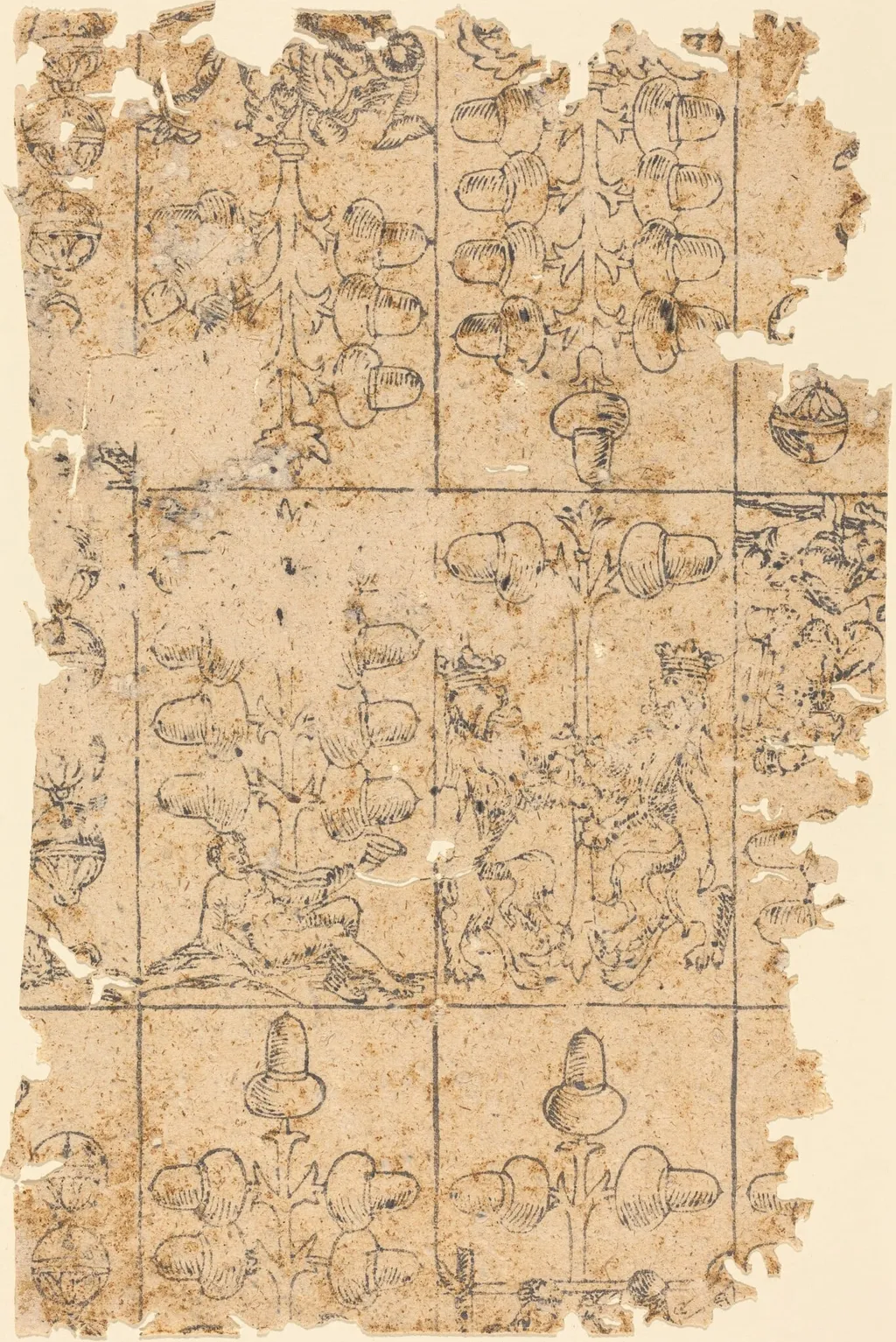
Playing Card is an ink print by the Renaissance artist German 16th Century. It dates from 1550 and is held in the collection of the National Gallery of Art.
About this work
Overview
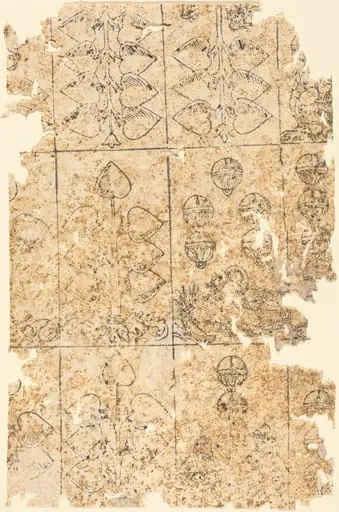
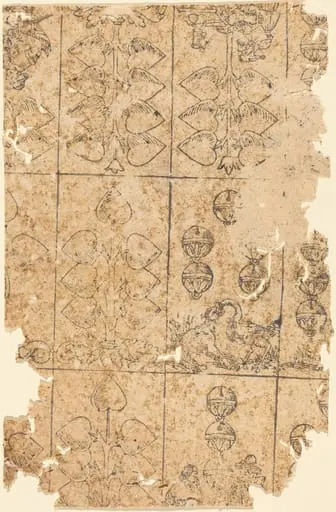
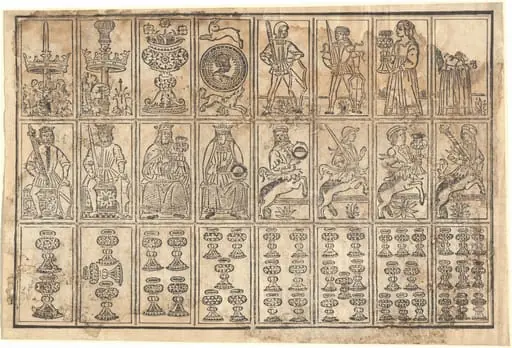
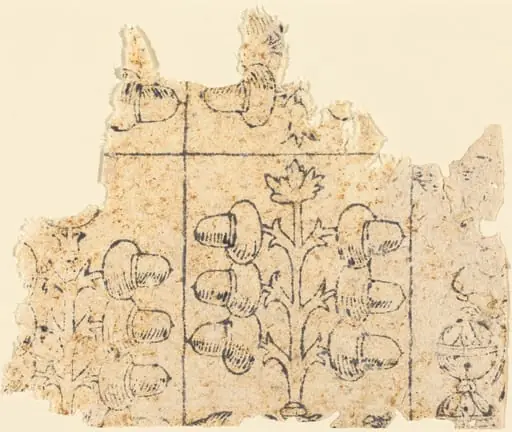
The work is a fragment of a playing card executed as a woodcut print. The surviving piece is divided into four panels, each depicting a stylized tree with rounded foliage surrounded by small birds or animal figures. The edges of the fragment are irregular, suggesting wear and breakage over time.
Subject & Meaning
Each panel presents a solitary tree rendered with exaggerated, rounded leaves, a motif that may allude to natural cycles or symbolic growth. The accompanying fauna—birds and other small creatures—populate the scene, hinting at a narrative of woodland life or a decorative emblem typical of card imagery.
Technique & Style
The image was produced by carving the design into a wooden block, inking the raised surfaces, and pressing the block onto paper. This relief printing method yields bold outlines and a characteristic grainy texture, evident in the jagged edges and the contrast between the dark inked areas and the paper background.
History & Provenance
The fragment appears aged and worn, indicating it has survived considerable handling. Its origin as part of a playing card suggests it was once a functional object, likely circulated in a domestic or gaming context before being separated and preserved as a print artifact.
Artist & collection

Artist
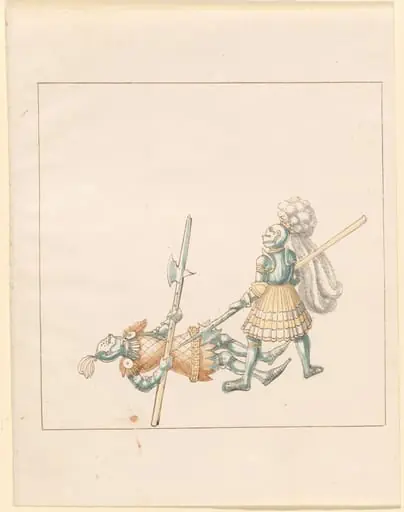
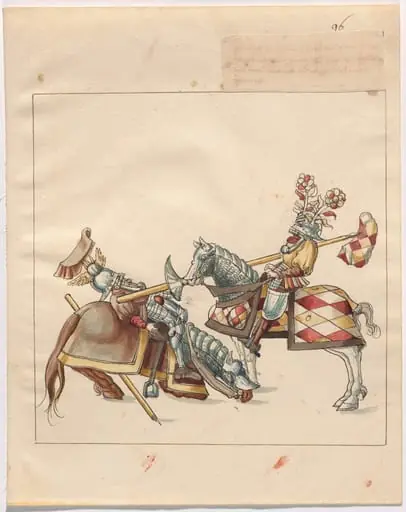
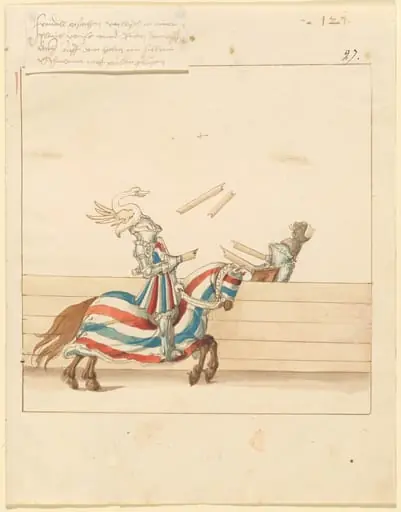
A German artist from the late 1500s drew lively scenes of knights clashing in parades and mock battles.

![Abraham Entertaining the Angels [verso], by German 16th Century](https://artifactworldgallery.com/img/german-16th-century--abraham-entertaining-the-angels-verso--69d1b25f4eba0a53-w320.webp)