Artwork
Playing Card
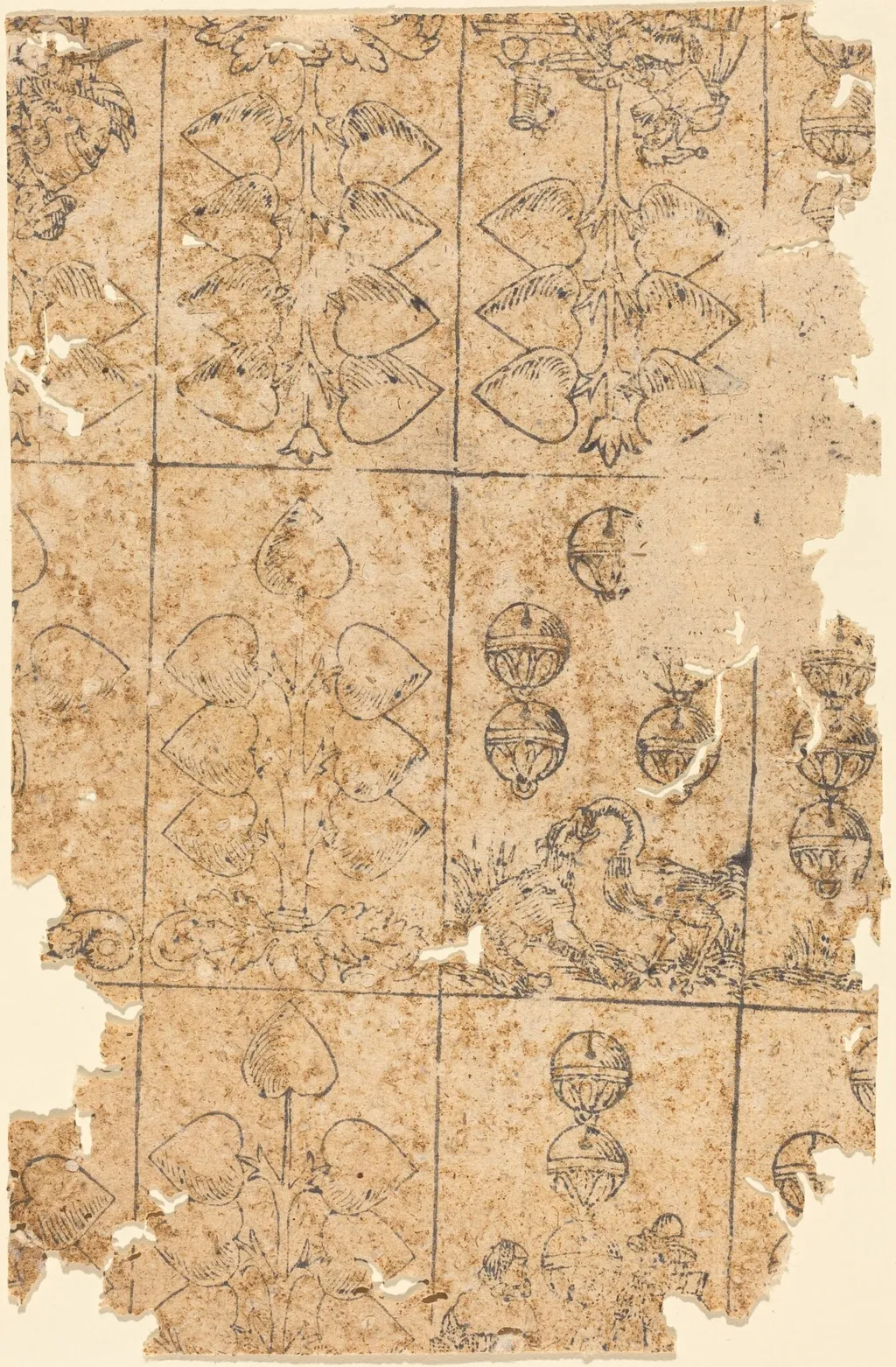
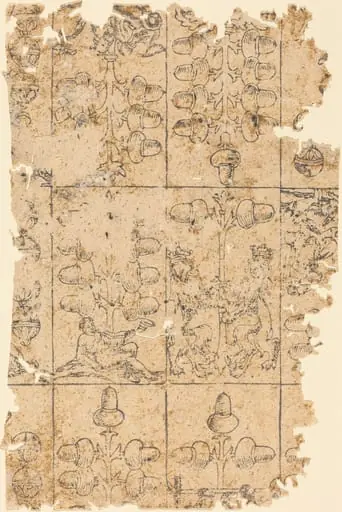
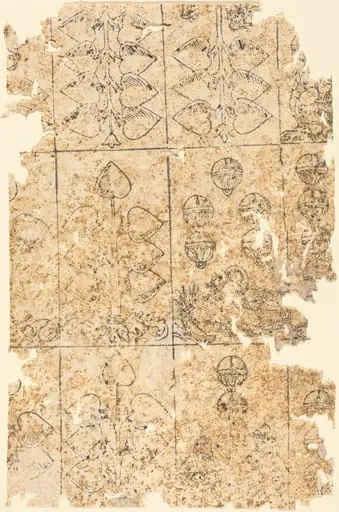
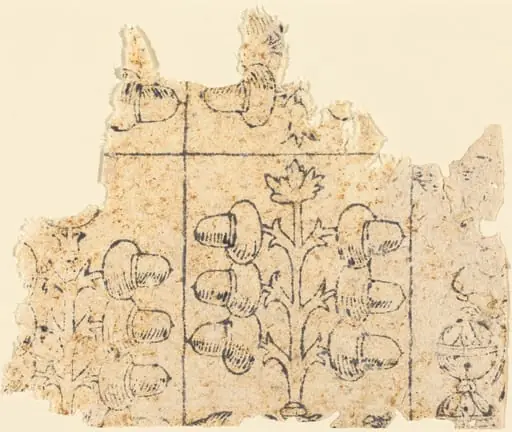
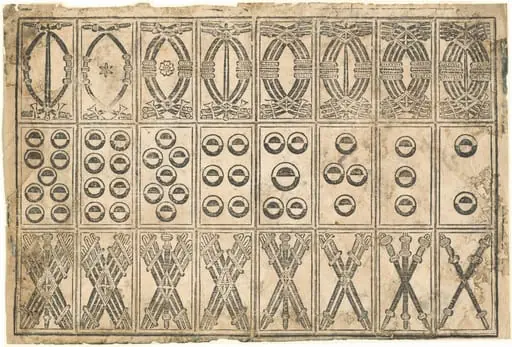
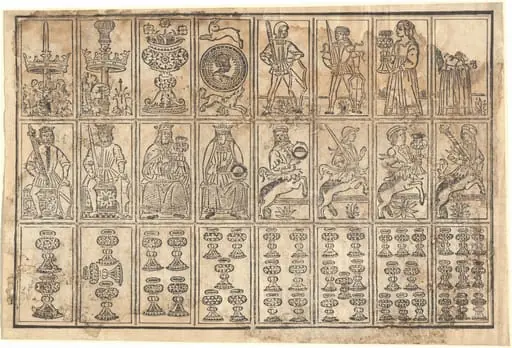
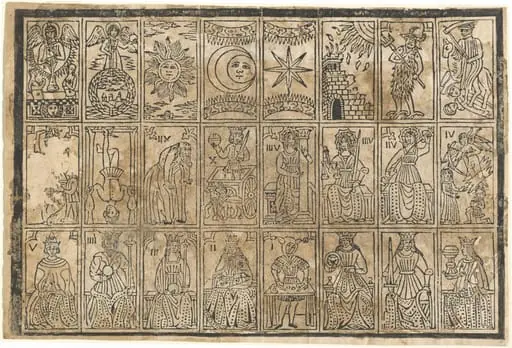
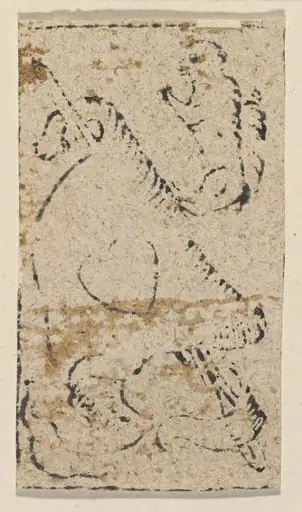
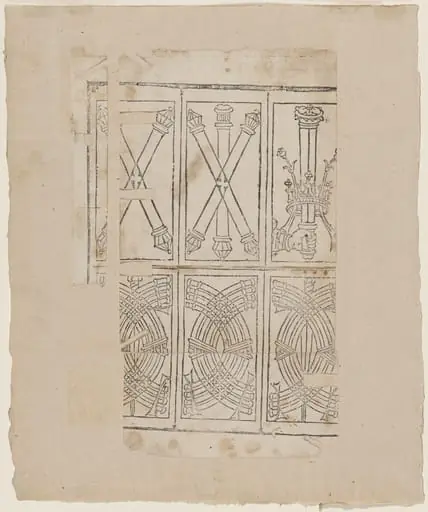
Playing Card is an ink print by the Renaissance artist German 16th Century. It dates from 1550 and is held in the collection of the National Gallery of Art. This woodcut print presents a portion of a larger sheet, its surface populated by a regular grid of playing‑card motifs.
About this work
The overall effect is one of delicate beauty, as if the cards are floating on the surface of the paper.
This painting shows a fragment of a sheet of paper with a repeating pattern of playing cards. The cards are arranged in rows and columns, with each card featuring a unique design. Some cards have flowers or leaves, while others have geometric shapes or abstract patterns.
The cards are drawn in a simple, yet elegant style, with bold lines and minimal shading. The paper itself appears to be aged and worn, with tears and creases visible along the edges. The overall effect is one of delicate beauty, as if the cards are floating on the surface of the paper.
To learn more about the art of the Renaissance, explore the works of German 16th Century.
Overview
This woodcut print presents a portion of a larger sheet, its surface populated by a regular grid of playing‑card motifs. Each card is rendered with a distinct decorative scheme, ranging from botanical motifs to geometric or abstract designs, creating a rhythmic visual field that suggests both order and variety.
Subject & Meaning
The work foregrounds the playing card as a cultural object, emphasizing its ornamental potential rather than any narrative content. By isolating the cards from a game context, the image invites contemplation of pattern, repetition, and the decorative language of everyday objects in the early modern period.
Technique & Style
Executed with the woodcut technique, the image relies on bold, clean lines and a restrained use of shading, giving the designs a crisp, graphic quality. The simplicity of the carving highlights the contrast between the dark inked areas and the pale, aged paper, enhancing the sense of delicate precision.
History & Provenance
The print originates from the German tradition of the 16th century, a time when woodcut was a primary medium for disseminating both religious and secular imagery. Its survival on a torn, creased fragment indicates it was likely part of a larger sheet used for illustration or decorative purposes.
Context
During the Renaissance, German artisans frequently produced patterned prints for decorative arts, book illustration, and popular entertainment. Playing cards, already widespread, served as a vehicle for artistic experimentation, allowing craftsmen to display skill in repetitive design and motif variation.
Legacy
Such patterned woodcuts contributed to the visual vocabulary of print culture, influencing later decorative prints and the development of ornamental motifs in European design. The piece exemplifies the intersection of everyday objects and artistic practice in early modern Germany.
Artist & collection

Artist
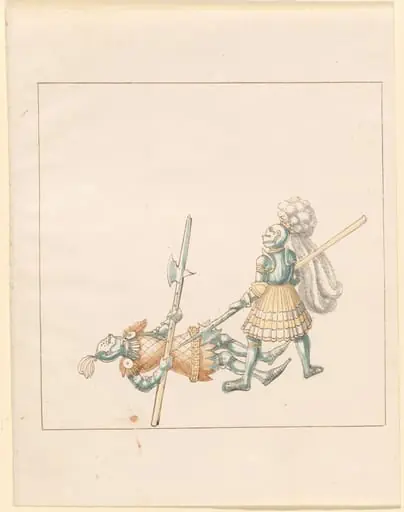
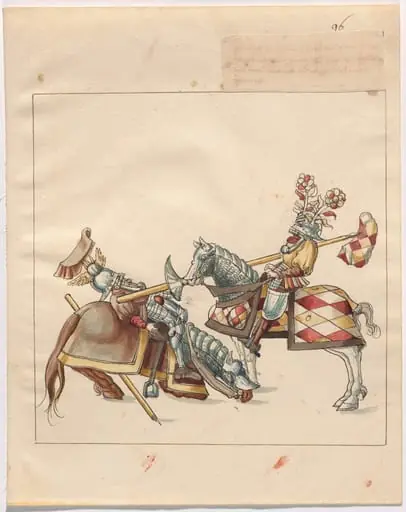
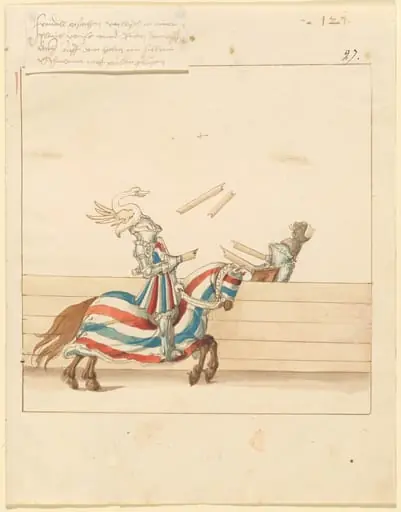
A German artist from the late 1500s drew lively scenes of knights clashing in parades and mock battles.

![Abraham Entertaining the Angels [verso], by German 16th Century](https://artifactworldgallery.com/img/german-16th-century--abraham-entertaining-the-angels-verso--69d1b25f4eba0a53-w320.webp)