Artwork
Triptych of the Virgin and Child with Saints
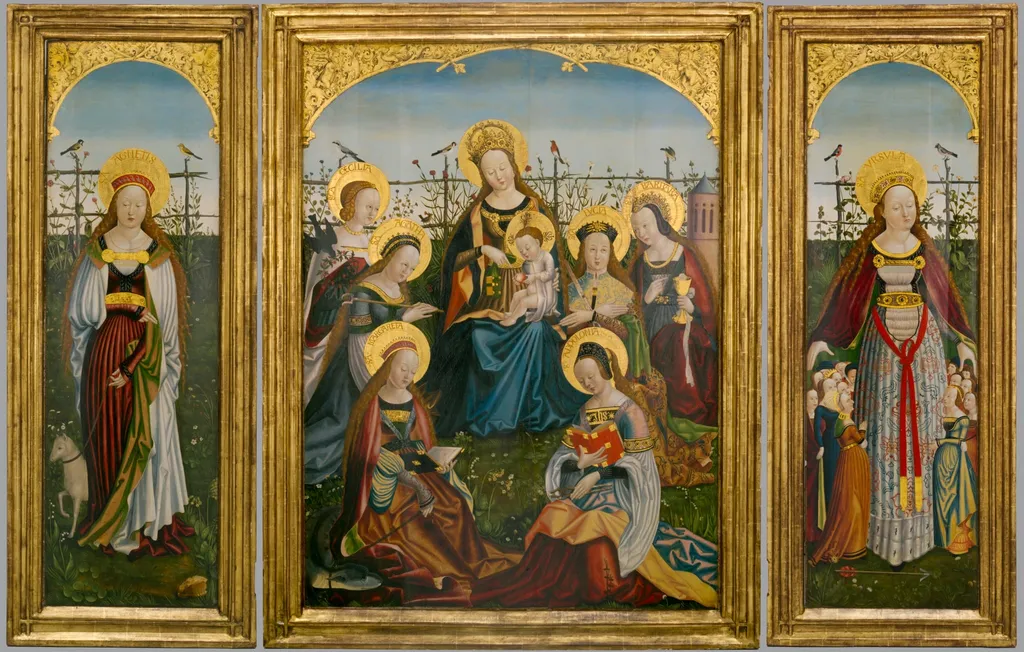
Triptych of the Virgin and Child with Saints is an oil painting by the Northern Renaissance artist Unknown. It dates from 1510 and is held in the collection of the Art Institute of Chicago.
About this work
Overview
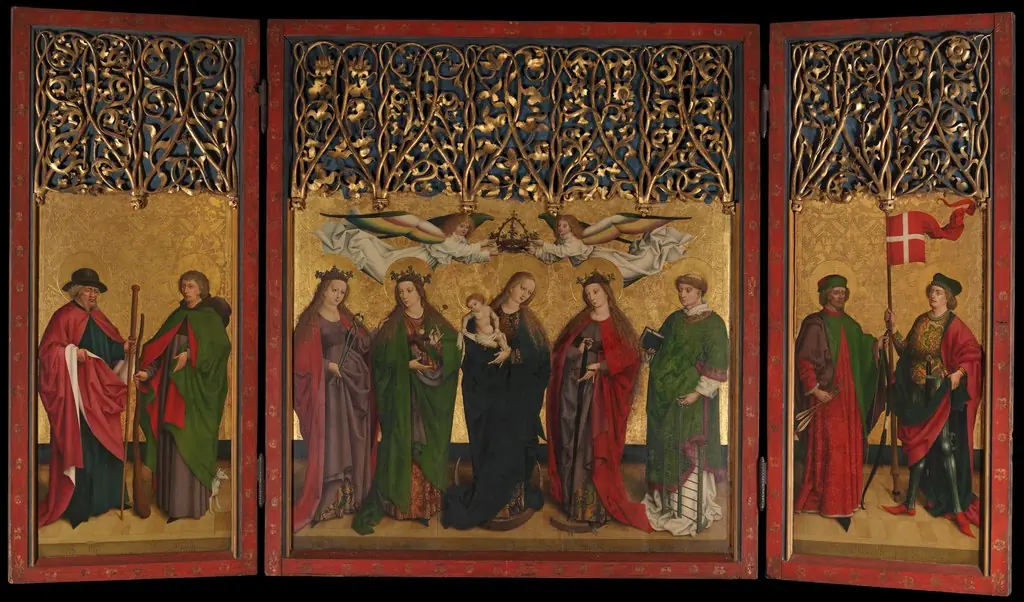
This oil and tempera triptych on panel depicts the Virgin Mary crowned as Queen of Heaven, flanked by female saints within an enclosed garden. The central panel emphasizes her regal presence, while the side panels feature martyr saints associated with purity and devotion. The composition reflects the devotional priorities of late medieval religious communities, particularly those of women.
Subject & Meaning
Ursula’s companions, rendered in miniature, allude to her legendary pilgrimage and martyrdom, serving as a narrative fragment within a devotional framework.
The hortus conclusus, or enclosed garden, symbolizes Mary’s spiritual purity and the sanctity of paradise. Saint Agnes on the left and Saint Ursula on the right are both virgin martyrs, their inclusion reinforcing ideals of chastity and faithfulness. Ursula’s companions, rendered in miniature, allude to her legendary pilgrimage and martyrdom, serving as a narrative fragment within a devotional framework.
Technique & Style
The painting employs tempera and oil glazes to achieve luminous skin tones and rich fabric textures. Gold leaf outlines the architectural arches framing the panels, echoing the gilded sculpture common in German altarpieces. Fine detail, especially in the miniature figures of Ursula’s followers, demonstrates meticulous handwork typical of Northern European panel painting in the late Middle Ages.
History & Provenance
Created for a female religious community, the triptych likely served as a focus for private prayer and liturgical use. Its emphasis on female saints and the intimate scale suggest it was commissioned by or for a convent, possibly in the Rhineland or Lower Rhine region. Its survival indicates continued veneration, though its early ownership remains undocumented.
Context
In late medieval Germany, devotional triptychs with female saints were common in nunneries, where contemplative life centered on models of holiness. The hortus conclusus motif, rooted in biblical and theological tradition, was widely adopted in Marian imagery. The blending of painting and gilded framing reflects a regional aesthetic that valued both spiritual symbolism and material richness.
Legacy
This triptych exemplifies the quiet intensity of late medieval female devotion, preserving the visual language of convent spirituality. Its focus on martyrdom and purity influenced later representations of saints in religious art, particularly in regions with strong monastic traditions. Though not widely known today, it remains a testament to the devotional needs of women’s religious communities.
Artist & collection

 Domestic Scene
 Giacomo and Cardinal Marco, investing Andrea, Abbot of San Zeno, with his Benefice
 The Nymph of Fontainebleau
 Portrait of a Woman
 Madonna and Child with Saints in the Enclosed Garden
 Venus and Minerva
 Family Group of Four on Sofa
 Wall painting from Room H of the Villa of P. Fannius Synistor at Boscoreale