Artwork
The Holy Family with a Musician Angel Saints Catherine and Barbara
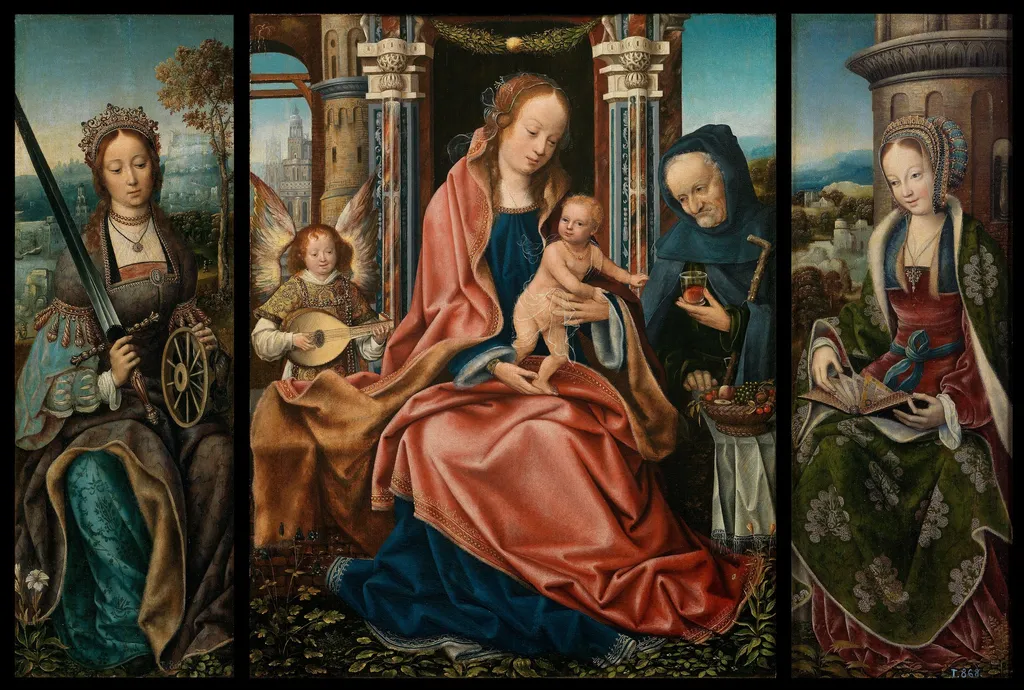
The Holy Family with a Musician Angel Saints Catherine and Barbara is an oil painting by the High Renaissance artist Unknown. It dates from 1510 and is held in the collection of the Museo del Prado. This oil painting depicts a sacred gathering of five figures arranged in a balanced composition.
About this work
Overview
The setting is an architectural interior with a distant landscape visible through open arches, enhancing the spatial depth of the scene.
This oil painting depicts a sacred gathering of five figures arranged in a balanced composition. The central group includes the Virgin Mary with the infant Jesus, accompanied by a winged musician angel. Flanking them are two saints, Catherine and Barbara, each identified by symbolic attributes. The setting is an architectural interior with a distant landscape visible through open arches, enhancing the spatial depth of the scene.
Subject & Meaning
The Holy Family is surrounded by saints associated with faith and martyrdom. Saint Catherine, holding a wheel and spear, symbolizes divine wisdom and endurance; Saint Barbara, with a book and fan, represents protection and devotion. The angel playing the lute suggests heavenly harmony, while the fruit and cup offered by Joseph may allude to abundance and the Eucharist. Together, the figures form a devotional tableau meant to inspire contemplation.
Technique & Style
The artist employs chiaroscuro to model forms with subtle gradations of light and shadow, lending volume and realism to the figures and drapery. Richly rendered fabrics, such as Mary’s deep red robe and Barbara’s blue and red garments, reflect attention to texture and detail. The architectural backdrop is rendered with precision, creating a sense of spatial recession that grounds the sacred figures in a tangible world.
History & Provenance
The painting likely originated in the late 15th or early 16th century, possibly in Northern Italy or the Low Countries, where devotional imagery with saints was common. Its detailed execution and use of oil suggest a commission from a wealthy patron or religious institution. Early records indicate it was held in a private collection before entering a public museum, though its exact origins remain partially undocumented.
Context
During the Renaissance, depictions of the Holy Family with accompanying saints were popular in both public altarpieces and private devotional works. The inclusion of specific saints like Catherine and Barbara reflects localized veneration patterns, particularly in regions where their cults were strong. The blending of sacred narrative with naturalistic detail aligns with broader trends in early modern religious art seeking emotional resonance and visual fidelity.
Legacy
This work exemplifies the transition from medieval symbolic representation to Renaissance humanism in religious painting. Its careful use of light, spatial depth, and individualized figures influenced later devotional compositions. Though not widely known today, it remains a representative example of how Renaissance artists integrated theological meaning with technical innovation to serve both spiritual and aesthetic purposes.
Artist & collection

 Domestic Scene
 Giacomo and Cardinal Marco, investing Andrea, Abbot of San Zeno, with his Benefice
 The Nymph of Fontainebleau
 Portrait of a Woman
 Madonna and Child with Saints in the Enclosed Garden
 Venus and Minerva
 Family Group of Four on Sofa
 Wall painting from Room H of the Villa of P. Fannius Synistor at Boscoreale
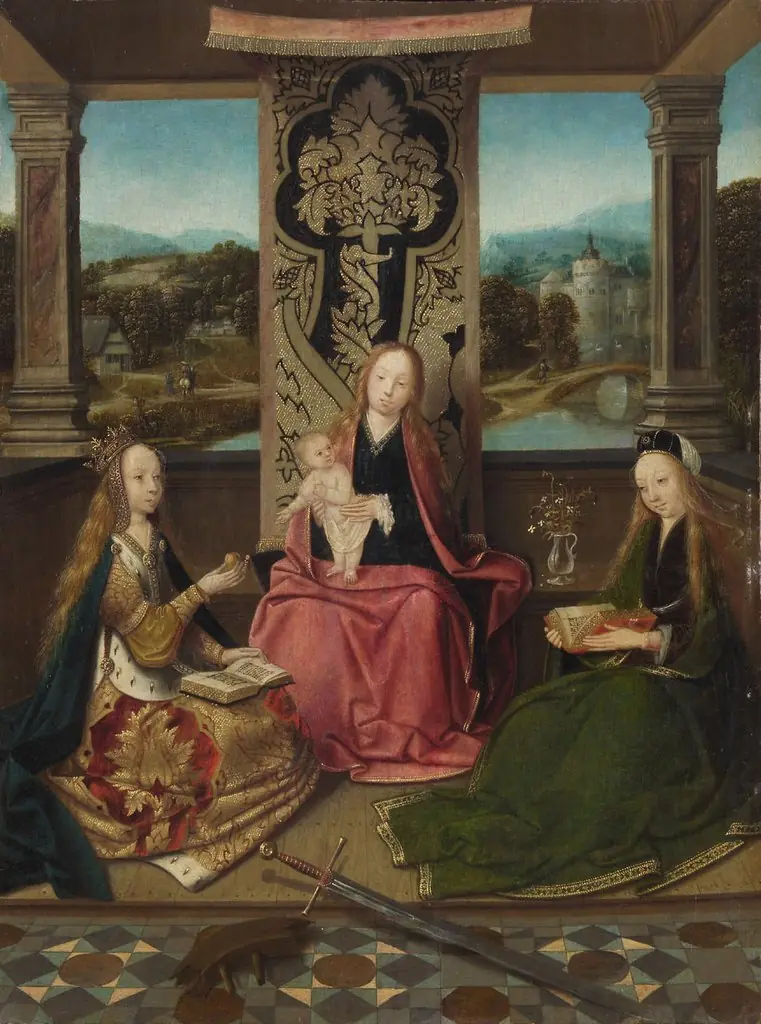 Madonna and Child with Saints Catherine and Barbara
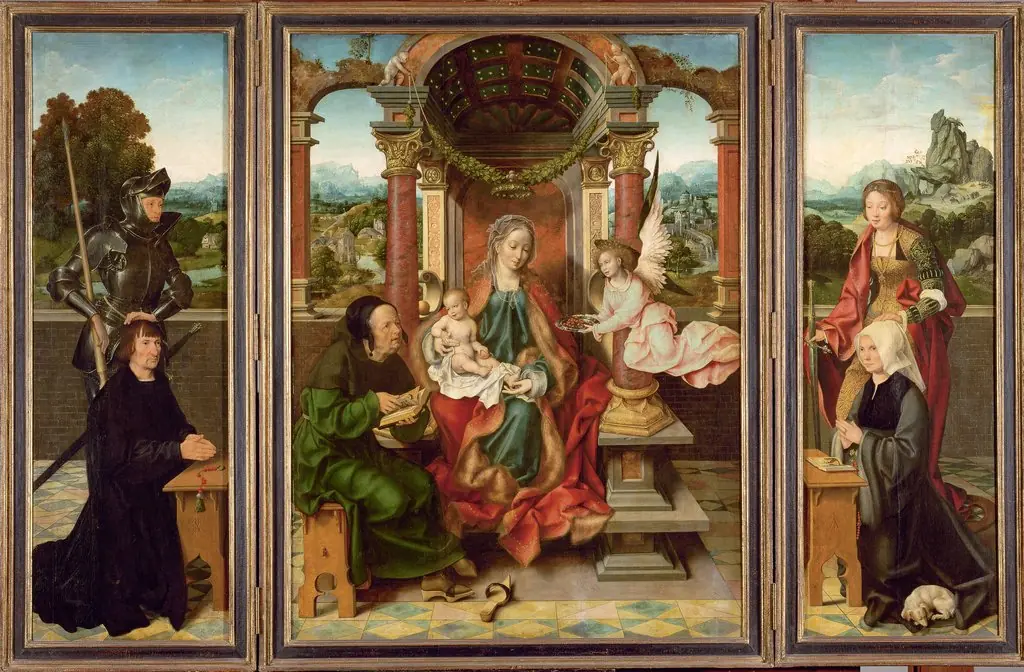 Winged Altar
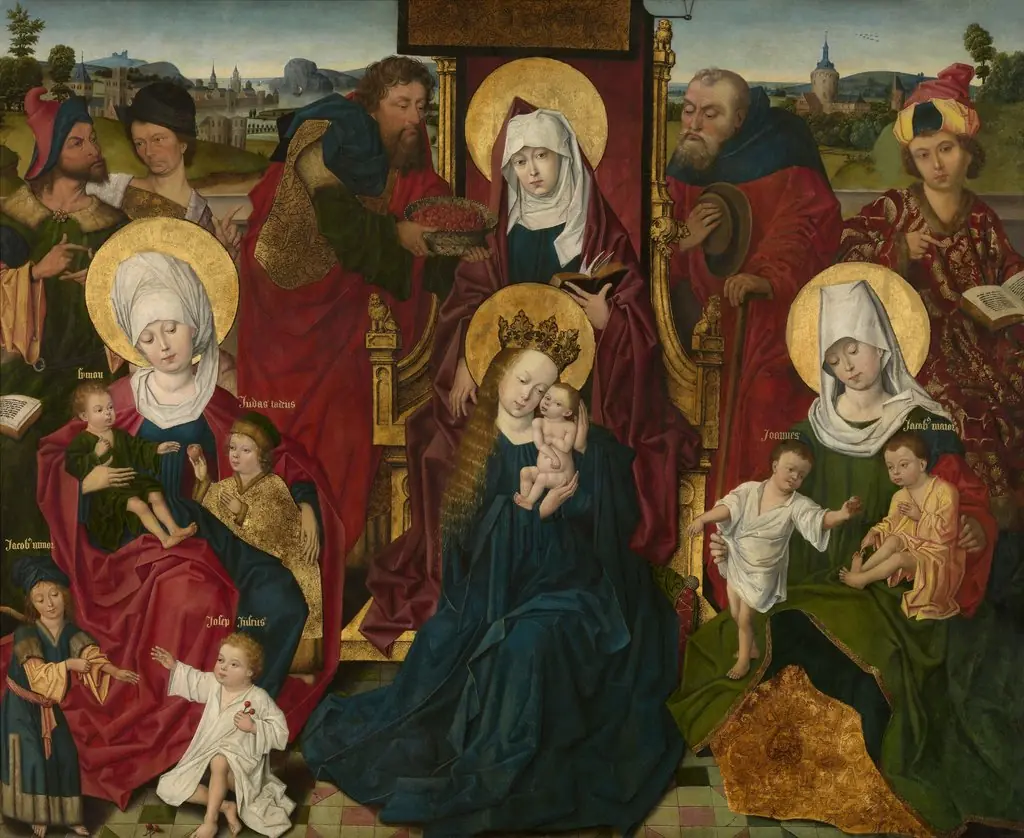 Holy Kinship
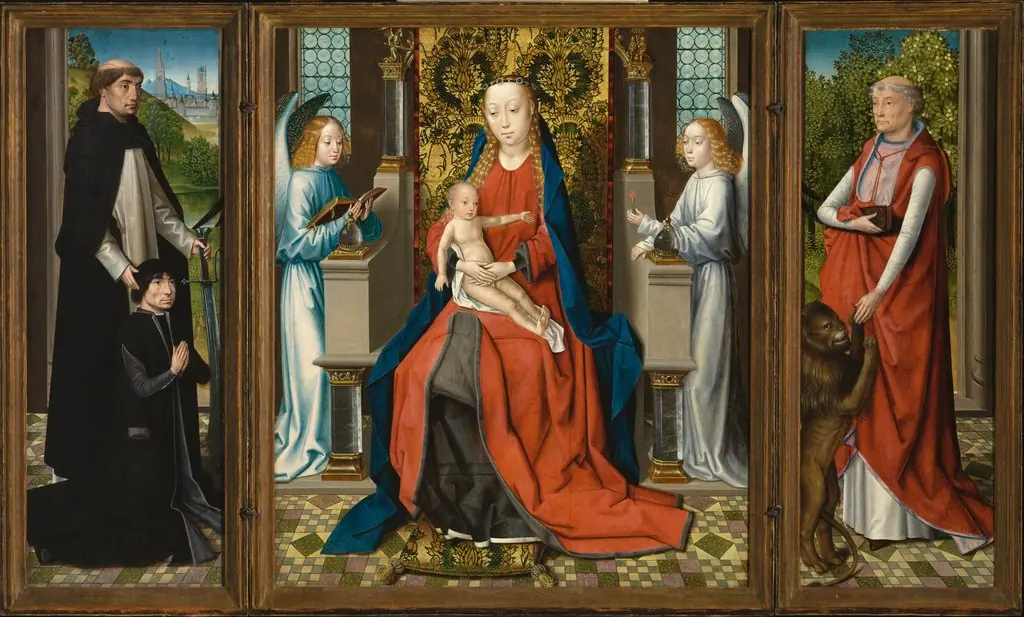 Triptych of Madonna and Child with Angels; Donor and His Patron Saint Peter Martyr; and Saint Jerome and His Lion
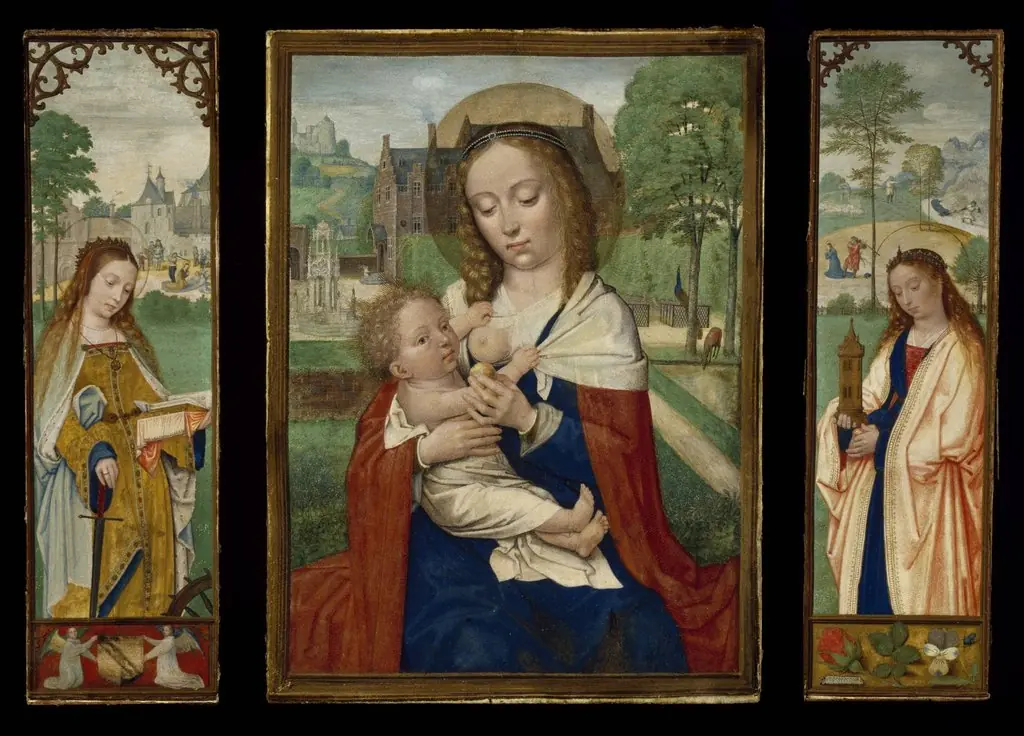 Triptych of Virgin and Child; Saints Catherine and Barbara
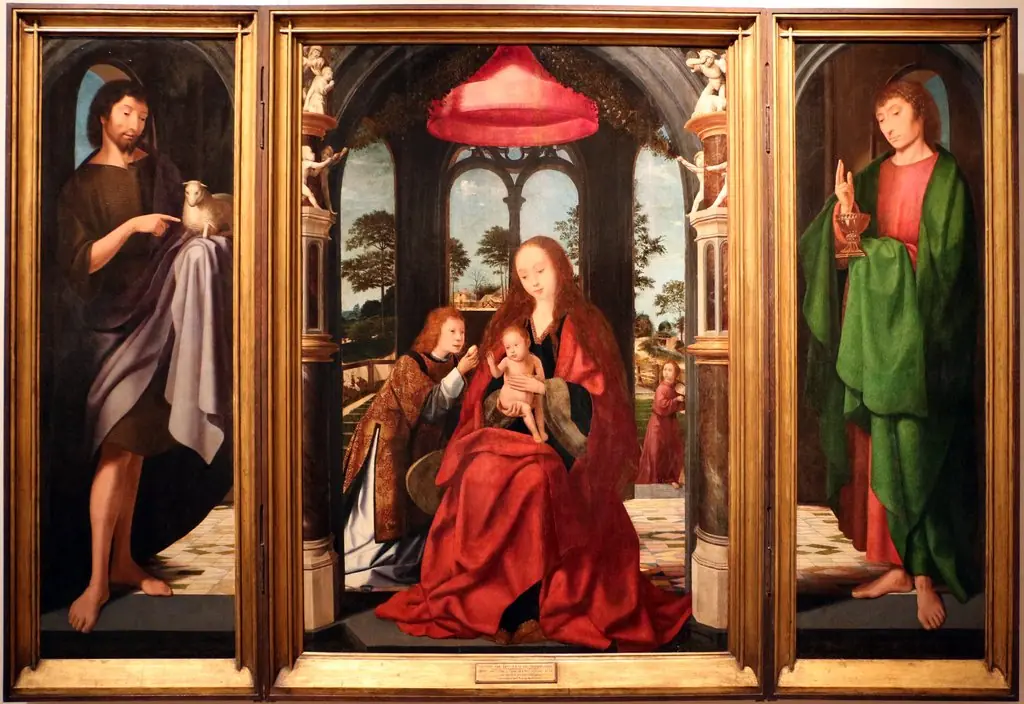 Triptych of the Virgin with the Child and Angels, St. John the Baptist and St. John the Evangelist
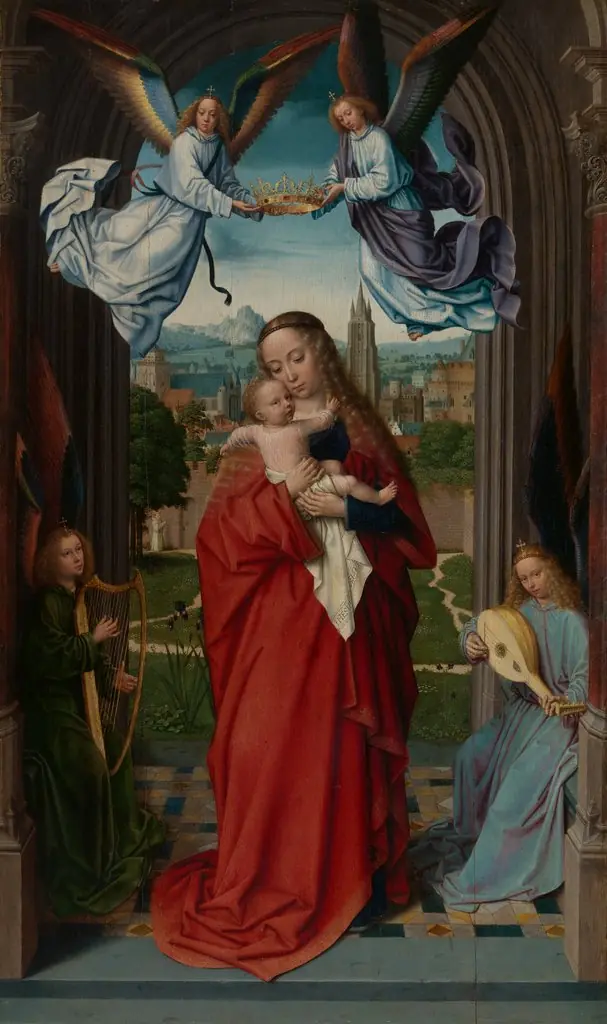 Virgin and Child with Four Angels
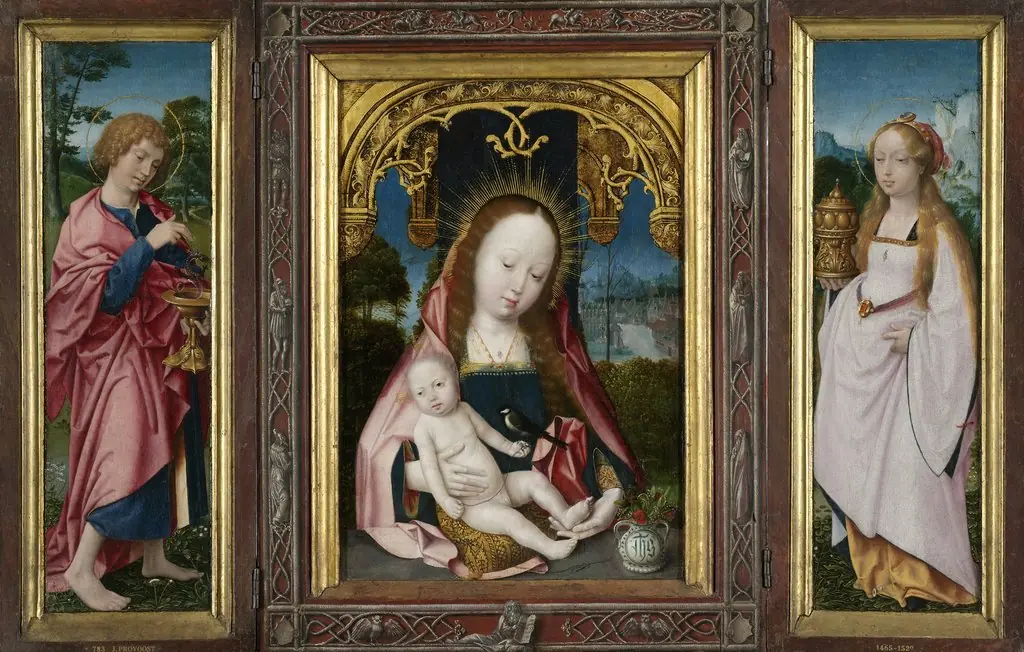 Triptych with the Virgin and Child (centre panel), St John the Evangelist (inner left wing) and Mary Magdalen (inner right wing)
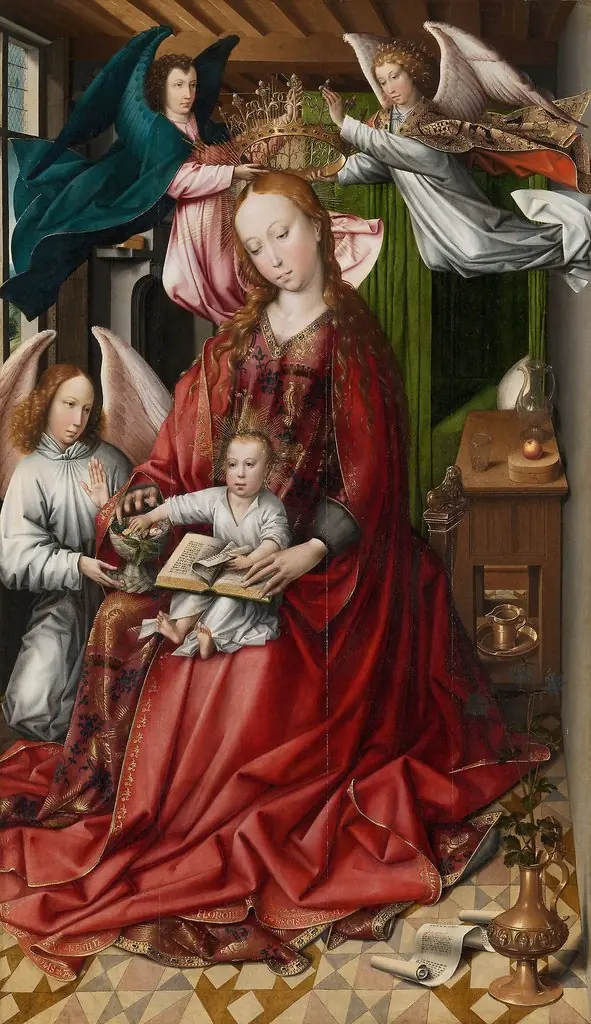 Virgin and Child Crowned by Angels
 Triptych with Virgin and Child, Saint John the Evangelist (left wing) and Mary Magdalene (right wing)
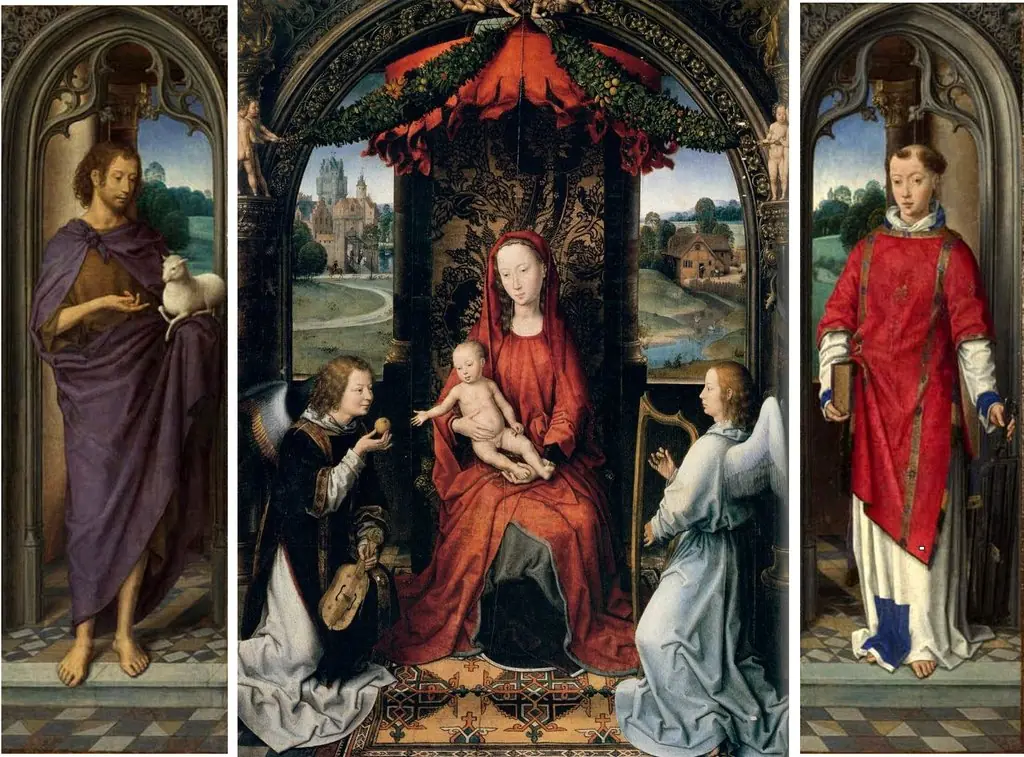 Pagagnotti Triptych