Artwork
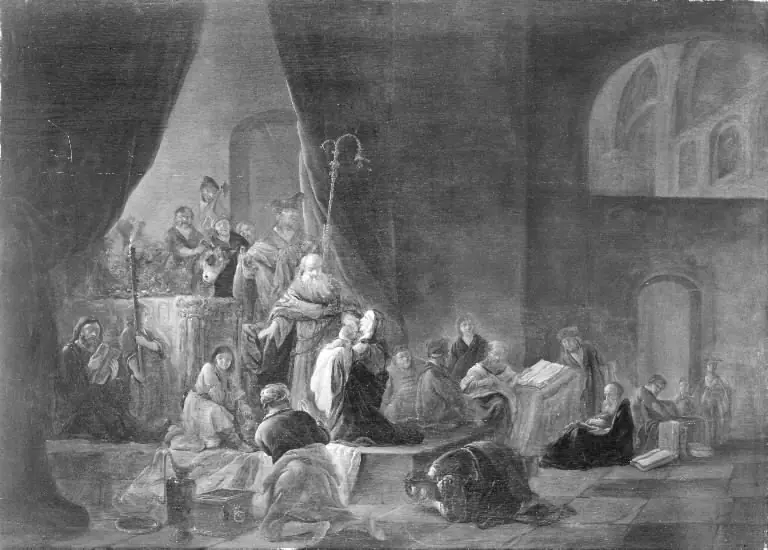
Christ and the Woman Taken in Adultery
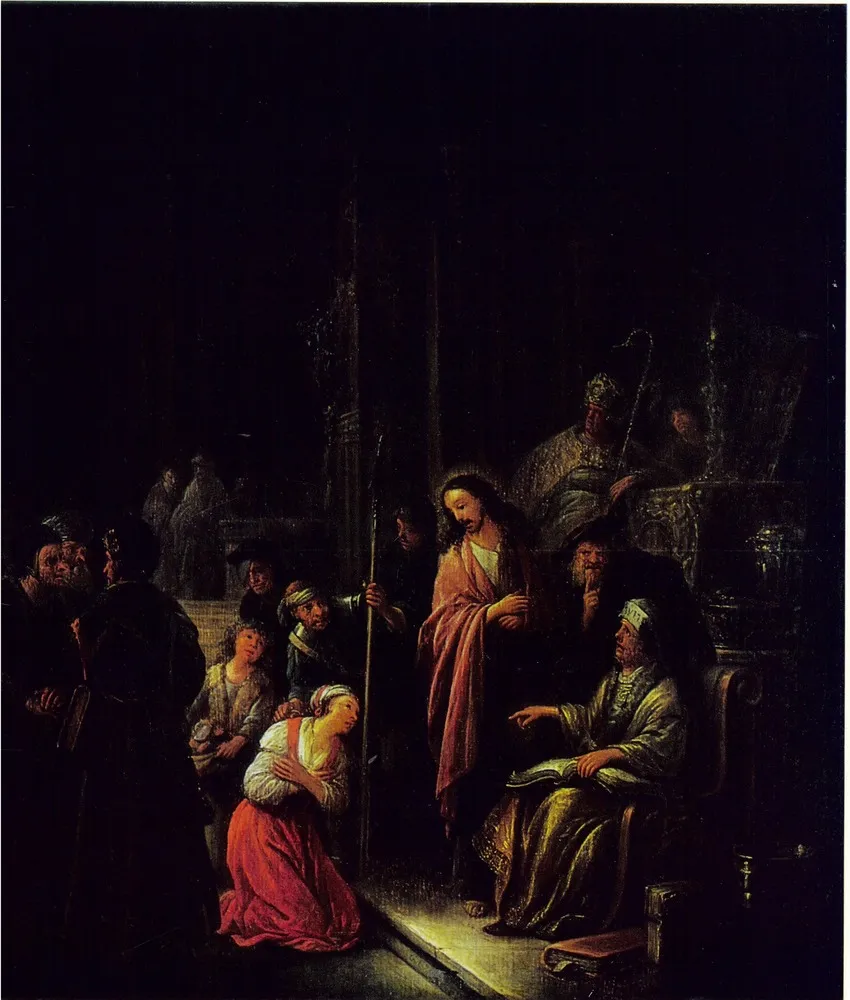
Christ and the Woman Taken in Adultery is an oil painting by the Dutch Golden Age artist Gerrit de Wet. It dates from 1657 and is held in the collection of the Hermitage Museum.
About this work
Overview
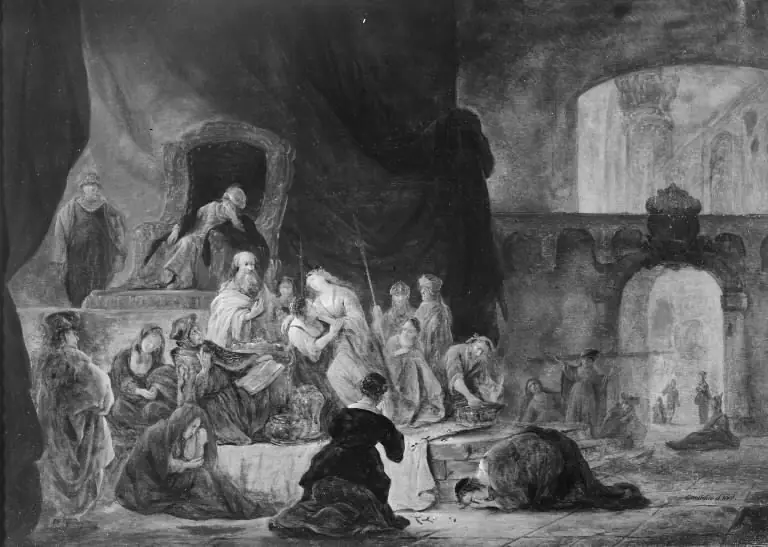
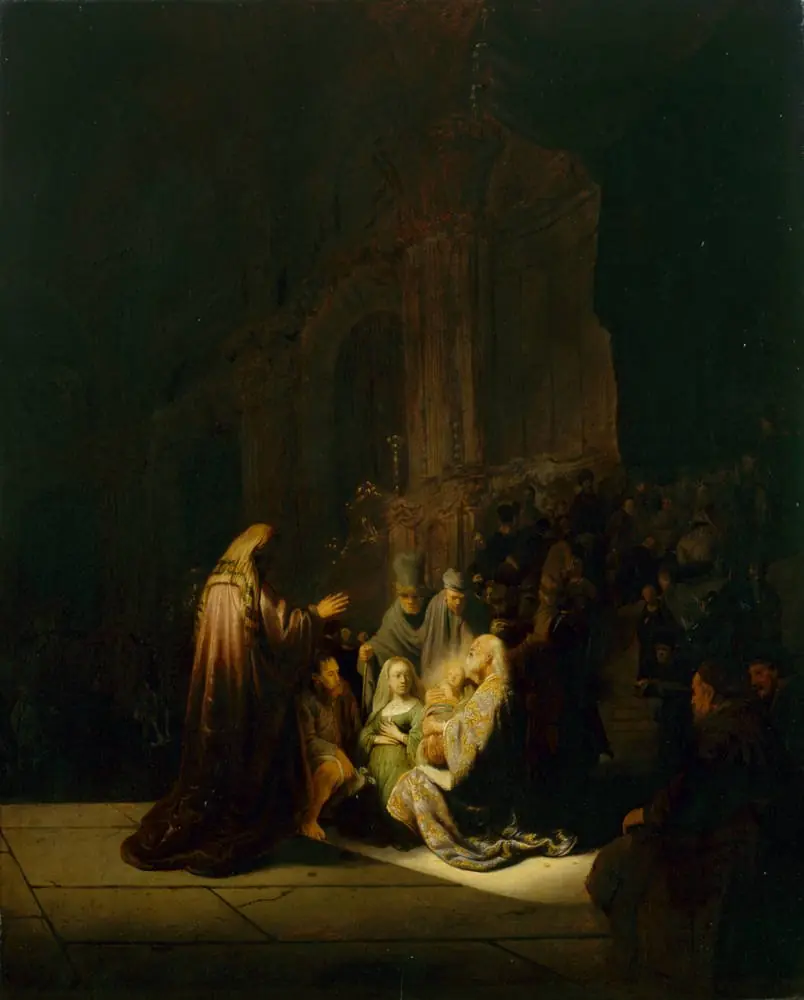
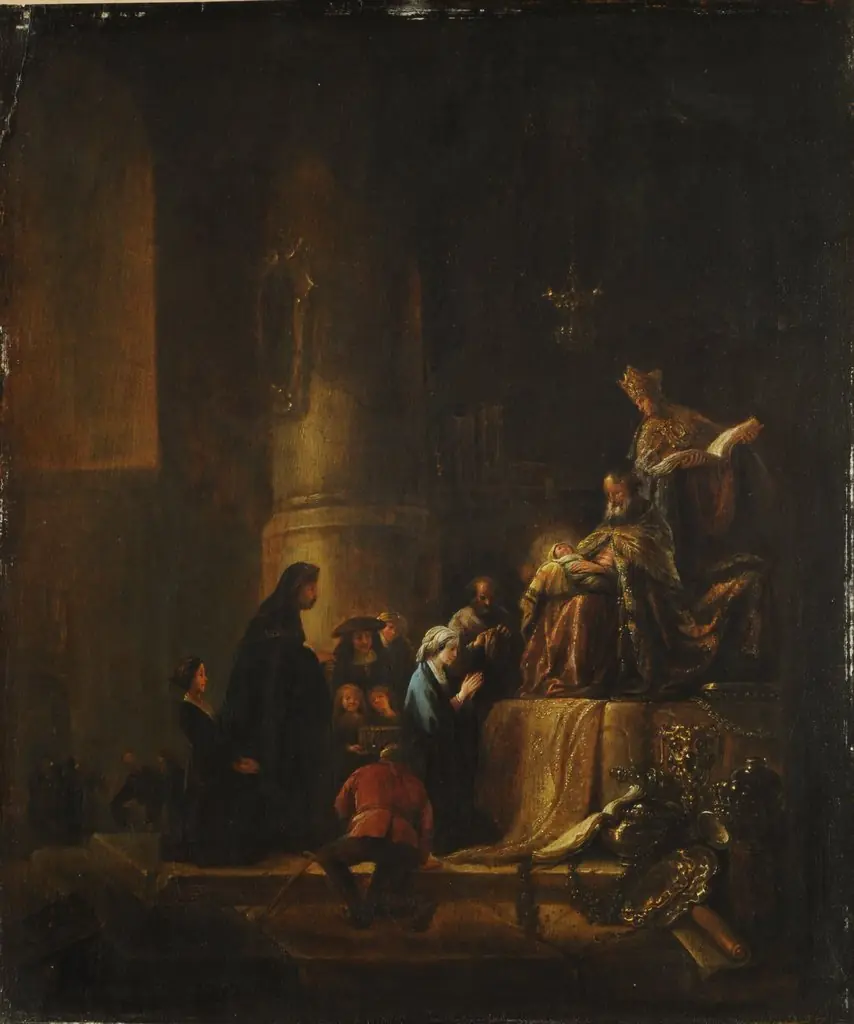
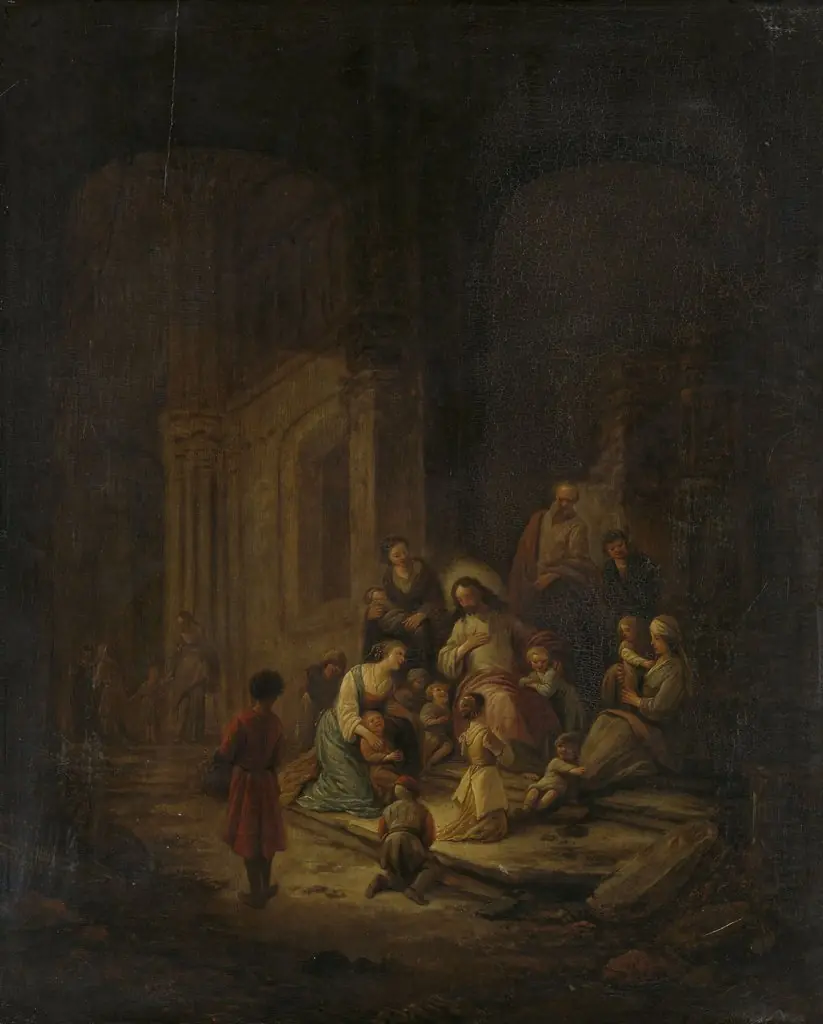
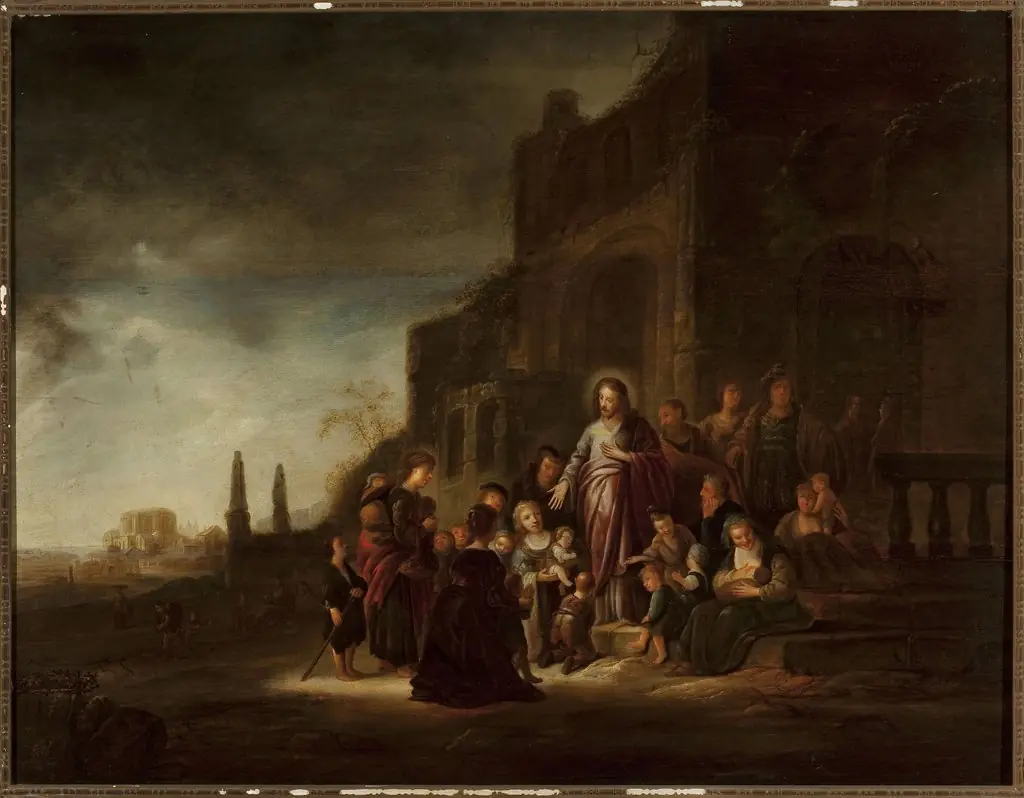
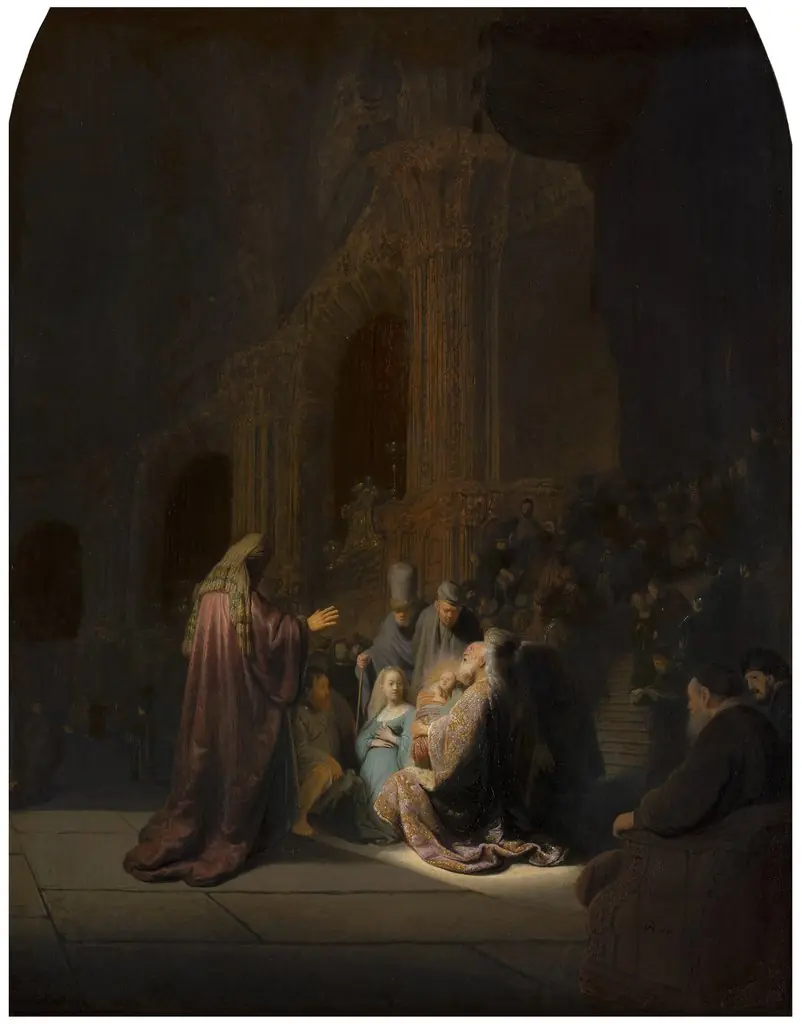
Gerrit de Wet’s 1657 oil on canvas, *Christ and the Woman Taken in Adultery*, presents a nocturnal interior where a group of onlookers surrounds a central figure in a red robe. The composition is anchored by a kneeling woman in a red dress, her gaze directed downward, while a few spectators sit, stand, or hold a book. The work is part of the State Hermitage Museum’s collection.
Subject & Meaning
The scene illustrates the New Testament episode in which Jesus intervenes to prevent the execution of a woman accused of adultery. By placing the Christ figure at the heart of the gathering and emphasizing the woman’s humble posture, the painting underscores themes of mercy, judgment, and the tension between law and compassion that were central to 17th‑century religious discourse.
Technique & Style
The handling of oil paint reveals a Rembrandt‑influenced palette, with deep reds and muted earth tones defining form and atmosphere.
De Wet employs a pronounced chiaroscuro, allowing a concentrated beam of light to illuminate the principal characters while the surrounding space recedes into shadow. This contrast heightens the drama and guides the viewer’s attention to the interaction between Christ and the woman. The handling of oil paint reveals a Rembrandt‑influenced palette, with deep reds and muted earth tones defining form and atmosphere.
History & Provenance
Trained in Rembrandt’s workshop, de Wet worked in Haarlem between 1643 and 1662, a period that coincides with the Dutch Golden Age. *Christ and the Woman Taken in Adultery* entered the State Hermitage Museum’s holdings in the 20th century, where it remains on display as an example of mid‑century Dutch religious painting.
Artist & collection
Artist
Gerrit de Wet (1616, Amsterdam? – 1674, Leiden), sometimes called De Wett, Düwett, De Weth, or De Weet, was a Dutch painter. He was a scholar of Rembrandt, whose manner he imitated; he also painted landscapes, and was…