Artwork
Herring Seller
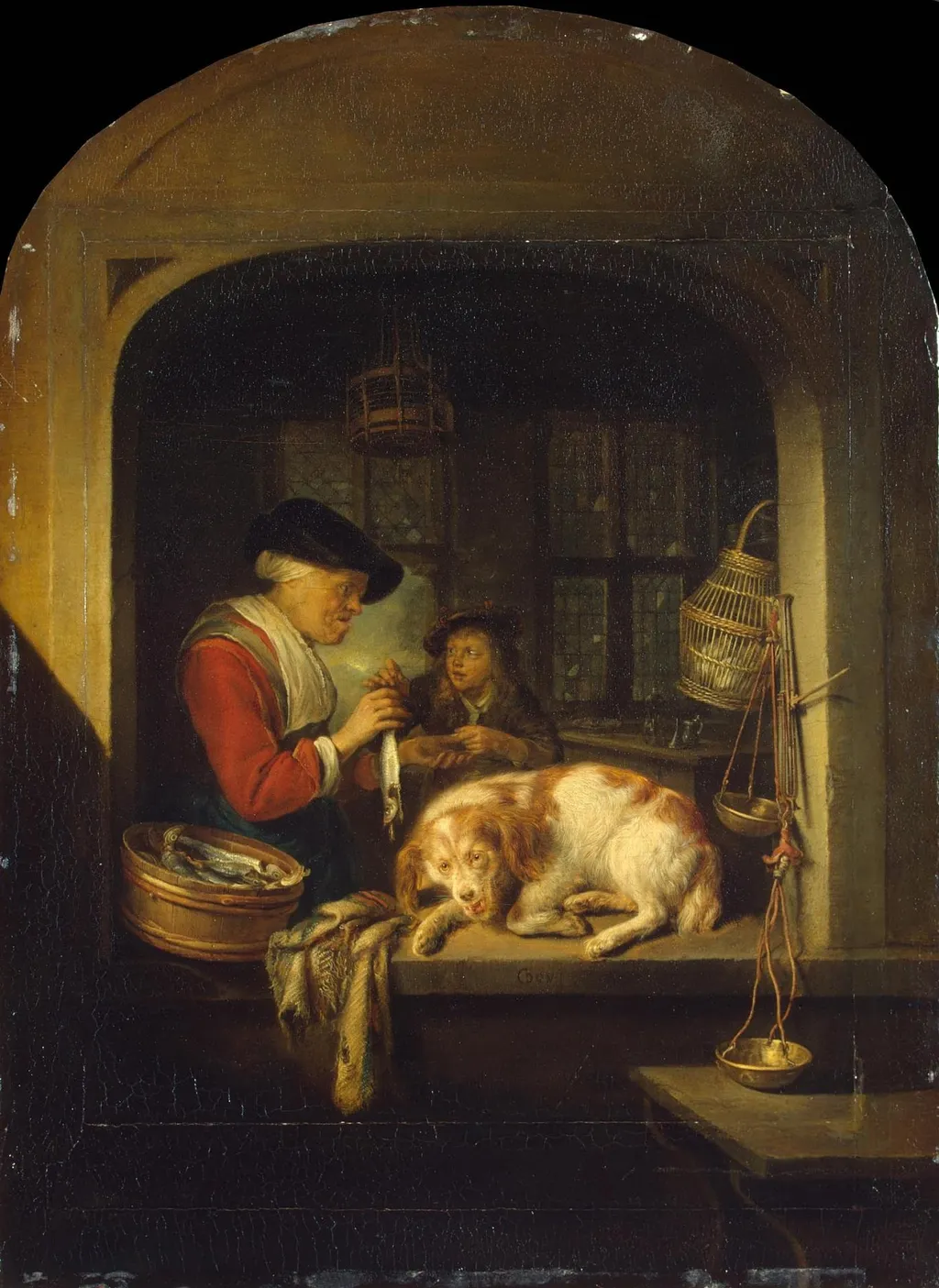
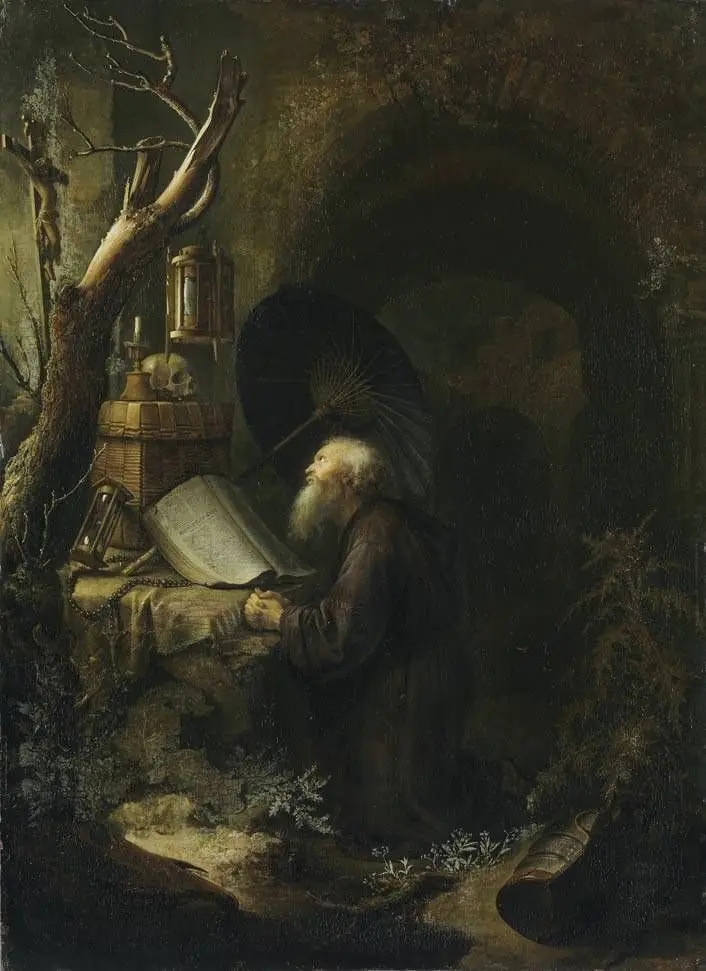
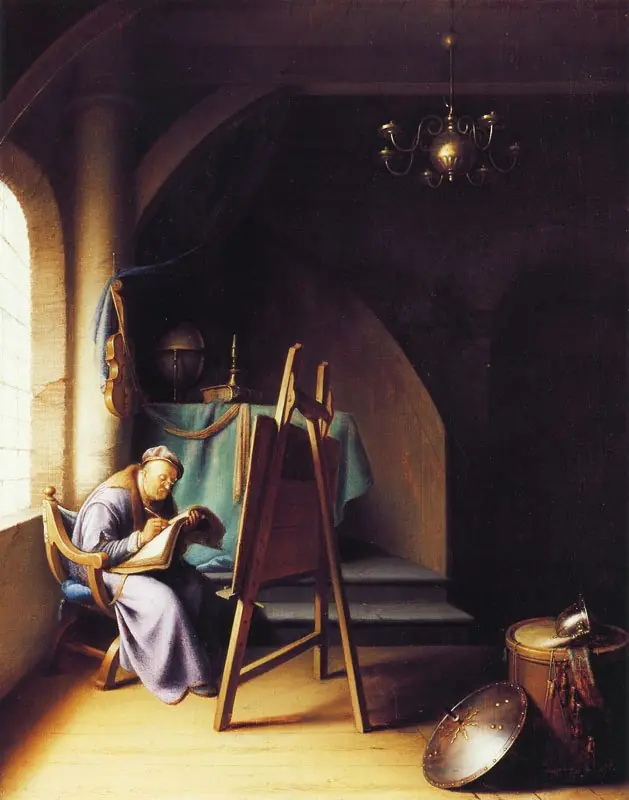
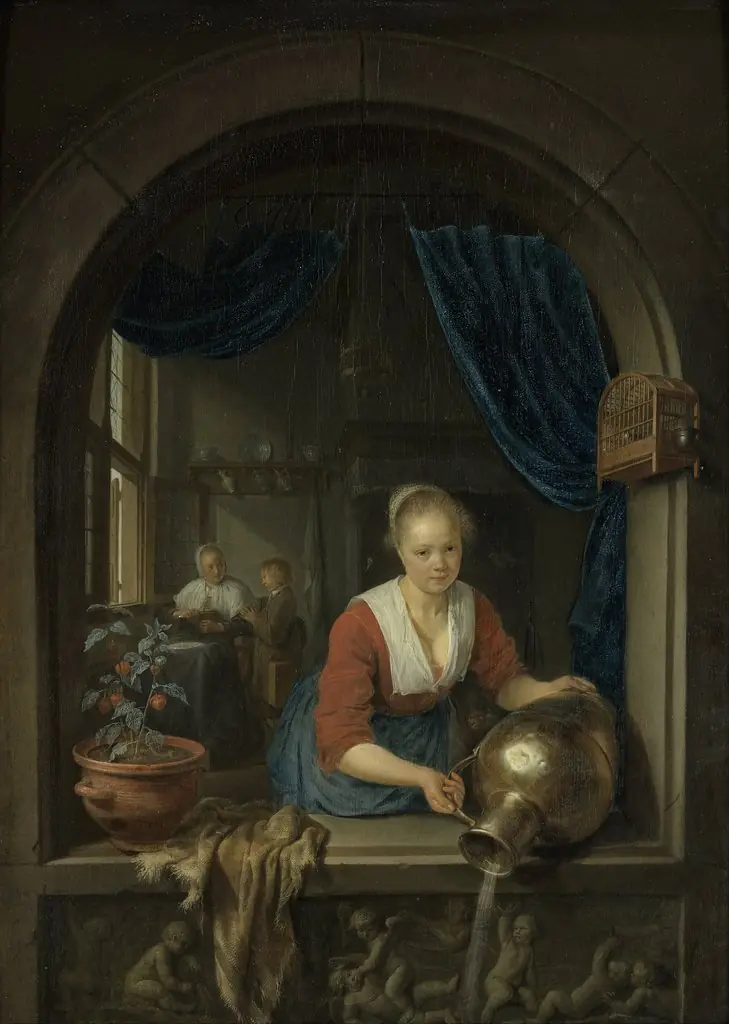
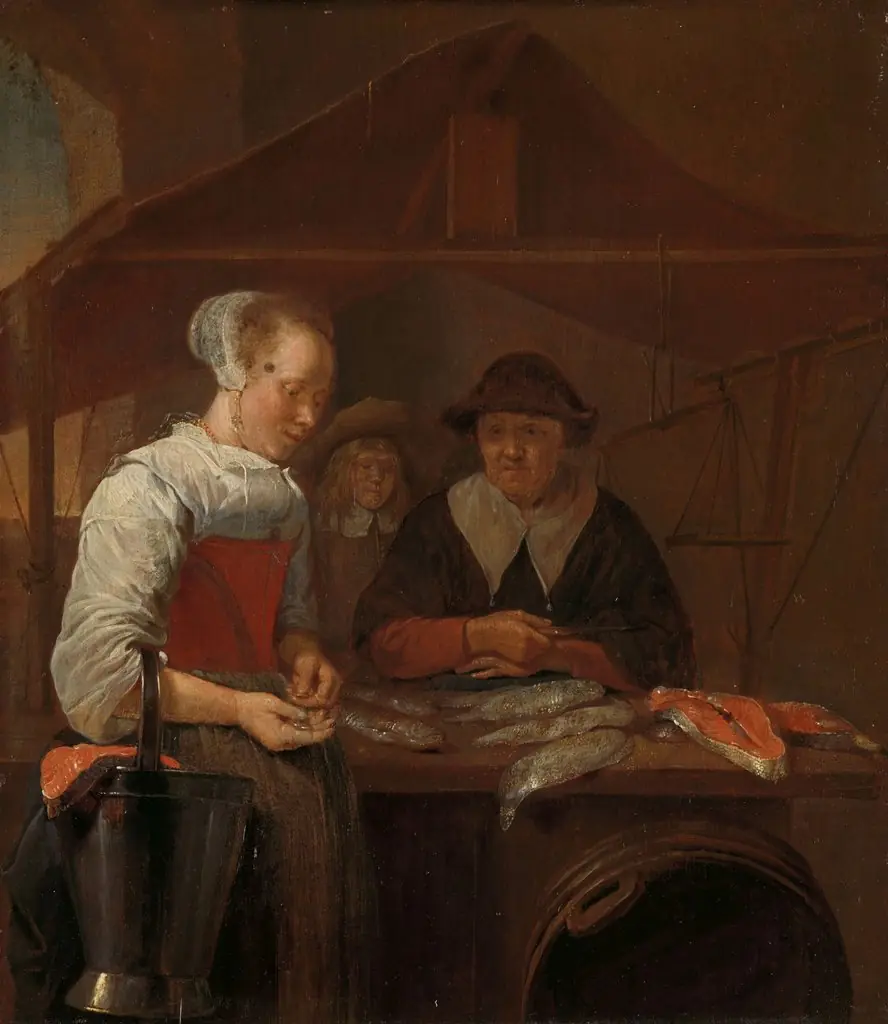
Herring Seller is an oil painting by the Dutch Golden Age artist Gerrit Dou. It dates from 1673 and is held in the collection of the Hermitage Museum.
About this work
Overview
Gerrit Dou’s oil painting *Herring Seller*, executed in 1673, belongs to the intimate genre scenes typical of the Leiden fijnschilders. The work measures only a few centimeters across, inviting close inspection of its finely rendered details. It is part of the State Hermitage Museum’s collection in St. Petersburg.
Subject & Meaning
The composition centers on a woman positioned in an arched doorway, offering herring from a basket while holding a cloth, perhaps to clean the fish. A young boy watches her attentively from behind, and a dog rests on a nearby table. The quiet exchange suggests everyday commerce and domestic routine in 17th‑century Dutch life.
Technique & Style
Dou employs a meticulous brushwork that captures the texture of fabric, the sheen of the fish, and the soft fur of the dog. Subtle chiaroscuro creates a dim, atmospheric light that filters through a background window, highlighting the figures without breaking the overall calm.
History & Provenance
Created during Dou’s mature period, the painting remained in private collections before entering the State Hermitage Museum in the early 20th century. Its provenance reflects the broader European interest in Dutch genre paintings during the 19th and 20th centuries.
Context
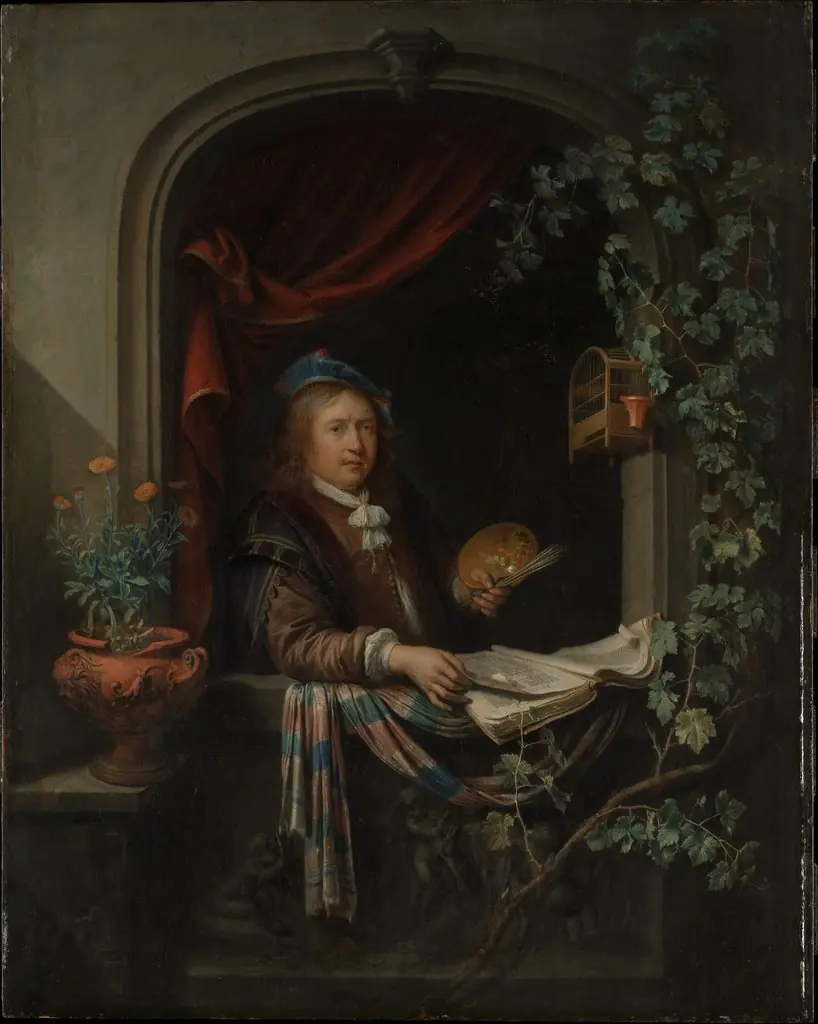
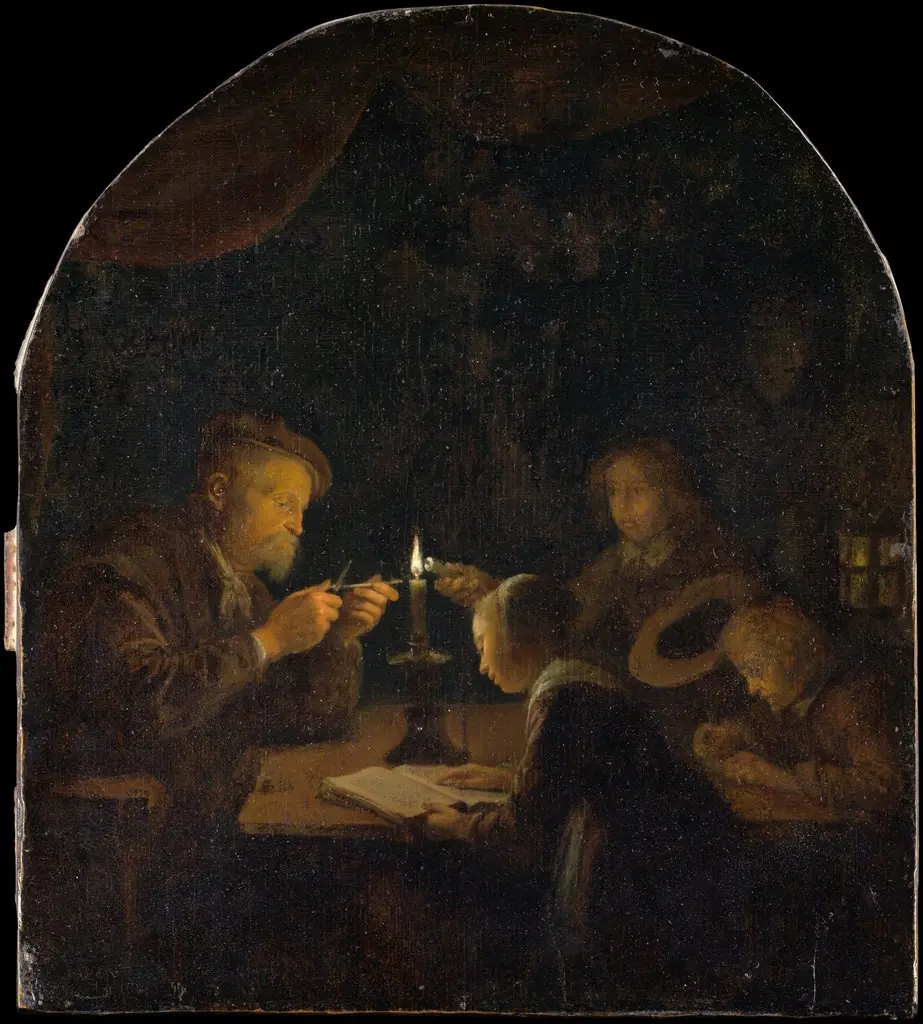
*Herring Seller* exemplifies the fijnschilder tradition, a movement in Leiden that prized precision and smooth surfaces. As a pupil of Rembrandt, Dou inherited a mastery of light, yet he applied it to small, domestic scenes that catered to the tastes of affluent Dutch patrons.
Artist & collection
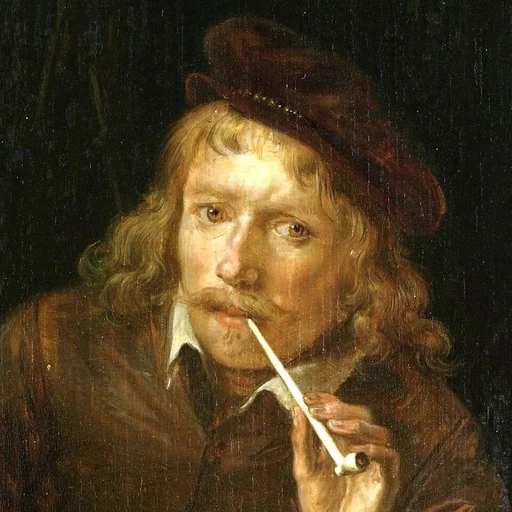
Artist
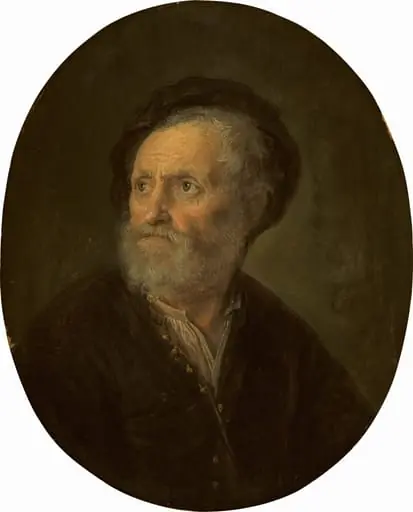
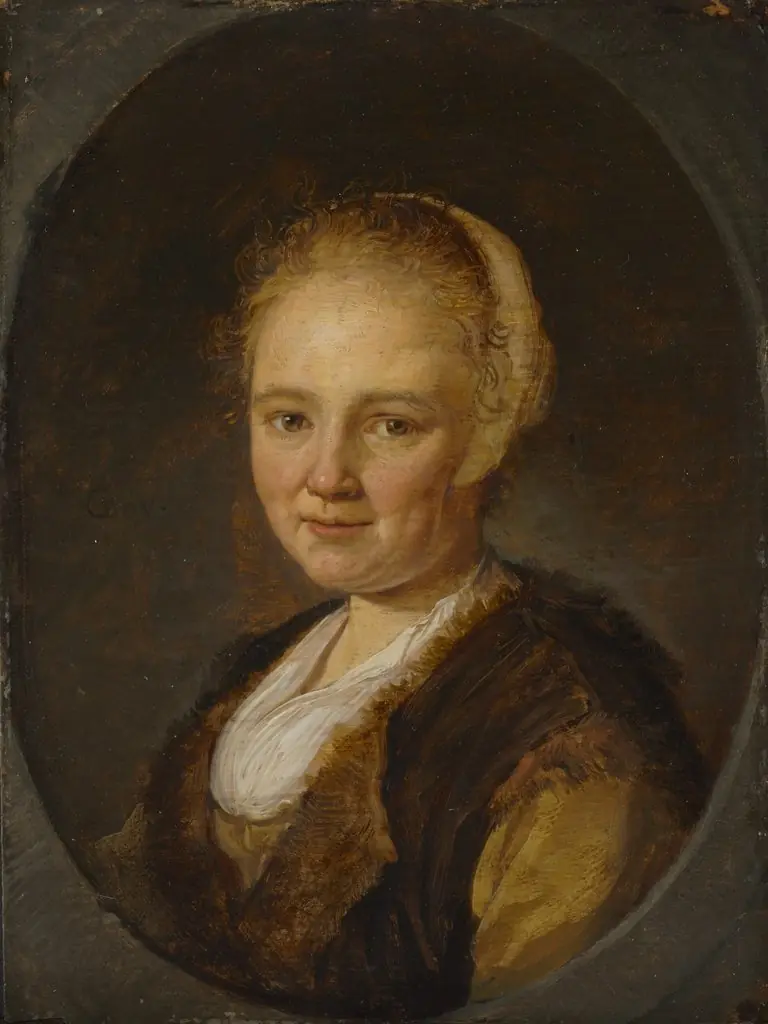
Gerrit Dou (pronounced ; 7 April 1613 – 9 February 1675), also known as Gerard Douw or Dow, was a Dutch Golden Age painter, whose small, highly polished paintings are typical of the Leiden fijnschilders.