Artwork
Fără surdină
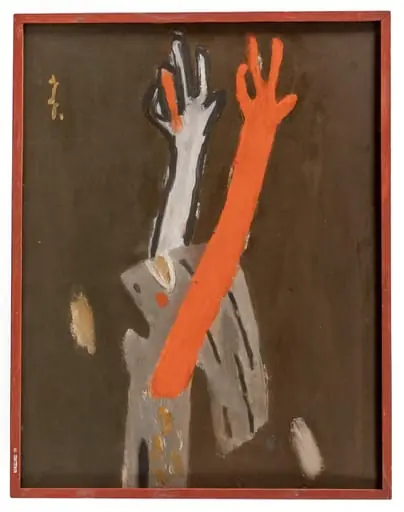
Fără surdină is a print by Gheorghiu Val. It dates from 1984 and is held in the collection of the Moldova National Museum Complex.
About this work
Overview
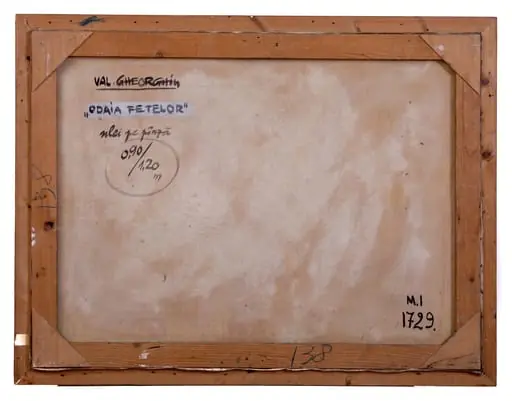
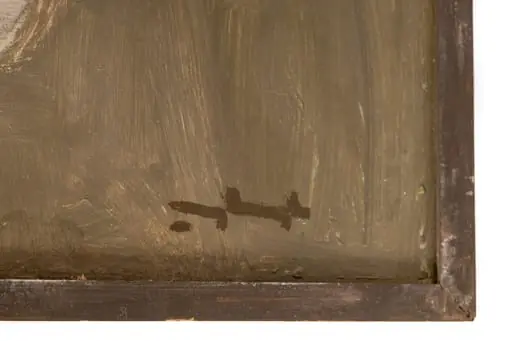
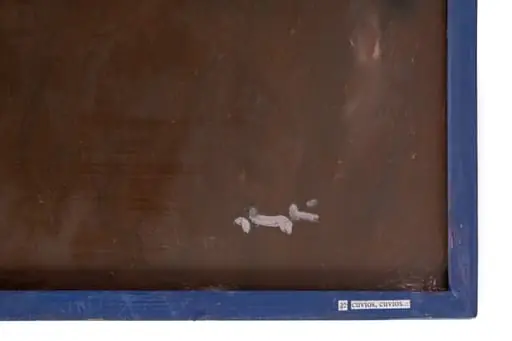
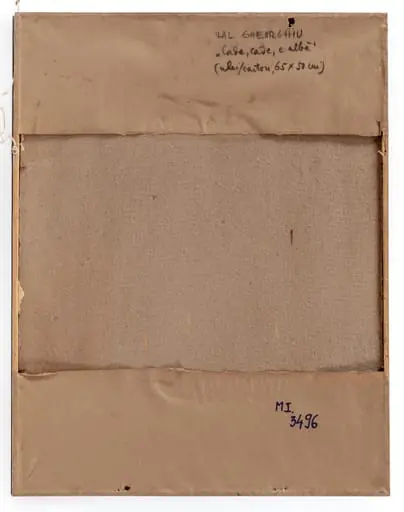
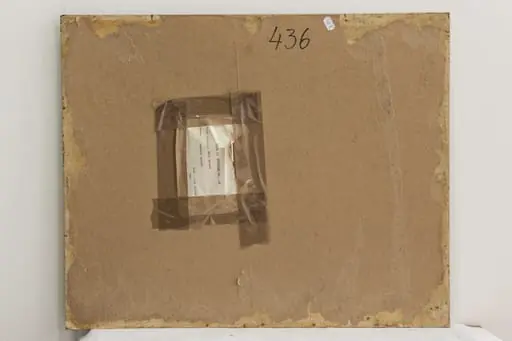
The object presents no image within its borders, instead revealing the reverse side of what was once a mounted print.
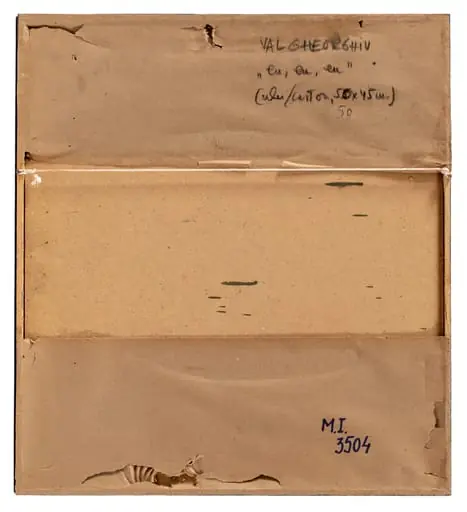
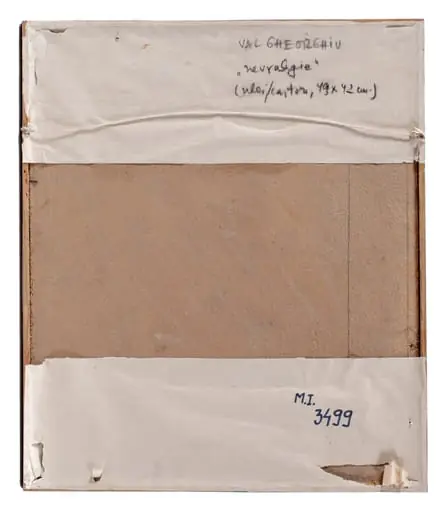
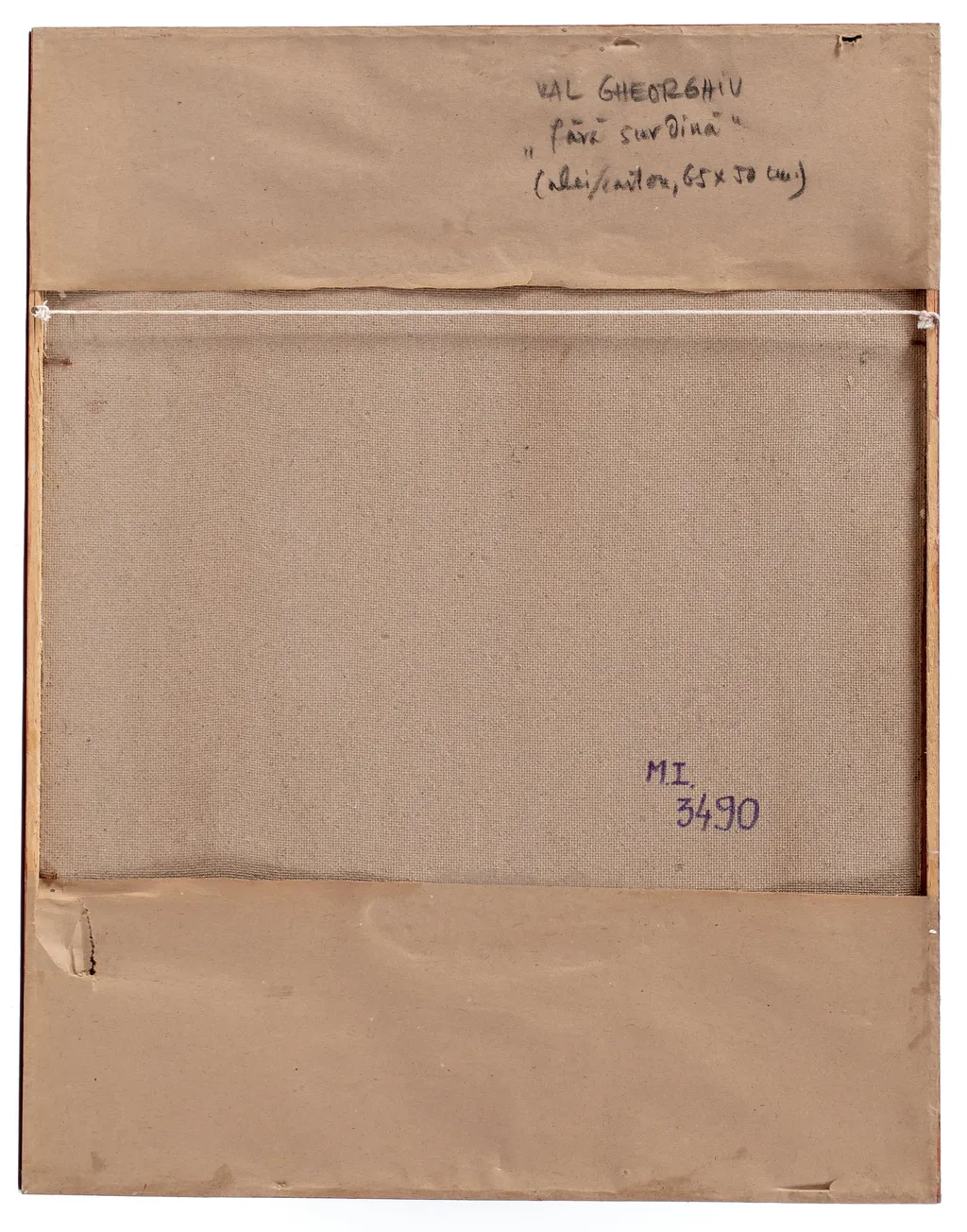
Fără surdină, dated around 1984, is an empty picture frame created by Romanian artist Gheorghiu Val. The object presents no image within its borders, instead revealing the reverse side of what was once a mounted print. The frame’s worn edges and faint fabric mesh suggest prior use, while handwritten inscriptions identify the work and its dimensions, transforming the frame into a self-referential artifact.
Subject & Meaning
The absence of an image in Fără surdină invites reflection on absence, memory, and the rituals of display. By preserving only the frame’s back and its remnants—fabric, ink, wear—the work questions the authority of the visible and the role of objects in preserving meaning. The title, meaning 'Without a Mute' in Romanian, may imply a refusal to silence or conceal, turning the void into a statement.
Technique & Style
Val Gheorghiu repurposed a standard wooden frame, leaving its structural elements intact but stripping away its original content. The mesh backing, likely used to secure a printed image, remains partially intact, while handwritten labels in pencil and blue ink are applied directly to the surface. The work’s aesthetic is deliberately unadorned, emphasizing material decay and the traces of prior handling over formal composition.
History & Provenance
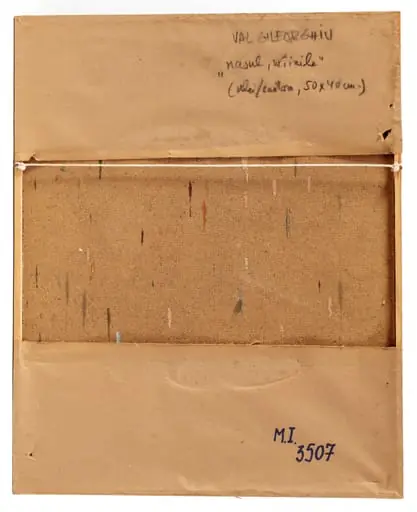
The work carries two handwritten markings: the artist’s name, title, and dimensions in the top left, and 'MI 3490' in blue ink at the bottom right—likely an institutional inventory code. Its current association with the Museum of Ethnography suggests it entered a public collection as part of a broader documentation of Romanian artistic practices from the late socialist period, though its exact acquisition history remains undocumented.
Context
Created in the early 1980s under Romania’s communist regime, Fără surdină reflects a quiet resistance to state-controlled imagery. While public art promoted ideological narratives, this work subverted expectations by presenting emptiness. Its modest materials and unpolished appearance align with underground or non-conformist practices that prioritized conceptual integrity over official aesthetics.
Legacy
Fără surdină endures as a quiet example of conceptual art emerging from constrained environments. It contributes to a broader understanding of how Romanian artists used absence and material decay to communicate dissent or introspection. Its preservation in a museum setting underscores its significance as a document of artistic autonomy during a period of limited creative freedom.
Artist & collection
Artist
Gheorghiu Val made prints and paintings in a raw, direct style that feels like a punch to the ribs.