Artwork
Cafenea
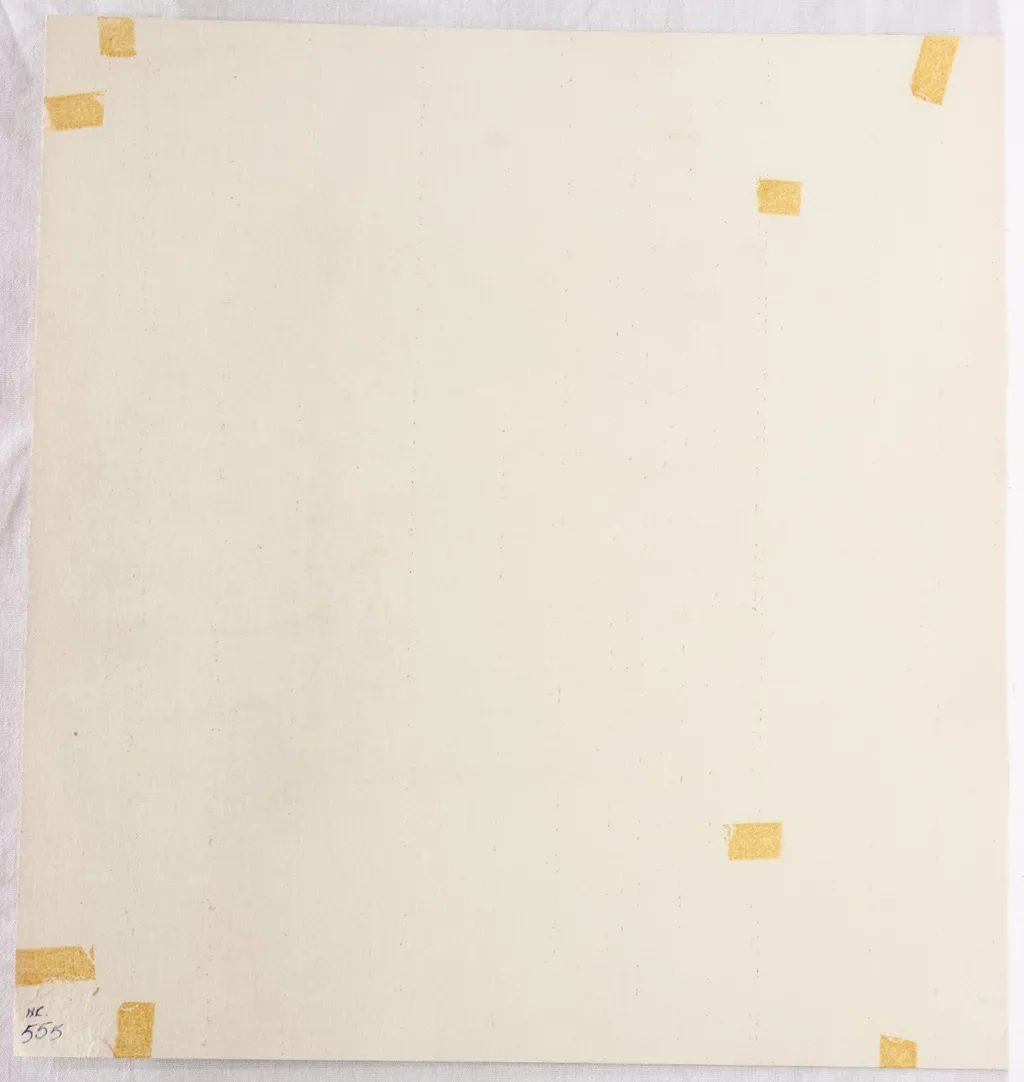
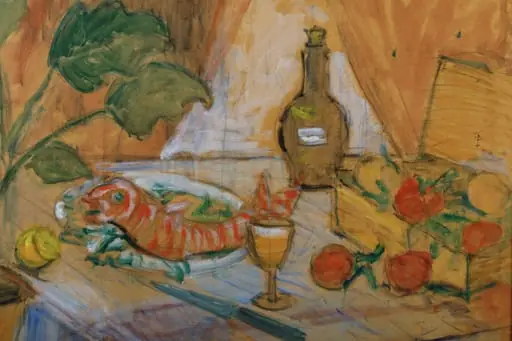
Cafenea is a drawing by Theodor Pallady. It dates from 1950 and is held in the collection of the Gavrila Simion Eco-Museum Research Institute Tulcea.
About this work
Overview
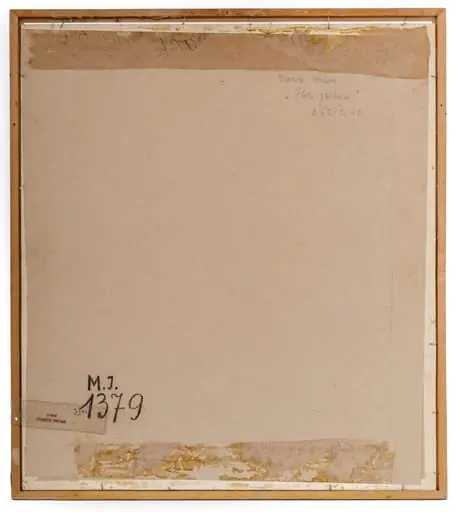
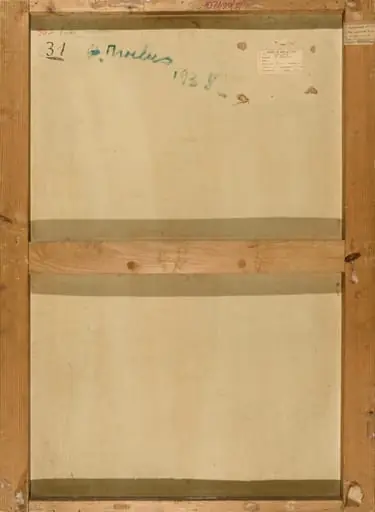
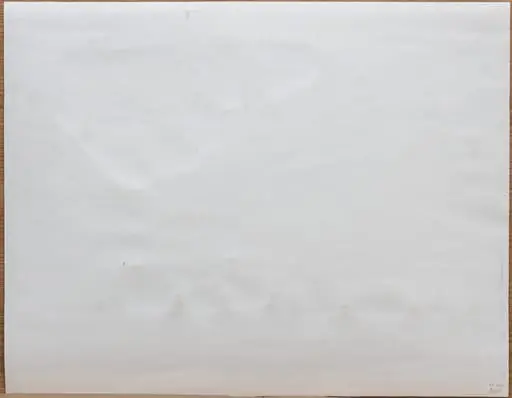
Cafenea, attributed to Theodor Pallady and dated around 1950, is part of the collection of the Museum of Ethnography. The piece consists of a single square sheet of light‑beige paper, positioned on a white backdrop and marked by a faint crease along its left edge.
Subject & Meaning
The work presents an unadorned sheet of paper, its corners secured with small strips of yellow tape. A brief handwritten annotation, “BC 555” in blue ink, appears in the lower‑left corner, introducing a subtle trace of personal intervention amid the otherwise austere composition.
Technique & Style
Pallady’s approach here relies on the materiality of paper and the visual contrast between the beige surface and the surrounding white space. The minimal use of tape and ink emphasizes the object's everyday qualities, while the visible crease suggests handling or intentional manipulation.
History & Provenance
Created circa 1950, Cafenea entered the Museum of Ethnography’s holdings at an unspecified date. Its inclusion in an ethnographic context highlights the artist’s interest in ordinary objects as carriers of cultural or documentary significance.
Context
The work aligns with mid‑twentieth‑century tendencies to foreground mundane materials, echoing broader artistic movements that questioned the boundaries between art and artifact. By presenting a simple sheet of paper, Pallady invites contemplation of the object's provenance and the traces of human activity it bears.
Artist & collection
Museum
Gavrila Simion Eco-Museum Research Institute Tulcea
Continue through works from the same source collection.