Artwork
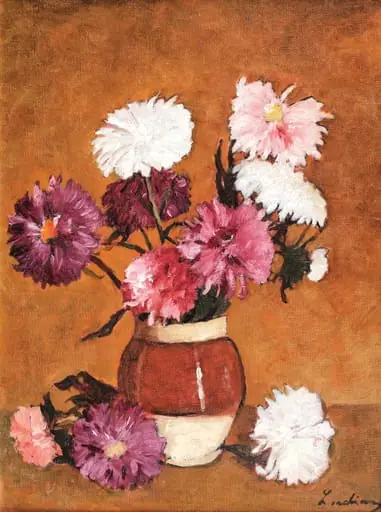
Vas cu garoafe
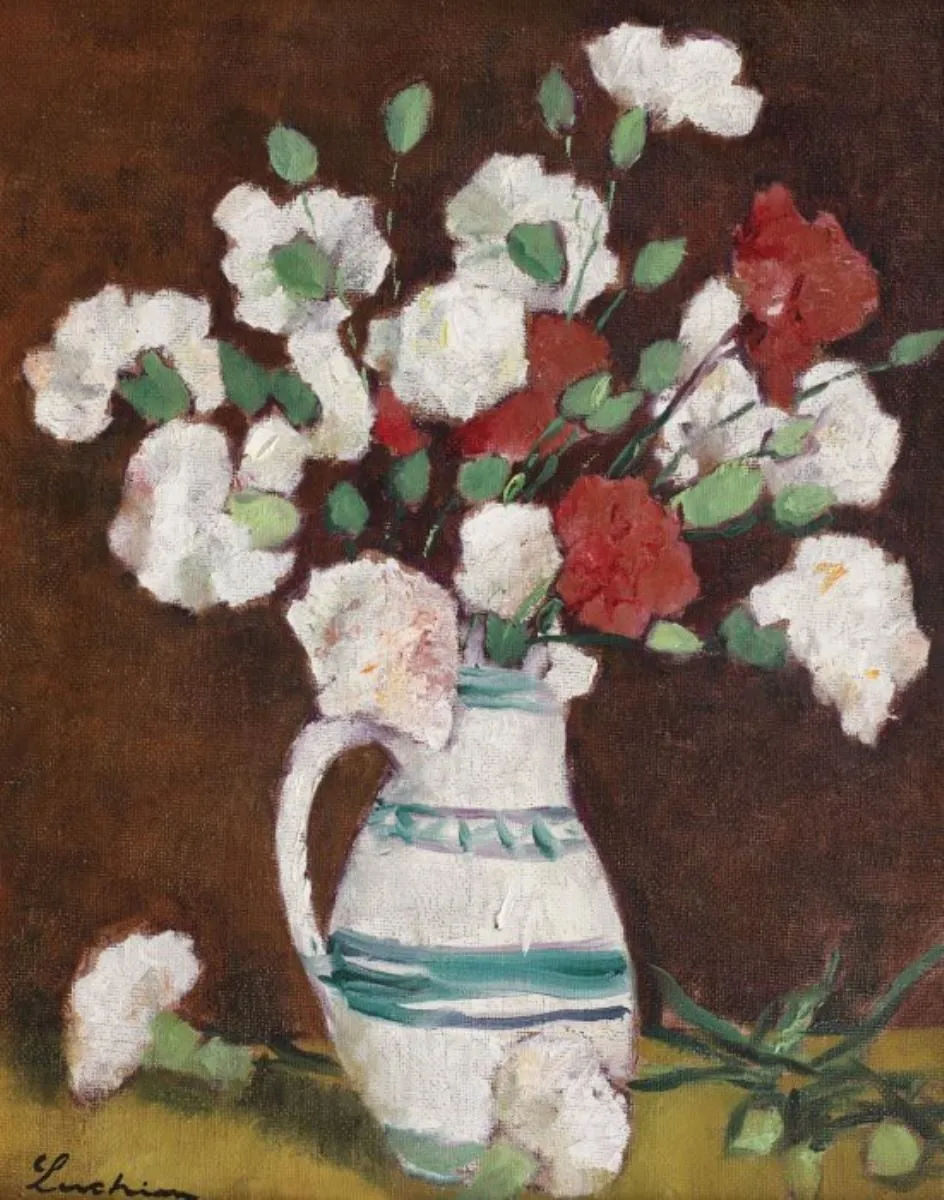
Vas cu garoafe is a print by the Art Nouveau artist Ștefan Luchian. It dates from 1909 and is held in the collection of the Colecție particulară - București.
About this work
Overview
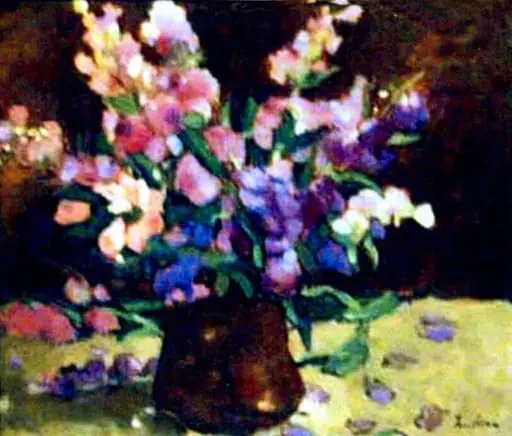
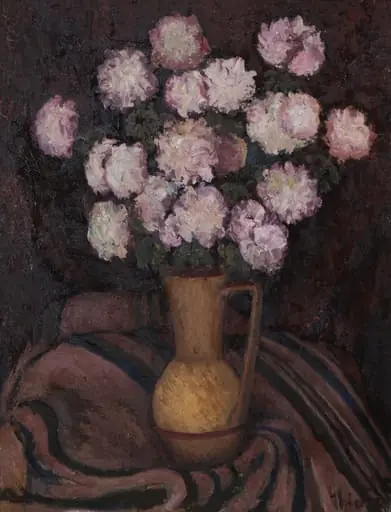
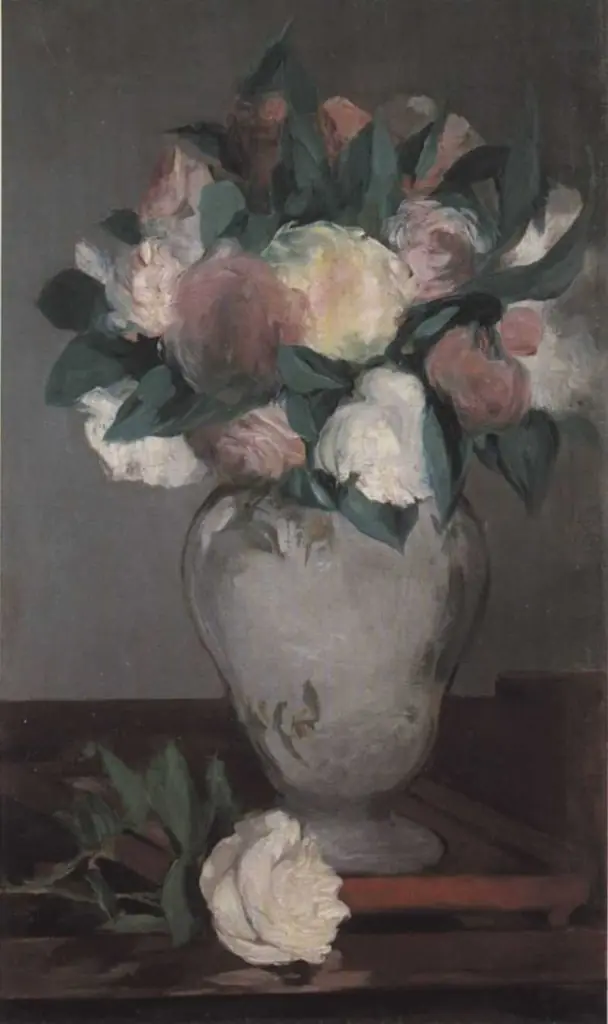
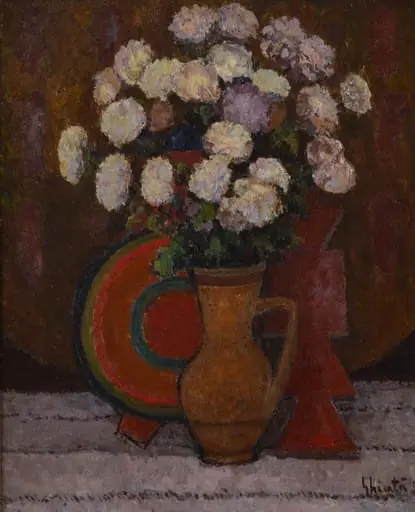
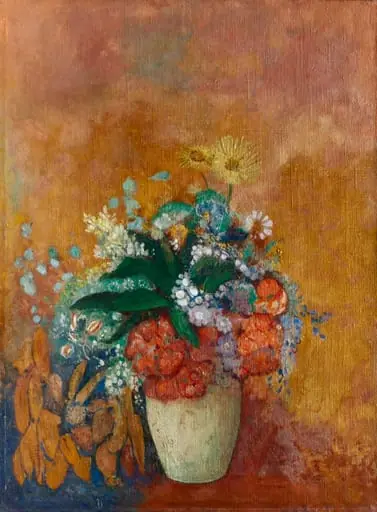
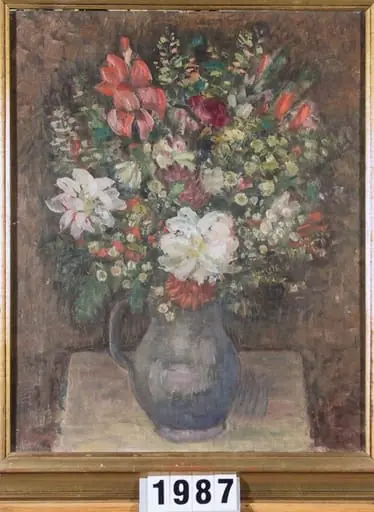
Painted around 1909 by Ștefan Luchian, Vas cu garoafe is a still life depicting a white vase with green stripes holding a bouquet of white and red carnations.
Painted around 1909 by Ștefan Luchian, Vas cu garoafe is a still life depicting a white vase with green stripes holding a bouquet of white and red carnations. The composition is restrained, focusing on the vase and flowers against a muted brown backdrop. The work is part of the collection at the Museum of Ethnography in Bucharest, where it is preserved as an example of early 20th-century Romanian painting.
Subject & Meaning
The arrangement of carnations in a simple ceramic vase reflects a quiet domestic intimacy. The contrast between the vibrant red blooms and the pale petals suggests a subtle interplay of life and transience. Luchian avoids symbolic overstatement, instead inviting contemplation through the ordinary—flowers as objects of daily beauty, rendered without theatricality or narrative.
Technique & Style
Luchian employs loose, visible brushwork that emphasizes texture over precision. The petals and vase surfaces are built with layered strokes, creating a tactile quality. The brown background is applied with broad, even strokes, grounding the composition while allowing the flowers to emerge with naturalistic luminosity. Color is used expressively, not realistically, with reds and whites heightened by the earthy tone behind them.
History & Provenance
The painting entered the Museum of Ethnography’s collection in the early 20th century, likely through acquisition or donation following Luchian’s death in 1916. Its placement in an ethnographic institution, rather than a fine arts museum, reflects early institutional efforts to document Romanian cultural expression across artistic and material domains.
Context
Created during a period when Romanian artists were redefining national identity through local subjects, Luchian’s still lifes diverged from academic traditions. While contemporaries often painted landscapes or historical scenes, he turned to intimate domestic objects, aligning with broader European trends in Post-Impressionism while maintaining a distinctly personal sensibility.
Legacy
Vas cu garoafe exemplifies Luchian’s role in shifting Romanian painting toward emotional resonance through everyday subjects. Though not widely exhibited outside Romania, the work remains a touchstone for its quiet formal harmony and its influence on later generations who valued sincerity over spectacle in still life composition.
Artist & collection

Artist
Ștefan Luchian was a Romanian painter, famous for his landscapes and still life works.