Artwork
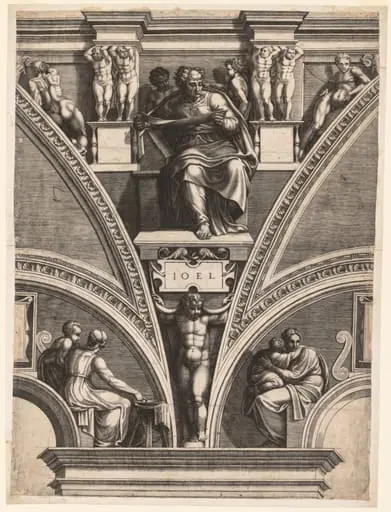
The Prophet Joel
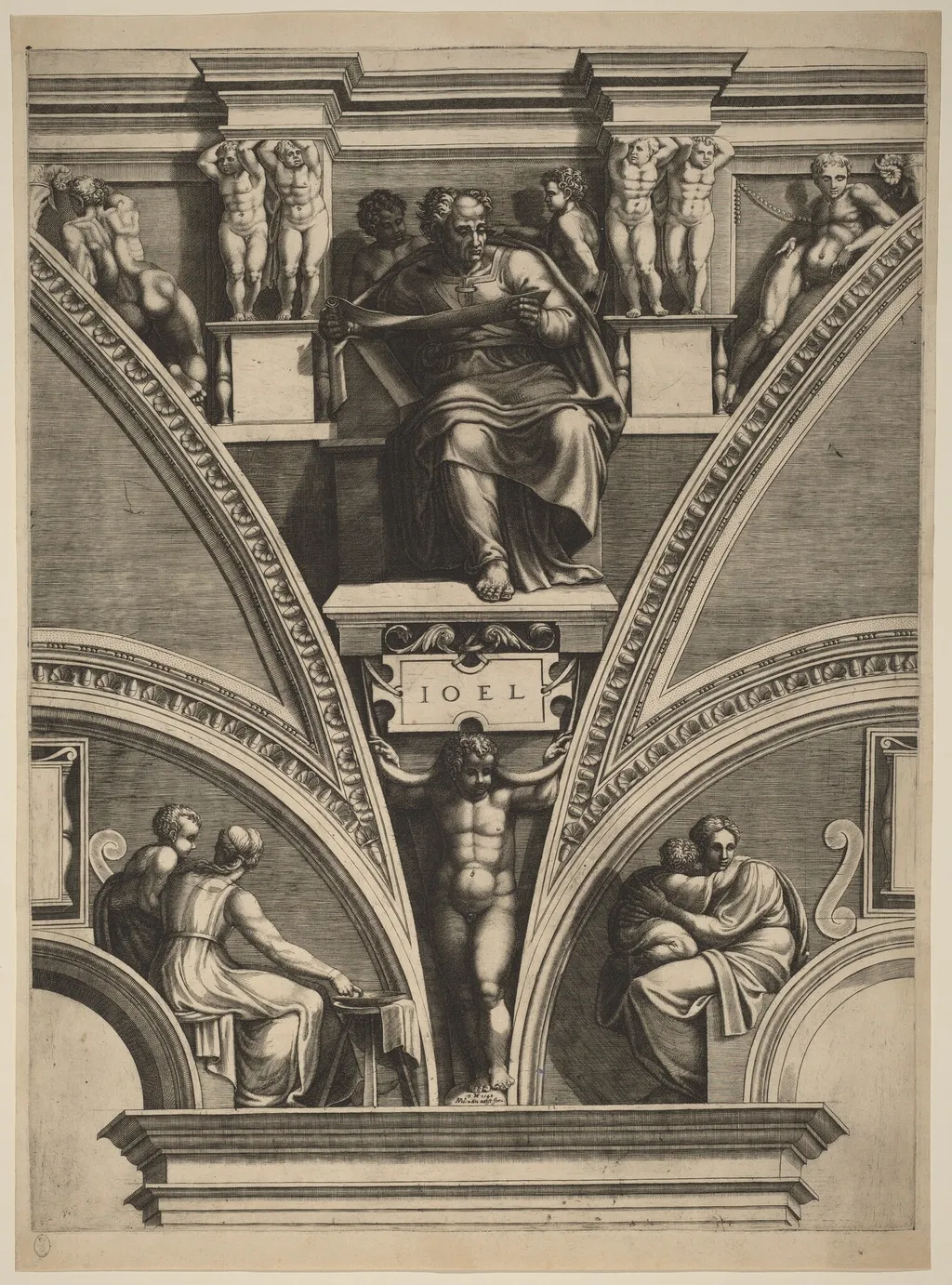
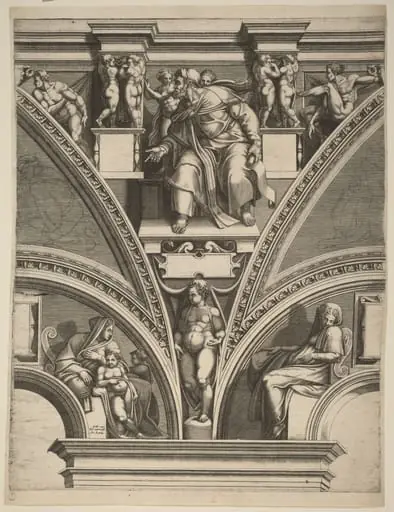
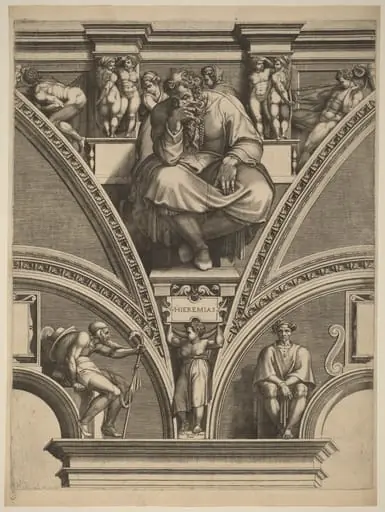
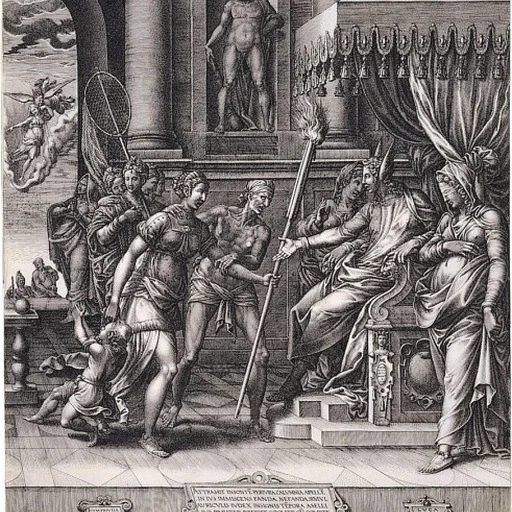
The Prophet Joel is an ink print by the Renaissance artist Giorgio Ghisi. It dates from 1574 and is held in the collection of the National Gallery of Art.
About this work
Overview
This work exemplifies his technical precision and engagement with Mannerist aesthetics, reflecting his travels across Italy, the Netherlands, and France.
Giorgio Ghisi, an Italian engraver active in the late 16th century, created *The Prophet Joel* around 1574 as a detailed print on laid paper. Though known for both printmaking and damascened metalwork, only two metal pieces survive, making his engravings the primary record of his artistry. This work exemplifies his technical precision and engagement with Mannerist aesthetics, reflecting his travels across Italy, the Netherlands, and France.
Subject & Meaning
The engraving portrays the biblical prophet Joel seated on an architectural ledge, holding a scroll, with his name inscribed above. Surrounding him are nude figures contorted in dynamic poses, integrated into the structure as if part of a ceiling fresco. Below, two additional figures—one holding a scroll, another cradling a child—suggest a layered narrative. The composition blends sacred text with allegorical form, implying divine revelation intertwined with human embodiment.
Technique & Style
Ghisi employed fine, controlled lines to model volume and depth on a flat surface, achieving a sculptural quality through hatching and cross-contouring. The figures exhibit exaggerated musculature and unnatural poses typical of late Mannerism, emphasizing movement over naturalism. The integration of clothed and nude forms within an architectural frame demonstrates a deliberate tension between the sacred and the idealized human body, enhancing the scene’s symbolic complexity.
History & Provenance
Created during Ghisi’s mature period, the print likely circulated among collectors and artists in northern Italy and beyond. Its survival in multiple impressions suggests it was produced in a small, controlled edition. While specific early ownership records are sparse, its stylistic links to contemporary prints and its technical refinement indicate it was valued within intellectual and artistic circles of the time.
Context
In the decades after the Council of Trent, religious imagery in print form became a key medium for conveying theological narratives to a broad audience. Ghisi’s work responds to this demand while drawing from classical and Michelangelesque models. The fusion of architecture and allegorical figures reflects a broader trend in Mannerist art to embed spiritual meaning within complex, intellectual compositions rather than straightforward depiction.
Legacy
Ghisi’s *The Prophet Joel* stands as a refined example of late Mannerist engraving, influencing later printmakers through its compositional daring and technical mastery. Though not widely reproduced in popular culture, it remains a touchstone in studies of 16th-century printmaking, illustrating how religious subjects were reimagined through formal experimentation and intellectual allusion.
Artist & collection
Artist
Giorgio Ghisi (1520 — 15 December 1582) was an Italian engraver from Mantua who also worked in Antwerp and in France.