Artwork
The Delphic Sibyl
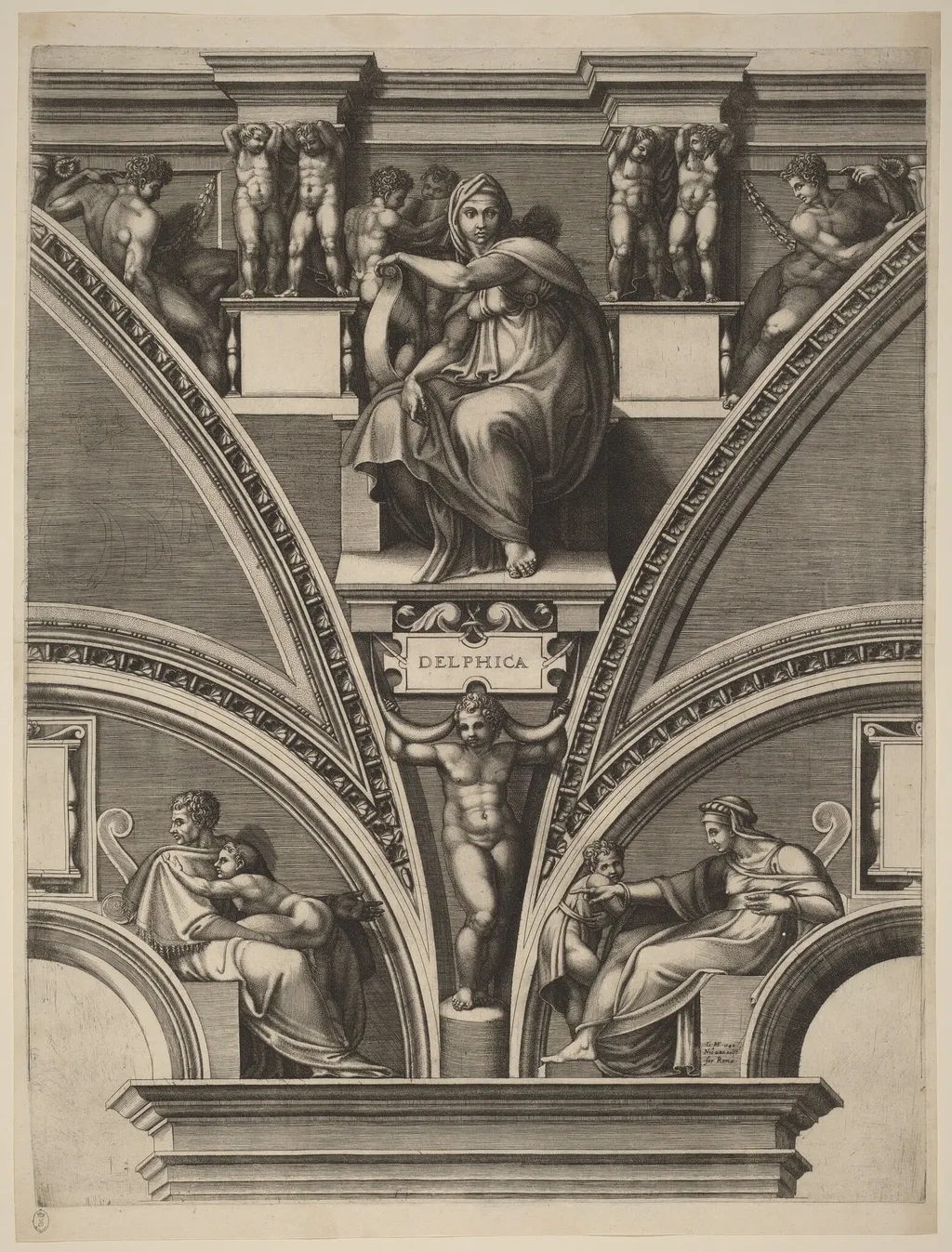
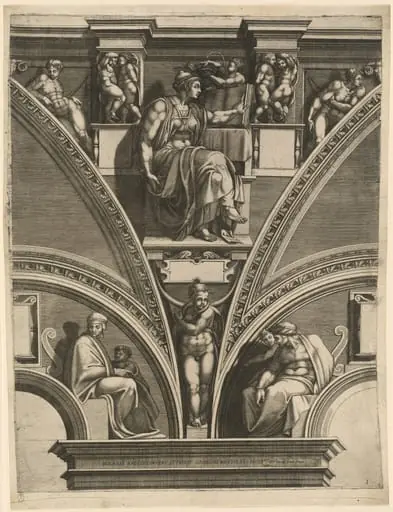
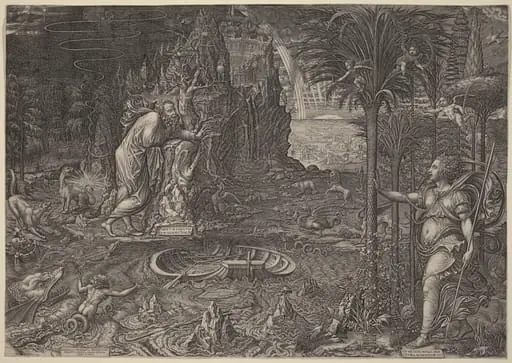
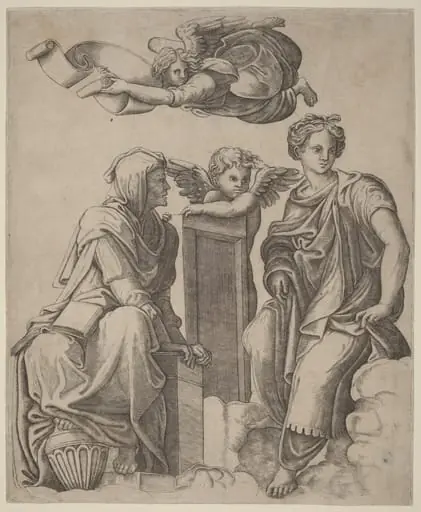
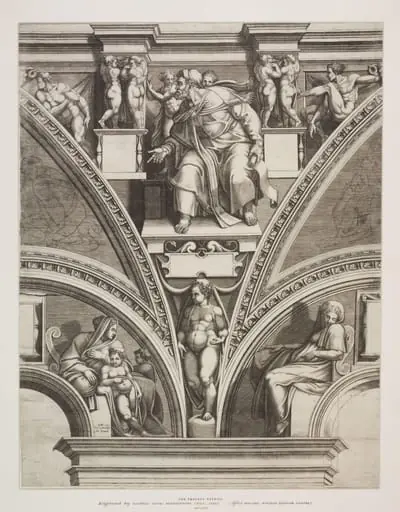
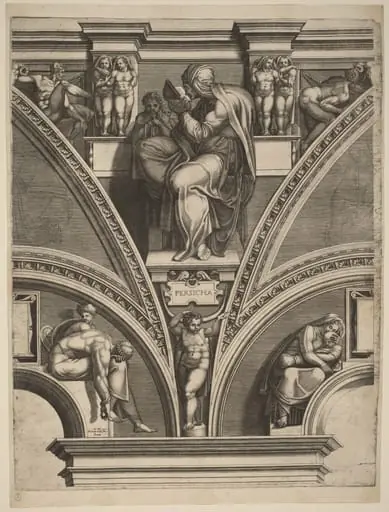
The Delphic Sibyl is an ink print by the Renaissance artist Giorgio Ghisi. It dates from 1574 and is held in the collection of the National Gallery of Art.
About this work
Overview
Created circa 1574 by the Mantuan engraver Giorgio Ghisi, this print presents a seated female figure identified as the Delphic Sibyl. Executed on laid paper, the work exemplifies Ghisi’s late Mannerist approach to printmaking, combining intricate line work with a complex, crowded composition.
Subject & Meaning
The central figure is a prophetess associated with the ancient Oracle of Delphi, indicated by the inscription “Delphica” on her throne. She holds a scroll, a traditional symbol of prophetic revelation, while surrounding nude figures suggest a mythic entourage, reinforcing the sibyl’s role as a conduit of divine knowledge.
Technique & Style
Ghisi employed fine engraving techniques, incising detailed lines into a metal plate before transferring the image onto laid paper. The print displays characteristic Mannerist elongation and elaborate ornamentation, with a dense arrangement of figures and a heightened sense of theatricality.
History & Provenance
Giorgio Ghisi worked throughout Italy, the Netherlands, and France, producing both prints and rare damascened metal objects. This particular engraving forms part of his broader output of mythological and religious subjects, reflecting the transnational circulation of print culture in the late sixteenth century.
Context
The Delphic Sibyl was a popular subject in Renaissance art, embodying the revival of classical antiquity and the humanist interest in prophetic voices. Ghisi’s rendition aligns with contemporary depictions that merged classical motifs with the stylized elegance of the late Mannerist aesthetic.
Artist & collection
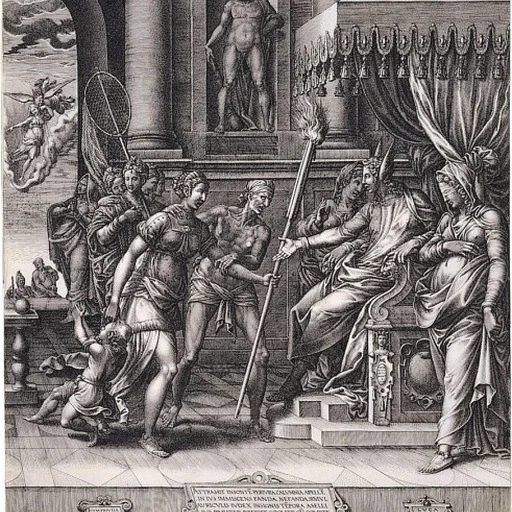
Artist
Giorgio Ghisi (1520 — 15 December 1582) was an Italian engraver from Mantua who also worked in Antwerp and in France.