Artwork
Allegory of Life
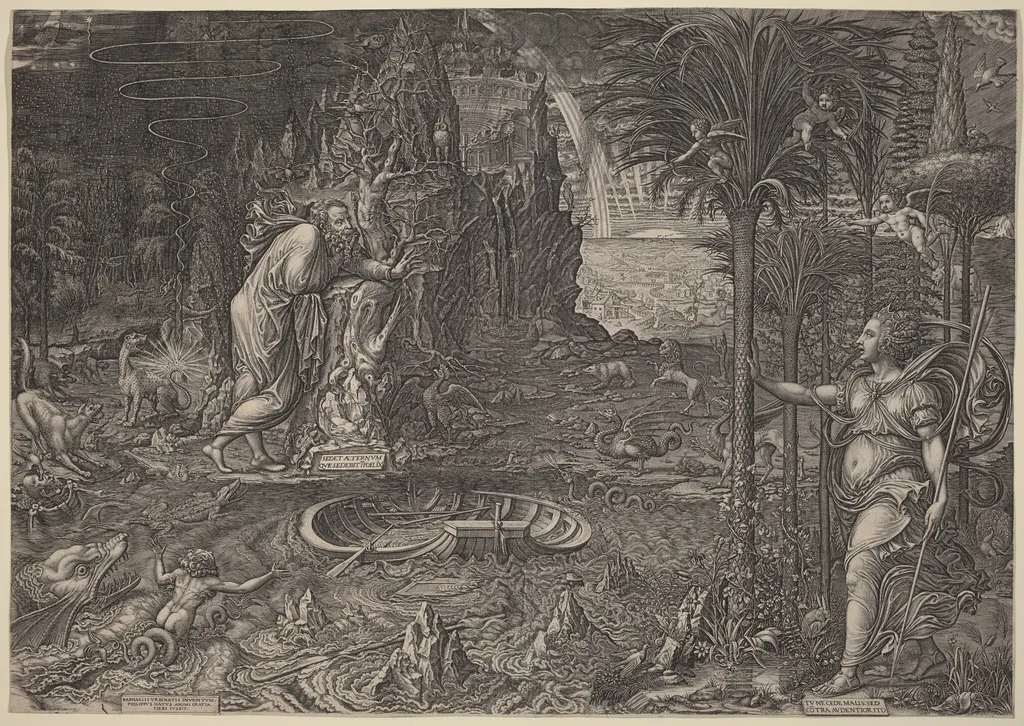
Allegory of Life is an ink print by the Renaissance artist Giorgio Ghisi. It dates from 1561 and is held in the collection of the National Gallery of Art.
About this work
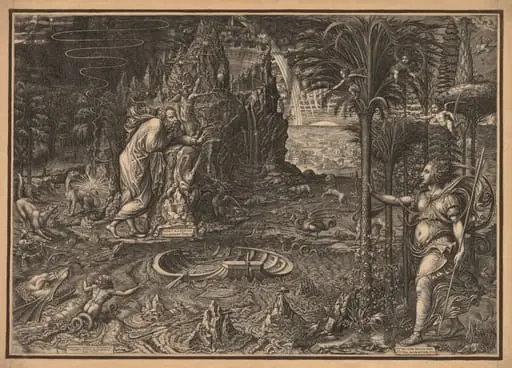
On the left, a robed figure stands on a rocky shore, pointing toward a distant city glowing with light.
This image is a busy black-and-white scene packed with tiny details. On the left, a robed figure stands on a rocky shore, pointing toward a distant city glowing with light. To the right, a woman holds a staff and looks out over a stormy sea. Strange creatures swim below, and angels or figures float in the sky. The background mixes a dark forest, a winding river, and a map-like view of a city.
Notice how the artist uses fine lines to create shadows and depth—this is called cross-hatching. The tiny text at the bottom names the artist and the year, 1561.
Want to see more like this? Look up technique: engraving.
Overview
Created in 1561 by the Mantuan engraver Giorgio Ghisi, this print presents a densely populated black‑and‑white tableau on laid paper. The composition juxtaposes a robed figure on a craggy shore gesturing toward a luminous city with a woman holding a staff who surveys a tumultuous sea, while fantastical sea creatures and ethereal beings occupy the lower and upper zones respectively.
Subject & Meaning
The scene functions as an allegorical meditation on the cycles of existence, contrasting the stability of a distant illuminated metropolis with the unpredictable forces of the sea and the surrounding wilderness. The juxtaposed figures and mythic elements suggest a dialogue between guidance, aspiration, and the chaotic aspects of life that surround human endeavor.
Technique & Style
Executed in the late Mannerist idiom, Ghisi employs meticulous cross‑hatching to render texture, shadow, and atmospheric depth. The fine incised lines build intricate details—from the bark of trees to the scales of marine monsters—while the overall composition reflects the period’s penchant for complex, crowded narratives and exaggerated spatial relationships.
History & Provenance
Giorgio Ghisi, known primarily for his printmaking, produced this work after periods of activity in both Antwerp and France. Although he also created a small number of damascened metal pieces, his reputation rests on engravings such as this, which survive as rare examples of his mature output and have been documented in several European collections since the 17th century.
Context
The engraving belongs to the broader tradition of allegorical prints that circulated among educated patrons in the mid‑16th century, serving both decorative and didactic purposes. Its intricate iconography reflects contemporary interests in moral philosophy, cartographic imagination, and the blending of classical and biblical motifs characteristic of Mannerist visual culture.
Artist & collection
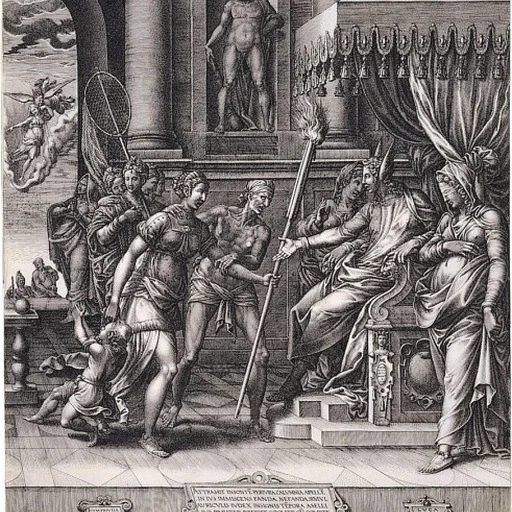
Artist
Giorgio Ghisi (1520 — 15 December 1582) was an Italian engraver from Mantua who also worked in Antwerp and in France.

 Allegory of Life
 The Death of Procris
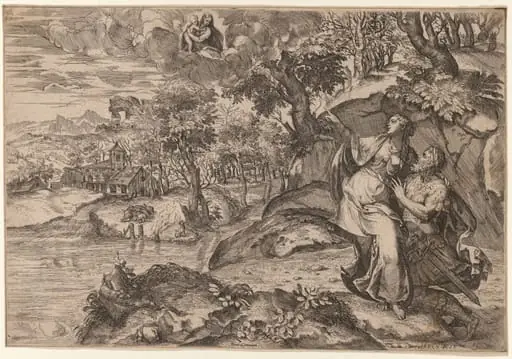 Augustus and the Tiburtine Sibyl
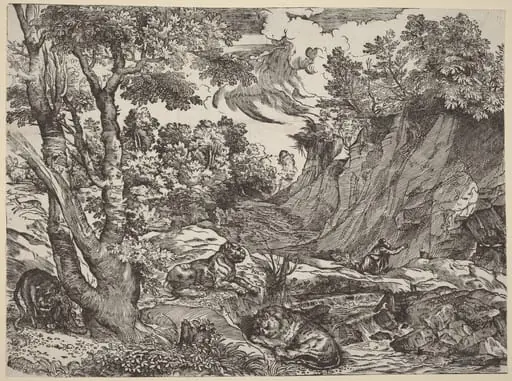 Saint Jerome in the Wilderness
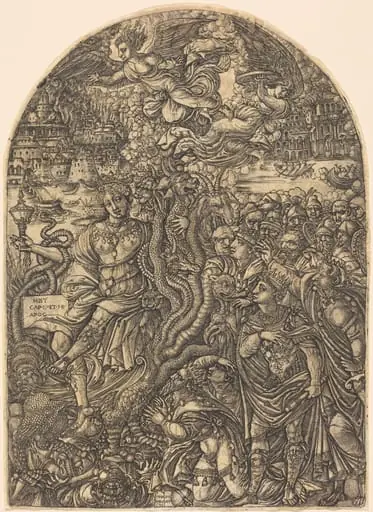 The Babylon Harlot
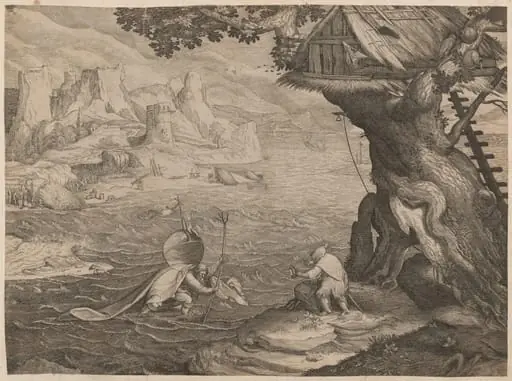 Saint Christopher with the Christ Child
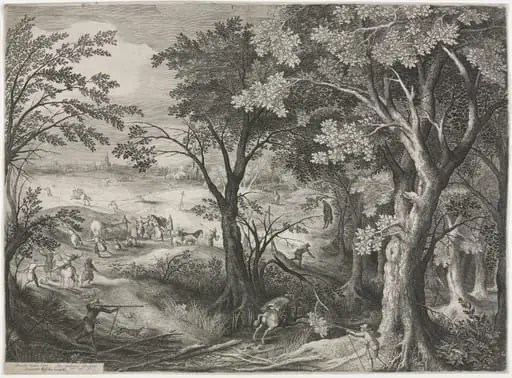 Landscape with Travelers Attacked by a Gang of Robbers
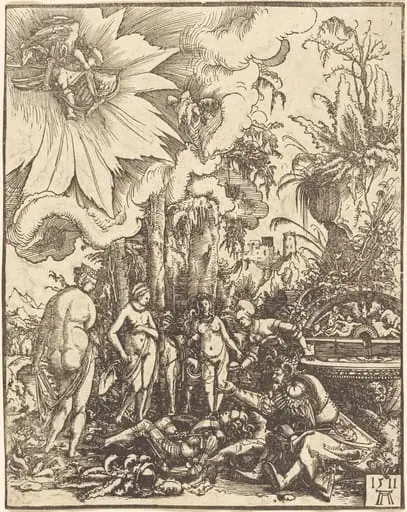 The Judgment of Paris
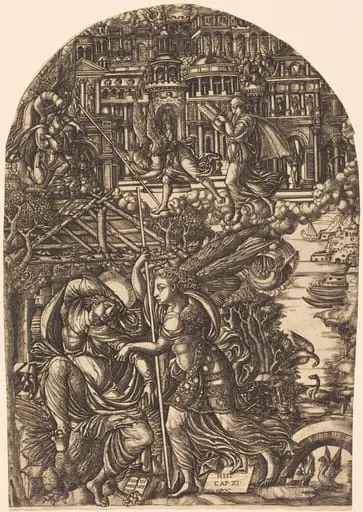 The Angel Shows Saint John the New Jerusalem
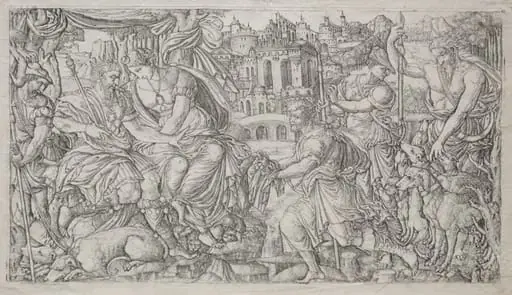 Huntsman Presenting a Gift to a King
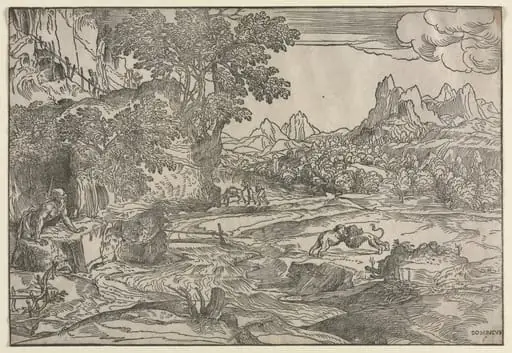 Landscape with Saint Jerome and Two Lions
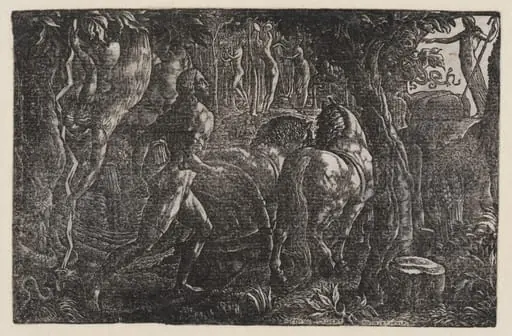 The Ploughman